Vocabulary enhancement Normal Long And Short Vowel Worksheets for Ages 5-8
8 filtered results
Difficulty Level
Grade
Age
-
From - To
Subject
Activity
Standards
Boost your child's vocabulary with our engaging Normal Long and Short Vowel Worksheets, designed specifically for ages 5-8. These interactive resources focus on enhancing language skills through fun activities that emphasize the distinction between long and short vowel sounds. Perfect for classrooms and at-home learning, each worksheet features colorful illustrations and easy-to-follow instructions that make learning enjoyable. Children will develop an enriched vocabulary while building literacy fundamentals through exercises tailored to their age group. Let our thoughtfully crafted worksheets be a valuable tool in your child's educational journey, fostering a love for learning and language that lasts a lifetime!
Favorites
With answer key
Interactive
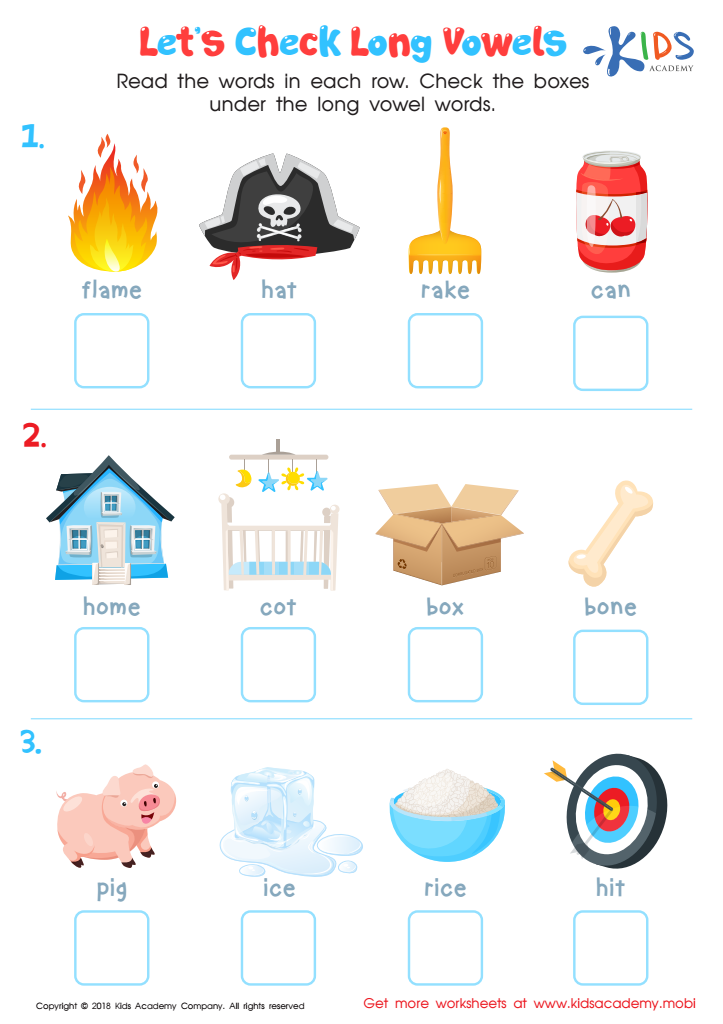
Let's Check Long Vowels: Assessment Worksheet
This worksheet helps your child identify objects and learn long vowel sounds. Ask them to say the names of the four objects in each row. Then, help them check the boxes to confirm they know the long vowel sounds. This will help them develop their reading skills.
 Assign to My Students
Let's Check Long Vowels: Assessment Worksheet
Worksheet
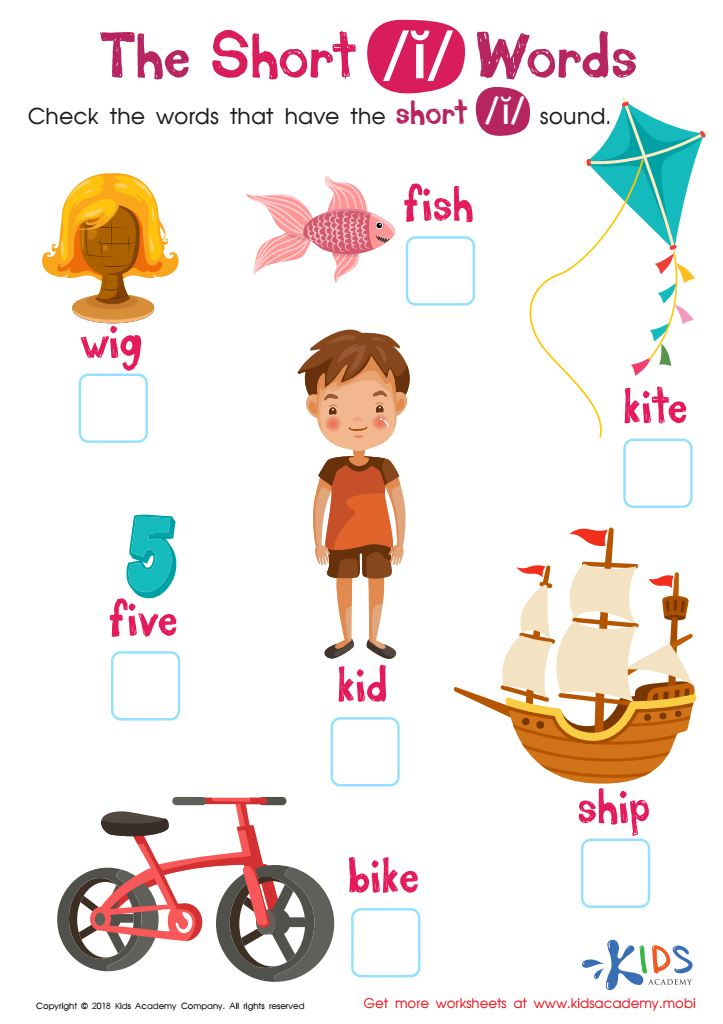
The Short I Words Reading Worksheet
Teach your kindergartner phonics with this printout worksheet! It introduces the short «i» sound and helps them differentiate and articulate sounds and letters of the alphabet. With practice, your child will soon find it easy to classify sounds into long and short vowels.
The Short I Words Reading Worksheet
Worksheet
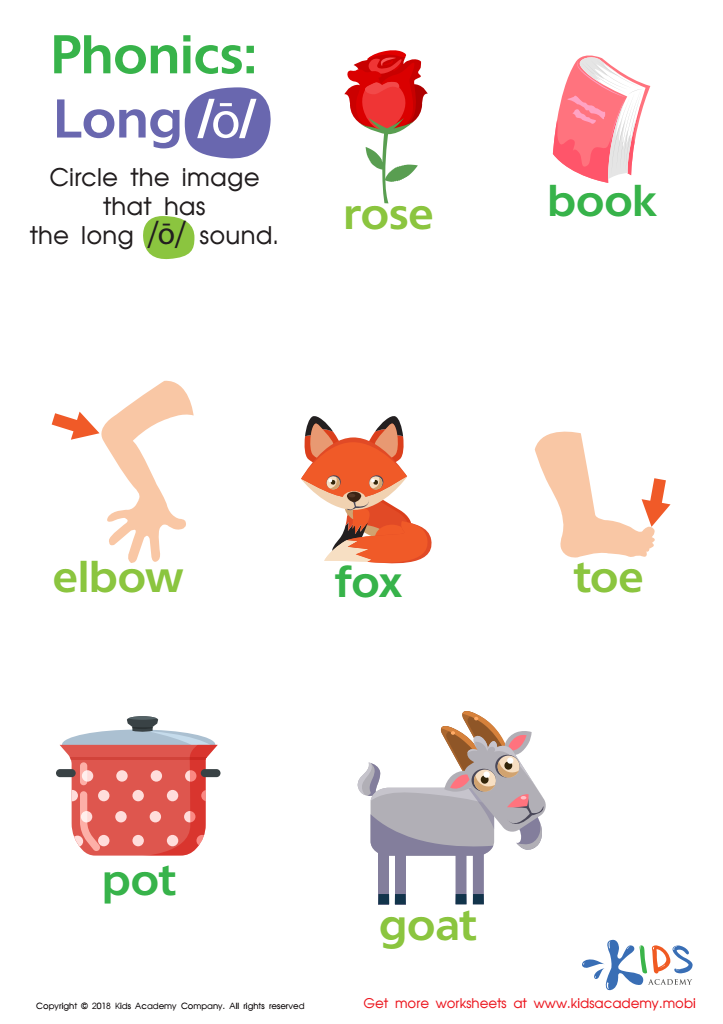
Phonics Long O Reading Worksheet
Are you ready to help your child learn the phonics long «o» sound? This worksheet is designed to aid them in getting familiar with the sound. After completing the exercise, your child should be able to differentiate letters, and recognize words with the long «o» sound. Encourage them to circle the images that have the sound.
Phonics Long O Reading Worksheet
Worksheet
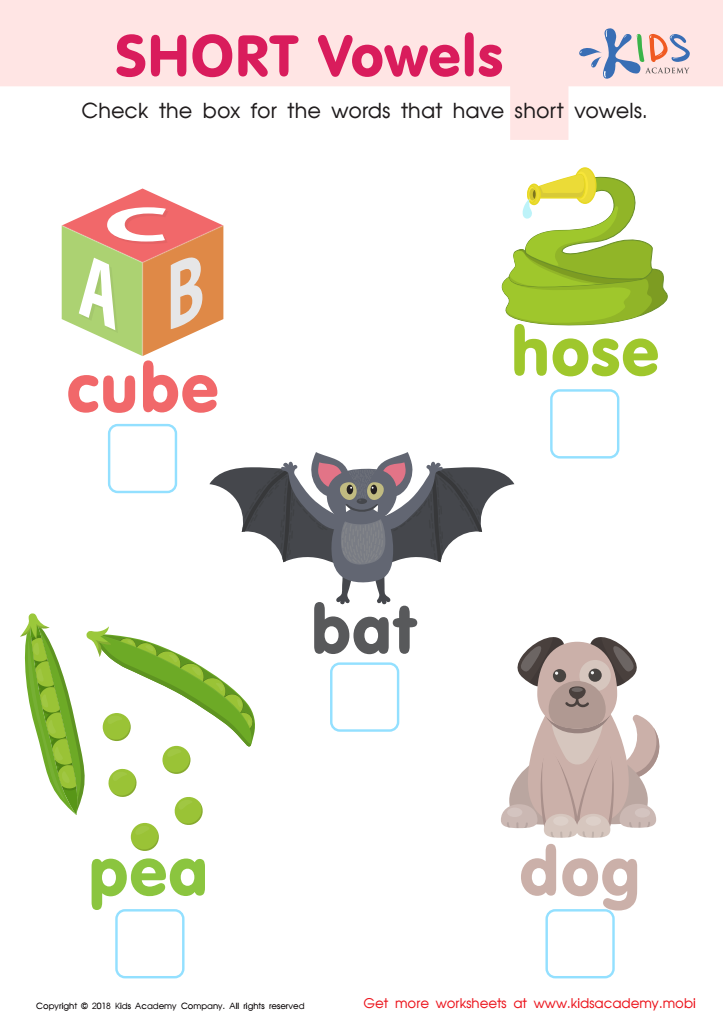
short vowels Worksheet
Say "dog" and notice how long it takes to pronounce the vowel. Is it short or long? Compare it to "pea" and use this worksheet to quickly assess your child's mastery. Have them name each picture and listen for the vowel sounds. Only check the boxes for words with short vowel sounds.
short vowels Worksheet
Worksheet
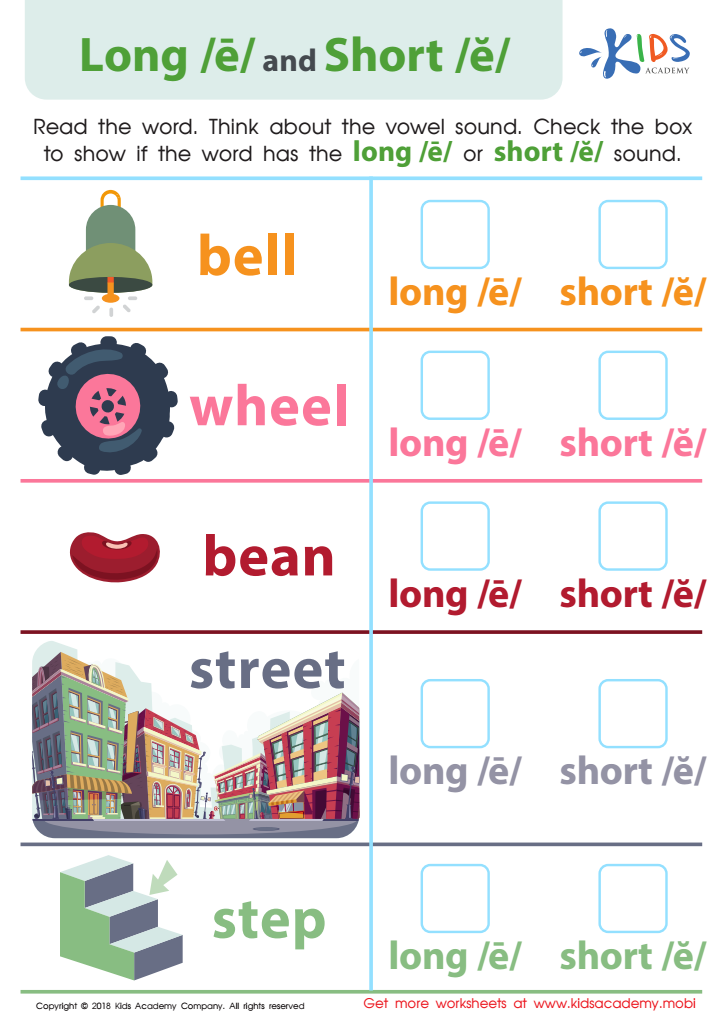
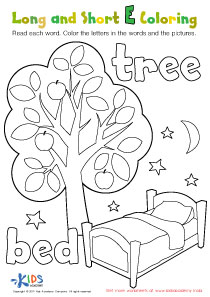
Reading: Long E and Short E Worksheet
Provide your students with valuable practice in distinguishing long and short E sounds with this worksheet. They'll look at pictures and read the words, then decide which sound is being used. It's an effective tool to help them master a difficult concept.
Reading: Long E and Short E Worksheet
Worksheet
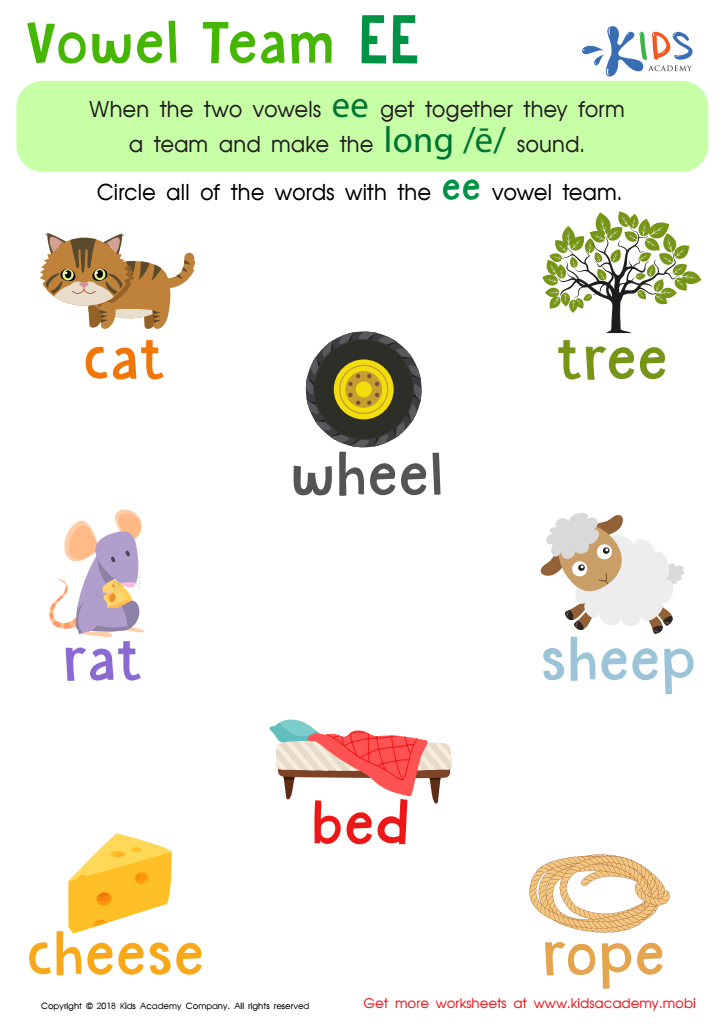
Reading: Vowel Team EE Worksheet
This worksheet is perfect for helping young learners master the /ee/ vowel team. It shows the first vowel with a long sound and the second vowel silent. It also provides pictures for unfamiliar words for readers of all levels. It's an ideal resource for teaching phonics skills.
Reading: Vowel Team EE Worksheet
Worksheet
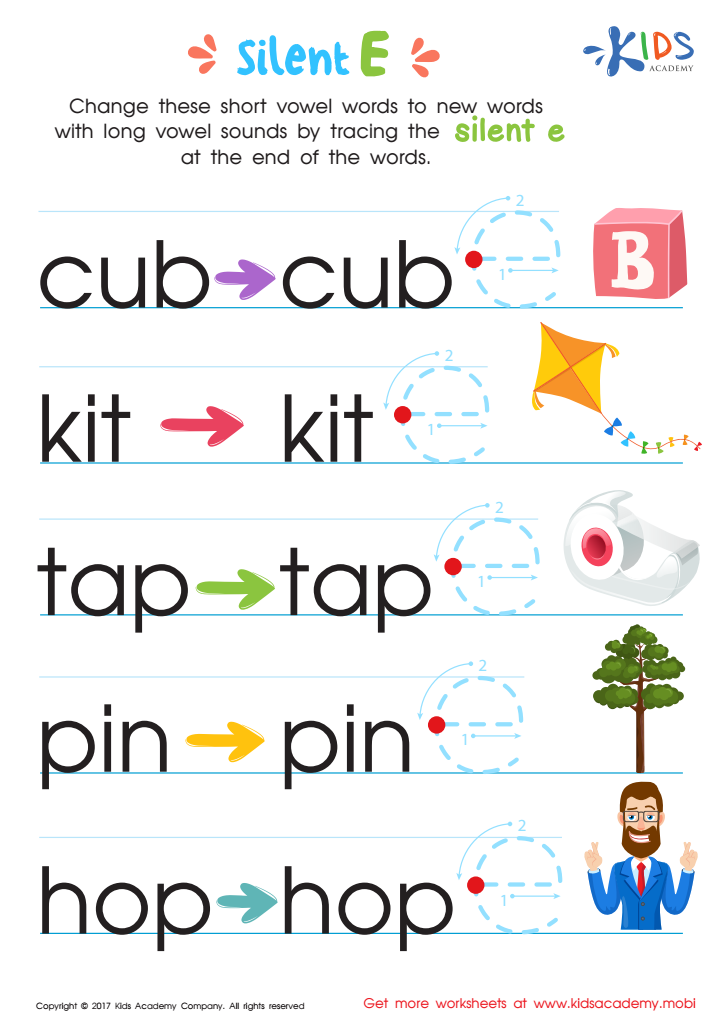
Silent E Words Worksheet
The letter e is amazing - it changes words without making a sound! Boost spelling and phonics with this Silent e worksheet from Kids Academy - fun and colorful!
Silent E Words Worksheet
Worksheet
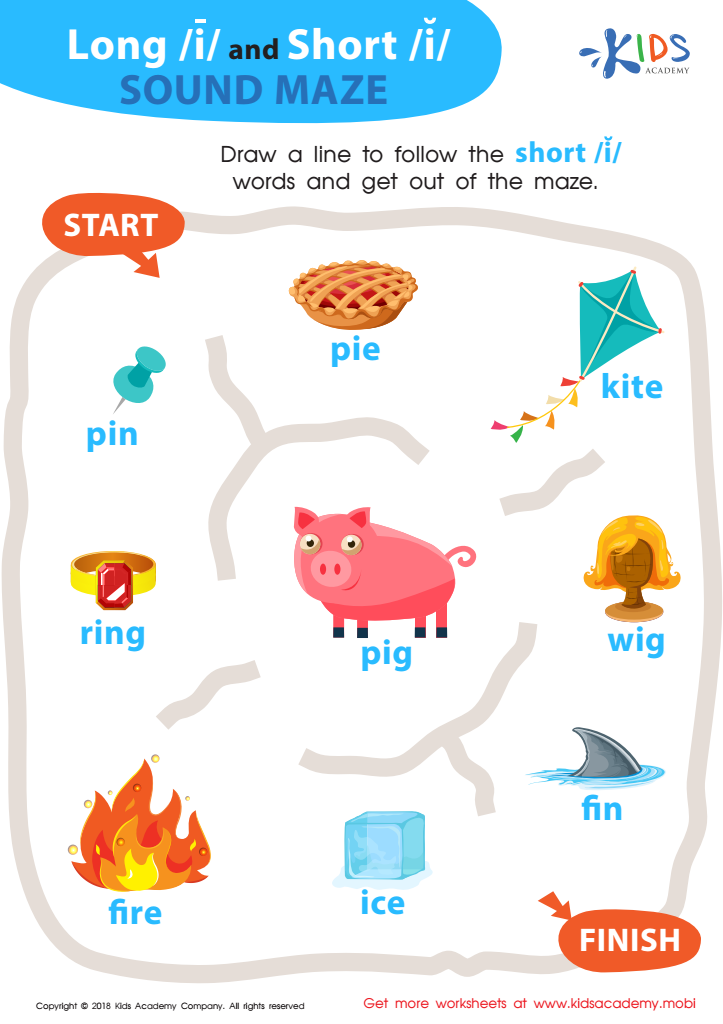
Reading: Long I and Short I Sound Maze Worksheet
Question your students if the worksheet is entertaining. They may respond negatively! Nonetheless, this activity will bring satisfaction while learning the distinction between a long and short I sound. Students read the words in the maze and only follow the words with the short I sound to finish the exercise. Grasping the difference between long and short vowels is demanding, but this worksheet helps students understand this reading skill.
Reading: Long I and Short I Sound Maze Worksheet
Worksheet
Join Kids Academy for Free
Who is primarily going to use this learning content?




Vocabulary enhancement is crucial for children aged 5-8 as it forms the foundation for reading, writing, and effective communication. This developmental stage is vital, as children rapidly acquire language skills that motivate their academic success and confidence in expression. Understanding normal long and short vowels is a significant aspect of vocabulary development.
By grasping vowel sounds and their usage, children not only improve their phonetic awareness but also enhance their ability to decode words. This fosters a smoother transition into reading proficiency, allowing them to navigate books with greater ease and enjoyment. Additionally, enriched vocabulary helps children articulate their thoughts clearly, enabling them to engage in meaningful conversations and academic discussions.
For parents and teachers, prioritizing vocabulary enhancement goes beyond mere word recognition; it boosts comprehension skills, critical thinking, and creativity. Engaging children with various learning activities that focus on long and short vowels cultivates a love for language, making them more adaptable learners. Providing children with a robust vocabulary equips them to face future academic challenges, promoting lifelong literacy skills. Ultimately, caring about vocabulary development ensures that children are not only prepared for school but are also well-equipped for effective communication throughout their lives.