Vowel Recognition Normal Long Vowels Worksheets for Ages 5-8
6 filtered results
-
From - To
Enhance your child's reading skills with our Vowel Recognition Normal Long Vowels Worksheets, designed for ages 5-8. These engaging activities help young learners distinguish between short and long vowel sounds, essential for developing phonics and reading fluency. With a variety of fun and educational exercises, children will enjoy identifying and practicing long vowels, building a solid foundation for future literacy success. Perfect for classroom or at-home learning, our worksheets align with educational standards and support phonemic awareness. Watch as your child gains confidence and proficiency in reading through targeted, enjoyable practice tailored to their needs.
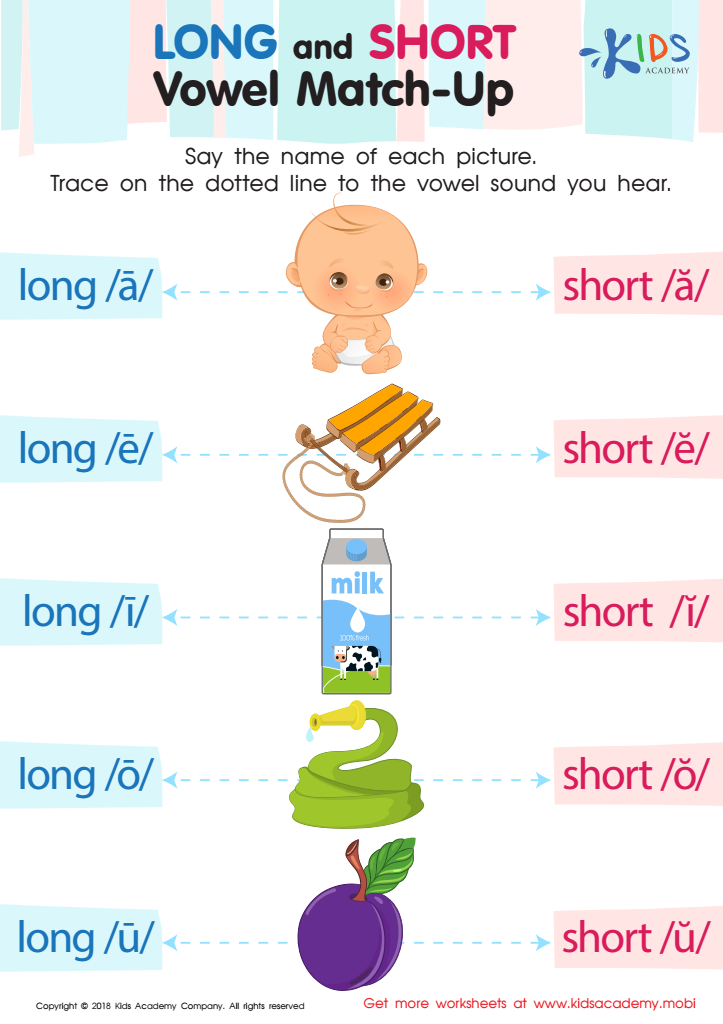
Long and Short Vowel Match up Reading Worksheet
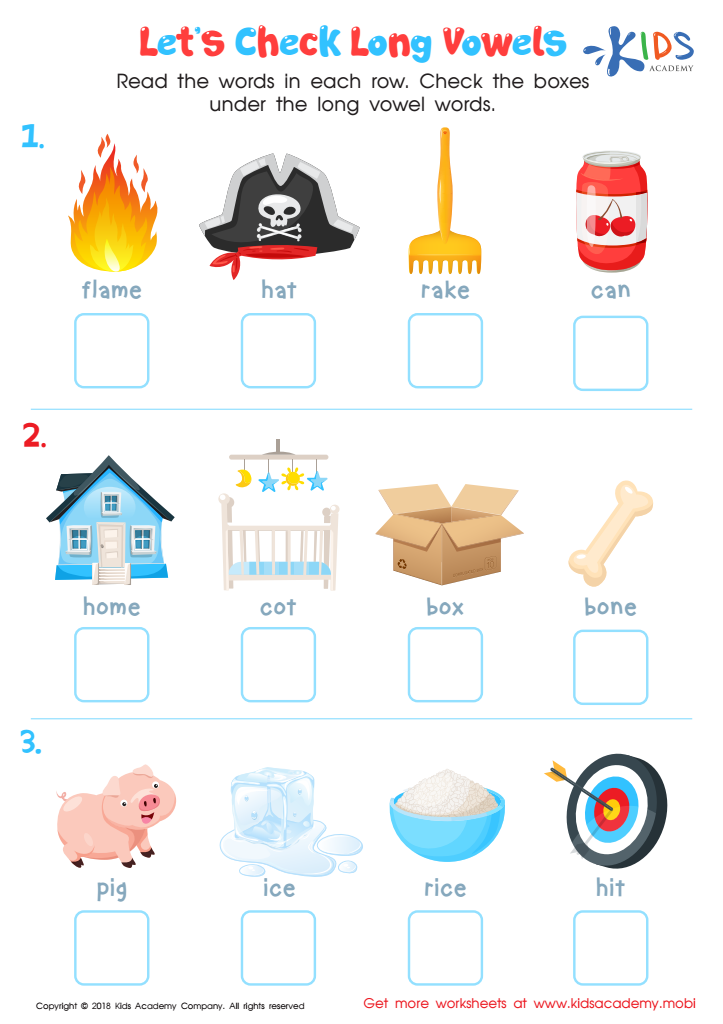
Let's Check Long Vowels: Assessment Worksheet
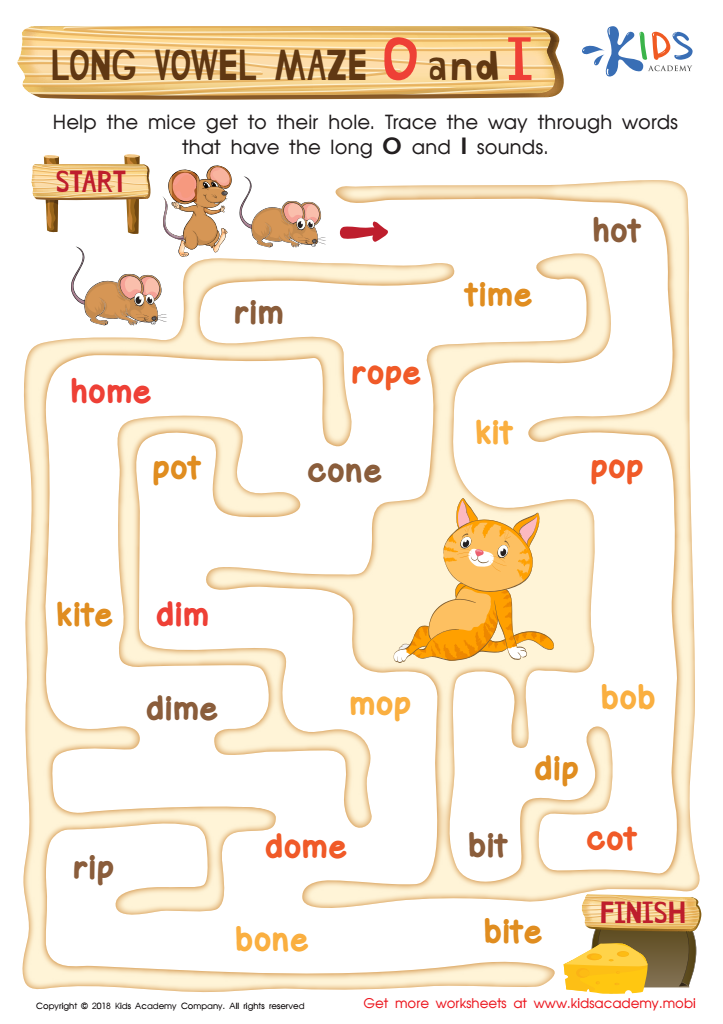
Long Vowel Maze /o/ and /i/ Worksheet
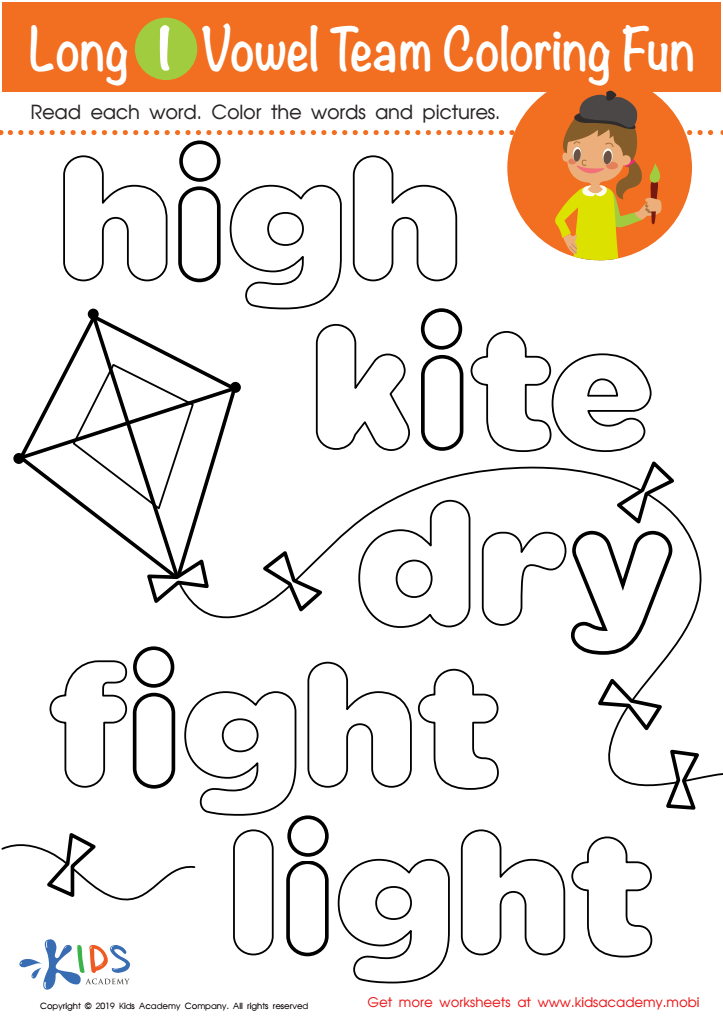
Long I Vowel Team Coloring Worksheet
 Assign to My Students
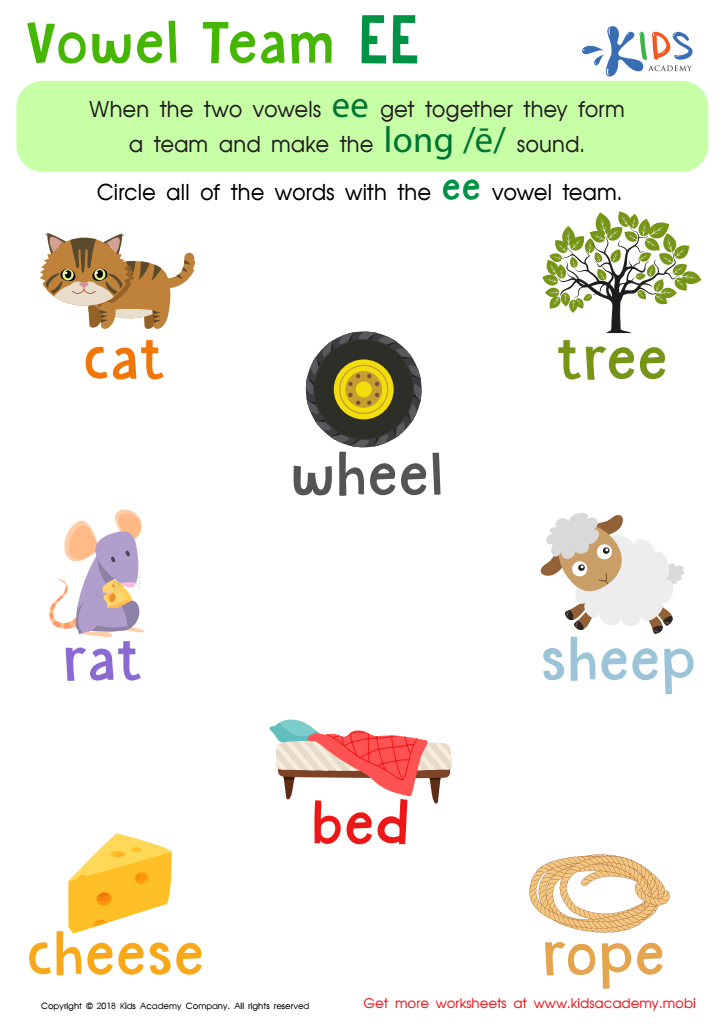
Reading: Vowel Team EE Worksheet
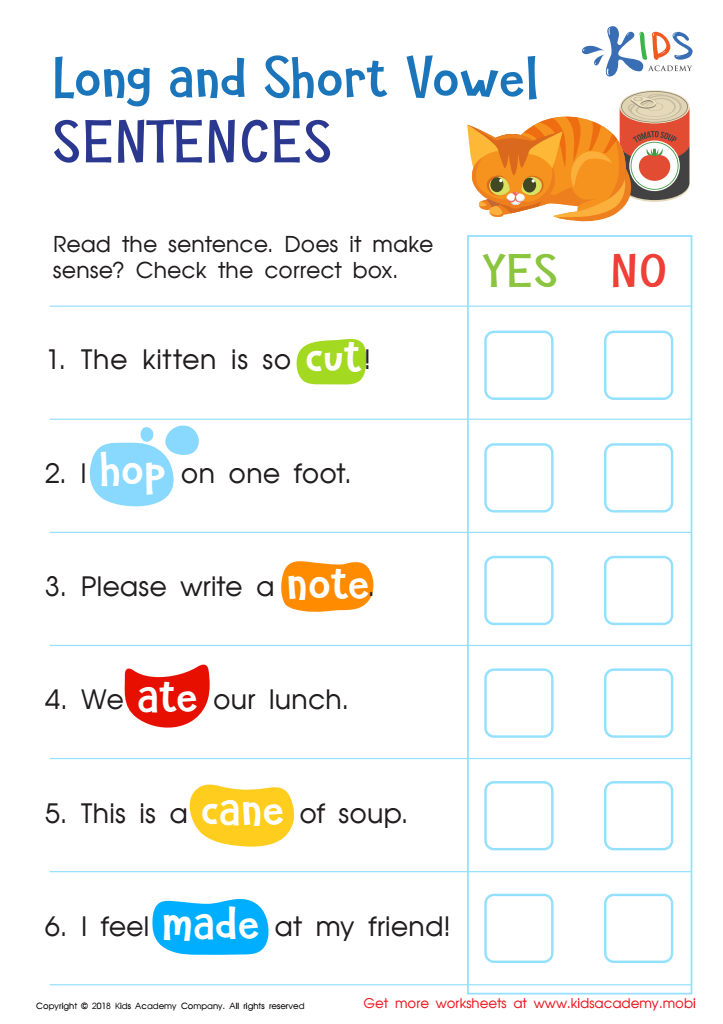
Long and Short Vowel Sentences: Assessment Worksheet



Vowel recognition and understanding the difference between normal and long vowels is crucial for young children aged 5-8 as it forms the foundation for reading and spelling proficiency. During these early years, children's brains are highly receptive to learning language patterns, which will significantly impact their literacy development.
Understanding vowels is critical because they are present in every word; distinguishing between normal (short) and long vowels helps children decode and pronounce words correctly. For instance, knowing the difference between the "a" in "cat" (short) and "cake" (long) aids in more accurate reading and comprehension. This distinction is vital for improving phonemic awareness — the ability to hear, identify, and manipulate phonemes, the smallest units of sound in speech.
Early recognition and mastery of vowel sounds can prevent reading difficulties, which often stem from an inability to decode words. This leads to better fluency and confidence in reading. For example, if they recognize that the letter "e" at the end of the word typically makes the preceding vowel long, they can read words like "bake" versus "back" correctly.
Moreover, this skill enhances spelling abilities since children can better anticipate how words are constructed and how adding or removing certain letters alters their sounds. Thus, parents and teachers should prioritize vowel recognition to build a robust foundation for future academic success and a lifelong love of reading.