Sound differentiation Normal Phonics Worksheets for Ages 5-8
3 filtered results
-
From - To
Discover our engaging "Sound Differentiation Normal Phonics Worksheets" designed specifically for children aged 5-8. These fun and interactive worksheets help young learners enhance their phonemic awareness by identifying and differentiating sounds within words. With colorful visuals and age-appropriate activities, kids will enjoy practiced skill-building as they sharpen their reading abilities. Our resources cater to diverse learning styles, promoting essential literacy skills in a playful way. Ideal for classroom use or at-home reinforcement, these worksheets encourage a love for reading while fostering confidence in phonics mastery. Explore our collection and give your child the tools to succeed in their literacy journey!
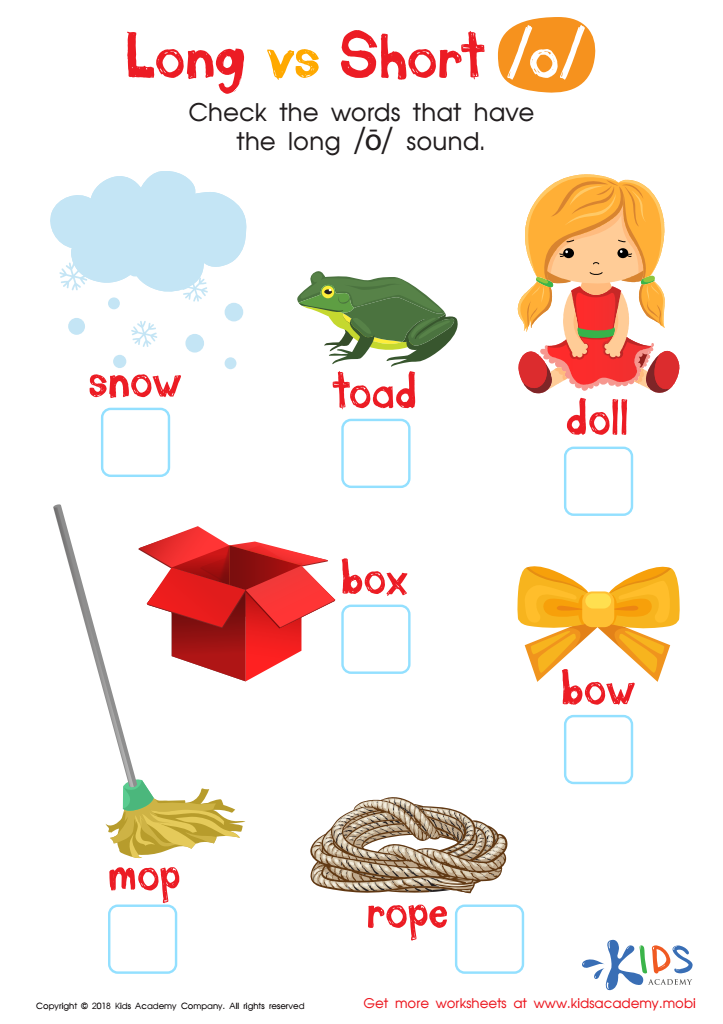
Long vs Short O Reading Worksheet
 Assign to My Students
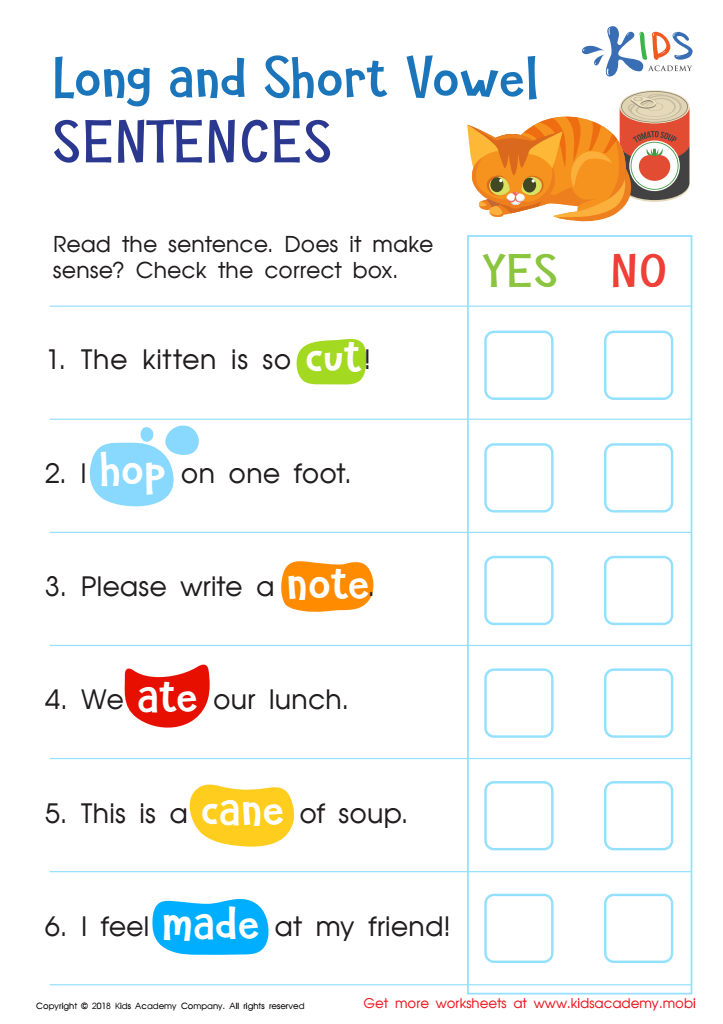
Long and Short Vowel Sentences: Assessment Worksheet
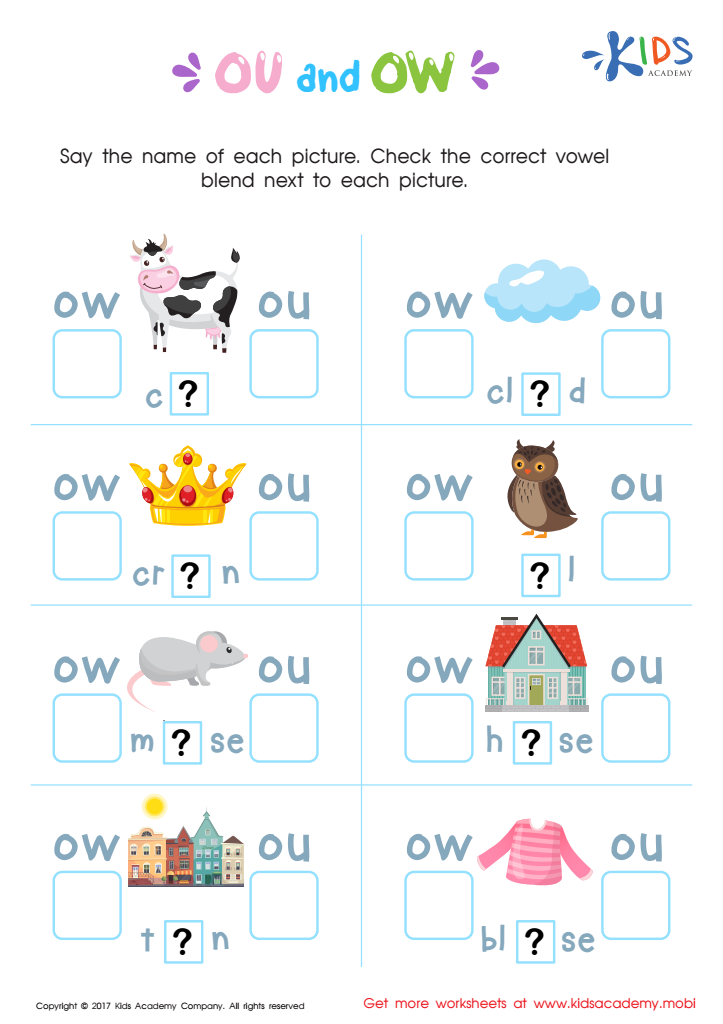
OU and OW Words Worksheet








Sound differentiation through Normal Phonics is crucial for children ages 5-8 as it directly impacts their literacy development. At this formative age, students are beginning to link sounds with letters, a foundational skill for reading and writing. By focusing on sound differentiation, children learn to identify and distinguish between different phonetic sounds, which enhances their ability to decode words. This proficiency leads to improved reading fluency and comprehension.
Moreover, understanding phonics lays the groundwork for spelling, vocabulary acquisition, and overall language skills. When parents and teachers emphasize sound differentiation, they equip children with the necessary tools to tackle more complex texts as they progress in their education. As early readers experience various phonemes, they become confident in their ability to sound out unfamiliar words, fostering a love for reading.
Additionally, this skill is instrumental in preventing reading difficulties later on. Research shows that a strong foundation in phonics minimizes the risk of future literacy challenges. By prioritizing sound differentiation in the classroom and at home, parents and teachers create a supportive learning environment that nurtures children's academic growth and instills a lifelong appreciation for language and reading. Ultimately, sound differentiation is essential in shaping competent and enthusiastic readers.







