
Word identification Normal Phonics Worksheets for Ages 5-8
6 filtered results
Difficulty Level
Grade
Age
-
From - To
Subject
Activity
Standards
Enhance your child's reading skills with our Word Identification Normal Phonics Worksheets designed for ages 5-8. These engaging resources help young learners explore letter sounds, improve phonemic awareness, and develop vital word recognition abilities. Each worksheet is crafted to provide a fun and interactive way to practice blending sounds and recognizing common words. Our user-friendly format caters to diverse learning styles, ensuring every child can thrive. By integrating phonics into their learning routine, your child will build a solid foundation for reading. Download our printable worksheets today and watch your little ones grow into confident and enthusiastic readers!
Favorites
With answer key
Interactive
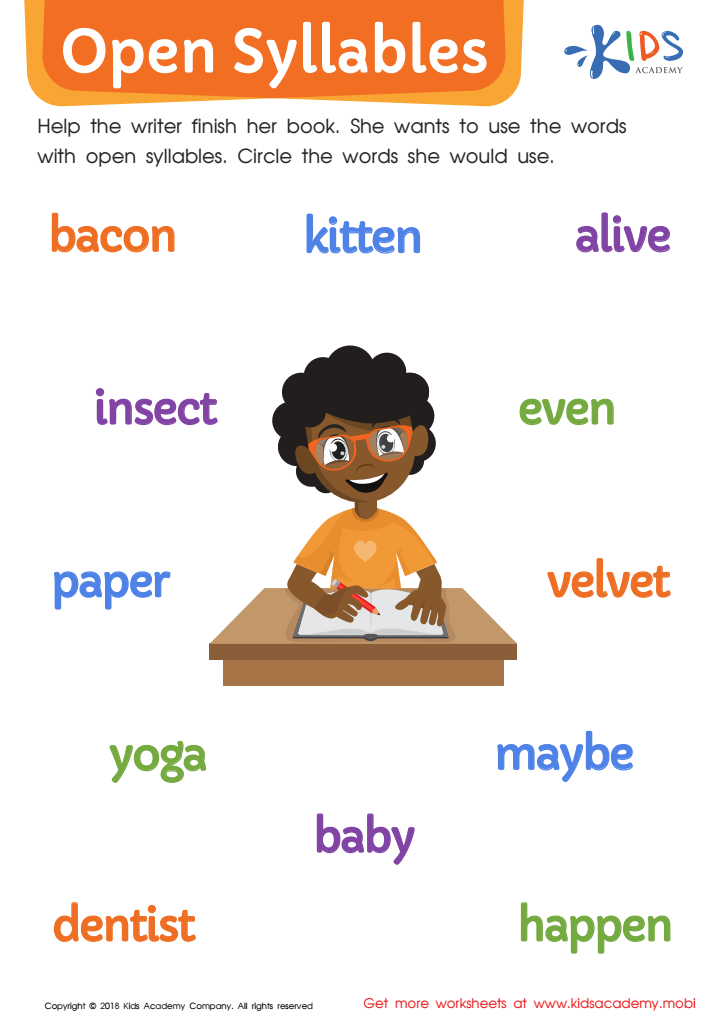
Open Syllables Worksheet
Before beginning this worksheet, make sure your child knows what open syllables are. If not, take time to teach them with examples. Then, help the writer finish her book by circling words with open syllables. She needs your child's help!
Open Syllables Worksheet
Worksheet
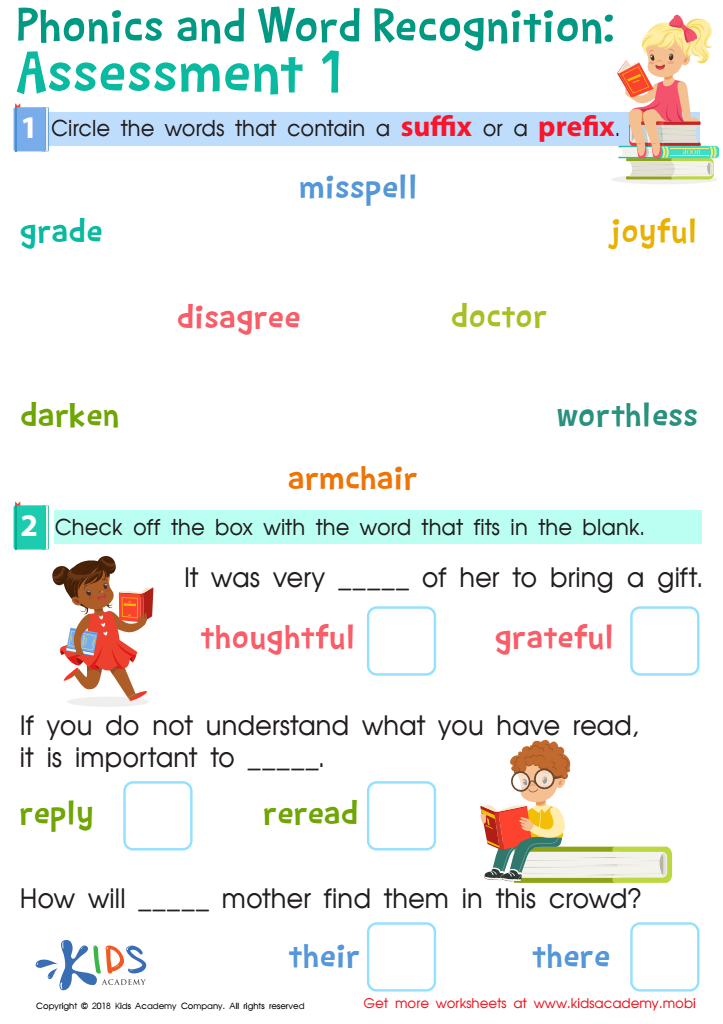
Phonics and Word Recognition: Assessment 1 Worksheet
Explain prefixes (words added to start of another word to give it a new meaning) and suffixes (added to end of word to change its meaning) to your kids with examples like 'unhappy' (prefix) and 'forgetful' (suffix). Now, help your child complete this worksheet, including circling words and checking boxes.
Phonics and Word Recognition: Assessment 1 Worksheet
Worksheet
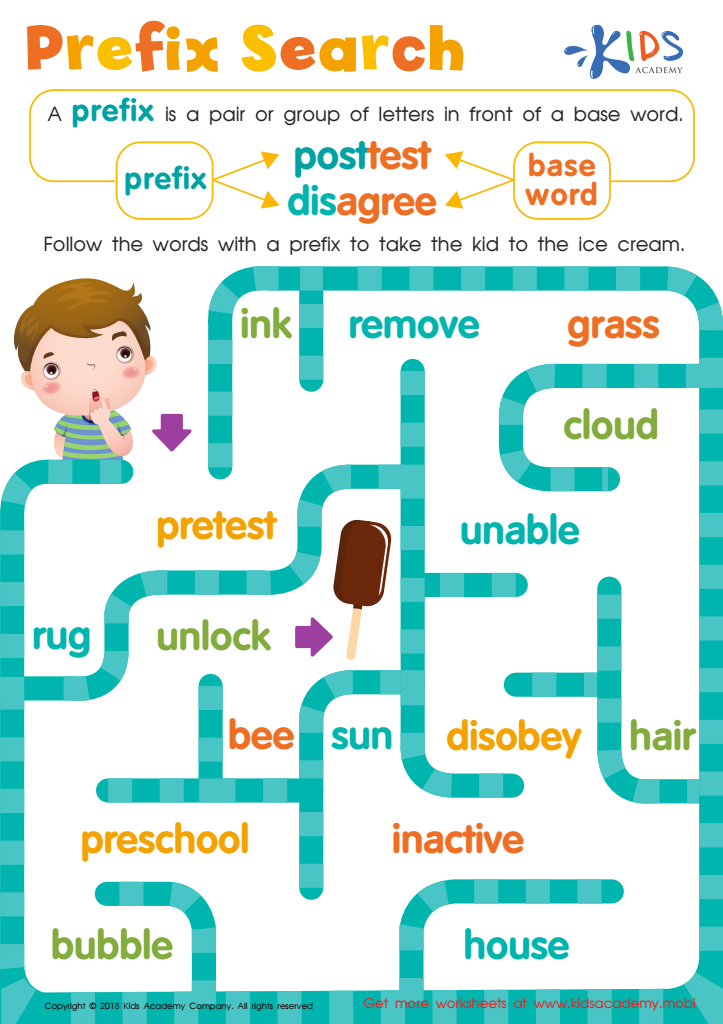
Reading: Prefix Search Worksheet
Maze your way through prefixes! This worksheet helps students practice reading new words with a prefix and figuring out the base word. An understanding of prefixes gives students the skills to comprehend new words. A fun and useful activity for the reading classroom!
Reading: Prefix Search Worksheet
Worksheet
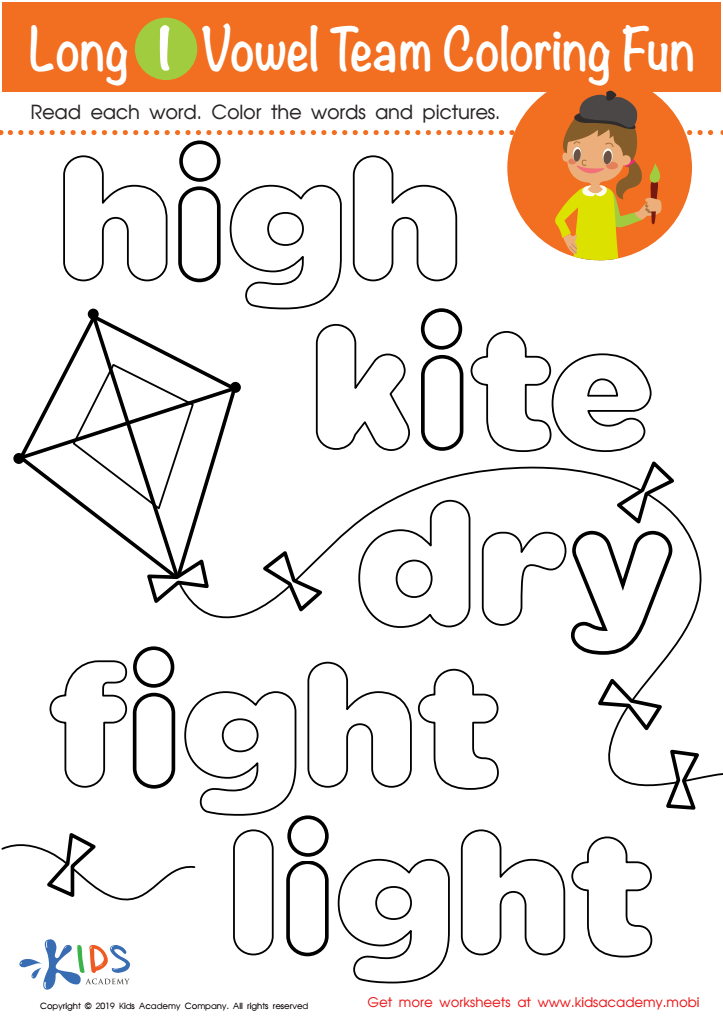
Long I Vowel Team Coloring Worksheet
This worksheet provides practice with letter combinations that make the long "i" sound while enhancing creativity and motor skills with a fun coloring activity. Unknowingly, new readers learn key phonics skills while having fun!
Download (PDF)
 Assign to My Students
Assign to My Students
Long I Vowel Team Coloring Worksheet
Worksheet
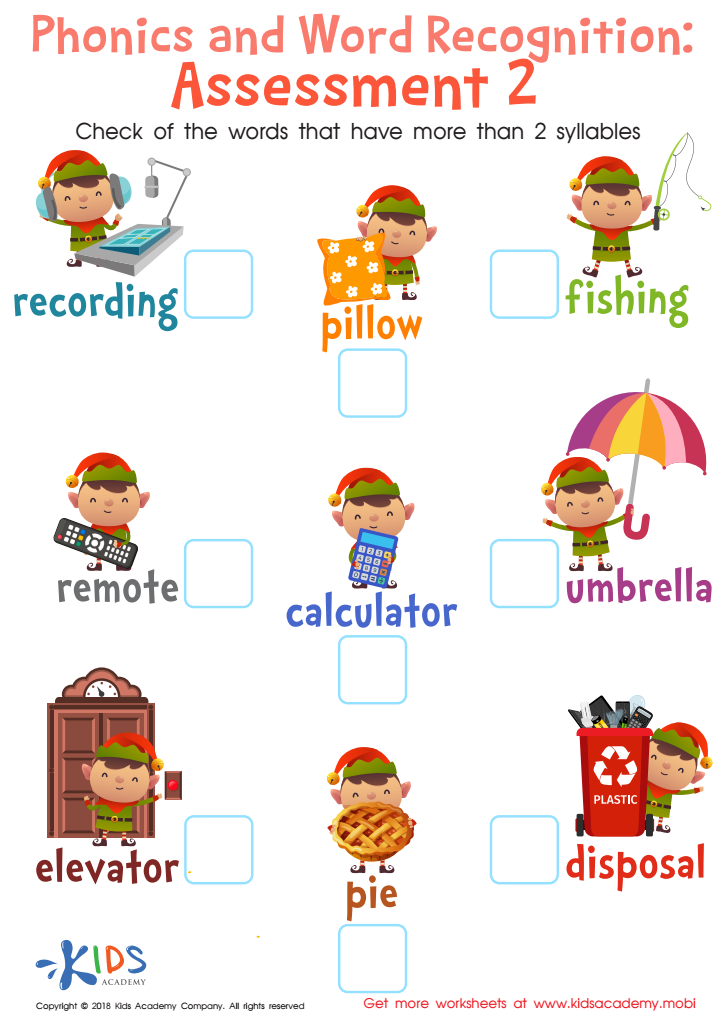
Phonics and Word Recognition: Assessment 2 Worksheet
Help your kids learn proper pronunciation by counting syllables. Most words they'll encounter have 1-3 syllables, making them simple to say. Have them repeat the words in your worksheet after you. Focus on longer words with more than two syllables.
Phonics and Word Recognition: Assessment 2 Worksheet
Worksheet
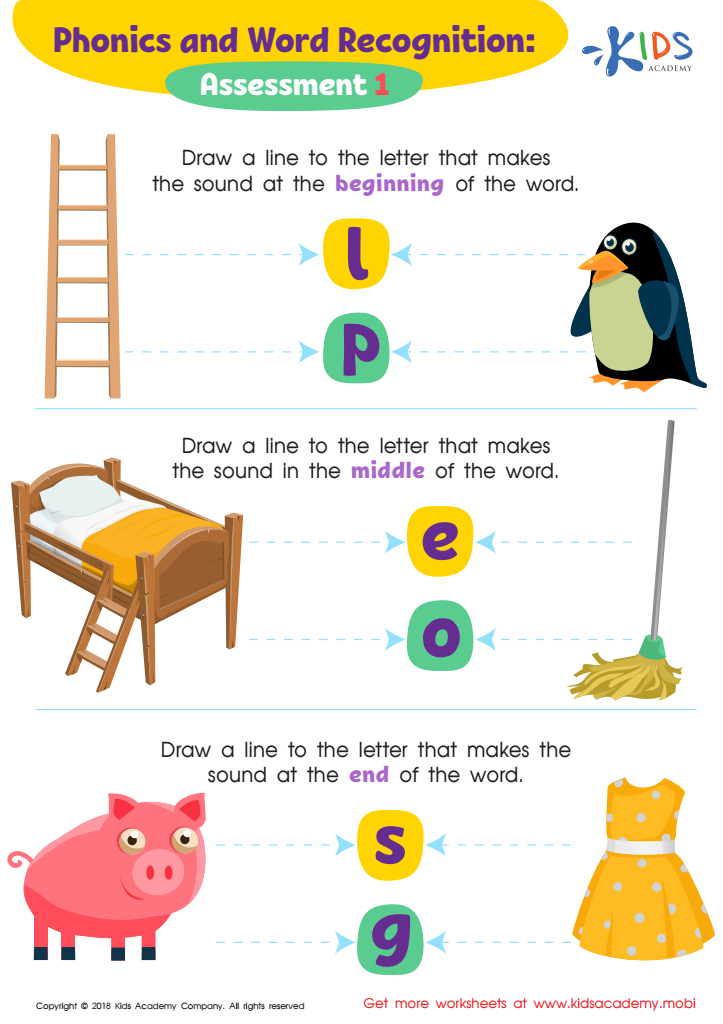
Phonics and Word Recognition: Assessment 1 ELA Worksheet
This fun worksheet tests your child's sound recognition skills for each part of a word. Ask your child to name each image and trace the line to match it with the corresponding letter. Listen for beginning sounds on 1st, middle sounds on 2nd, and ending sounds on 3rd. Encourage learning with this colorful and interactive activity!
Phonics and Word Recognition: Assessment 1 ELA Worksheet
Worksheet
Join Kids Academy for Free
Who is primarily going to use this learning content?








Word identification and phonics are crucial for children aged 5-8 as they lay the foundation for reading and writing skills. During this developmental stage, children are rapidly acquiring language and literacy skills. Understanding phonics helps students recognize the relationship between letters and sounds, enabling them to decode words independently. Proficient word identification is essential for comprehension and fluency, allowing children to focus on meaning rather than struggling with individual words.
For parents and teachers, fostering these skills has a direct impact on a child’s academic performance and confidence. Children who grasp phonics early are more likely to become proficient readers, enhancing their overall learning experience. Moreover, strong literacy skills at this age can prevent future educational struggles, contributing to long-term success in school and beyond.
Engaging parents in phonics activities and encouraging reading at home cultivates a supportive learning environment. Teachers can incorporate diverse strategies and materials to enhance word identification in their classrooms, catering to different learning styles. By prioritizing word identification and phonics, parents and teachers equip children with essential tools for lifelong learning, promoting not just academic achievement, but also a love for reading that stays with them for years to come.







