Normal Vowels and Consonants Worksheets for Ages 5-8 - Page 2
26 filtered results
-
From - To
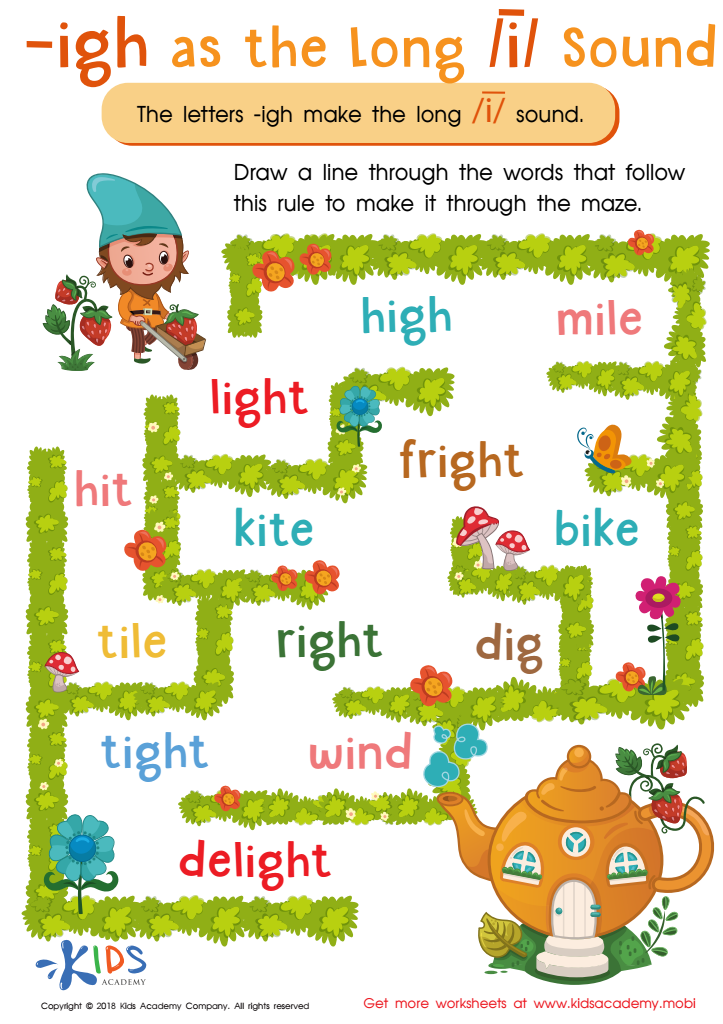
Reading: IGH as Long I Worksheet
 Assign to My Students
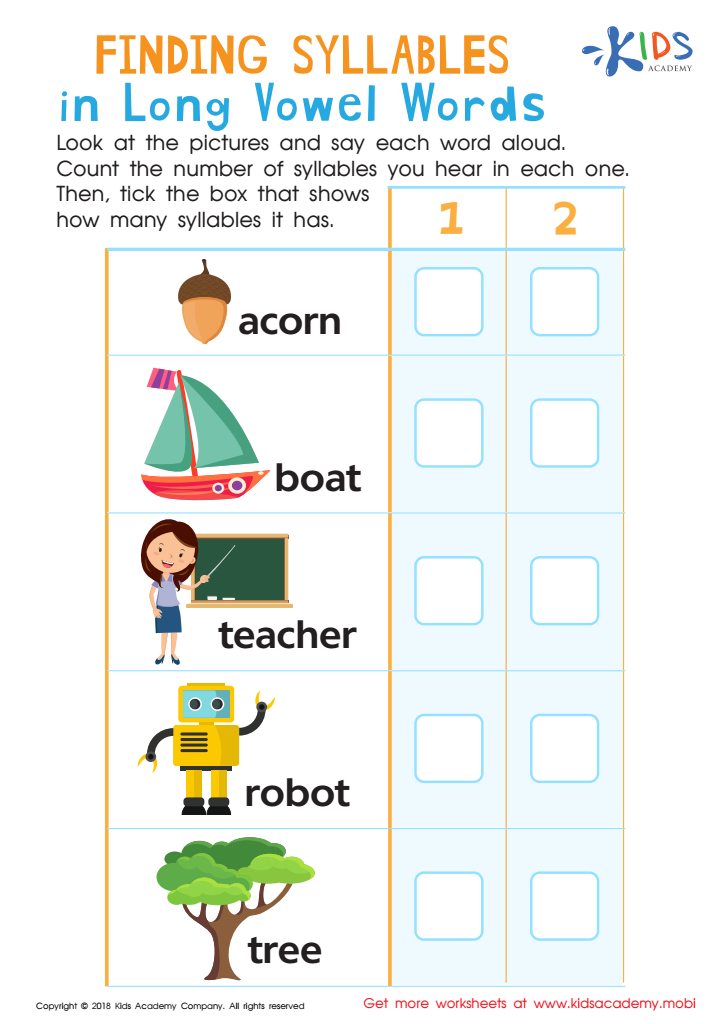
Finding Syllables in Long Vowel Words Worksheet



Parents and teachers have a vital role in guiding children's literacy development, particularly in learning normal vowels and consonants. This foundational knowledge is crucial for ages 5-8, a critical period for language acquisition and academic growth.
Understanding vowels and consonants helps build essential reading and writing skills. Vowels are pivotal for forming syllables, the building blocks of words. Consonants, on the other hand, offer structure and clarity to language. Mastery of these letters enables children to decode words, fostering fluency and comprehension.
Moreover, early mastery of these elements promotes confidence. As kids successfully learn to read and spell, their self-esteem grows, which positively impacts their broader academic engagement. Awareness of vowels and consonants supports effective communication, enhancing both verbal and written expression.
Teachers and parents focusing on these basics also set the stage for grasping more advanced literacy concepts like phonics, grammar, and syntax, reducing future learning hurdles. This knowledge foundation ensures smoother transitions to complex subjects, contributing to better educational outcomes.
Ultimately, investing time and resources to teach vowels and consonants ensures children possess the fundamental tools required for literacy, setting them on a path to lifelong learning and effective communication.