
Vowel Recognition Normal Vowels and Consonants Worksheets for Ages 5-8
6 filtered results
Difficulty Level
Grade
Age
-
From - To
Subject
Activity
Standards
Welcome to our Vowel Recognition Worksheets designed specifically for children ages 5-8! These engaging and interactive materials help young learners distinguish between normal vowels and consonants. Our worksheets include a variety of activities such as identifying, sorting, and matching vowels to enhance phonemic awareness. Ideal for both classroom and home use, these resources reinforce essential literacy skills in a fun and supportive way. As children work through the exercises, they will build confidence in their reading and writing capabilities. Explore our collection today and empower your little ones to master vowel recognition with ease!
Favorites
With answer key
Interactive
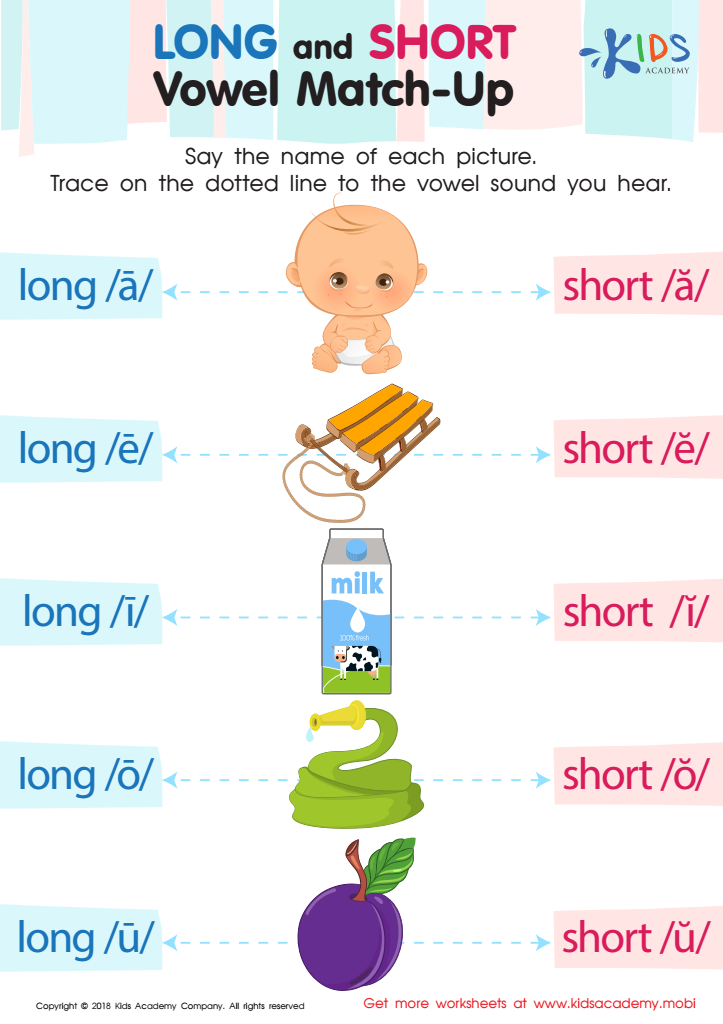
Long and Short Vowel Match up Reading Worksheet
Help your reader build confidence and refine their decoding skills! This worksheet combines long and short vowel recognition with a traceable component to improve fine motor skills. Your learner will name each picture and trace the dotted lines to get to the correct vowel sounds.
 Assign to My Students
Long and Short Vowel Match up Reading Worksheet
Worksheet
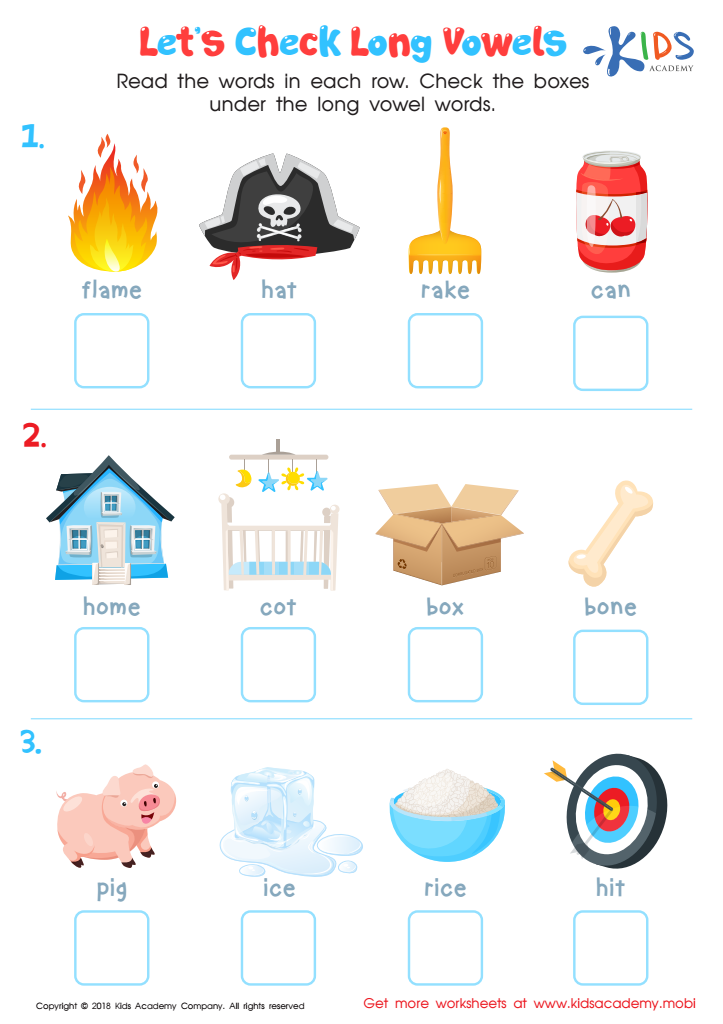
Let's Check Long Vowels: Assessment Worksheet
This worksheet helps your child identify objects and learn long vowel sounds. Ask them to say the names of the four objects in each row. Then, help them check the boxes to confirm they know the long vowel sounds. This will help them develop their reading skills.
Let's Check Long Vowels: Assessment Worksheet
Worksheet
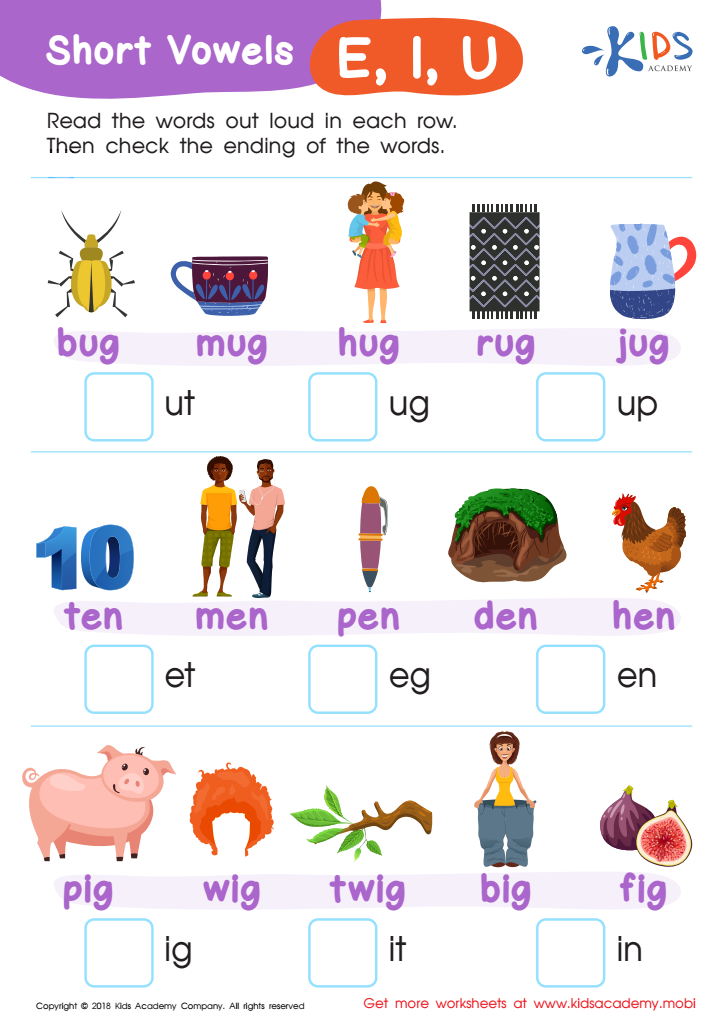
Short Vowels /e/, /i/, and /u/ Worksheet
Your emergent reader can have fun while practicing their short vowel sounds with this free, brightly colored worksheet. They'll identify one-syllable words by their pictures, then match the correct ending for each. They'll gain an understanding of how short vowel sounds vary in closed syllables with different endings, without even realizing it!
Short Vowels /e/, /i/, and /u/ Worksheet
Worksheet
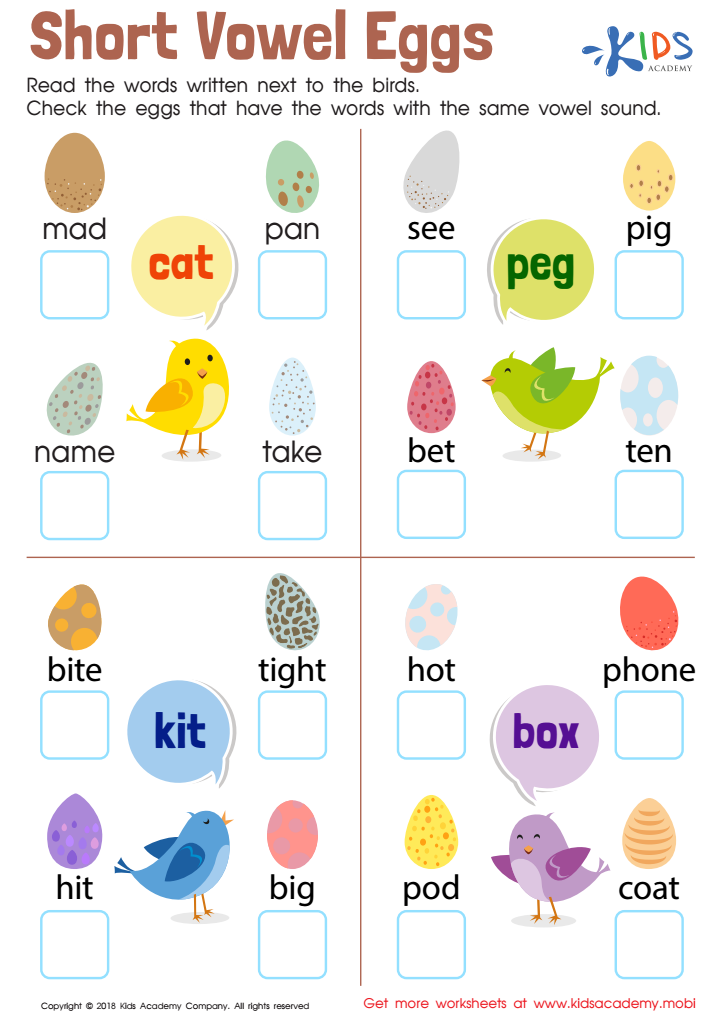
Short Vowel Eggs Worksheet
Your students will love helping these birdies pick the short vowel eggs! Have them read the words in the thought bubbles, then check off the boxes with the same short vowel sounds. The bright colors of this free Worksheet will draw them in and get them practicing their vowels!
Short Vowel Eggs Worksheet
Worksheet
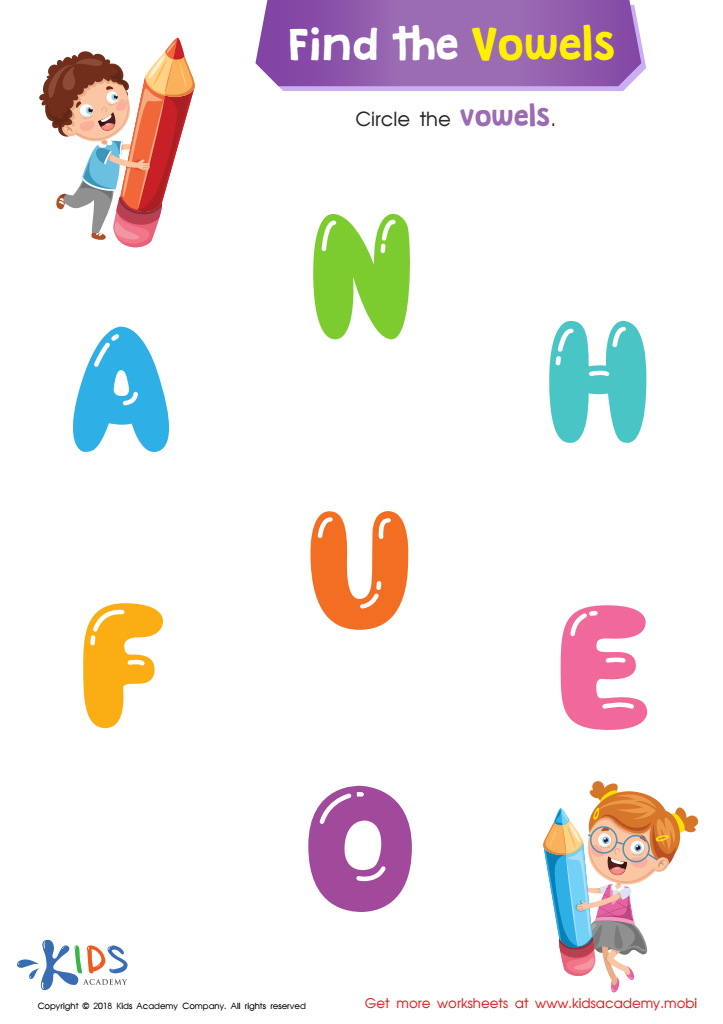
Find the Vowels Reading Worksheet
This worksheet helps kids identify vowels with bright colors and engaging activities to strengthen their visual discrimination and fine motor skills. Young learners will find it easy to succeed and be excited to keep reading!
Find the Vowels Reading Worksheet
Worksheet
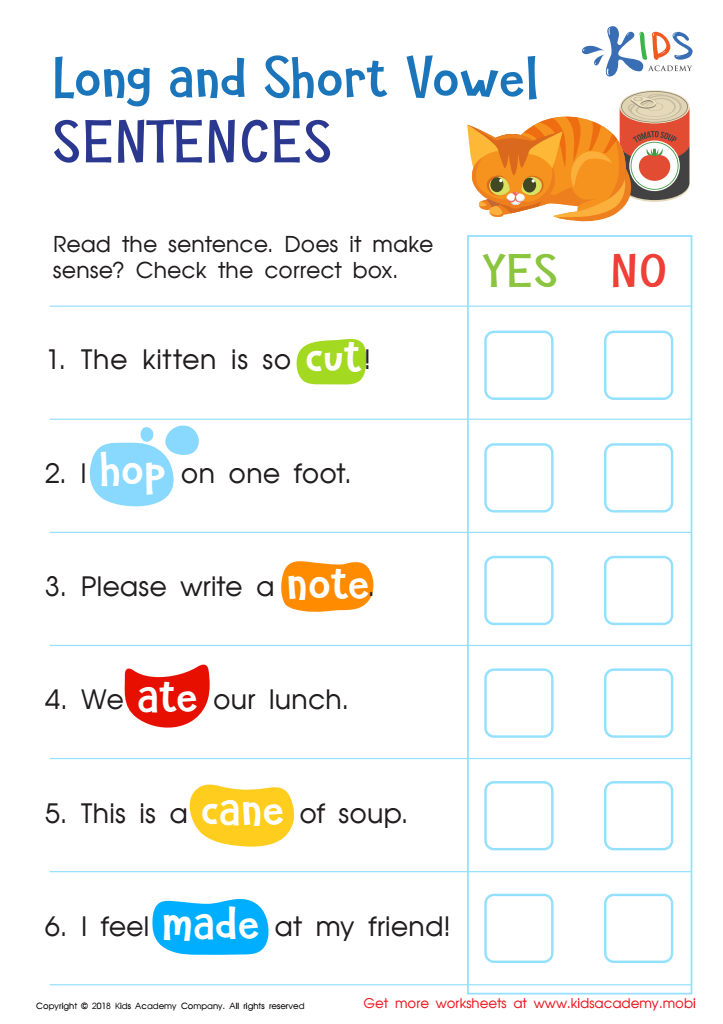
Long and Short Vowel Sentences: Assessment Worksheet
This printable worksheet helps kids practice differentiating between short and long vowel sounds. They'll use context clues to figure out which words make sense in simple sentences. A great way to build reading and writing skills!
Long and Short Vowel Sentences: Assessment Worksheet
Worksheet
Join Kids Academy for Free
Who is primarily going to use this learning content?



Vowel recognition, including recognizing normal vowels and consonants, is crucial for children aged 5-8 as it lays the foundation for reading and writing skills. During these formative years, children are typically learning letter sounds and basic phonics. Understanding vowels—specifically their sounds and roles in word formation—enables children to decode words more effectively.
Without strong vowel recognition, children may struggle with reading fluency and comprehension. Vowels are the backbone of most words and play a significant role in word meaning. As students encounter increasingly complex texts, a solid grasp of vowel sounds becomes critical for their ability to sound out words and understand how language works.
Moreover, recognizing consonants in conjunction with vowels helps children build their vocabulary and spelling skills. Activities that reinforce vowel-consonant relationships can promote phonemic awareness, an essential skill for literacy development.
Parents and teachers should care because these early literacy skills impact a child’s confidence and proficiency in reading, shaping their overall educational journey. By fostering strong vowel and consonant recognition, caregivers contribute significantly to a child's academic success and lifelong love of learning. Ultimately, this focus enriches their reading experience and prepares them for future literacy challenges.






