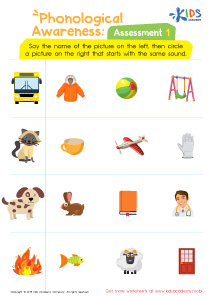
Phonics practice Normal Vowels Worksheets for Ages 5-8
9 filtered results
-
From - To
Boost your child's reading skills with our engaging Phonics Practice Normal Vowels Worksheets designed for ages 5-8. Our printable worksheets offer fun and effective exercises to help young learners recognize and master vowel sounds, an essential foundation for phonetic understanding. Through interactive activities, kids identify, pronounce, and match vowels within words, enhancing their reading fluency and comprehension. Ideal for both classroom and home use, these worksheets make learning a delightful experience, ensuring children stay engaged and motivated. Equip your child with the tools they need for reading success with our expertly crafted phonics worksheets.
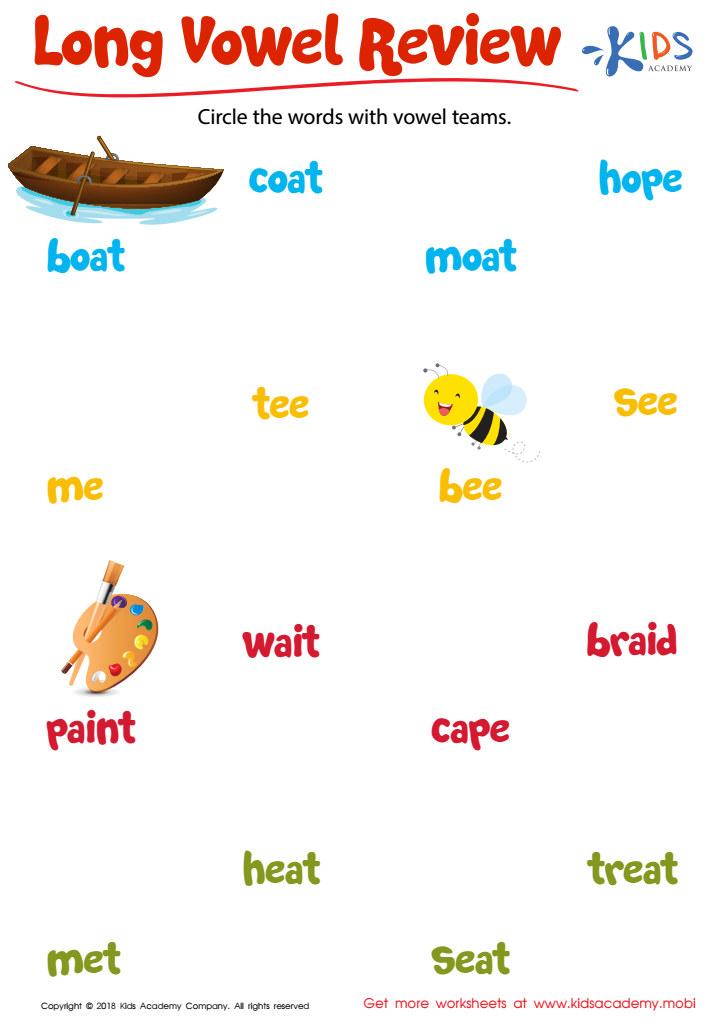
Long Vowel Review Worksheet
 Assign to My Students
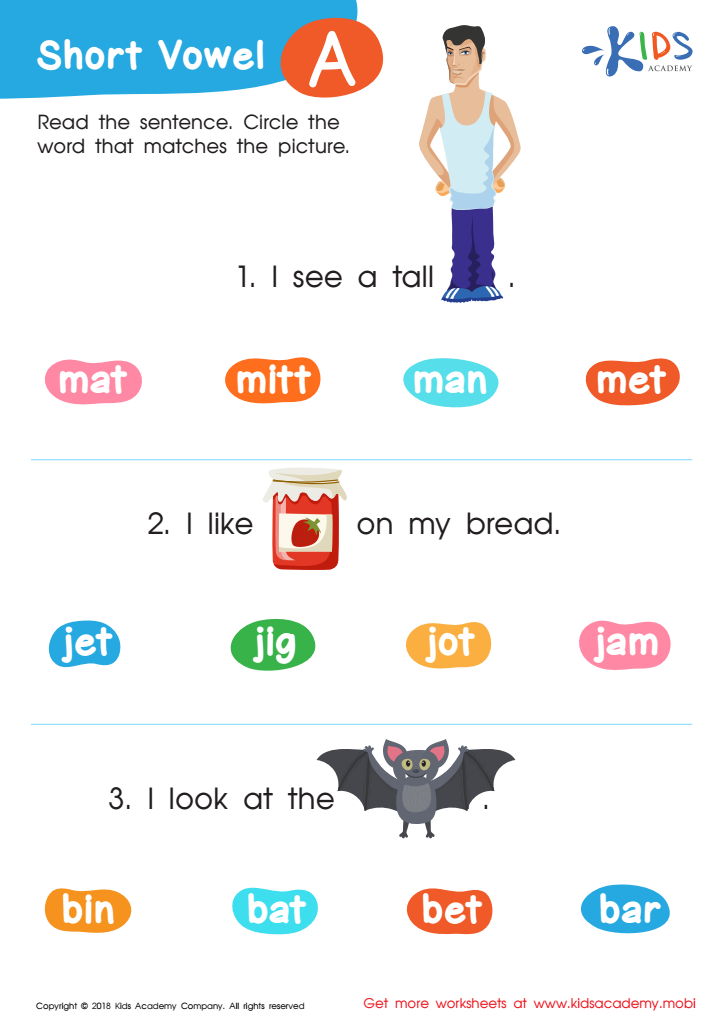
Short Vowel /a/ Worksheet
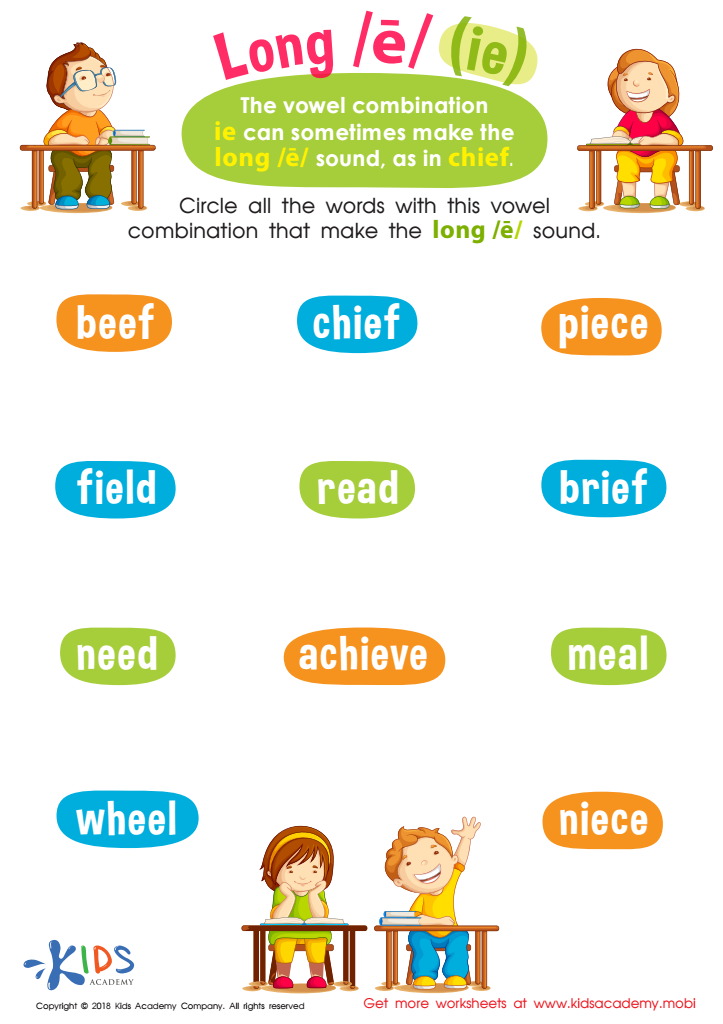
Reading: Long E and IE Worksheet
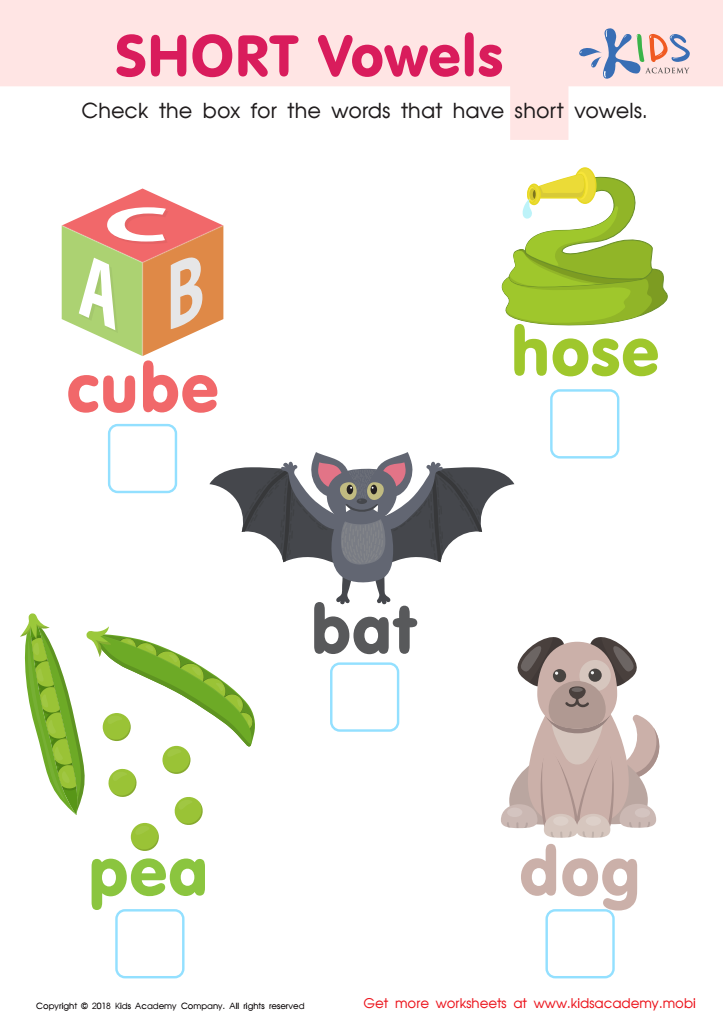
short vowels Worksheet
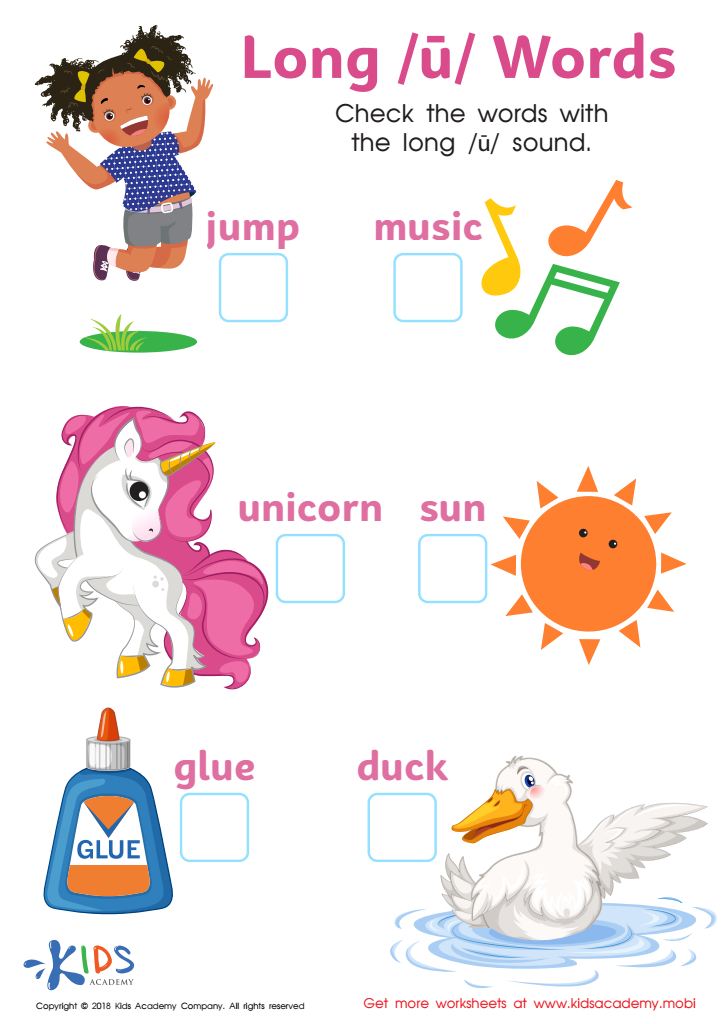
Long U Words Reading Worksheet
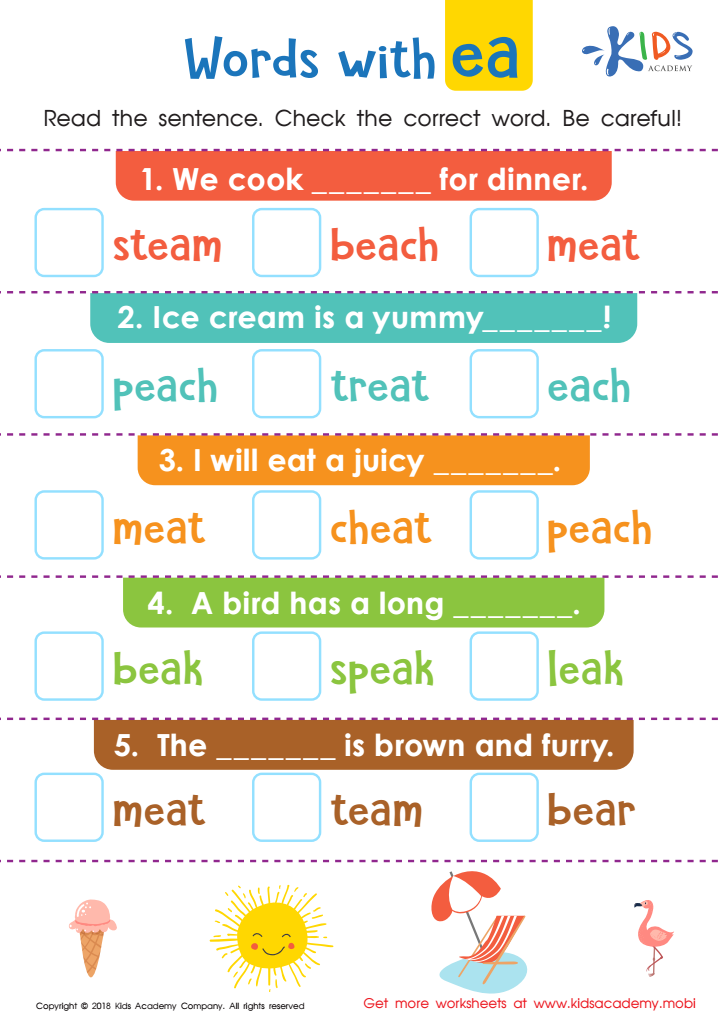
Words with ea Worksheet
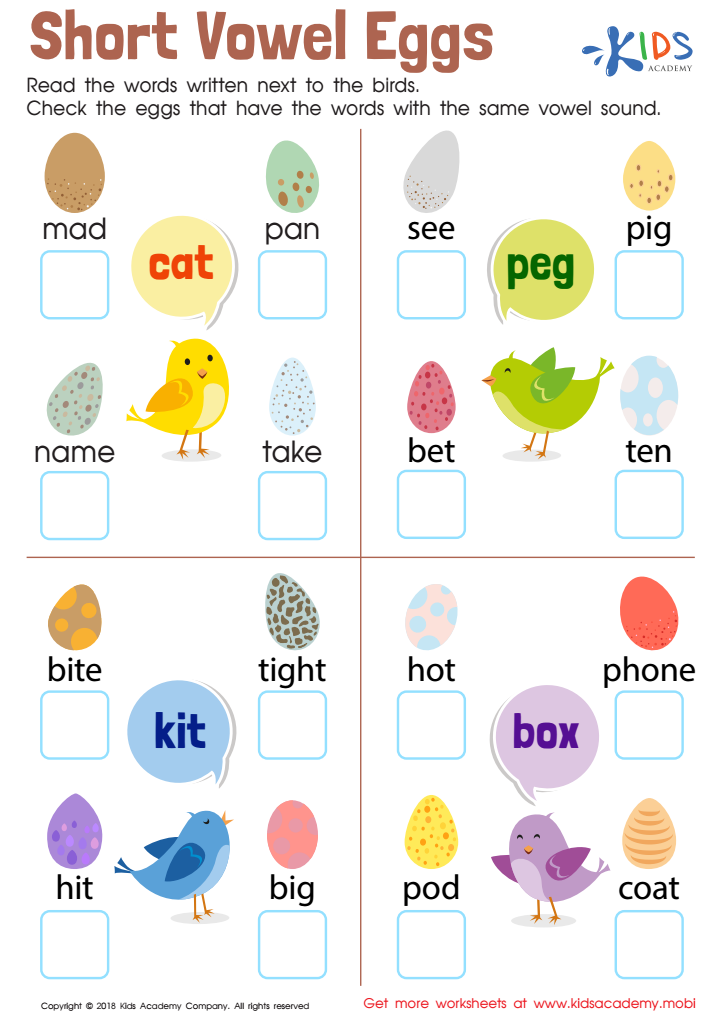
Short Vowel Eggs Worksheet
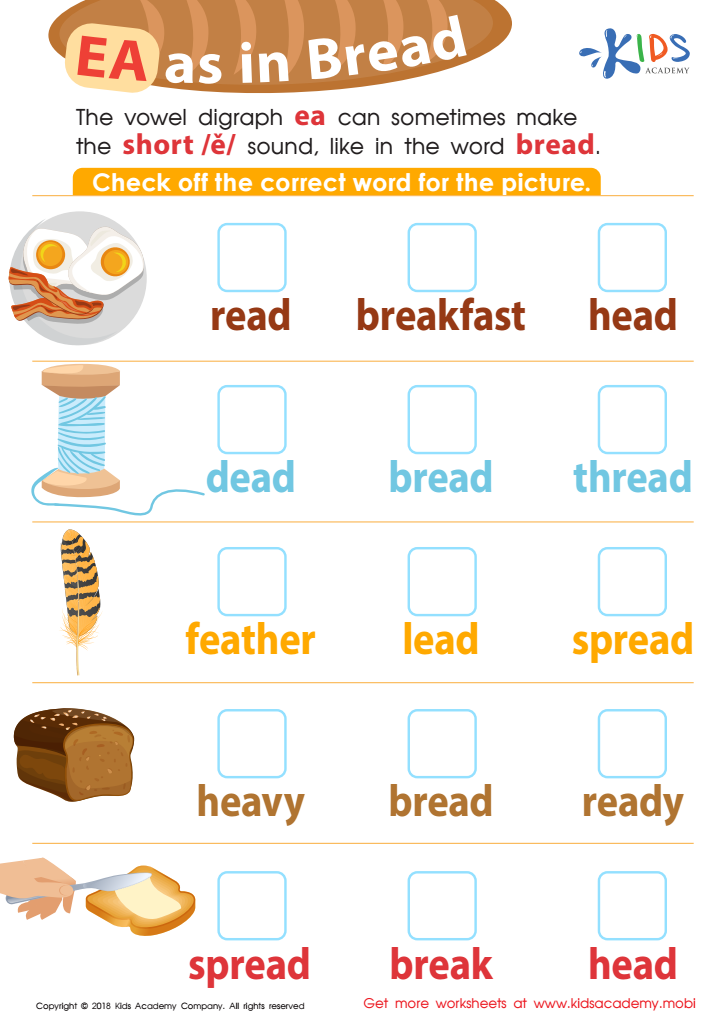
Reading: EA as in Bread Worksheet
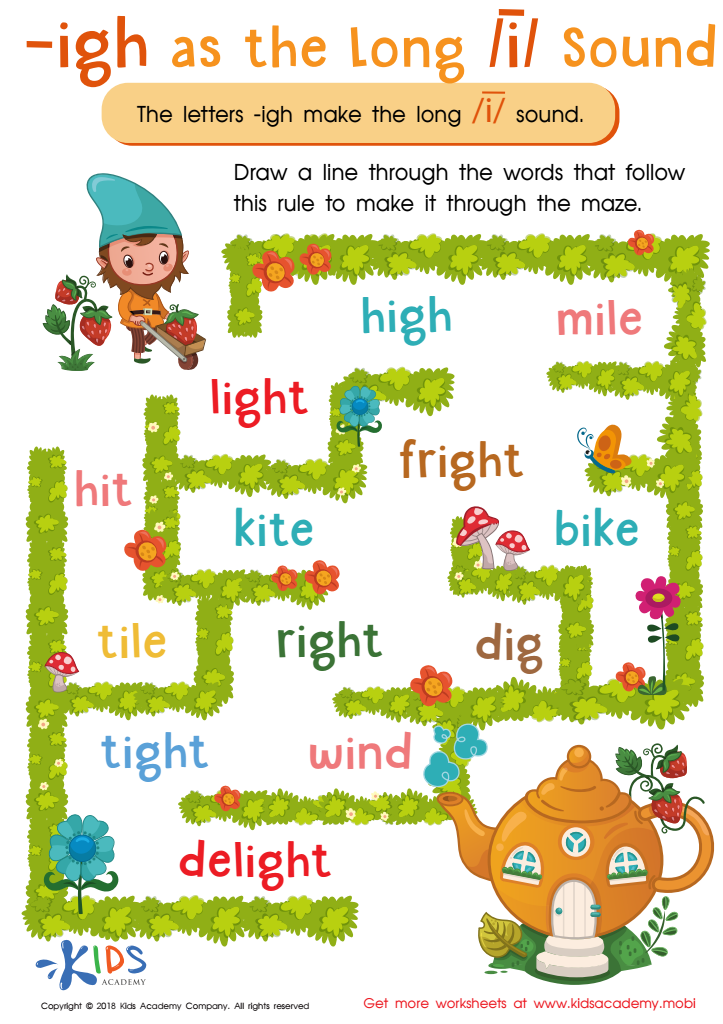
Reading: IGH as Long I Worksheet





Phonics practice with normal vowels (a, e, i, o, u) is essential for young learners ages 5-8, as it lays the foundational skills for reading and writing. During these formative years, children transition from recognizing alphabetic letters to developing an understanding of sounds and how they combine to form words. Phonics helps bridge this gap by teaching the relationships between letters and their corresponding sounds.
Proficiency in identifying normal vowel sounds is crucial because vowels appear in almost every word, affecting pronunciation and meaning. For instance, mispronunciation due to vowel confusion can lead to misunderstandings and frustration while reading. By practicing phonics with normal vowels, children learn to decode words, an essential step in achieving reading fluency. Early mastery of these skills can boost a child’s confidence, encouraging a love of reading that is linked to academic success across subjects.
Moreover, phonics practice aids in spelling and writing. As children practice sounding out words, they learn to encode sounds correctly, reducing errors when writing. It provides them with strategies to tackle new and unfamiliar words, fostering independent learning.
In conclusion, phonics practice with normal vowels for ages 5-8 is a critical educational building block, supporting literacy development and setting the stage for lifelong learning and communication skills.