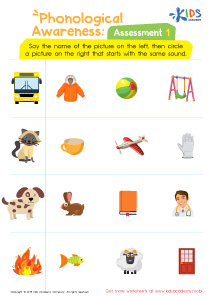
Sound differentiation Normal Vowels Worksheets for Ages 5-8
3 filtered results
-
From - To
Our "Sound Differentiation Normal Vowels Worksheets for Ages 5-8" are designed to help young learners master vowel sounds through engaging activities. Tailored for early elementary students, these worksheets focus on distinguishing short and long vowel sounds, enhancing reading and pronunciation skills. Featuring fun, interactive exercises, kids will enjoy matching, tracing, and filling in the blanks while understanding vowel variations. Perfect for both classroom and at-home practice, our worksheets support foundational literacy, making vowel learning accessible and enjoyable for children. Download now and watch your child’s confidence and proficiency in vowel sounds flourish!
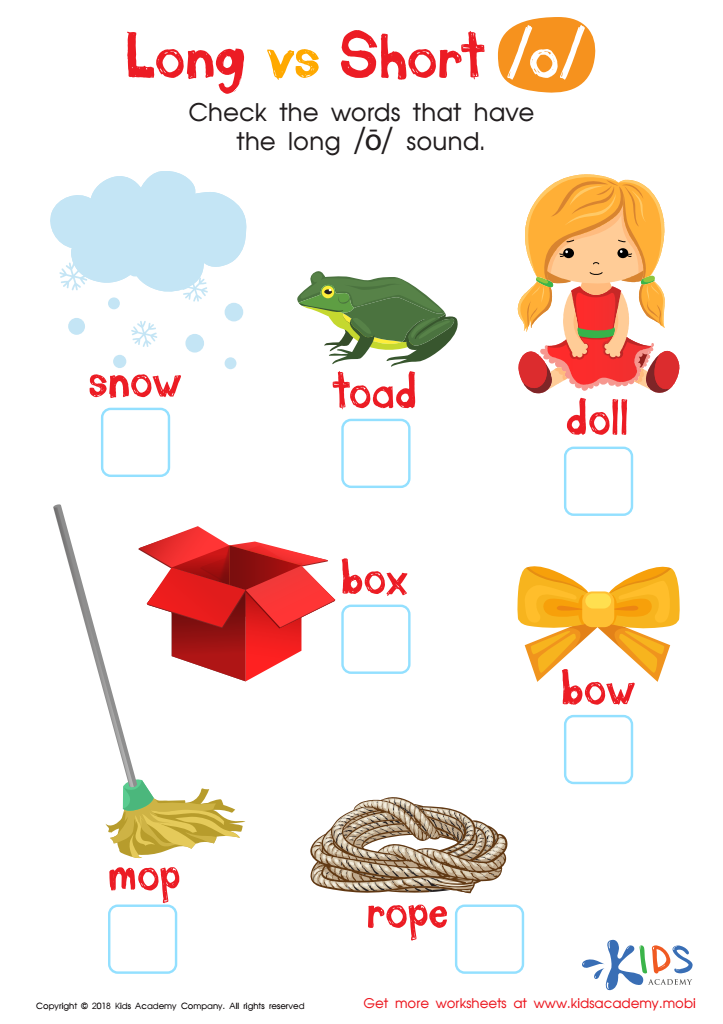
Long vs Short O Reading Worksheet
 Assign to My Students
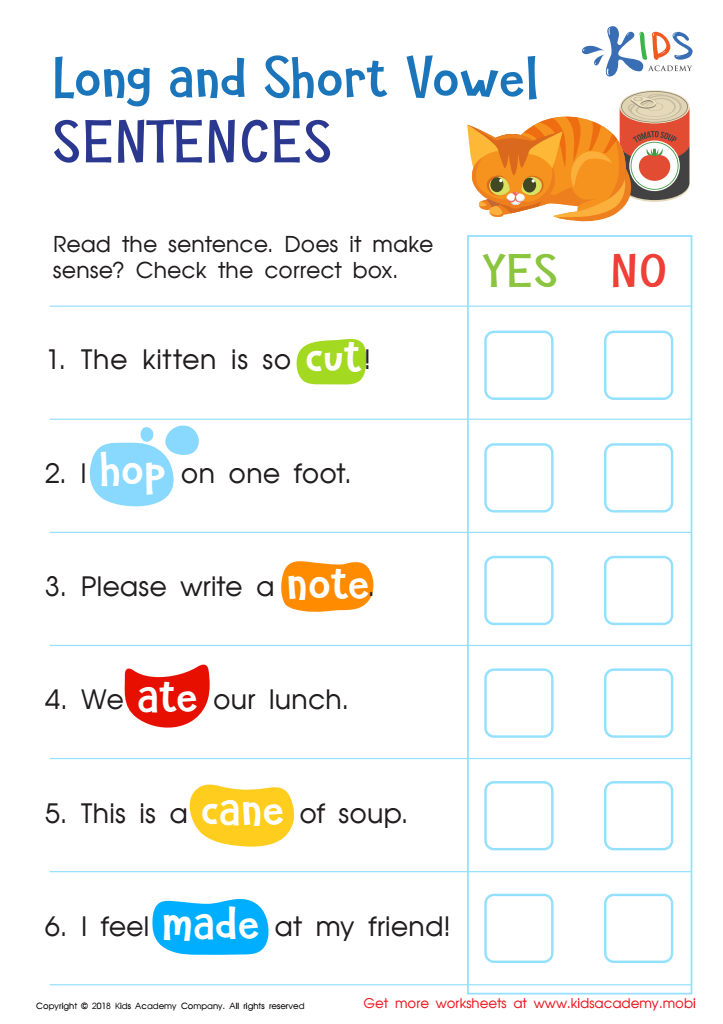
Long and Short Vowel Sentences: Assessment Worksheet
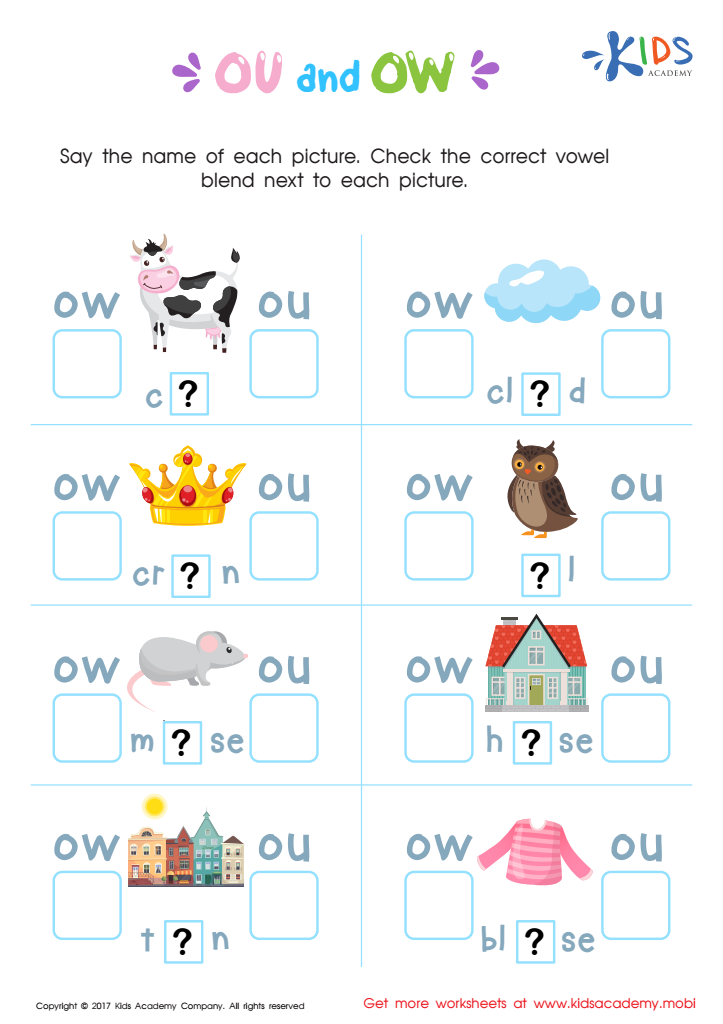
OU and OW Words Worksheet





Sound differentiation, specifically recognizing normal vowels, is fundamental for early literacy development in children aged 5-8. At this stage, children's brains are incredibly receptive to language acquisition, making it a crucial period for laying the groundwork for reading and writing skills.
Firstly, vowels form the core of the phonetic structure of words. Being able to identify and differentiate between normal vowel sounds aids in phonemic awareness, which is the ability to hear, identify, and manipulate phonemes—the smallest units of sound that make up words. Phonemic awareness is a critical predictor of future reading success. When children can distinguish vowel sounds, they are better equipped to decode words, enabling them to sound out and spell new words with greater ease.
Secondly, mastery of vowel sounds boosts confidence in oral and written communication. It helps children pronounce words accurately, fostering clearer speaking skills. This forms a foundation for effective verbal interaction, an essential skill both within and outside the classroom.
Lastly, early proficiency in vowel differentiation can prevent future literacy challenges. Children who struggle with identifying vowel sounds often find reading and writing more challenging, which can impact their overall academic performance. By focusing on vowel differentiation during these formative years, parents and teachers can set children on a path to becoming proficient readers and confident learners, setting them up for long-term educational success.