Basic Mathematics Normal Worksheets for Ages 5-8
5 filtered results
-
From - To
Discover our "Basic Mathematics Normal Worksheets for Ages 5-8," designed to build a strong foundation in math for young learners. These engaging, printable worksheets cover essential skills such as counting, addition, subtraction, patterns, and shape recognition, ensuring children develop confidence and proficiency in math. Each worksheet is crafted with vibrant illustrations and child-friendly layouts to make learning enjoyable and effective. Perfect for homeschooling or classroom activities, our resources support individualized learning and progress tracking. Help your child excel in math with fun and interactive worksheets that make mastering basic concepts an exciting adventure in learning!
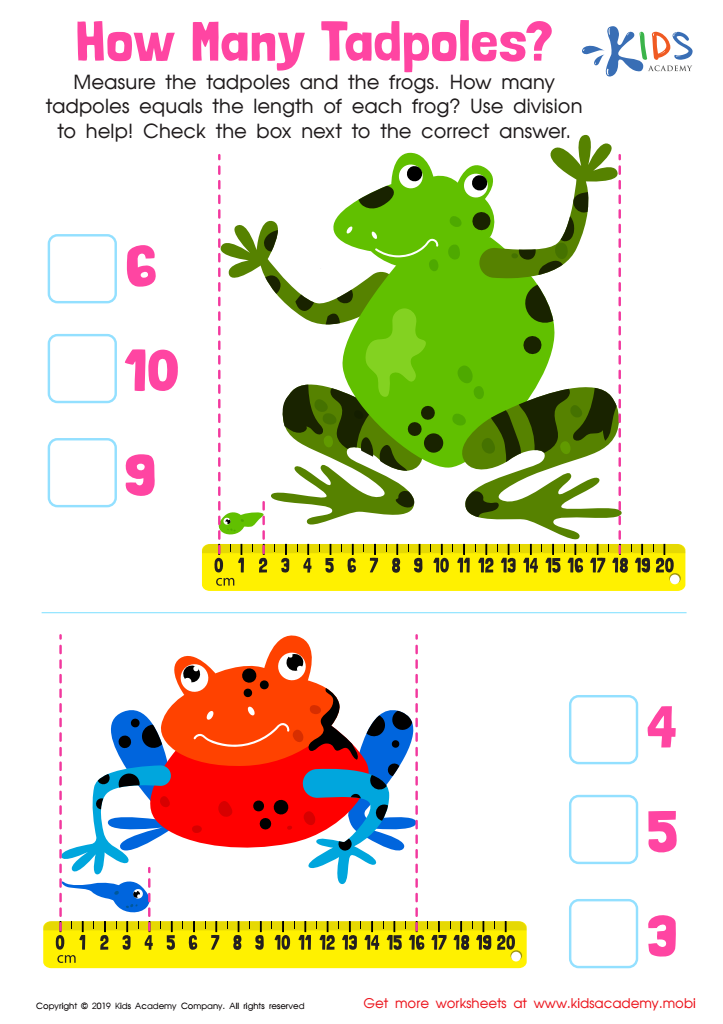
How Many Tadpoles Worksheet
 Assign to My Students
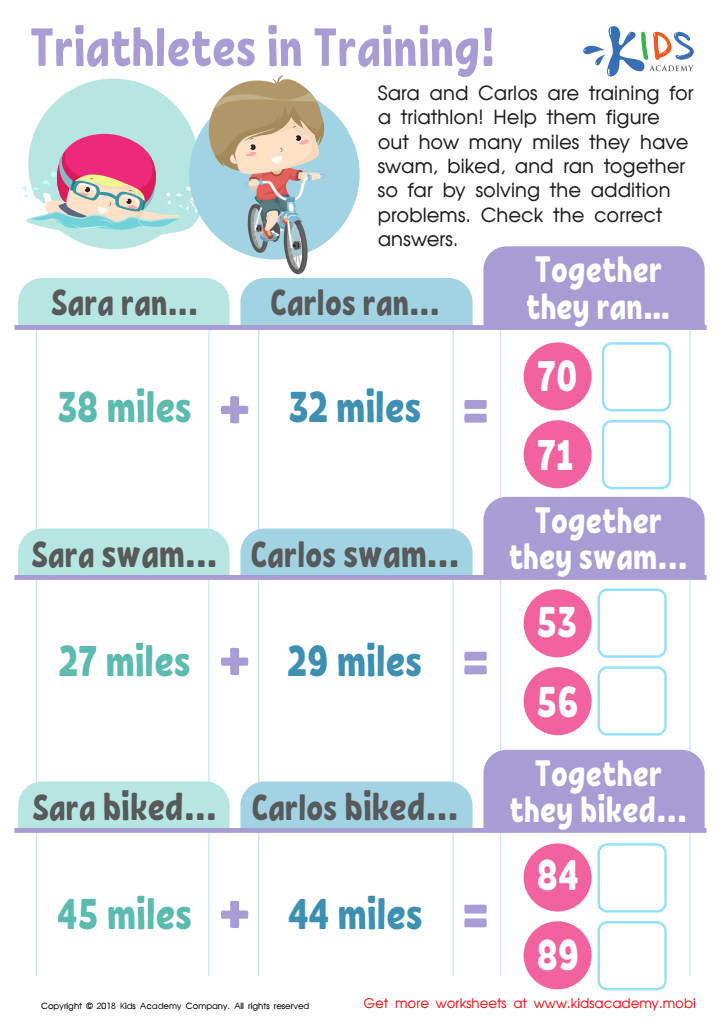
Triathletes in Training Worksheet
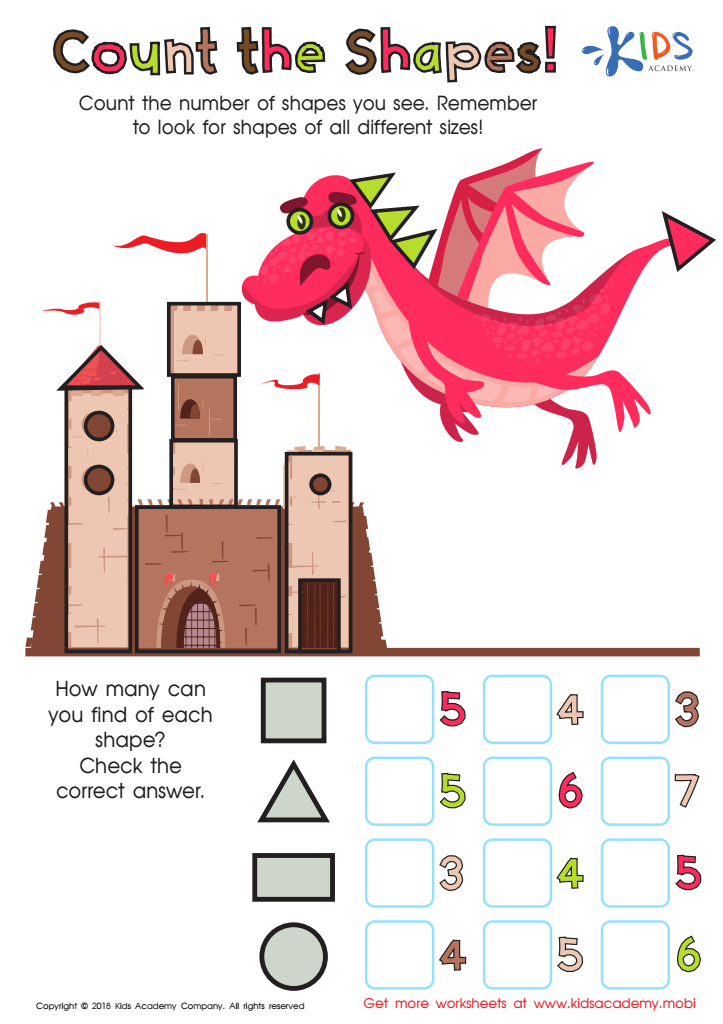
Count the Shapes Worksheet
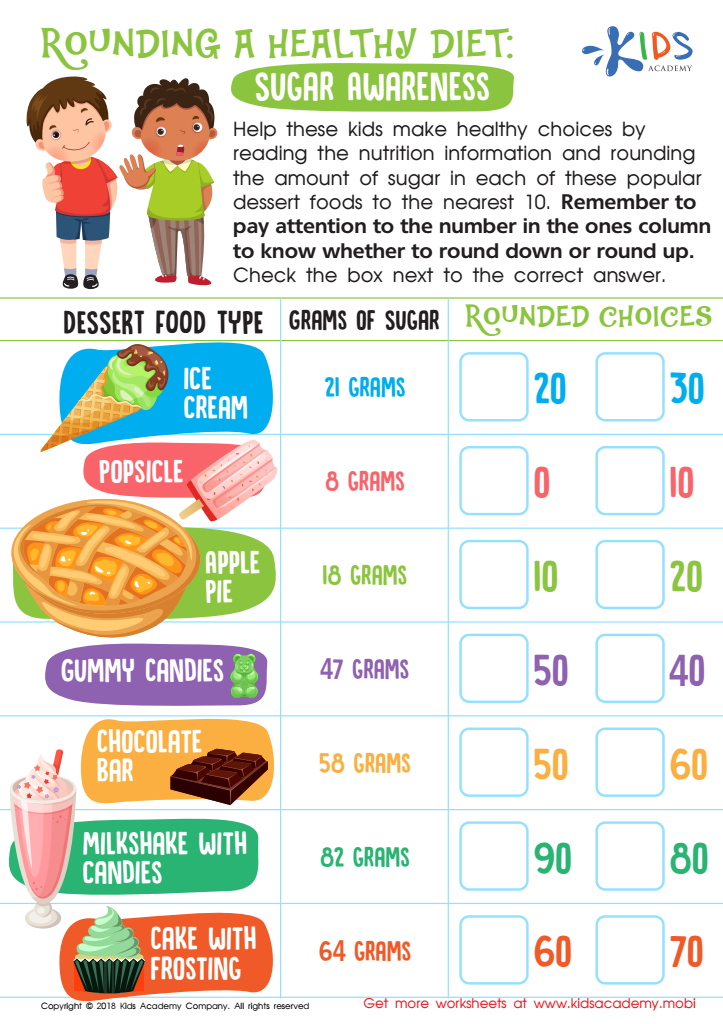
Rounding Healthy Diet Worksheet
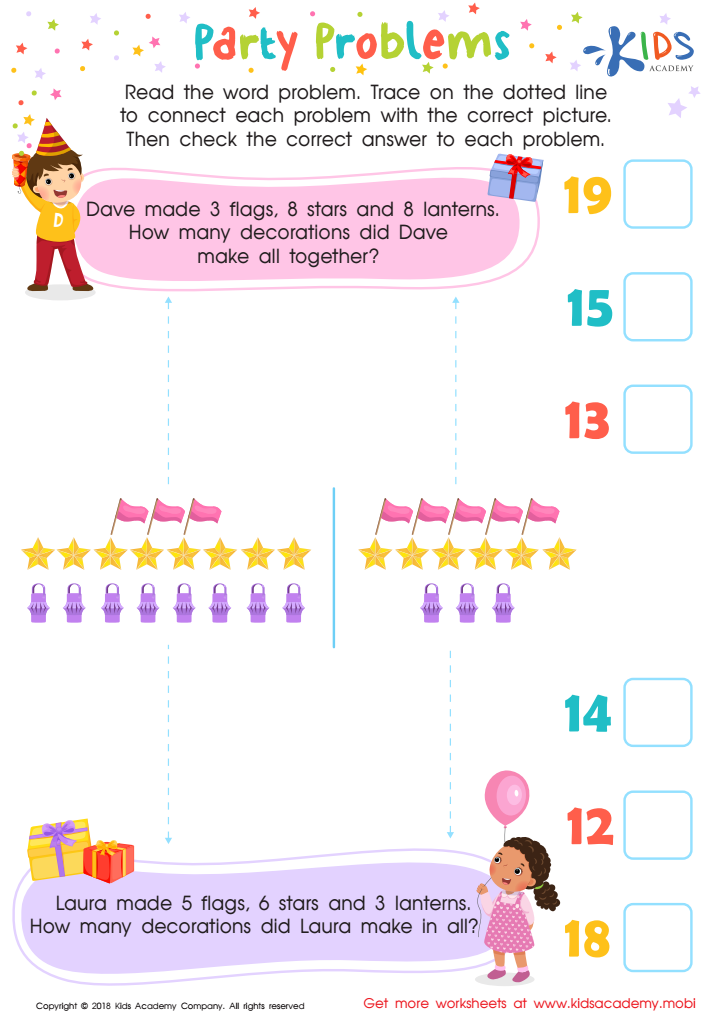
Party Problems Worksheet








Parents and teachers should prioritize basic mathematics for children aged 5-8 because it lays the foundation for all future learning. Mastering fundamental math concepts such as counting, addition, subtraction, and recognizing patterns helps develop critical thinking and problem-solving skills. During these formative years, children’s brains are highly receptive, making it an ideal time to cultivate an interest in mathematics.
Engaging with basic math boosts confidence, as children see tangible progress through skills mastery. Understanding math is not just about numbers; it enhances logical reasoning and decision-making abilities which are essential throughout life. It also supports other subjects, such as science and economics, fostering a well-rounded education.
Furthermore, early mathematical competency correlates strongly with later academic achievement. Teachers and parents can make learning fun and relatable through games and real-world applications. This creates positive associations with math, encouraging lifelong learning.
Ultimately, investing in basic mathematics education for kids leads to proficient, confident learners prepared to tackle more complex concepts in the future. Ultimately, a strong grasp of basic mathematics empowers students to navigate the world around them, contributes to societal literacy, and equips them for various career paths in a rapidly evolving workforce.








