Community awareness Normal Worksheets for Ages 5-8
3 filtered results
-
From - To
Introducing our Community Awareness Normal Worksheets for Ages 5-8! These engaging and interactive worksheets are designed to help young learners understand the importance of their community and develop essential social skills. Each activity encourages kids to explore their surroundings, recognize community helpers, and learn about the various roles people play in creating a safe and vibrant environment. With age-appropriate illustrations and clear instructions, these worksheets make learning fun and effective. Perfect for home or classroom use, our community awareness worksheets will nurture empathy, responsibility, and teamwork in early learners as they discover how they can contribute positively to their communities.
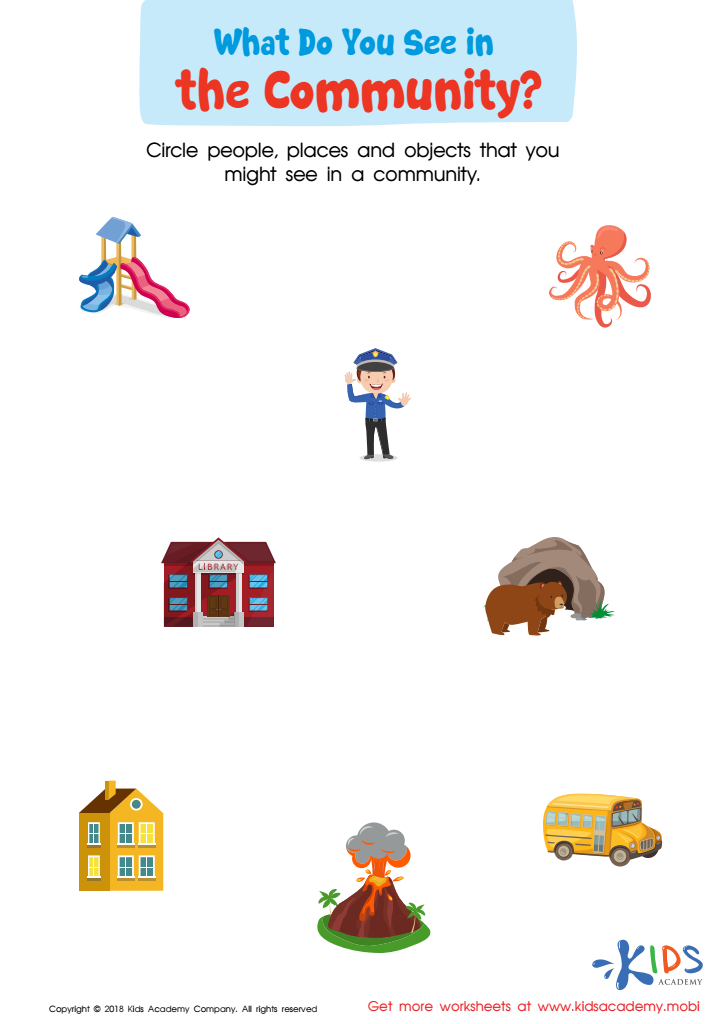
What Do You See in the Community Worksheet
 Assign to My Students
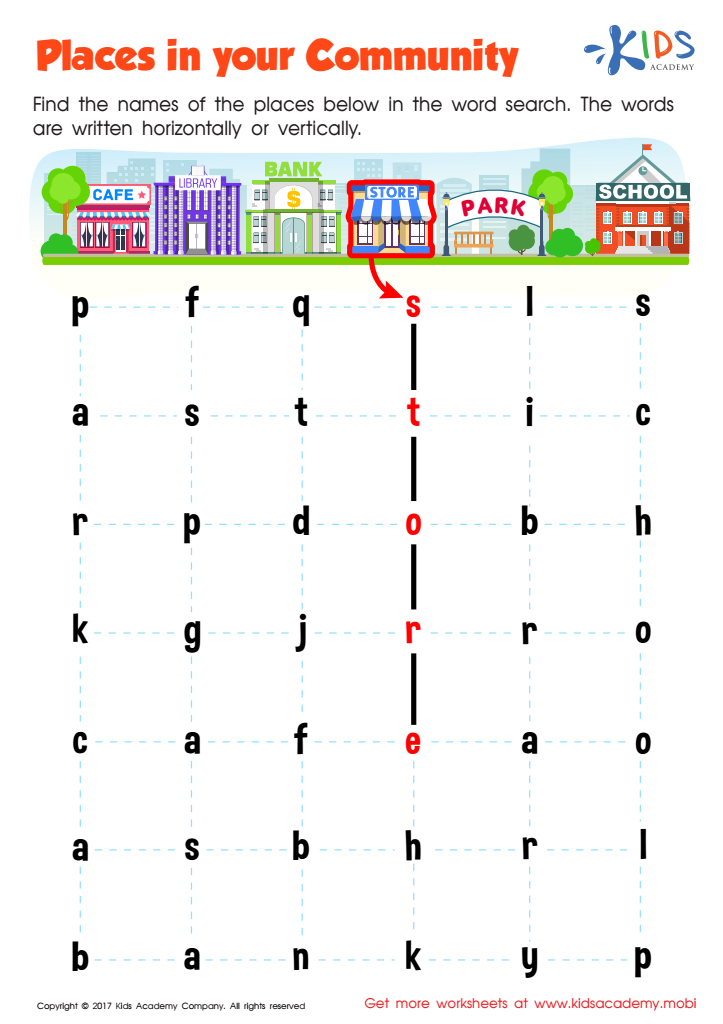
Places in Your Community Worksheet
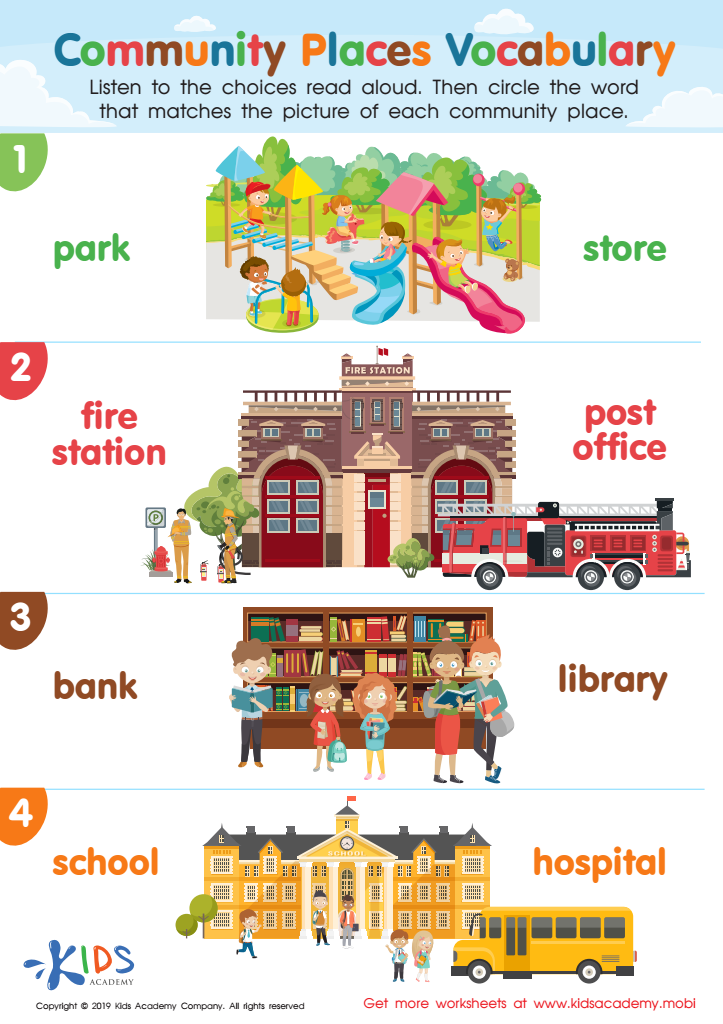
Community Places Vocabulary Worksheet



.jpg)



Community awareness is crucial for young children aged 5-8, and parents and teachers play a vital role in fostering this understanding. At this age, children are eager to explore and connect with their surroundings, making it essential to help them recognize their place within their community. Understanding community norms and values cultivates empathy, respect, and teamwork, essential qualities for social development.
Parents and teachers should care about community awareness because it enhances a child’s sense of belonging and safety. Familiarity with community resources, such as libraries, parks, and cultural centers, empowers children to engage in learning and recreational activities, promoting holistic development. It also encourages children to appreciate diverse perspectives by interacting with various cultures and lifestyles within their community.
Moreover, community awareness can instill civic responsibility, teaching children the importance of participation and contribution to local initiatives. This could include learning about recycling programs or volunteering, planting the seeds of active citizenship.
Encouraging community awareness in early childhood not only enriches children's educational experiences but also lays the foundation for building strong, connected communities in the future. By nurturing this understanding, parents and teachers can guide children toward becoming compassionate and informed members of society.








