Grammar application Normal Worksheets for Ages 5-8
3 filtered results
-
From - To
Welcome to our Grammar Application Normal Worksheets for Ages 5-8! Our engaging worksheets are designed to help young learners develop essential grammar skills in a fun and interactive way. Tailored for children in early grades, these resources cover key concepts like sentence structure, punctuation, and parts of speech, providing a solid foundation for effective communication. With a variety of exercises, including fill-in-the-blank and matching games, children will enjoy exploring grammar through colorful visuals and relatable examples. Perfect for home or classroom use, our worksheets aim to foster a love for language while enhancing literacy skills in an enjoyable learning environment. Explore today!
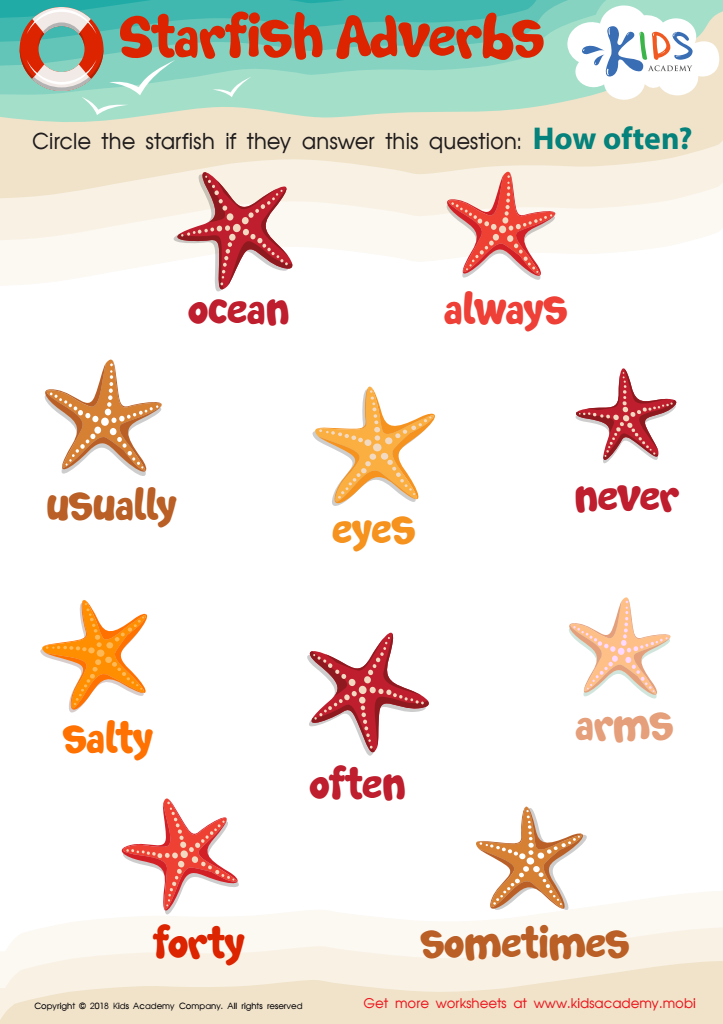
Starfish Adverbs Worksheet
 Assign to My Students
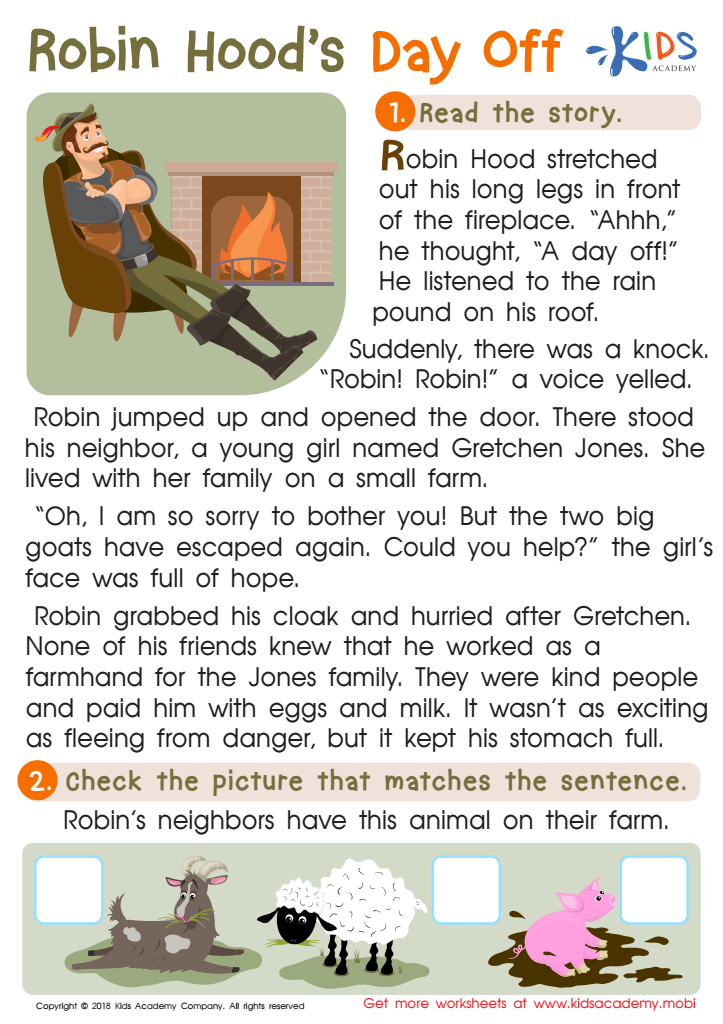
Robin Hood's Day Off Worksheet
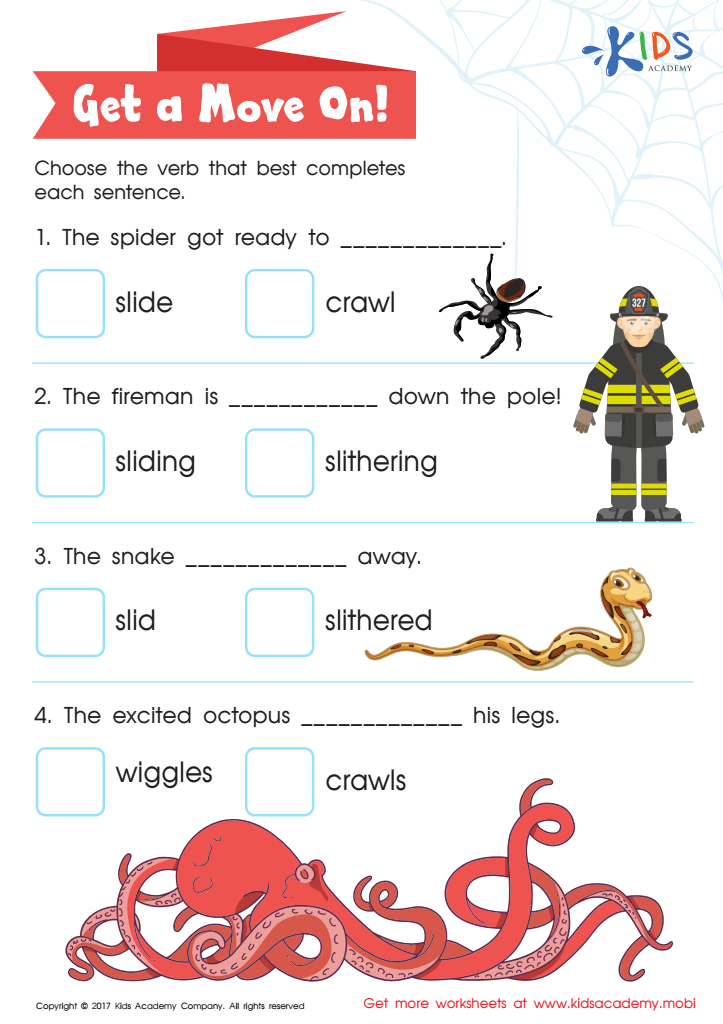
Verb Worksheet








Parents and teachers should care about grammar application for children aged 5-8 because the foundational years of language development are crucial for effective communication and academic success. At this age, children are not only learning to read and write but also developing essential cognitive skills. Understanding the basic rules of grammar helps them structure their sentences clearly, fostering better expression of ideas and feelings.
Grammar also plays a significant role in reading comprehension. When children grasp grammatical concepts, they can make sense of sentence structures, which enhances their ability to read and understand texts. As they transition from oral to written language, good grammar practices empower them to convey their thoughts more confidently.
Moreover, positive habits formed during these early years set the stage for future learning. Developing a strong grasp of grammar helps prevent confusion as they progress to more complex language tasks in later grades. Engaging parents in their child's language journey encourages supportive reading and writing activities, reinforcing the partnership between home and school. Ultimately, prioritizing grammar application equips young learners with the communication skills they need to navigate both academic environments and everyday interactions effectively.








