Identifying story elements Normal Worksheets for Ages 5-8
3 filtered results
-
From - To
Unlock your child’s storytelling potential with our "Identifying Story Elements Normal Worksheets" designed specifically for ages 5-8. These engaging worksheets help young learners recognize essential story elements such as characters, setting, plot, and more. Each activity encourages critical thinking and comprehension skills, fostering creativity and a love for reading. Perfect for both classroom use and homeschooling, our printable resources make learning fun and accessible. Enhance your child's understanding of narrative structure while they enjoy colorful illustrations and interactive exercises. Dive into the world of stories and help your child become a confident storyteller today!
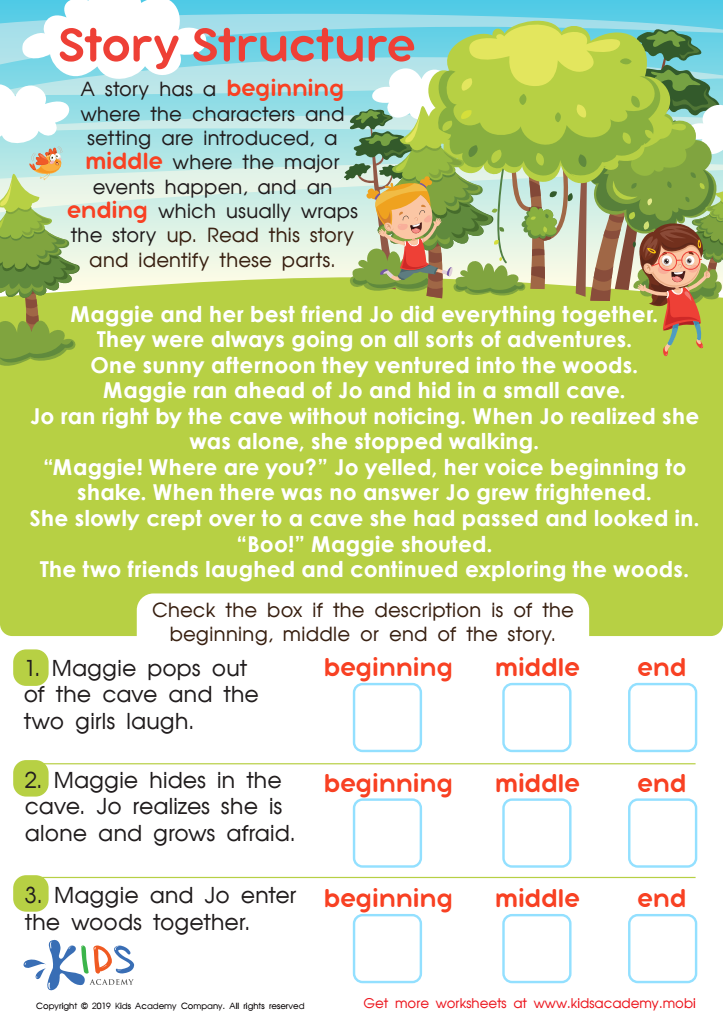
Story Structure Worksheet
 Assign to My Students
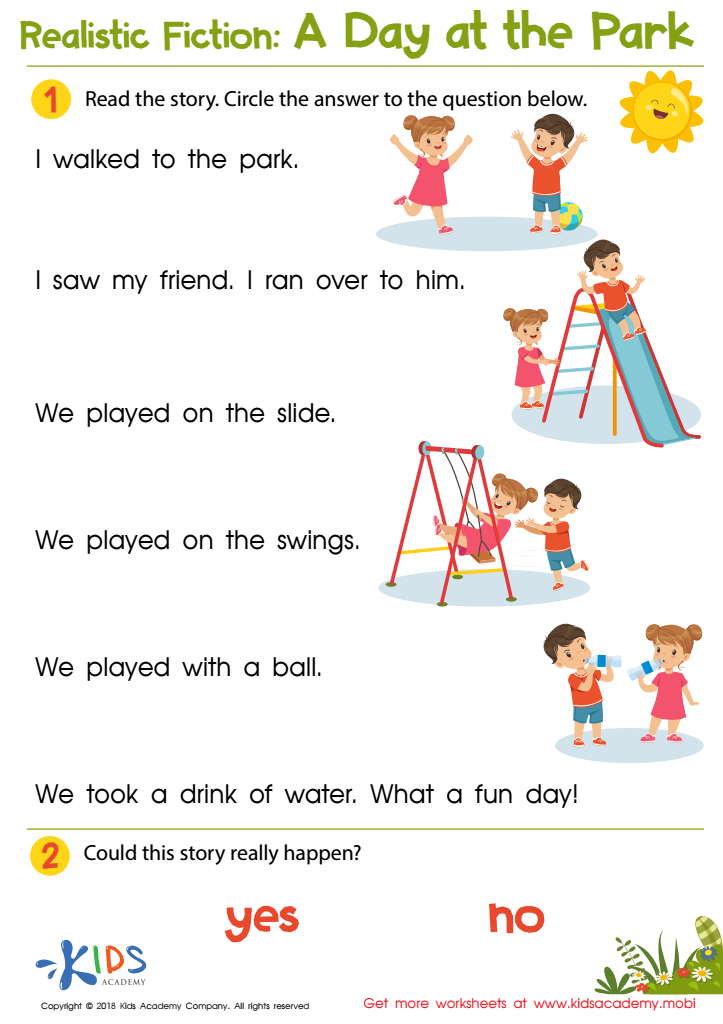
A Day at the Park Worksheet
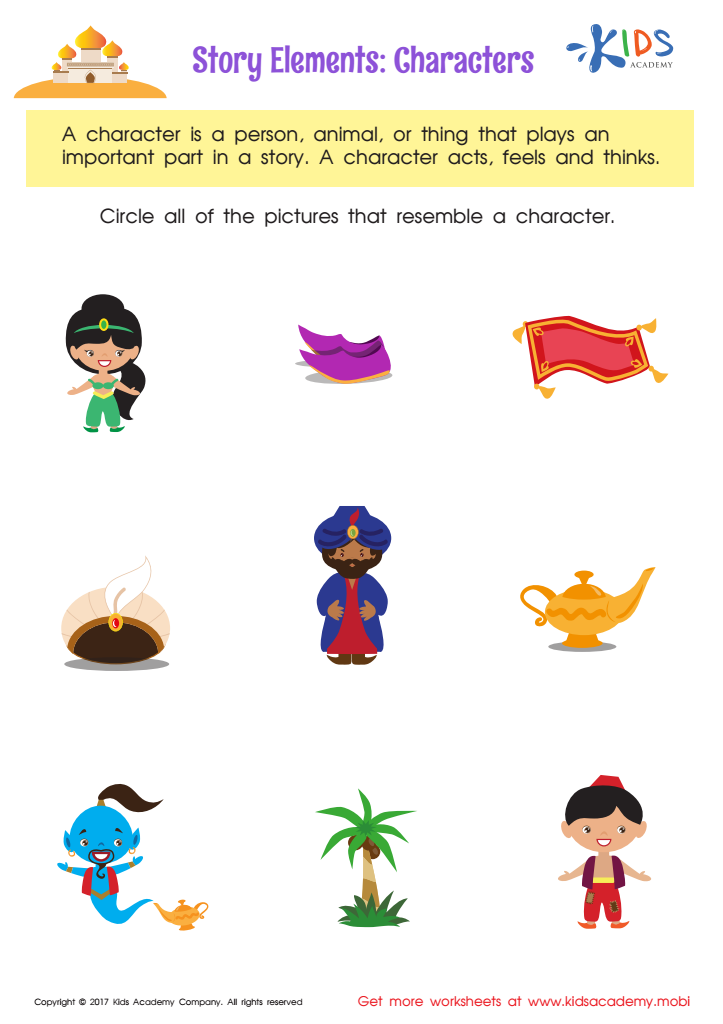
Story Elements Printable








Identifying story elements is crucial for young children aged 5-8, as it lays the foundation for their reading comprehension and engagement with literature. Story elements, including characters, setting, plot, conflict, and resolution, provide a framework that helps children understand narratives. When parents and teachers emphasize these components, they empower children to critically analyze stories, enhancing their ability to recall details and make connections.
Focusing on story elements also fosters creativity and imagination. As children begin to recognize and describe these elements in various texts, they can create their own stories with more complexity. This boosts their confidence in both reading and writing, important skills for their academic journey.
Additionally, understanding story elements aids in social and emotional growth. Characters often experience emotions and resolve conflicts similar to those in children's lives, providing relatable lessons about empathy, friendship, and problem-solving.
Lastly, engaging with story elements encourages discussions between parents, teachers, and children, enhancing vocabulary and communication skills. Overall, identifying story elements is a vital step in nurturing a child’s literacy, critical thinking, and emotional intelligence, all of which are essential traits for lifelong learning.








