Enhance your child’s mathematical skills with our "Improving Number Sense Normal Worksheets" tailored for ages 5-8. These worksheets provide engaging, age-appropriate activities designed to strengthen foundational math concepts such as counting, comparing numbers, and recognizing patterns. With fun exercises and colorful illustrations, your little learners will enjoy exploring numbers in a playful yet educational manner. Ideal for early grade teachers and parents, these printable resources are perfect for at-home learning or classroom support. Encourage confidence in math and set your child on the path to numerical fluency today with our thoughtfully crafted worksheets that foster a love for learning!

Check out this FREE "Improving number sense" Trial Lesson for age 5-8!

Understanding Place Value Ones and Tens

Favorites
With answer key
Interactive
  • 5-8
  • Improving number sense
  • Normal
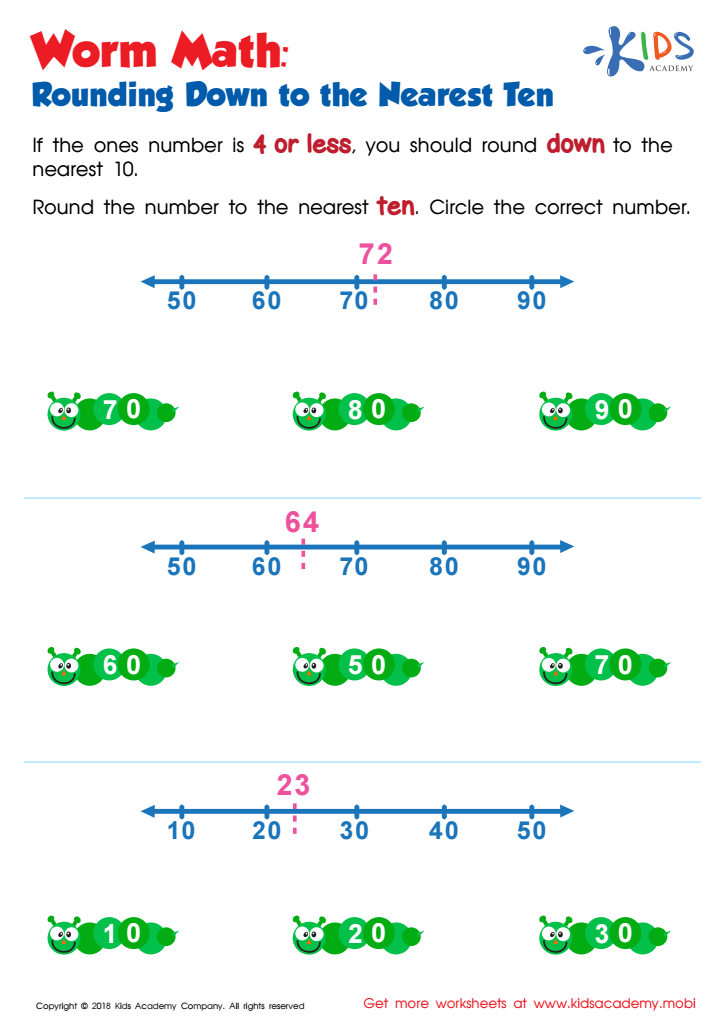
Worm Math Rounding Down to the Nearest Ten Worksheet

Worm Math Rounding Down to the Nearest Ten Worksheet

Look at the full of smiles worms carrying two-digit numbers. Is the number in the ones spot 4 or less? Round down to the nearest ten! Help kids learn the tricky concept of rounding with this math worksheet. Perfect for clearing up confusion and practicing rounding down to the nearest ten!
Worm Math Rounding Down to the Nearest Ten Worksheet
Worksheet
Repeated Addition = Multiplication Worksheet

Repeated Addition = Multiplication Worksheet

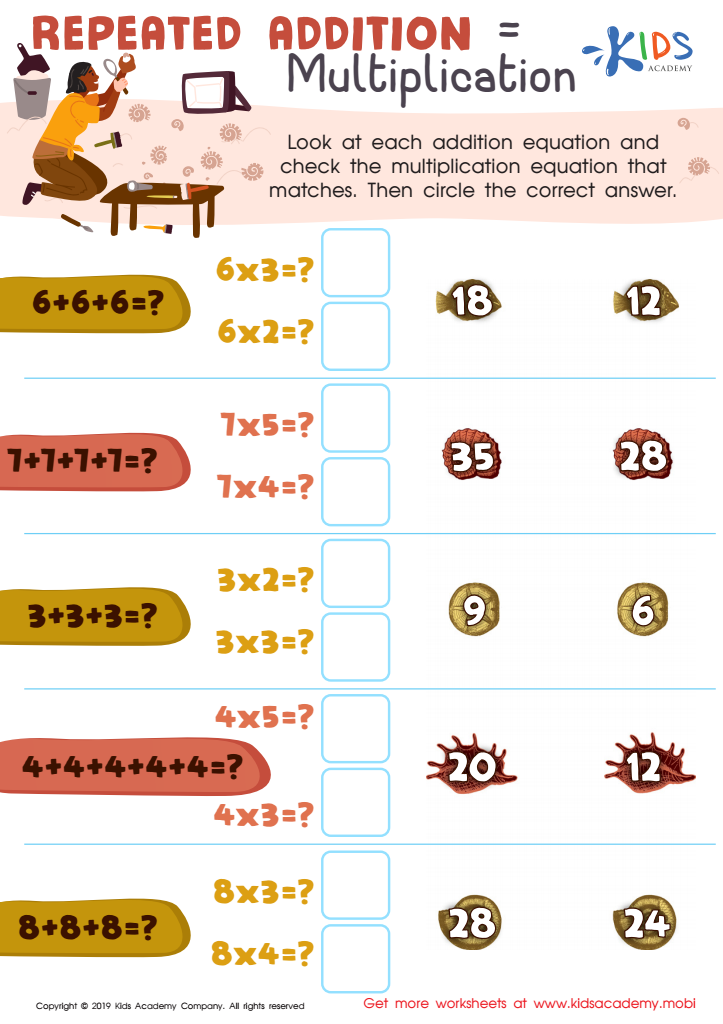
If your child is having trouble with math, worksheets like this can help them get more practice. Addition, subtraction, and multiplication go together. Look over each addition equation and pick the matching multiplication equation, then circle the correct answer. This can give your child the necessary practice to understand mathematics better.
Repeated Addition = Multiplication Worksheet
Worksheet
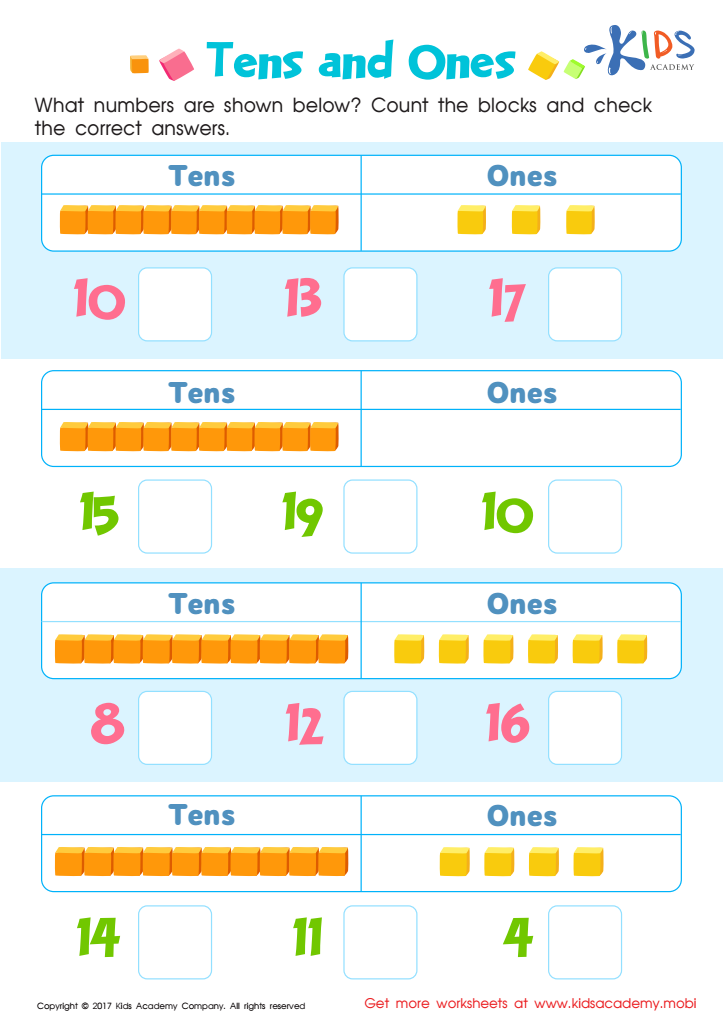
Tens and Ones Worksheet

Tens and Ones Worksheet

Help your child make math fun with this worksheet! Count the blocks on both sides and enter the total in the box below the figures. This will help them overcome any math-related anxieties they might have and let them enjoy the learning process.
Tens and Ones Worksheet
Worksheet
Apple Math Worksheet

Apple Math Worksheet

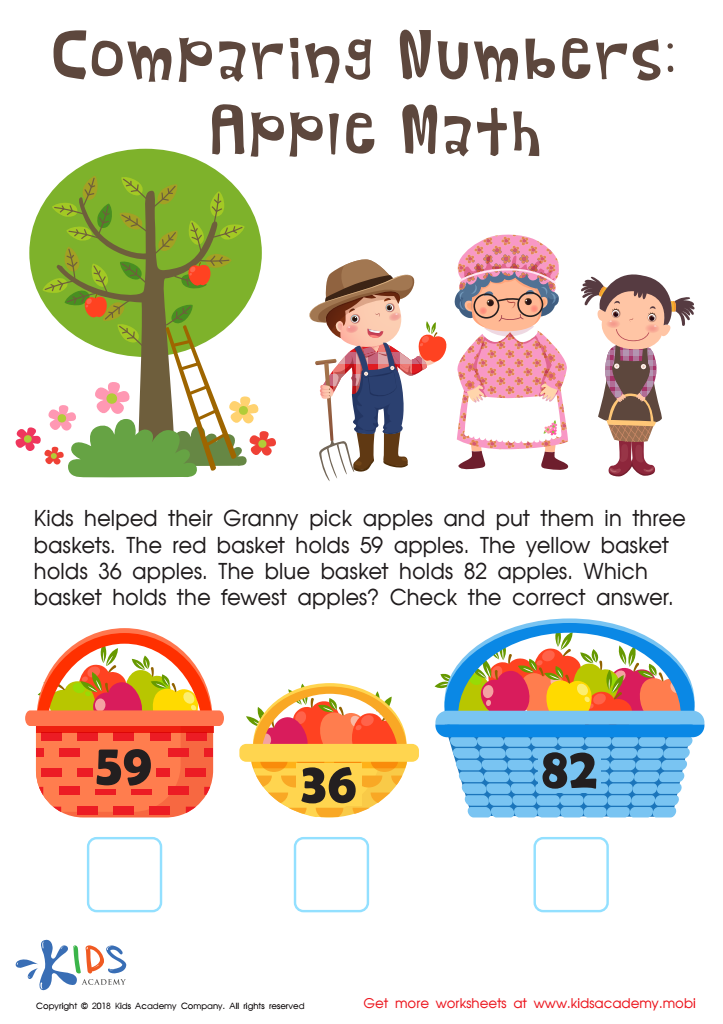
Math is more than just counting, adding, subtracting, multiplying, and dividing. Your child may be feeling overwhelmed by all the complexities, like comparing numbers and their differences. But with this worksheet, you can make comparing numbers fun again!
Apple Math Worksheet
Worksheet
Part, Part, Whole Worksheet

Part, Part, Whole Worksheet

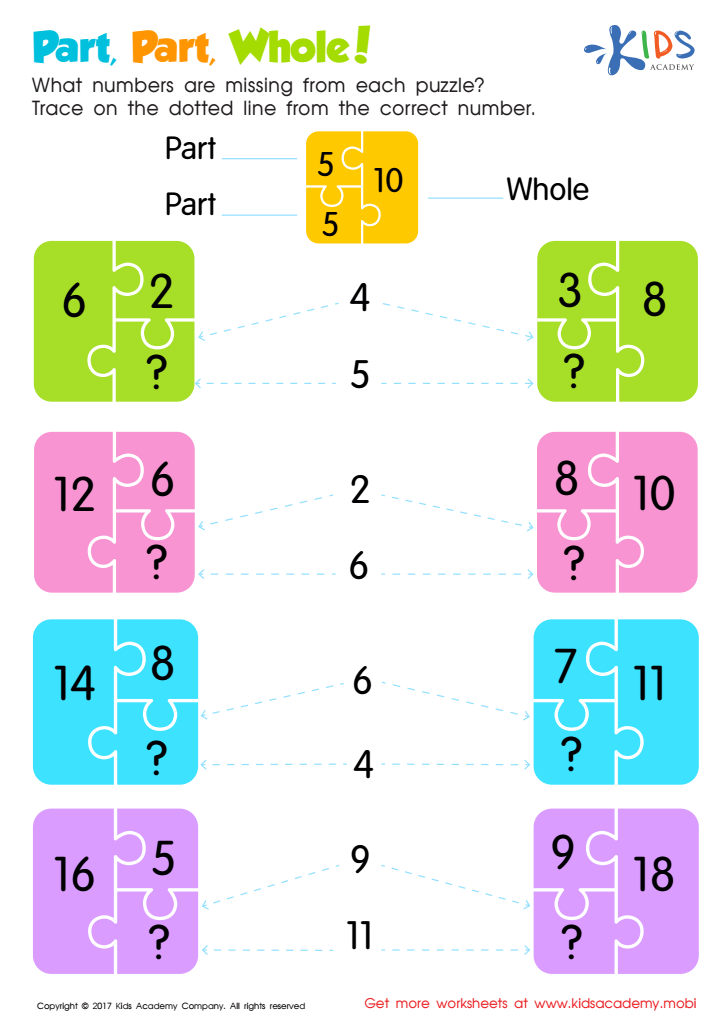
Help your child find the missing numbers in the puzzles. The worksheet combines fun and maths - stimulating the brain while keeping them engaged. Colourful pages will keep the learning enjoyable. Simple addition and subtraction will ensure they stay entertained.
Part, Part, Whole Worksheet
Worksheet
What Equation Is That? Worksheet

What Equation Is That? Worksheet

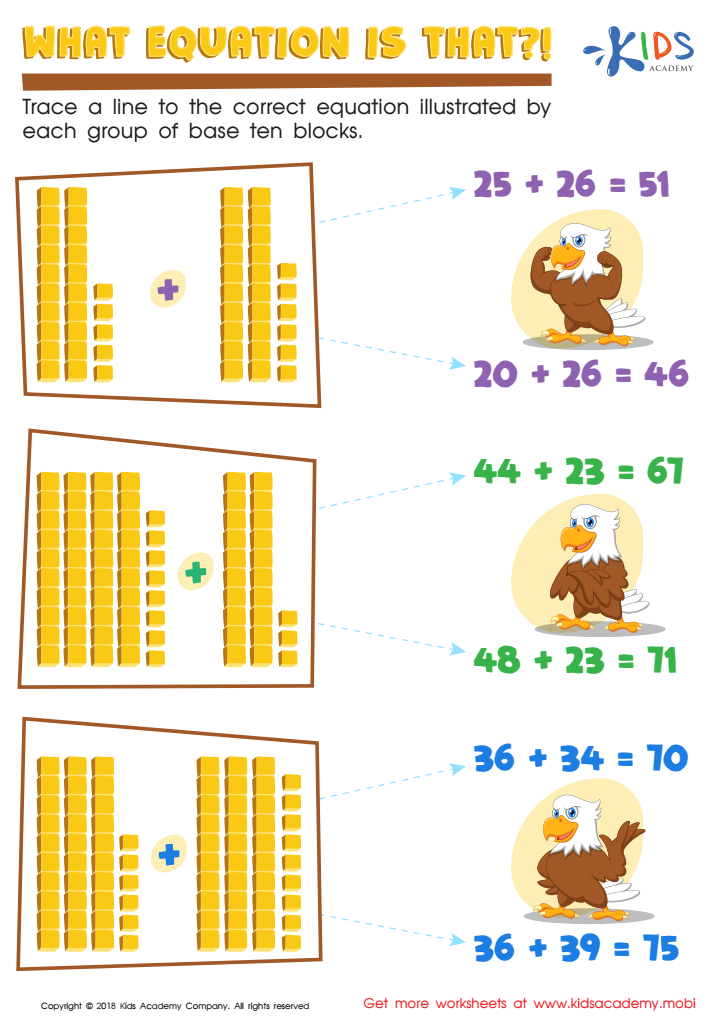
Have your students practice counting with base ten blocks. This will help them with math struggles. Homework and worksheets will help them improve; ask them to trace lines to the correct equation on a tracing sheet. Guide them as they count the blocks and trace the lines.
What Equation Is That? Worksheet
Worksheet
Bugs and Legs Fact Families Worksheet


Bugs and Legs Fact Families Worksheet

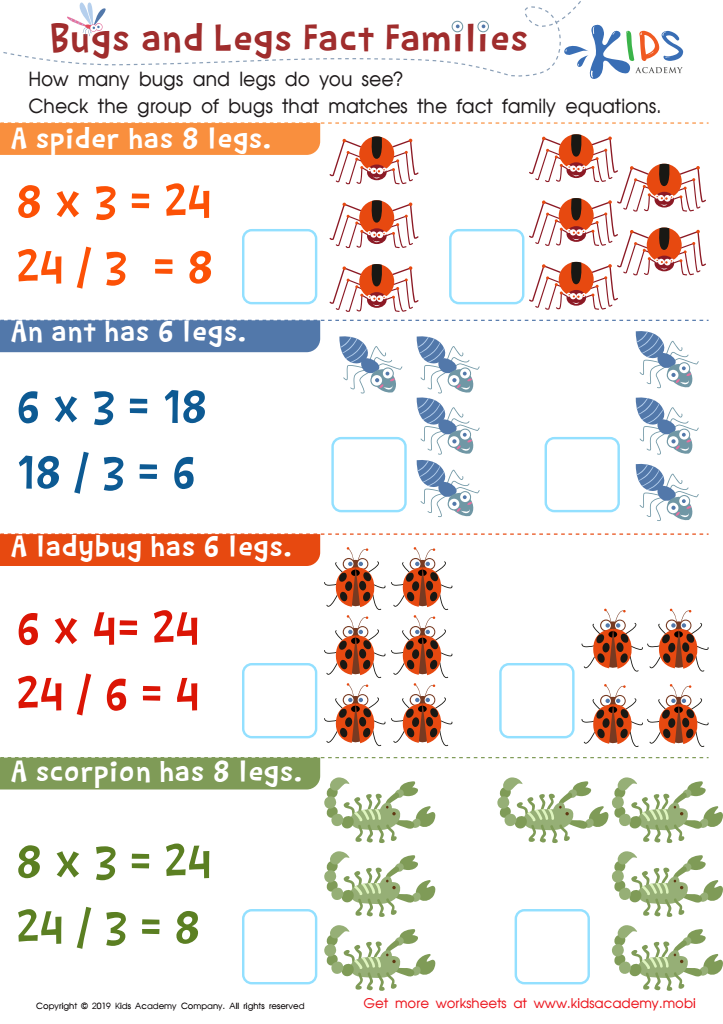
This free worksheet uses bugs and insects to help young math students learn about fact families and recognize patterns in multiplication and division. It's a fun and colorful way to gain automaticity and efficiency in computation skills, without even realizing it's math!
Bugs and Legs Fact Families Worksheet
Worksheet


Improving number sense in children aged 5-8 is crucial for their overall mathematical development and academic success. Number sense refers to a child's understanding of numbers, their relationships, and how they can be manipulated. At this age, children are building the foundational skills necessary for more complex mathematical concepts.

By fostering number sense, parents and teachers can help children develop confidence in their math abilities, encouraging a positive attitude toward the subject. Mastery of number sense supports skills such as addition, subtraction, and problem-solving, which are fundamental for future learning. Additionally, children with strong number sense are more likely to understand the "why" behind mathematical operations rather than just memorizing rules.

Early intervention in developing number sense also enables teachers to identify potential learning difficulties before they escalate, allowing for targeted support. Engaging families in this process through fun and interactive activities at home can reinforce these skills outside of the classroom, making learning a collaborative experience. Ultimately, investing time in enhancing number sense sets the stage for academic achievement, improved logical thinking, and everyday problem-solving abilities that extend beyond mathematics.

In short, cultivating strong number sense during these formative years lays the groundwork for a child's lifelong relationship with math.