Information processing Normal Worksheets for Ages 5-8
4 filtered results
-
From - To
Unlock your child’s potential with our Information Processing Normal Worksheets designed for ages 5-8. These engaging worksheets focus on enhancing critical thinking, decision-making, and comprehension skills through fun and age-appropriate activities. Children will practice sorting, organizing, and interpreting information, laying the foundation for future learning success. Our vibrant and interactive designs make learning enjoyable, keeping young minds encouraged and motivated. Perfect for classroom use or at-home learning, these worksheets are an excellent resource for parents and teachers alike. Explore the array of topics and help your child navigate information processing with confidence and creativity! Start their educational journey today!
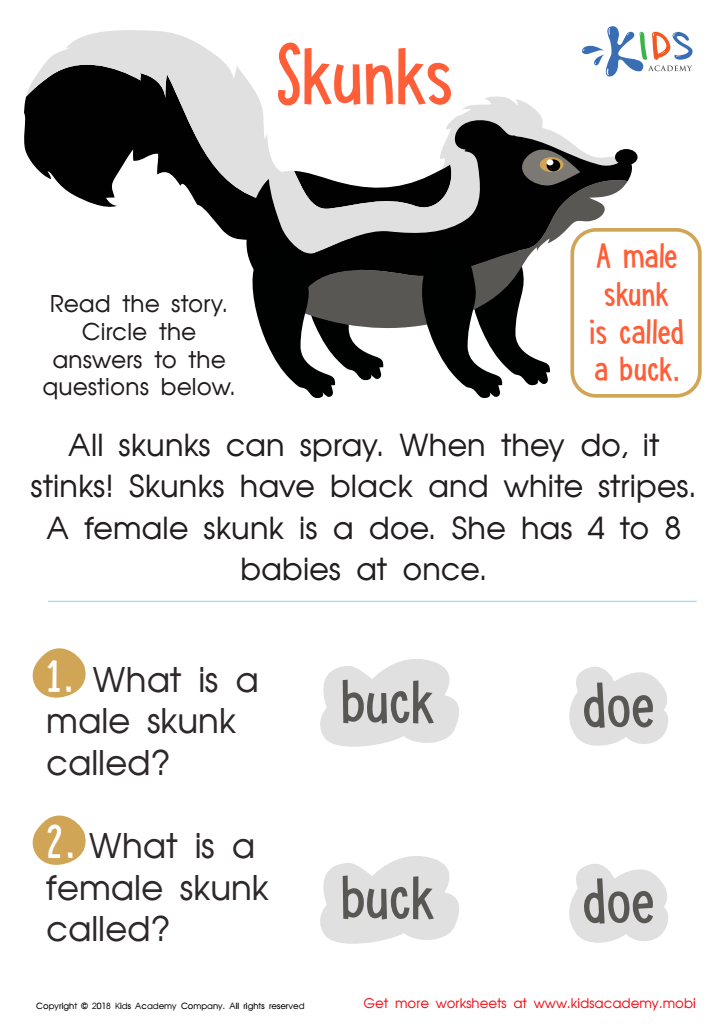
Skunks Worksheet
 Assign to My Students
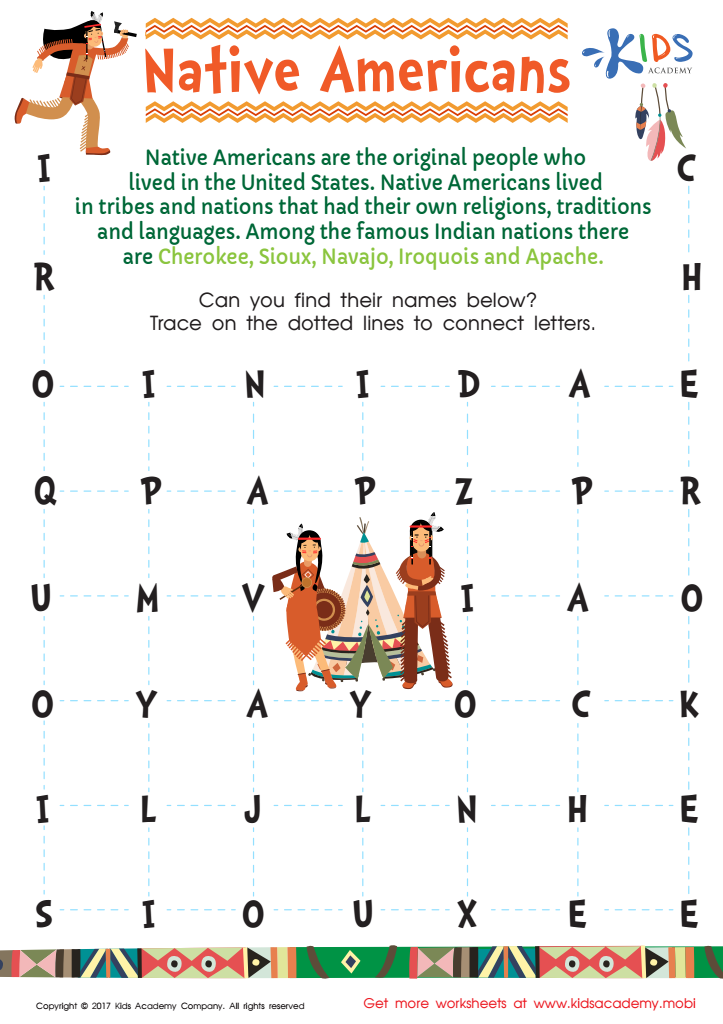
Native American Word Search Printable

Golden Eagles Worksheet
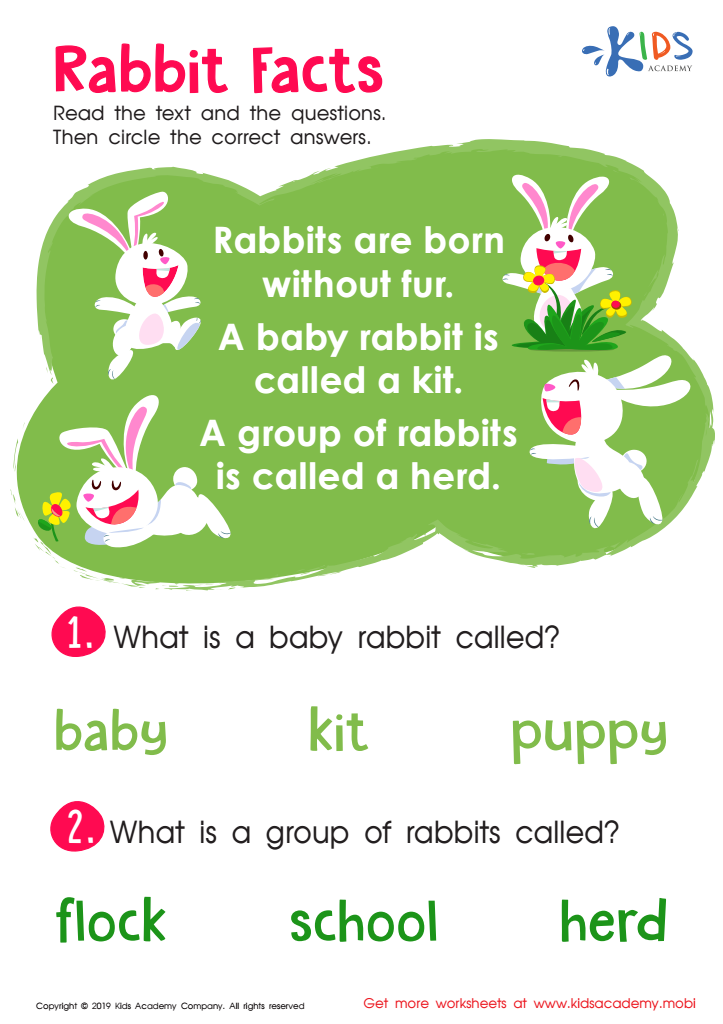
Rabbit Facts Worksheet








Understanding information processing norms for children ages 5-8 is crucial for parents and teachers because this developmental stage lays the foundation for future learning experiences. During these years, children refine their cognitive abilities, including attention, memory, and problem-solving skills, which are essential for their overall academic journey.
By being aware of research-backed information processing norms, parents and teachers can set realistic expectations and provide appropriate support. This knowledge helps them identify any potential learning difficulties early on, ensuring timely interventions that can drastically improve a child's educational outcomes. For example, recognizing that a child may require additional time or alternative methods to process information allows caregivers to tailor their teaching approaches.
Furthermore, understanding these norms fosters a supportive learning environment where children feel understood and secure in their abilities. It encourages the use of engaging, hands-on learning strategies that resonate with children's natural curiosity and energetic exploration. Ultimately, caring about these processing norms helps create a positive feedback loop—learning becomes more enjoyable, children build confidence, and parents and teachers can better track developmental milestones, all of which contribute to a successful educational experience.








