Learning addition Normal Worksheets for Ages 5-8
4 filtered results
-
From - To
Welcome to our "Learning Addition Normal Worksheets for Ages 5-8". Our engaging worksheets are carefully designed to introduce young learners to basic addition in a fun and interactive way. Tailored for kids between the ages of 5 to 8, these printables offer a range of activities that blend creativity with fundamental math skills. By incorporating colorful graphics and relatable scenarios, we ensure that children remain interested while reinforcing their knowledge of addition concepts. Whether at home or school, our worksheets provide an excellent resource to boost your child's confidence and proficiency in math. Start their learning journey today!
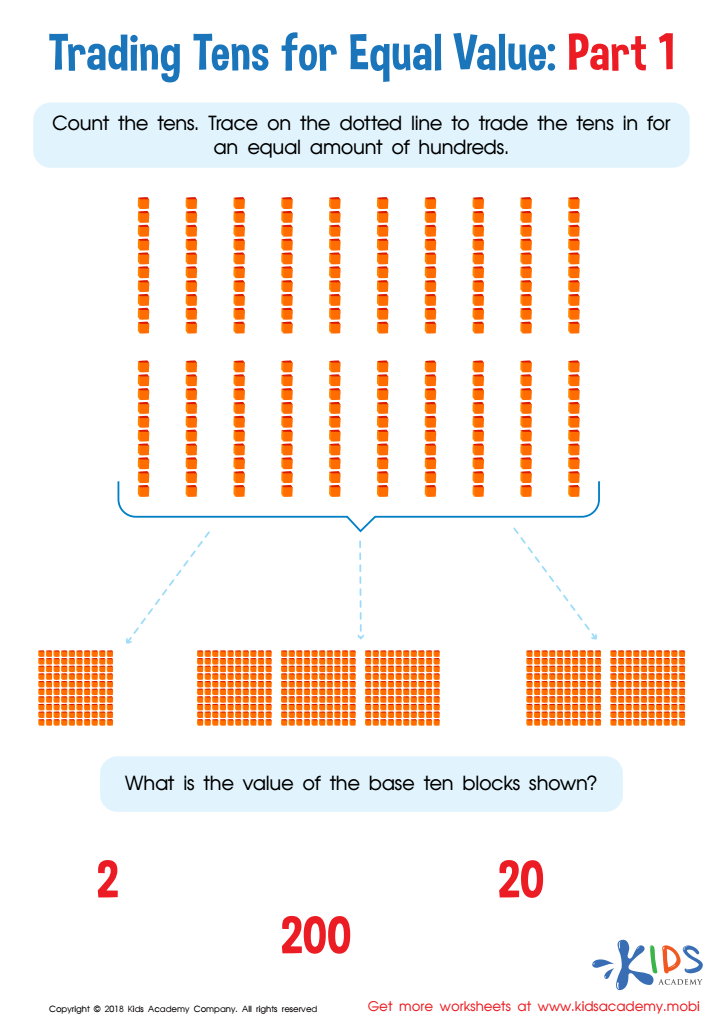
Trading Tens for Equal Value Worksheet: Part 1
 Assign to My Students
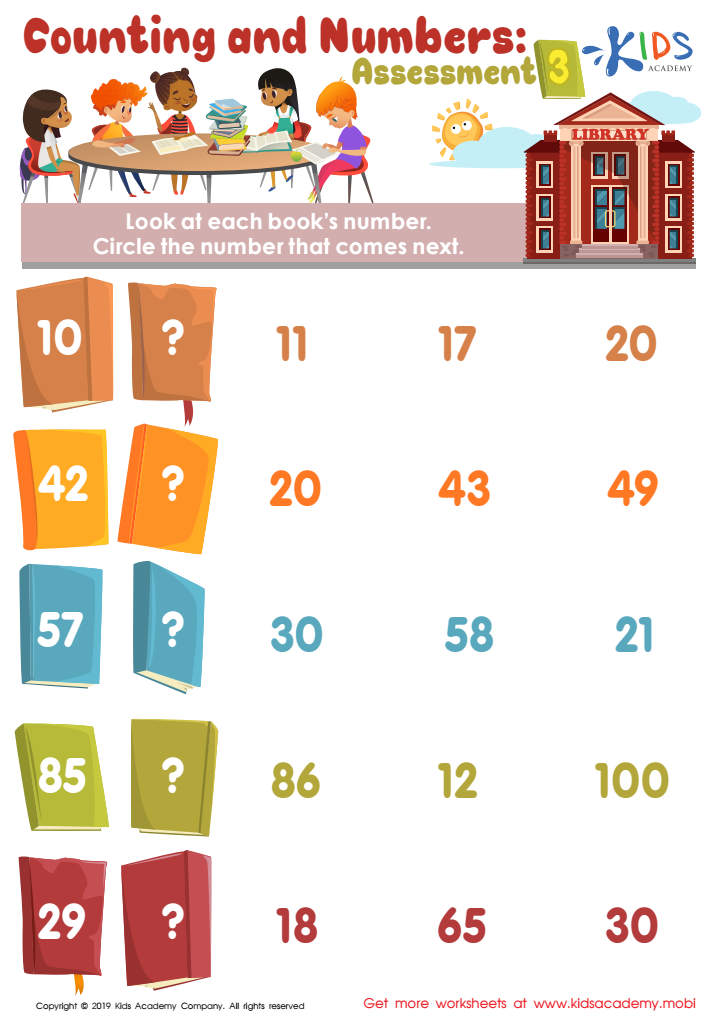
Counting and Numbers: Assessment Worksheet
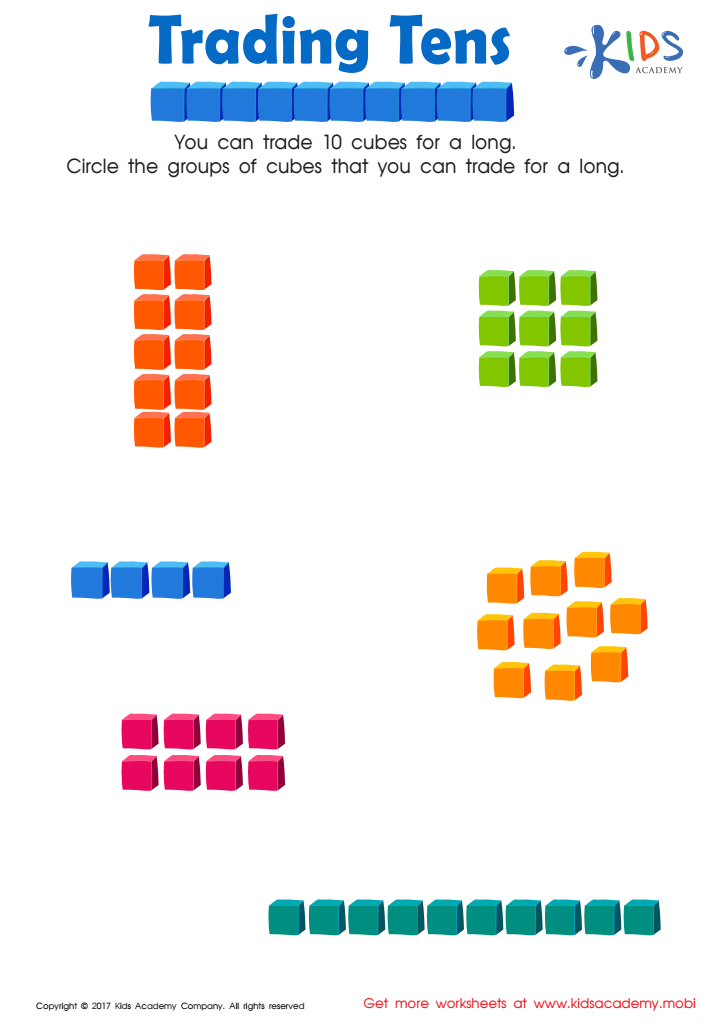
Trading Tens Worksheet
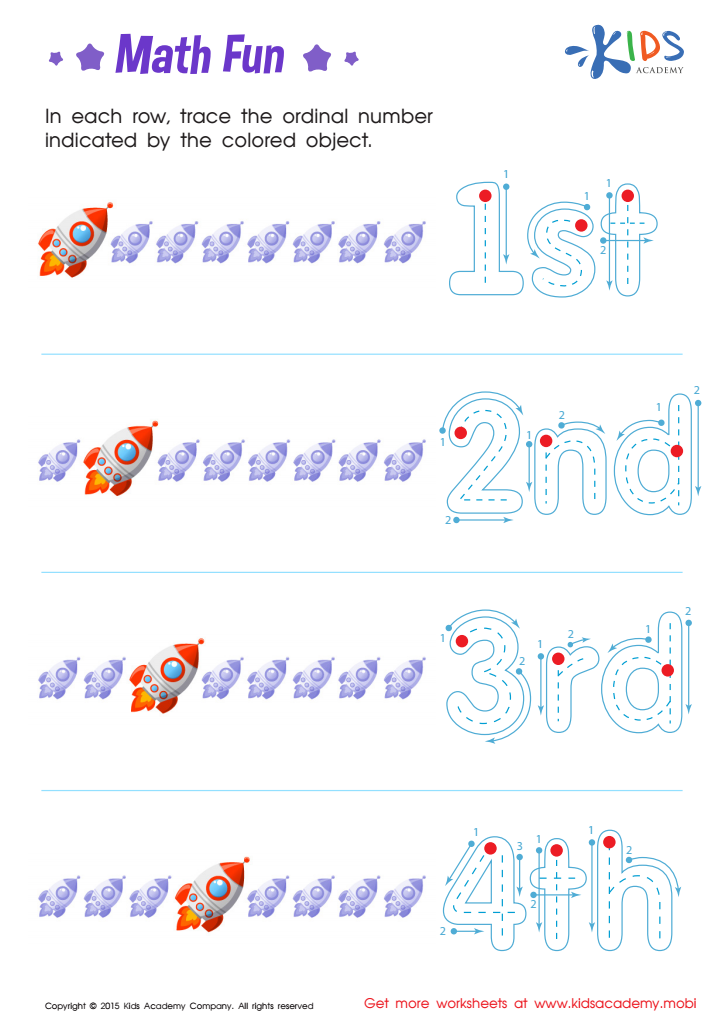
Ordinal Numbers: Math Fun Worksheet







Teaching addition to children aged 5-8 is foundational for their future success in mathematics and overall cognitive development. This early arithmetic skill is a core building block for more complex mathematical concepts, such as subtraction, multiplication, and division. By mastering addition, children develop number sense, which is the ability to understand, relate, and connect numbers. This skill is crucial not only for higher-level math but also for everyday problem-solving and logical thinking.
Supporting young learners in grasping addition builds their confidence and fosters a positive attitude towards math. Early success in addition can motivate children and help reduce anxiety or fear related to math subjects. Moreover, incorporating addition into playful and engaging activities nurtures a love for learning and makes education enjoyable.
Practical life skills benefit as well; children will efficiently handle basic tasks like counting, sharing equally, and understanding money. Parents and teachers play a vital role in providing consistent practice opportunities and encouragement.
By investing in teaching addition at an early age, parents and teachers set the stage for lifelong learning and academic achievement. This investment pays off as children grow to handle more complex math challenges with ease and develop critical thinking skills essential in both academic and real-world scenarios.








