Plant identification Normal Worksheets for Ages 5-8
4 filtered results
-
From - To
Welcome to our Plant Identification Worksheets for Ages 5-8! Designed to spark curiosity and enhance learning, these engaging resources help young learners recognize diverse plants in their environment. Each worksheet incorporates fun activities, including matching games, coloring tasks, and observation prompts, fostering an appreciation for nature. Tailored to support early education, our worksheets promote critical thinking skills, improve vocabulary, and encourage outdoor exploration. Ideal for both home and school use, these printables make learning about plants interactive and enjoyable. Equip your child with foundational knowledge about the natural world while having fun—download our worksheets today and watch their love for plants grow!
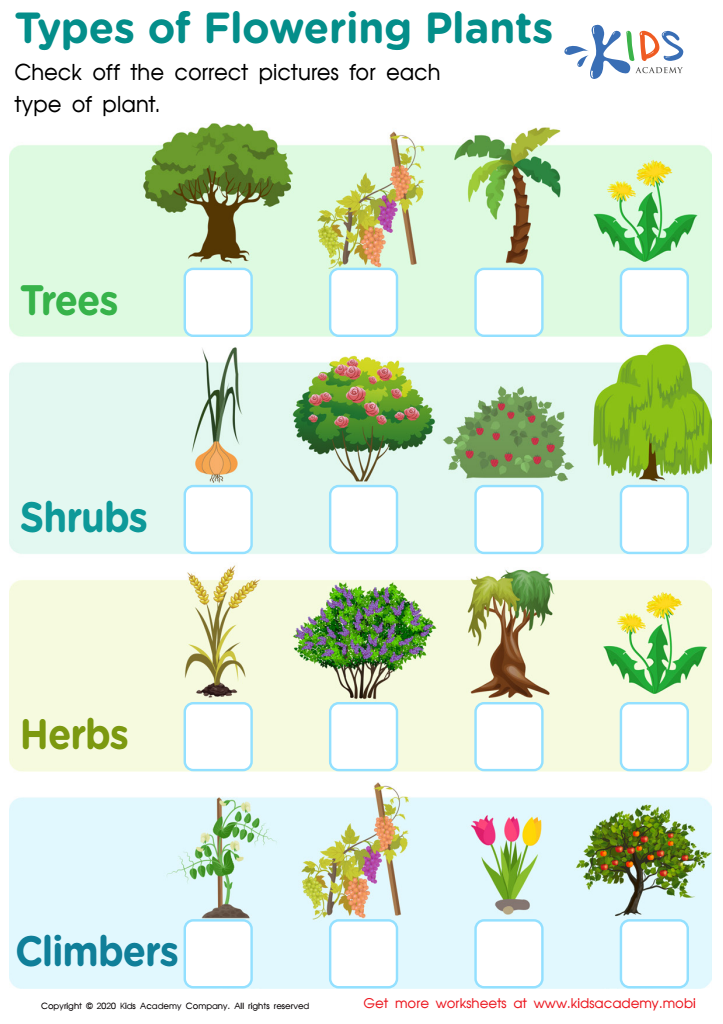
Types of Flowering Plants Worksheet
 Assign to My Students
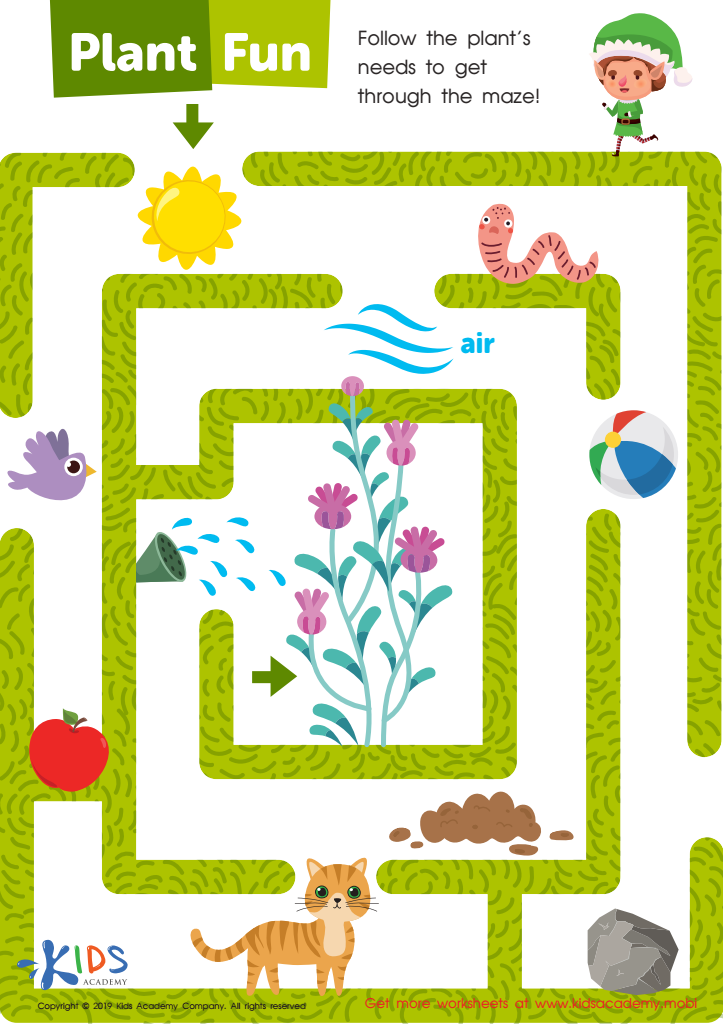
Plant Fun Worksheet
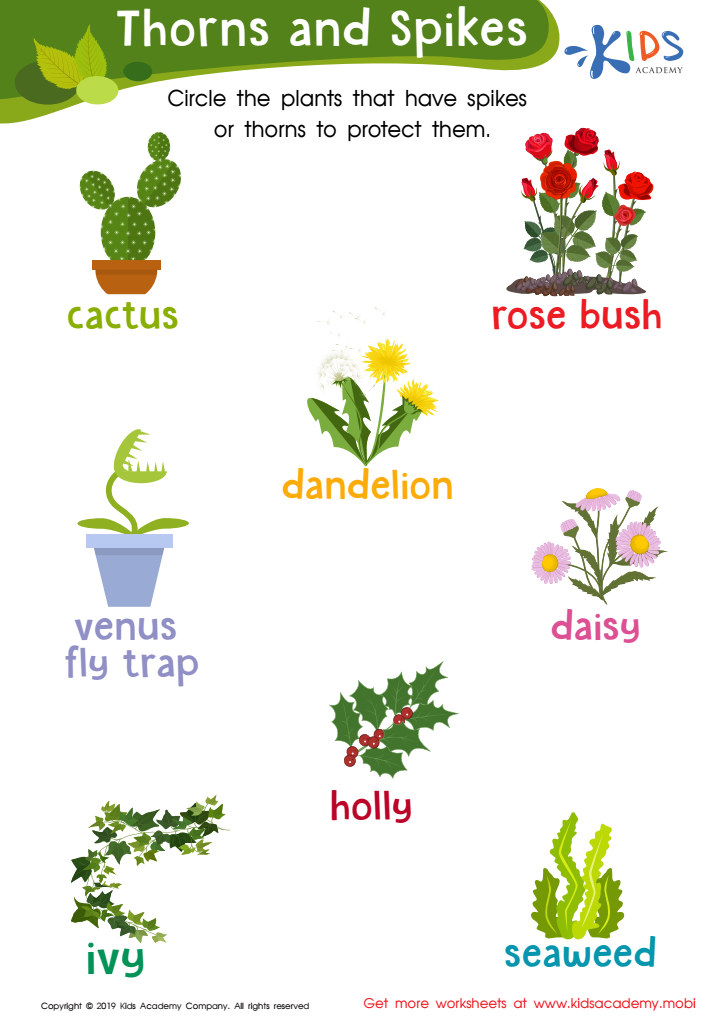
Thorns and Spikes Worksheet
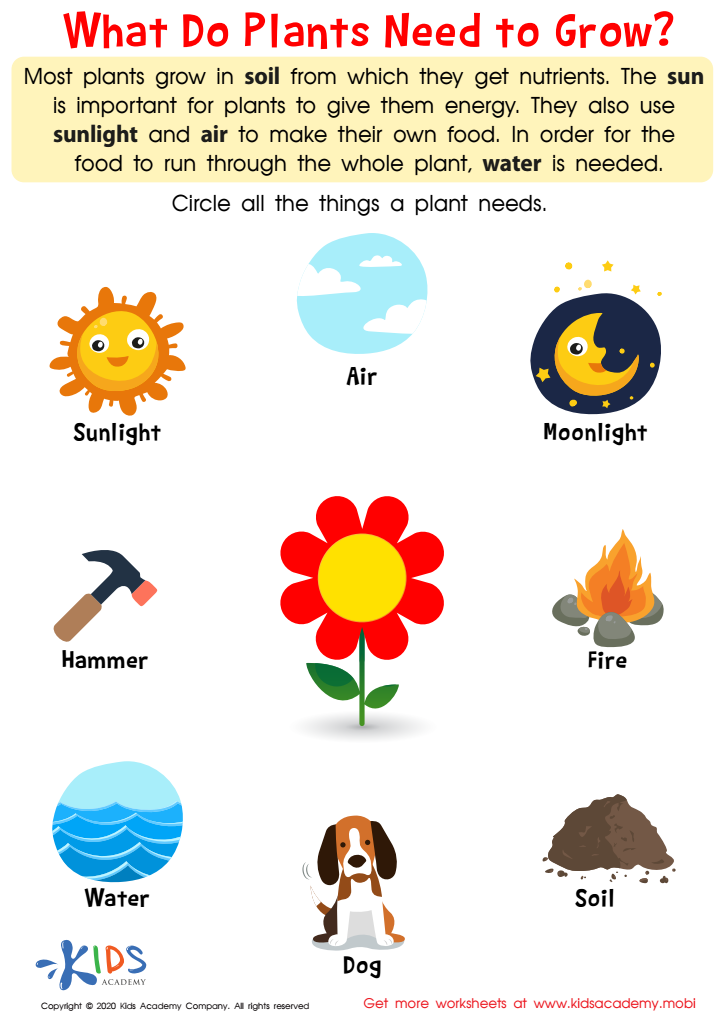
What Do Plants Need to Grow Worksheet







Teaching children about plant identification is crucial for their overall development and appreciation for the natural world. For children aged 5-8, learning to recognize different plants fosters curiosity and observation skills, encouraging them to explore their surroundings. This foundational knowledge cultivates a sense of responsibility towards the environment and instills a lifelong respect for nature.
Additionally, plant identification can enhance various educational subjects. In science, it introduces concepts like ecosystems, photosynthesis, and biodiversity. In art, children can draw and create projects using leaves and flowers, connecting to creative expression. Learning about plants also promotes language development as children acquire new vocabulary related to botany.
Furthermore, identifying plants can help children understand the importance of nutrition and healthy eating. Recognizing fruits and vegetables encourages better food choices, contributing to their physical well-being. Engaging activities like nature hikes or gardening lessons provide hands-on experiences that enhance learning and retention.
Overall, plant identification is not just about knowing names; it fosters a holistic approach to education, nurturing critical thinking, emotional connection, and community awareness. Therefore, it’s essential for parents and teachers to prioritize this aspect of learning, enriching children’s lives both academically and personally.








