Reading clocks Normal Worksheets for Ages 5-8
3 filtered results
-
From - To
Introduce the joy of time-telling with our "Reading Clocks Normal Worksheets" designed for ages 5-8. These carefully crafted worksheets offer engaging activities to help young learners grasp the concepts of hours and minutes. Ideal for building essential time-reading skills, they feature colorful illustrations and interactive exercises to make learning fun and effective. Watch as your child confidently progresses from recognizing clock faces to mastering both analog and digital time. Perfect for home or classroom use, our worksheets align with educational standards, ensuring a high-quality resource for developing crucial abilities in early learners. Help your child learn to tell time with ease today!
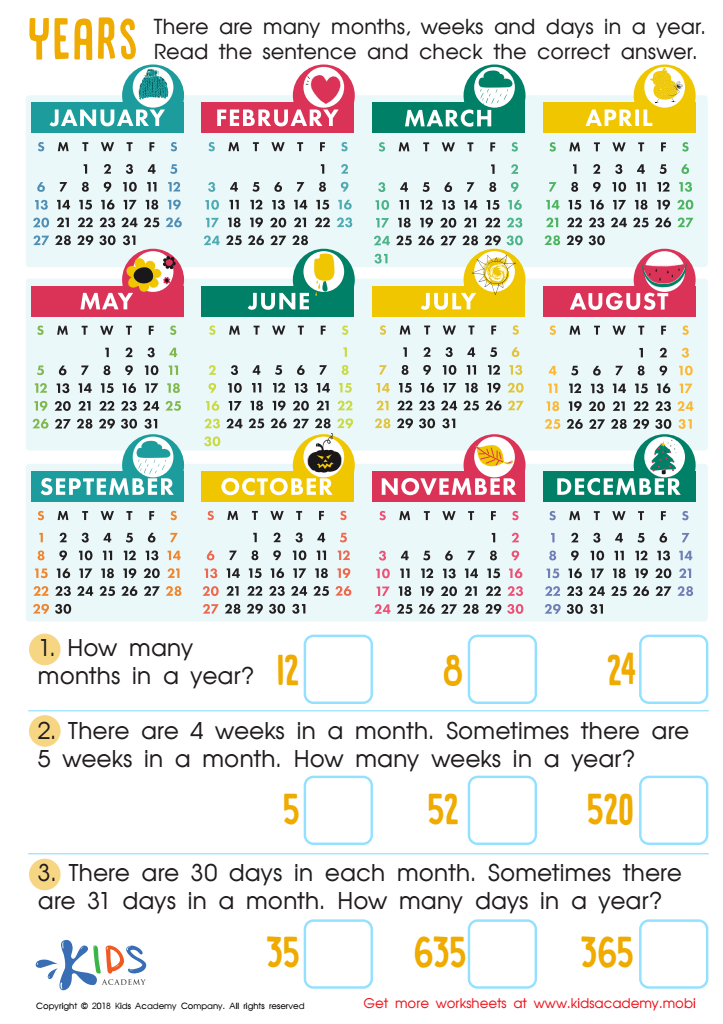
Years Worksheet
 Assign to My Students
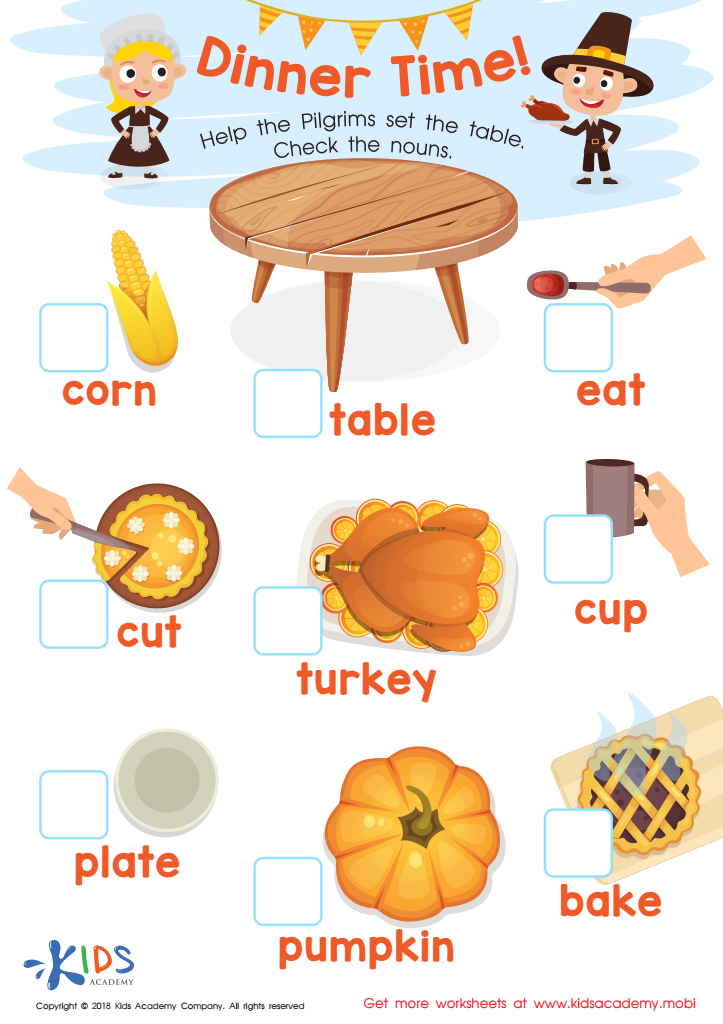
Dinner Time! Worksheet
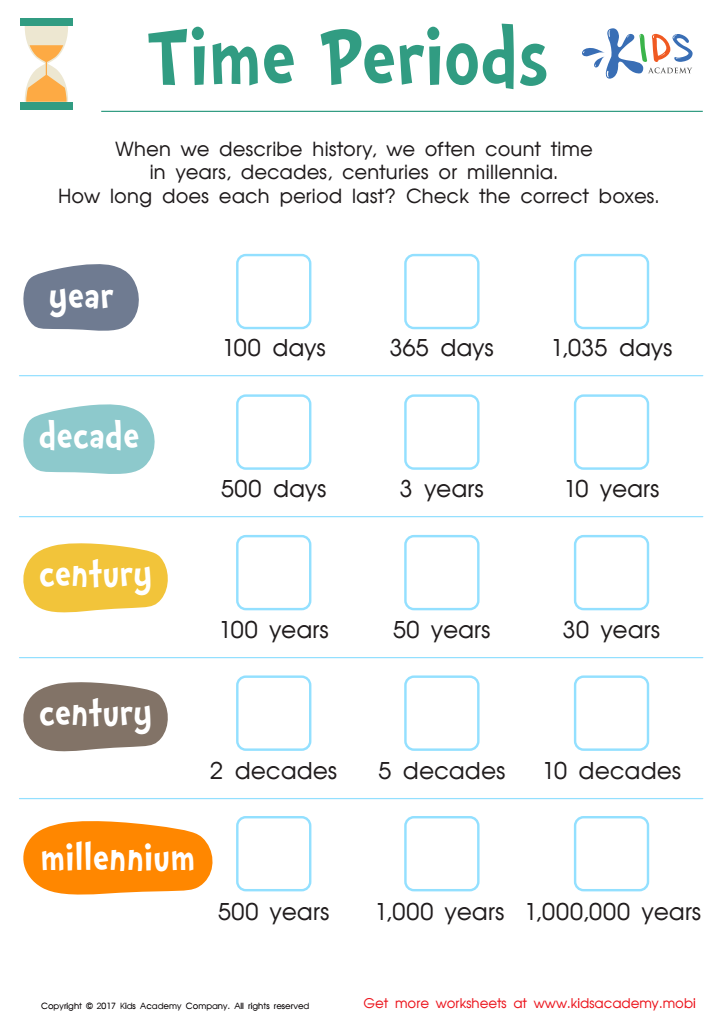
Time Periods Worksheet







Understanding how to read clocks is a crucial milestone for children aged 5-8, as it directly influences their daily routines and future learning. Time-telling is a foundational skill that helps young learners develop a sense of structure and predictability in their lives. It aids in transitioning between various activities smoothly, fostering a sense of independence and responsibility.
For parents and teachers, ensuring that children grasp this concept is essential. It supports the development of mathematical skills through the introduction of numbers, counting, and basic fractions as children differentiate between hours and minutes. This forms a bedrock for more advanced math topics they'll encounter later.
Additionally, time-telling enhances a child's language and comprehension abilities. When kids understand phrases like "half-past" or "quarter to," they become more competent in following directions and communicating their needs.
In a broader sense, reading clocks helps children comprehend the value of time, promoting better time-management skills as they grow. Understanding time fosters punctuality and can reduce anxieties related to timing and schedules. Teachers and parents who invest in teaching time-telling contribute to a child's overall sense of discipline and readiness to engage with increasingly complex concepts, both academically and in daily life.








