Recognizing number patterns Normal Worksheets for Ages 5-8
4 filtered results
-
From - To
Discover our engaging "Recognizing Number Patterns Normal Worksheets" designed specifically for children aged 5-8. These printable worksheets foster early math skills by helping young learners identify and understand numerical sequences and patterns. With colorful illustrations and age-appropriate activities, students will enjoy unraveling simple patterns, enhancing their critical thinking, and developing a strong foundation in math concepts. Ideal for classroom use or at-home practice, our worksheets ensure that math learning is fun and interactive. Perfect for early grade teachers and parents, these resources will ignite a love for numbers in your child while sharpening their analytical abilities. Start exploring today!
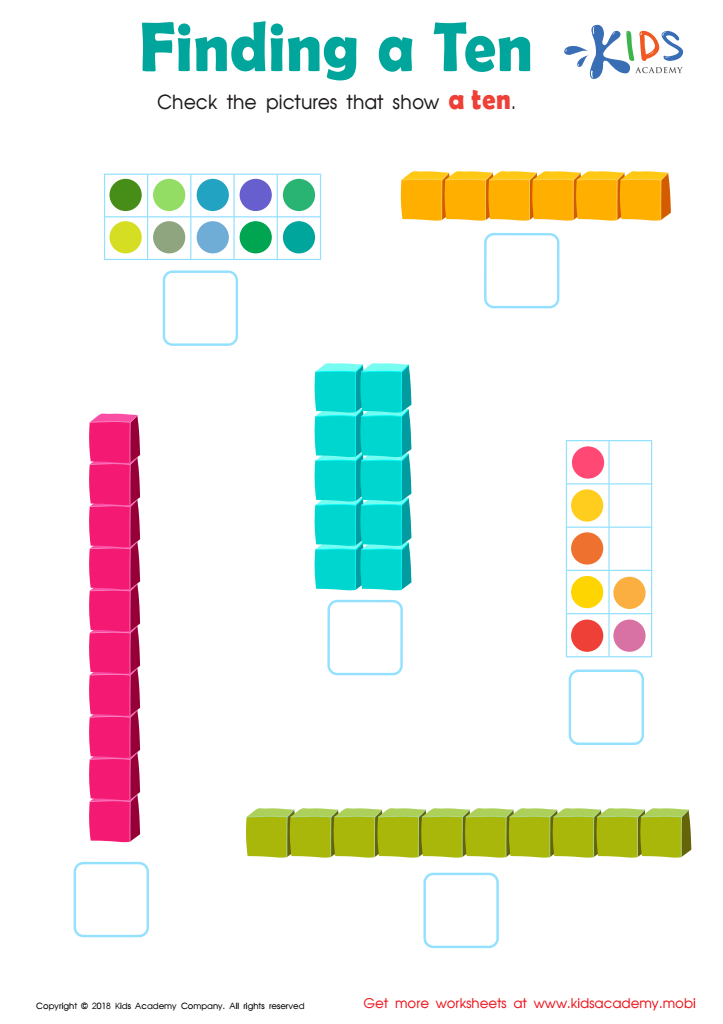
Finding a Ten Worksheet
 Assign to My Students
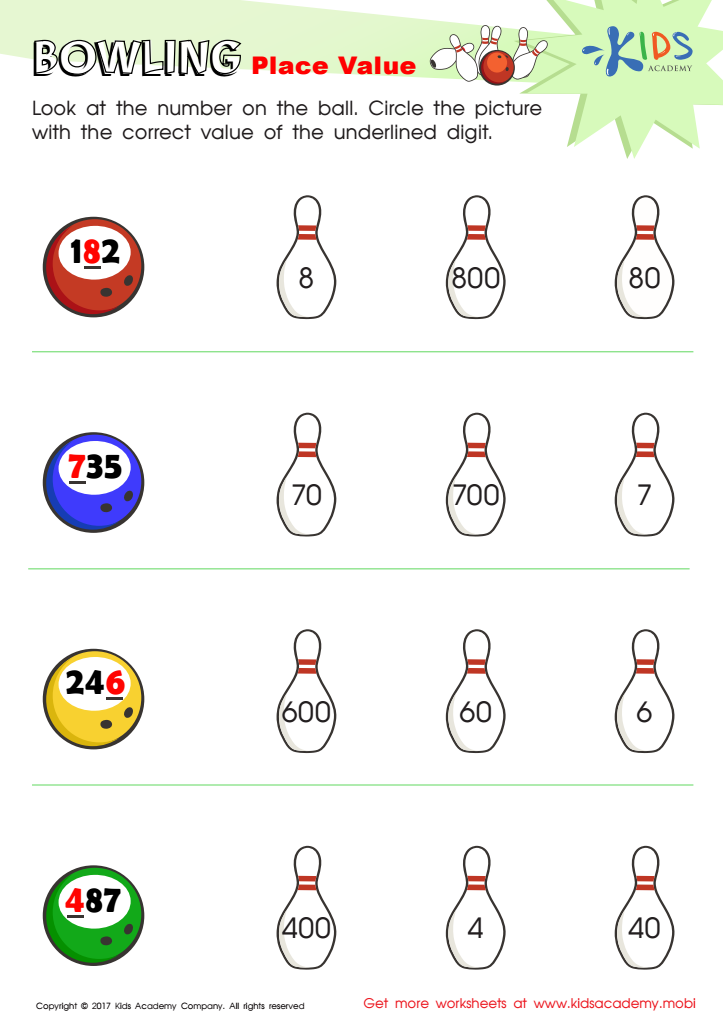
Place Value Worksheet
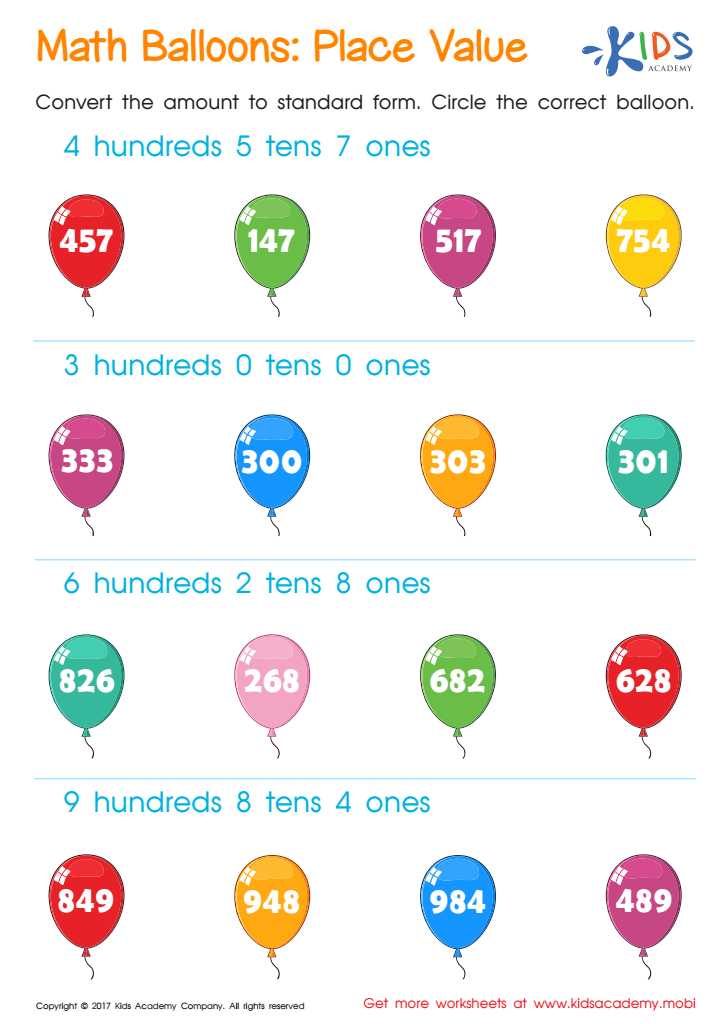
Place Value Printable Worksheet
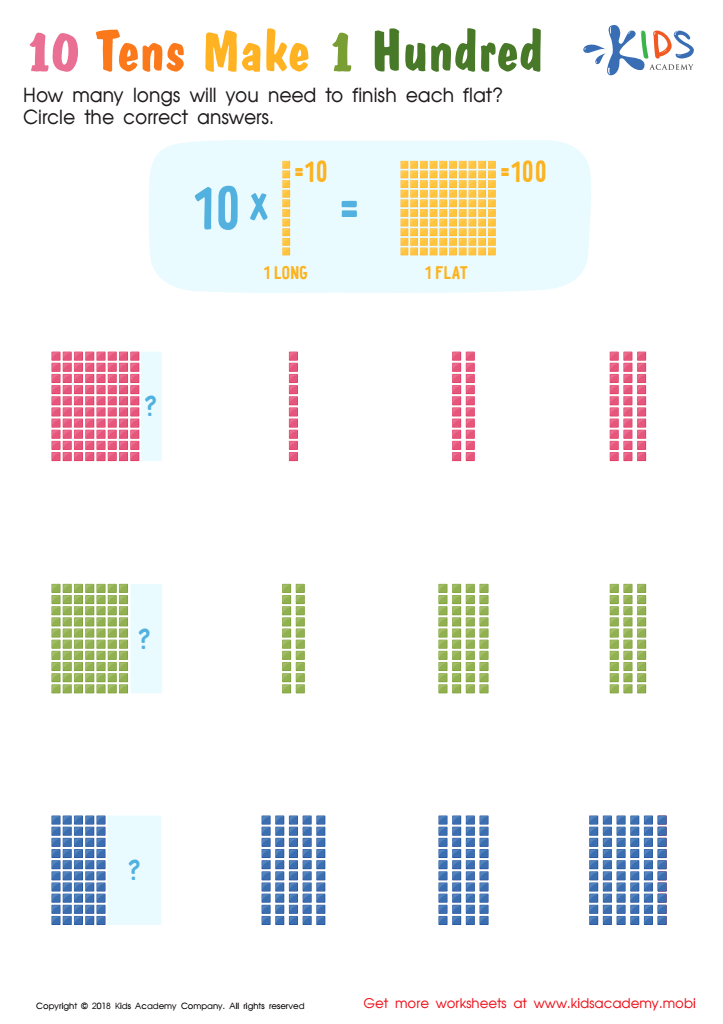
10 Tens Make 1 Hundred Worksheet







Recognizing number patterns is a fundamental skill that significantly impacts young children's mathematical understanding and overall cognitive development. For children aged 5-8, learning to identify patterns encourages logical thinking, boosts problem-solving abilities, and fosters an interest in mathematics. When parents and teachers emphasize number patterns, they help children develop a sense of order and predictability, which is essential for their learning journey.
Understanding number patterns lays the groundwork for more advanced mathematical concepts, such as addition, subtraction, and even multiplication later on. It helps children see relationships between numbers, enabling them to apply these skills to real-life situations. For instance, recognizing patterns can improve their ability to manage money or tell time.
Moreover, engaging in pattern recognition supports critical thinking and enhances executive functions, which are crucial for learning across all subjects. Through playful activities and games focusing on patterns, parents and teachers can make math engaging and enjoyable, encouraging a positive attitude toward learning.
Overall, reinforcing number patterns instills confidence in children, preparing them for future academic challenges and laying the foundation for lifelong numeracy skills. Consequently, parental and teacher involvement in this aspect of learning is vital for nurturing a well-rounded education.








