Recognizing Patterns Normal Worksheets for Ages 5-8
6 filtered results
-
From - To
"Recognizing Patterns Normal Worksheets for Ages 5-8" offers engaging and educational activities designed to enhance your child's pattern identification skills. Perfect for early learners, these worksheets support cognitive development through fun exercises involving sorting, sequencing, and predicting patterns. Tailored for children aged 5-8, each worksheet challenges and entertains, helping young minds to build strong foundations in mathematical thinking and reasoning. With colorful designs and age-appropriate tasks, these resources make learning enjoyable, boosting both confidence and academic performance. Equip your child with essential skills and a love for learning with our expertly crafted pattern recognition worksheets.
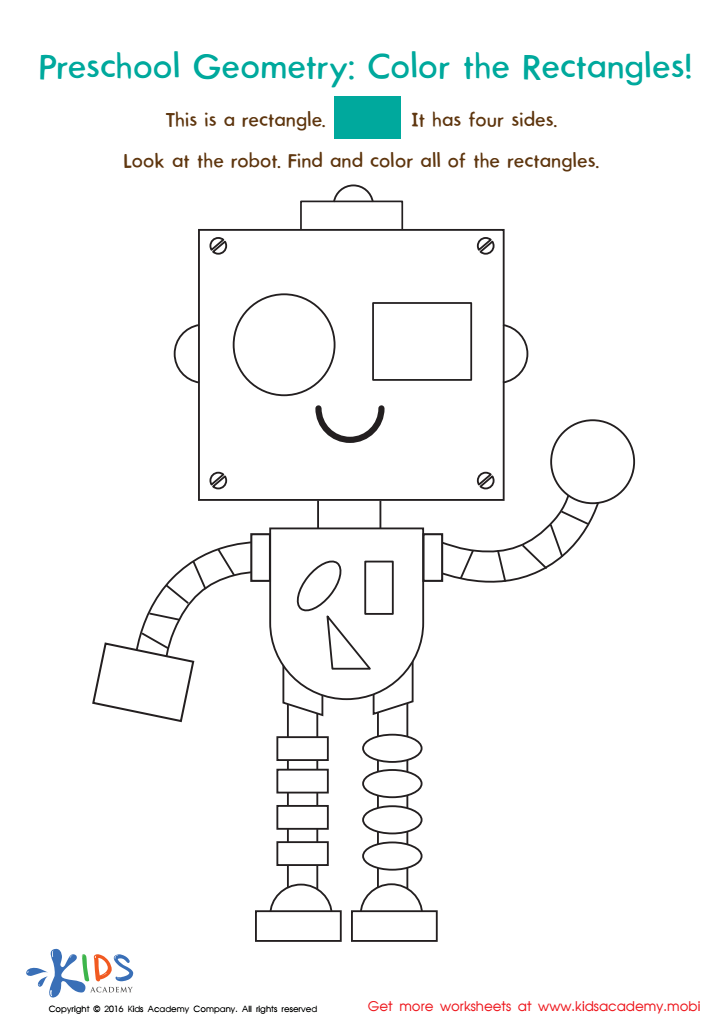
Geometry Worksheet
 Assign to My Students
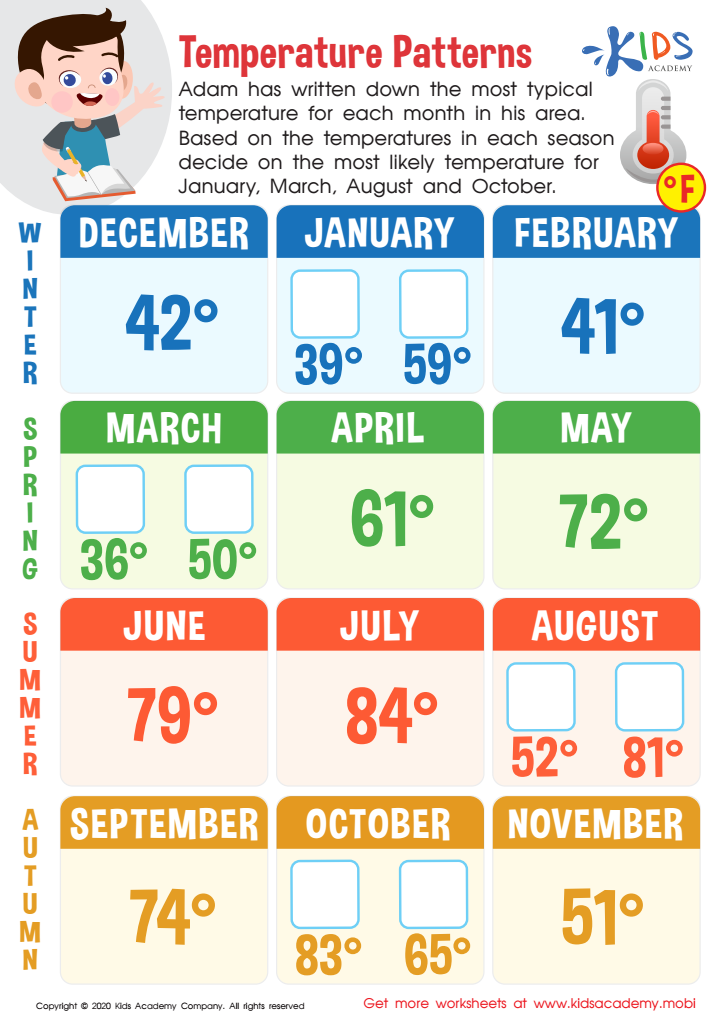
Temperature Patterns Worksheet
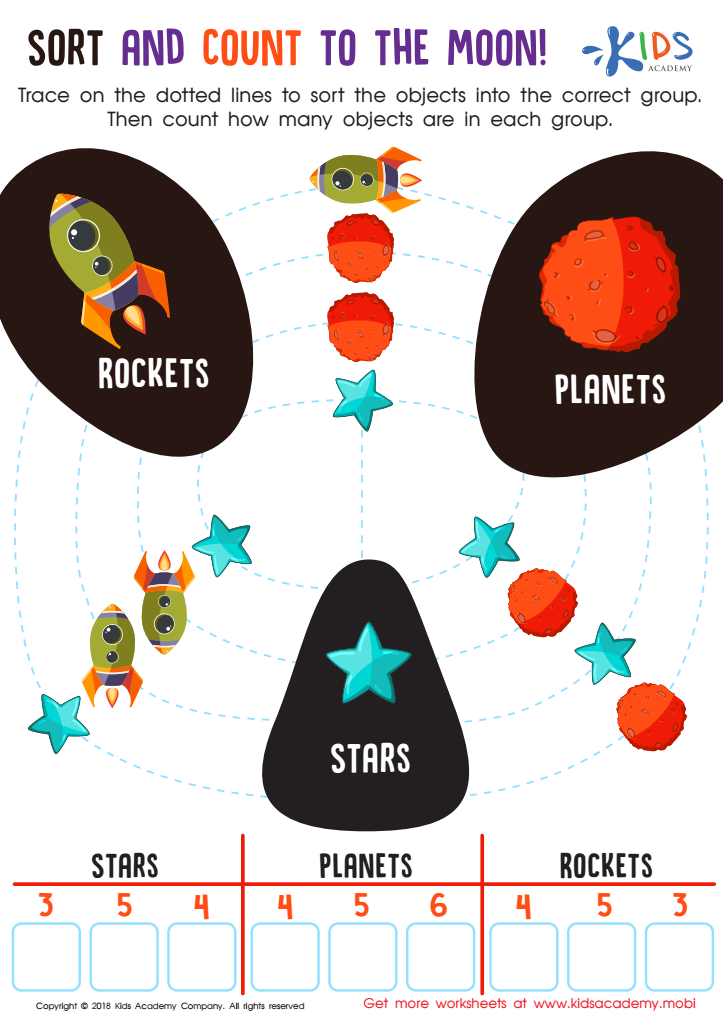
Sort and Count to the Moon Worksheet
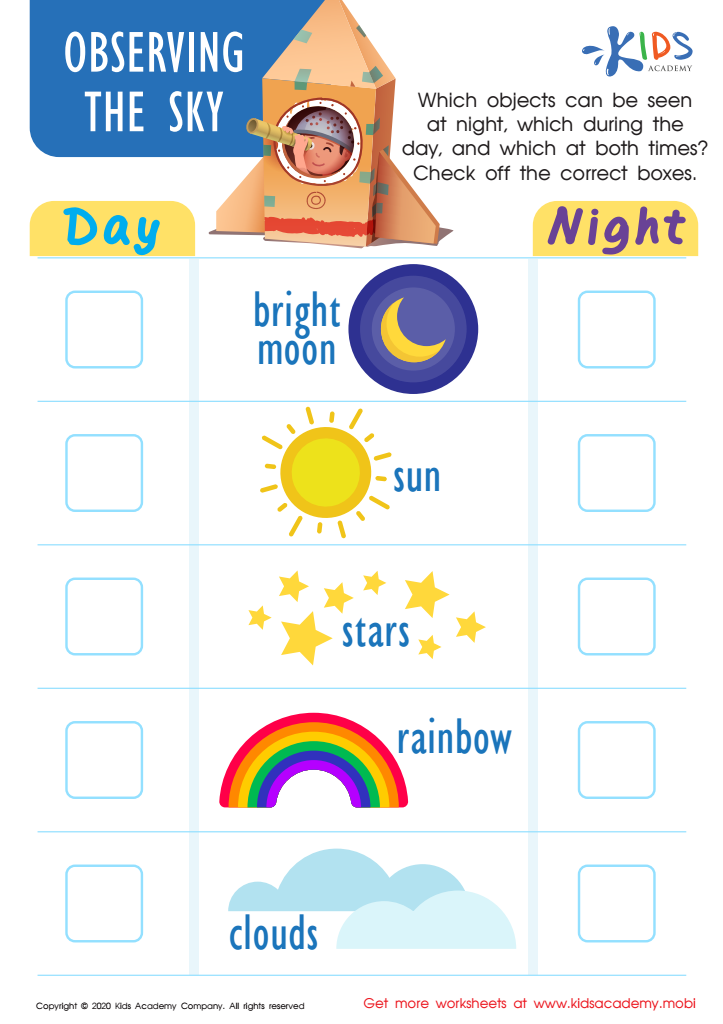
Observing the Sky Worksheet
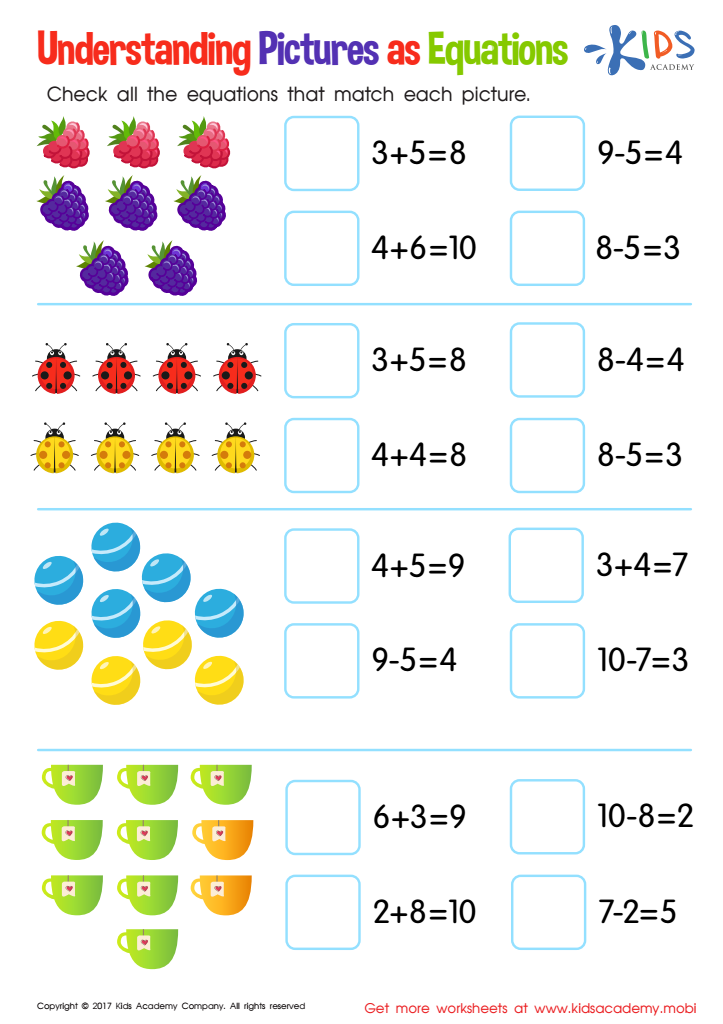
Understanding Pictures as Equations Worksheet
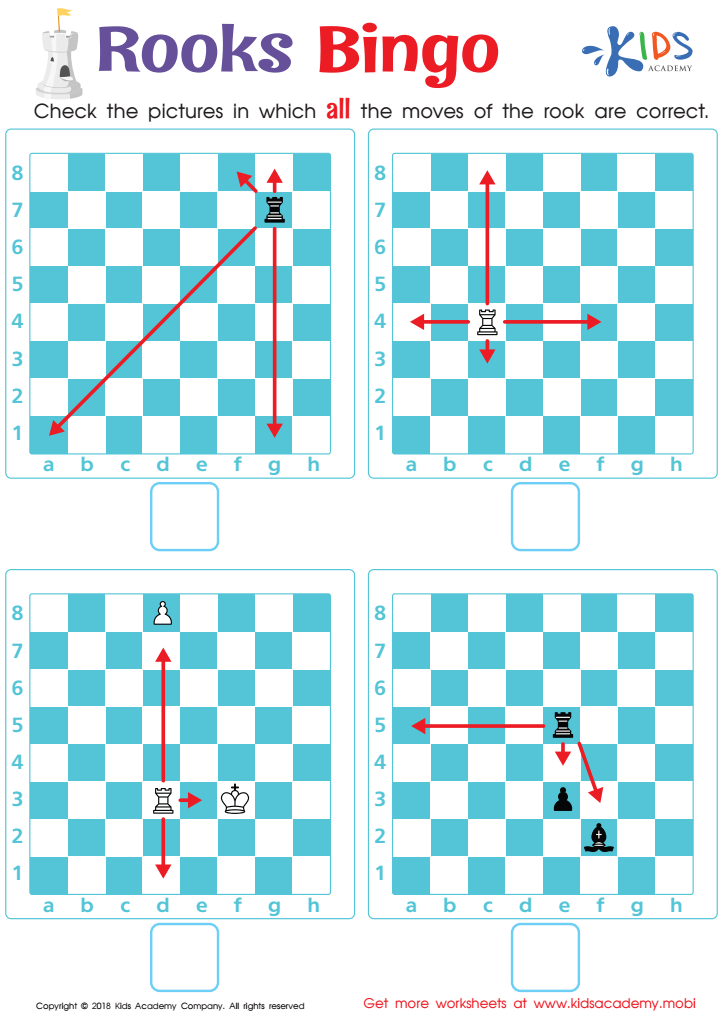
Rooks Bingo Worksheet







Recognizing patterns is a foundational skill for children aged 5-8, critical in both cognitive and academic development. Firstly, pattern recognition fosters mathematical thinking. Many mathematical concepts like sequences, number sense, and even basic arithmetic operations (such as addition and multiplication) are built upon understanding patterns. A strong grasp of patterns forms a basis for more complex math skills later on.
Additionally, pattern recognition enhances language and literacy skills. Language itself is filled with predictable patterns, be it in sentence structures, rhythms in poetry, or phonics. Grasping these patterns helps children in decoding words, predicting story sequences, and enhancing overall reading comprehension.
Further, pattern recognition aids in developing problem-solving skills. Children who can identify patterns tend to approach problems systematically, making them more efficient learners. This skill is omnipresent in science and coding, where recognizing and predicting sequences is integral.
Socially and emotionally, recognizing patterns supports routine-building and behavioral predictability, providing children with a sense of security and structure.
Therefore, educators and parents should nurture pattern recognition to support broad areas of development, from academics to daily life skills, ensuring children build a robust foundation for their future learning and everyday lives.








