Spatial understanding Normal Worksheets for Ages 5-8
3 filtered results
-
From - To
Enhance your child's spatial understanding with our engaging Normal Worksheets designed for ages 5-8. These vibrant, age-appropriate worksheets help develop essential skills such as directionality, shape recognition, and relationship to space. Through fun activities and puzzles, children will improve their ability to visualize and interact with their environment. Our user-friendly printable resources not only make learning enjoyable but also bolster cognitive development and critical thinking. Perfect for teachers, parents, and homeschoolers, these worksheets provide a comprehensive approach to mastering spatial concepts. Foster your child's learning journey today with our thoughtfully crafted materials, ensuring a strong foundation for future academic success!
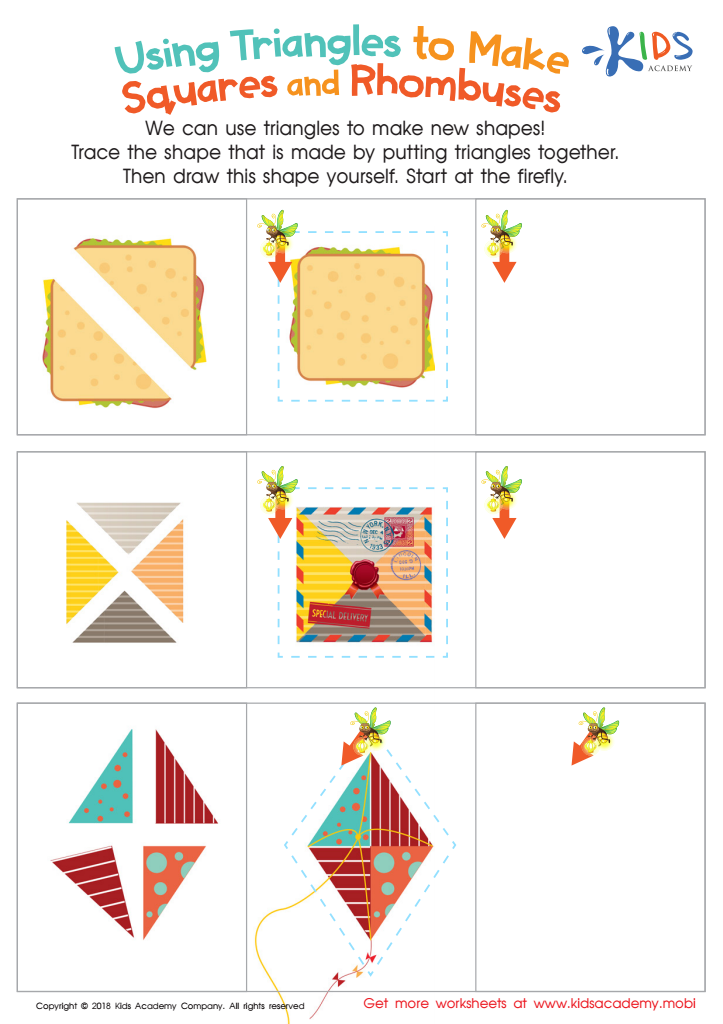
Using Triangles to Make Squares and Rhombuses Worksheet
 Assign to My Students
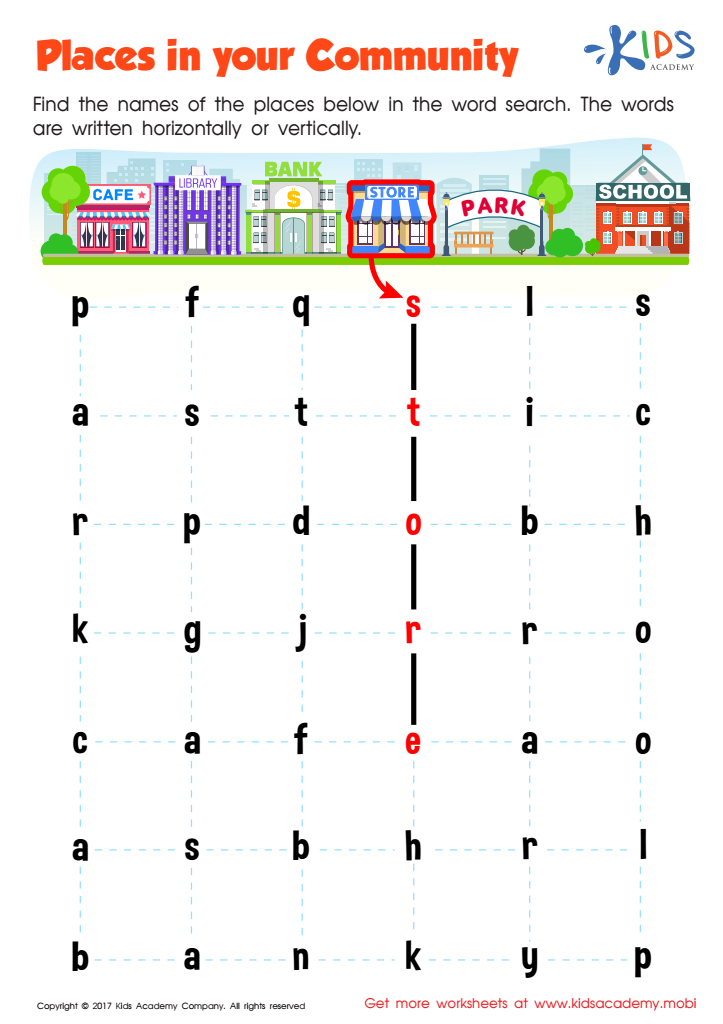
Places in Your Community Worksheet
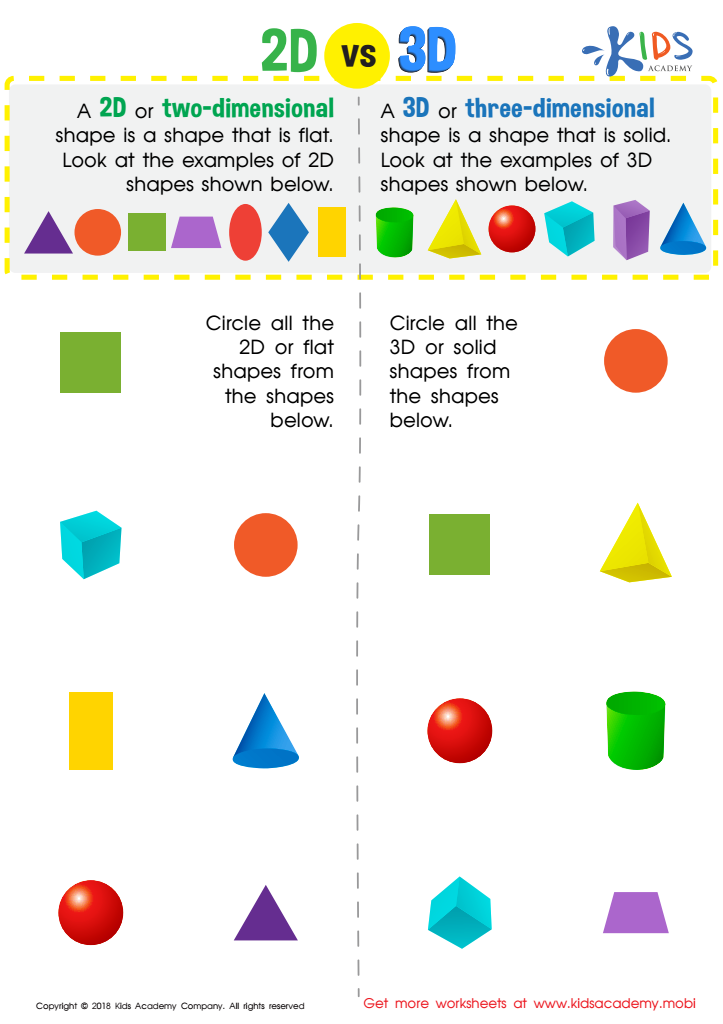
2D vs 3D Shapes Worksheet





Spatial understanding is a critical skill for children aged 5-8 as it serves as the foundation for various academic and everyday life tasks. It allows children to perceive and interact with their environment effectively. At this age, children are growing cognitively and can benefit tremendously from developing spatial awareness.
Parents and teachers should care about this skill because it plays a significant role in subjects like mathematics, science, and art. Spatial awareness aids in geometry, where children learn about shapes and their properties, and enhances their problem-solving and logical thinking skills. Furthermore, children with strong spatial skills often excel in STEM-related fields later in life.
Additionally, spatial understanding contributes to motor skills development. Activities such as drawing, building with blocks, or navigating physical spaces help young learners enhance their hand-eye coordination and control over their movements. Encouraging these activities can lead to greater confidence and independence.
Moreover, spatial reasoning influences a child’s ability to collaborate and communicate with peers, essential skills for social interaction. By fostering spatial understanding, parents and teachers equip children with essential tools for lifelong learning, critical thinking, and navigating an increasingly complex world. Engaging in spatial activities supports holistic development, making it a priority for caregivers and educators alike.








