Understanding base ten Normal Worksheets for Ages 5-8
3 filtered results
-
From - To
Welcome to our "Understanding Base Ten Normal Worksheets" page, designed specifically for children ages 5 to 8! These engaging and interactive worksheets help young learners grasp the fundamentals of the base ten number system. Through colorful activities, children will develop essential skills in place value, counting, and comparing numbers. Our thoughtfully crafted resources promote hands-on learning, making math concepts accessible and fun. Ideal for home practice or classroom use, these worksheets cater to various learning styles, ensuring that every child can thrive in their mathematical journey. Discover the joy of mastering base ten with our expert-designed worksheets today!
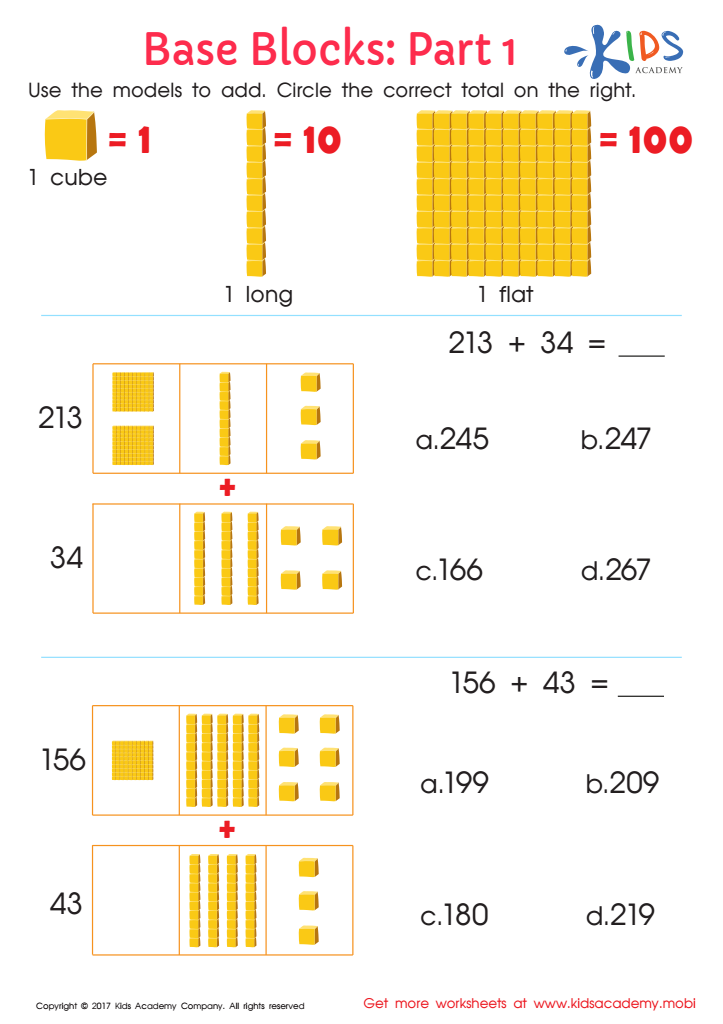
Base Ten Blocks Worksheet: Part 1
 Assign to My Students
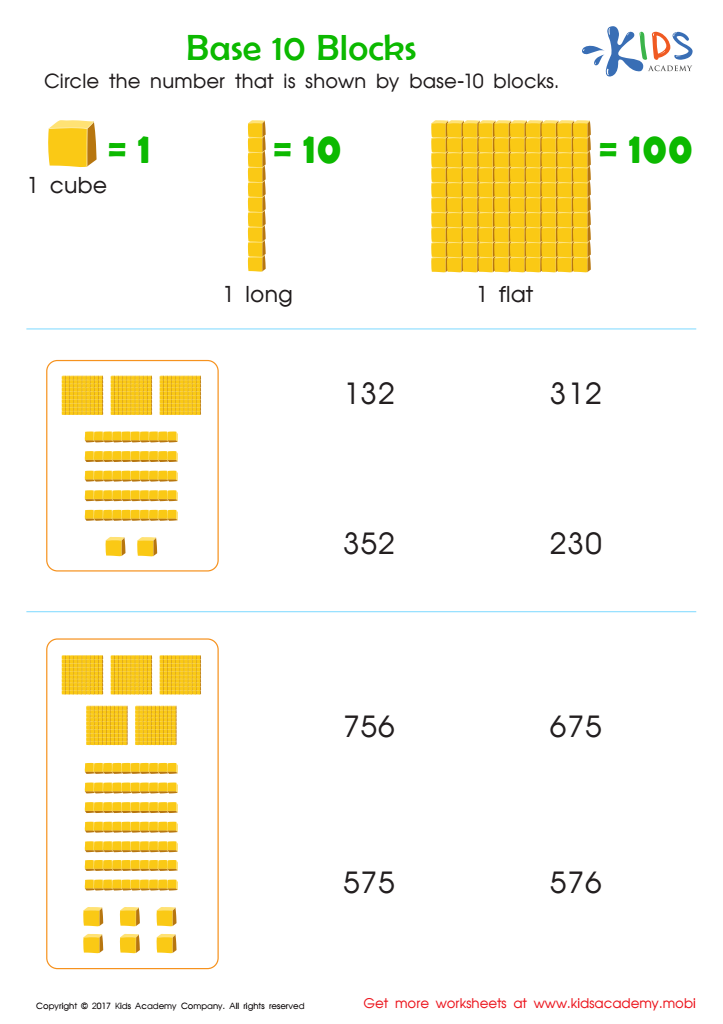
Base Ten Blocks Worksheet
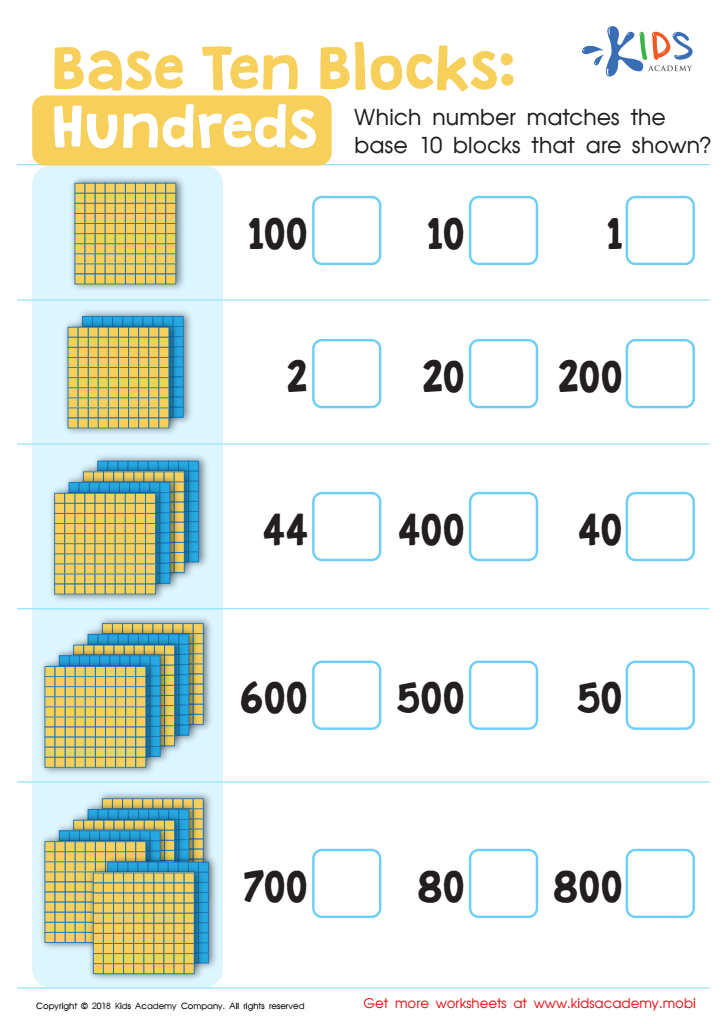
Base Ten Blocks: Hundreds Worksheet








Understanding base ten is crucial for young learners aged 5-8, as it forms the foundation for all future mathematical concepts. This number system, which we use daily, emphasizes the importance of place value and makes arithmetic operations more intuitive. For parents and teachers, fostering a strong grasp of base ten helps demystify math for children, enabling them to understand that the position of a digit impacts its value.
When children recognize that the number 23 consists of 2 tens and 3 ones, they build essential skills for addition, subtraction, multiplication, and even division. This knowledge paves the way for more advanced mathematical concepts, such as decimals and fractions, which will be encountered later in their education.
Furthermore, engaging with base ten enhances problem-solving abilities, as children learn to break down numbers into manageable units. It encourages logical reasoning and critical thinking, vital skills for lifelong learning. By prioritizing this aspect of mathematics, parents and teachers can boost children's confidence, making math a less daunting subject. Ultimately, ensuring children have a solid understanding of base ten not only supports their academic journey but also empowers them to approach math with positivity and competence in their everyday lives.








