
Understanding economics Normal Worksheets for Ages 5-8
3 filtered results
Difficulty Level
Grade
Age
-
From - To
Subject
Activity
Standards
Introduce the basics of economics to children aged 5-8 with our engaging worksheets designed to simplify essential concepts. At Kids Academy, our printable resources make learning fun and interactive, helping young learners grasp foundational ideas like saving, spending, and sharing. These age-appropriate exercises use playful scenarios to teach important financial skills, fostering early economic understanding and smart decision-making. Perfect for classroom use or at-home learning, our worksheets blend educational elements with creative illustrations to keep kids excited about everyday money matters. Equip little ones for a bright financial future with Kids Academy's "Understanding Economics" worksheets!
Favorites
With answer key
Interactive
 Assign to My Students
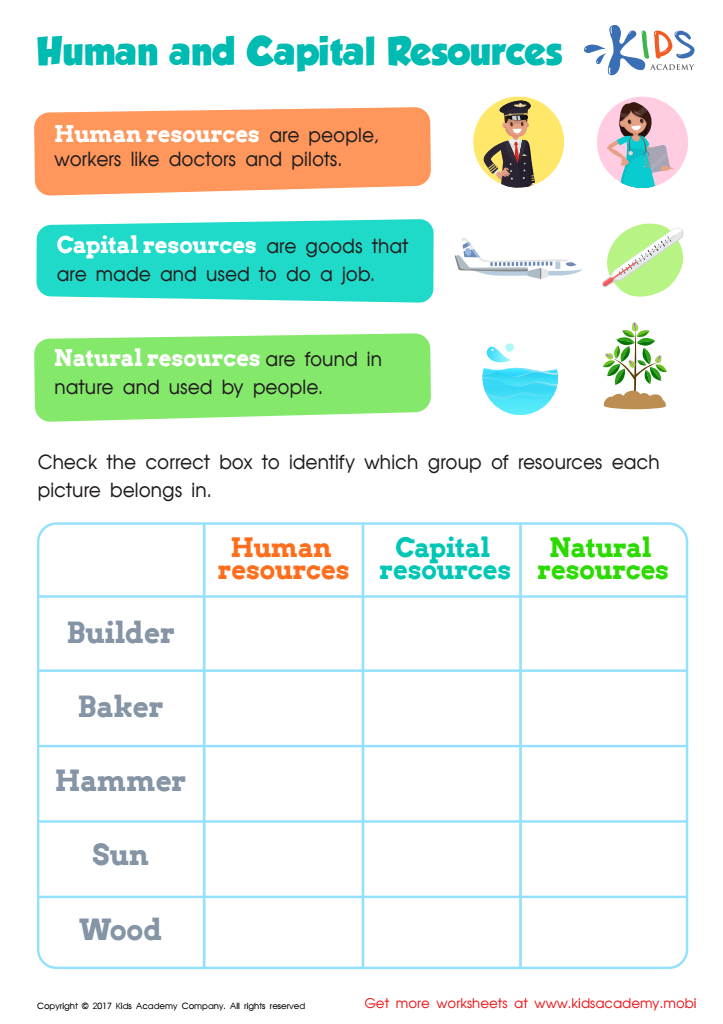
Human and Capital Resources Worksheet
It helps identify and differentiate human, natural and capital resources, so your kid can understand how each affects their world.
Human and Capital Resources Worksheet
Worksheet
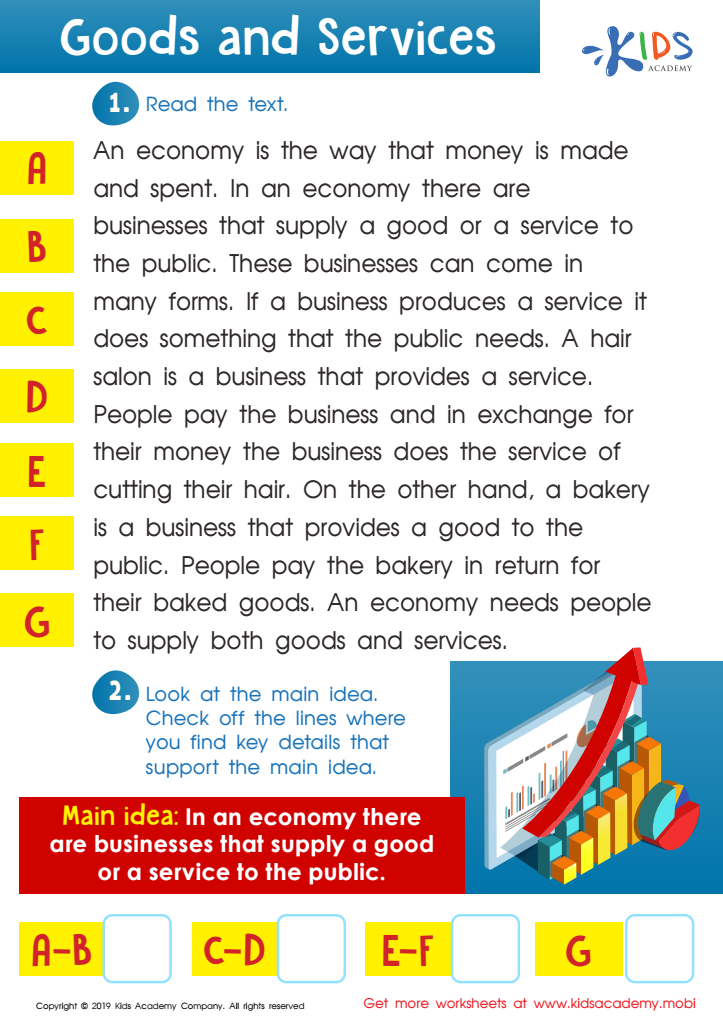
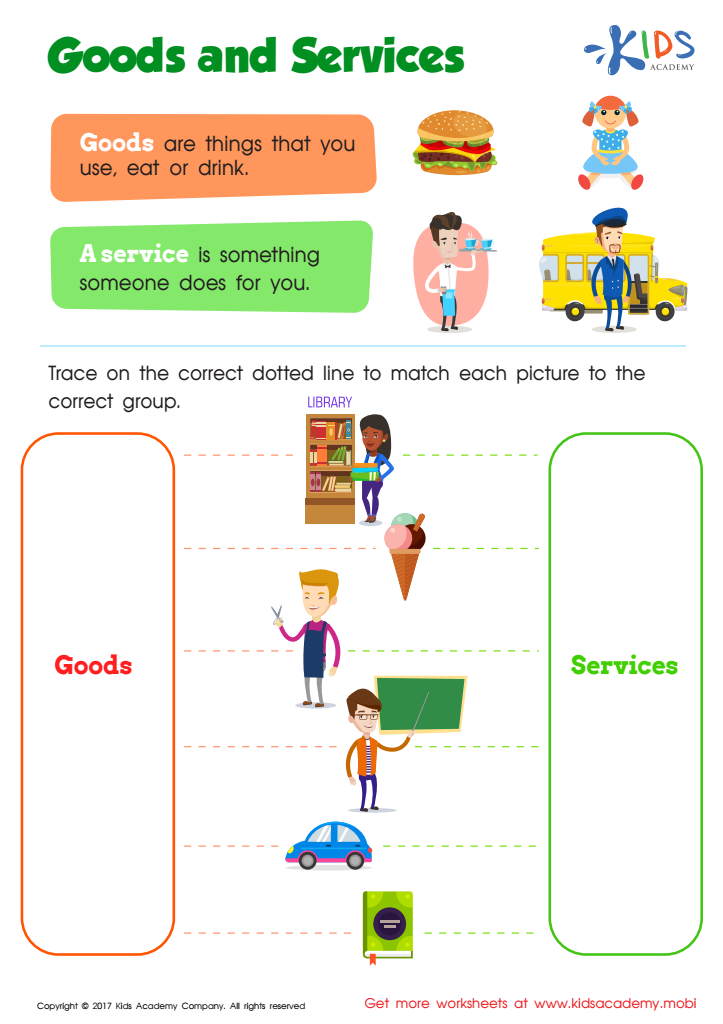
Goods and Services Worksheet
Teach your kids about the economy and businesses with this worksheet. Ask them if they know what goods and services are. After they complete the worksheet, they'll have a better understanding. Read the text to them and guide them step-by-step through the instructions. Help them learn!
Goods and Services Worksheet
Worksheet
Join Kids Academy for Free
Who is primarily going to use this learning content?






Understanding basic economic concepts can significantly benefit young children, and here's why parents and teachers should care:
First, early exposure to economics helps develop responsible financial habits. When children grasp the simple relationship between earning, saving, and spending, they begin to make more thoughtful decisions with money, even in small ways like managing their allowance.
Second, learning about economics can foster critical thinking and problem-solving skills. For example, understanding the concept of scarcity—how resources are limited and must be used wisely—encourages kids to weigh their choices and prioritize needs over wants.
Additionally, teaching basic economics promotes numeracy. As children use numbers and basic math to understand principles like trade-offs and value, they reinforce important math skills they'll use throughout their lives.
Economics education also supports social awareness. Kids become more conscious of how different families, communities, and countries make choices based on available resources, nurturing empathy and global awareness.
Lastly, these lessons prepare children for future academic pursuits and careers. A basic understanding of economics can serve as a foundation for more advanced studies and help children see the relevance of their education in real-world contexts.
Investing time in teaching these concepts early on equips children with essential life skills, promoting personal financial literacy and socially responsible behavior.








