
Understanding times tables Normal Worksheets for Ages 5-8
3 filtered results
Difficulty Level
Grade
Age
-
From - To
Subject
Activity
Standards
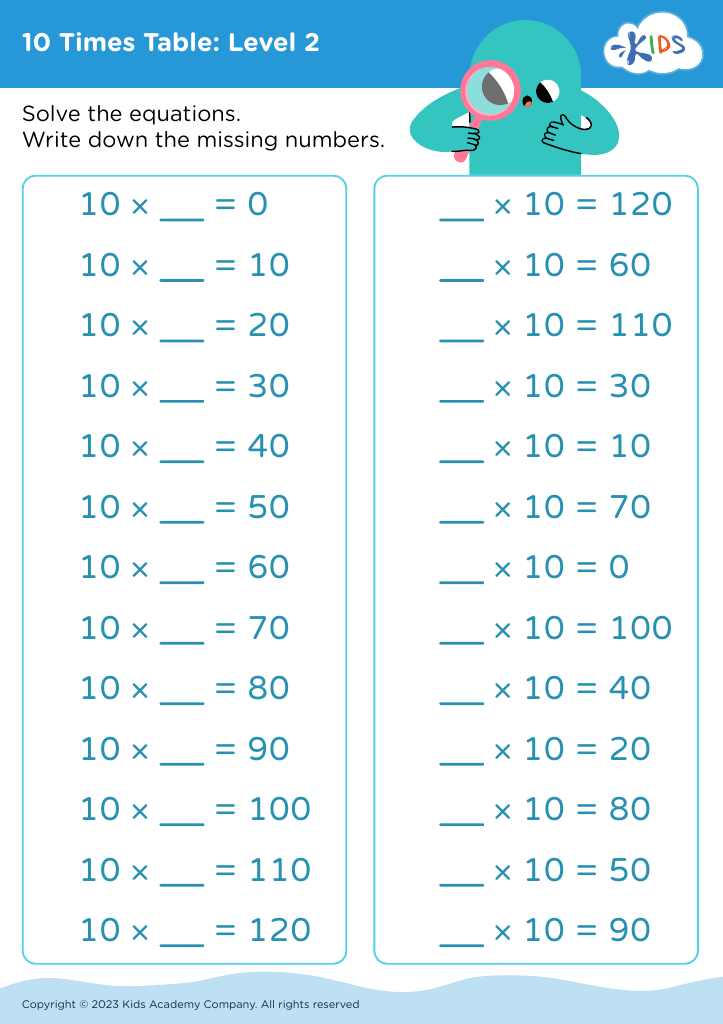
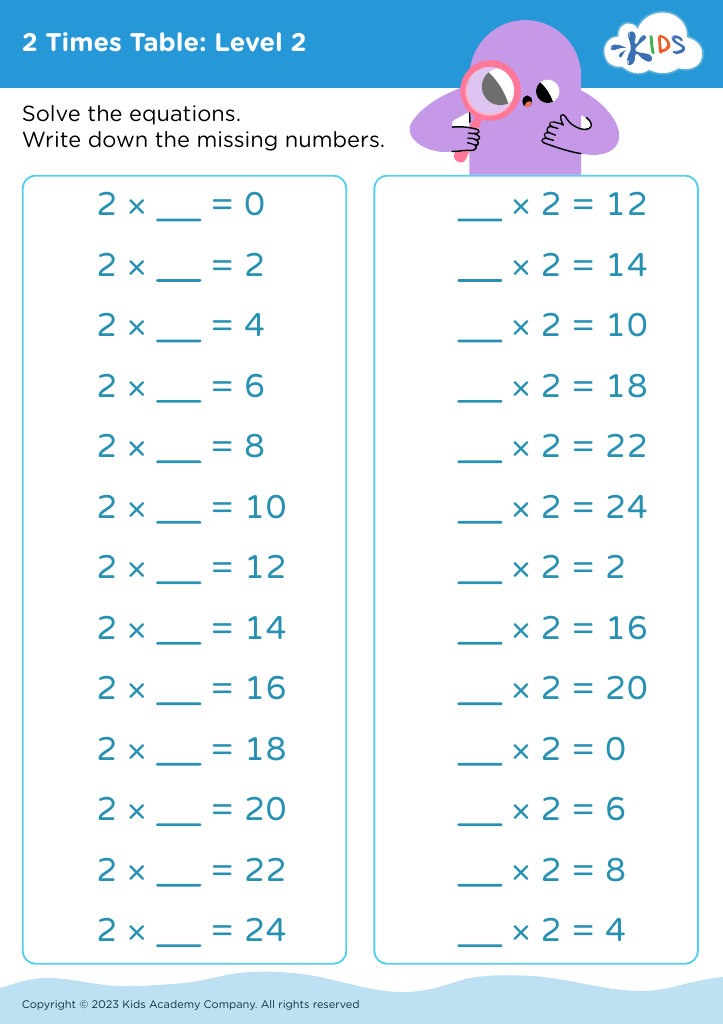
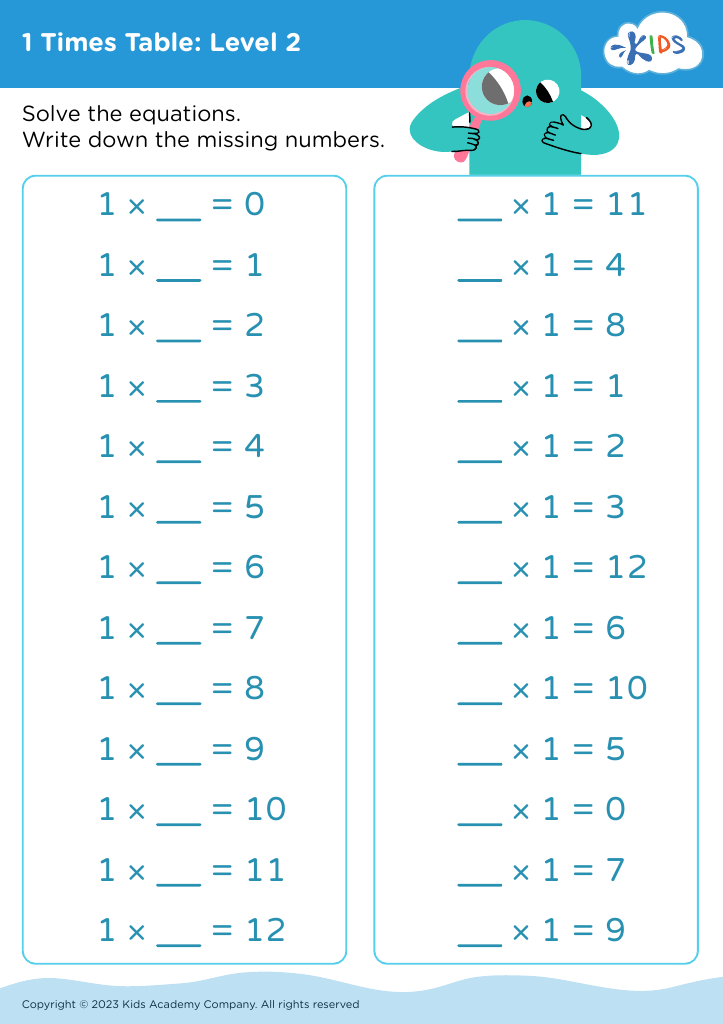
Unlock the world of multiplication with our "Understanding Times Tables Normal Worksheets" designed for children ages 5-8! Our engaging worksheets help young learners grasp the fundamentals of times tables through fun and interactive exercises. Each worksheet is tailored to suit various skill levels, ensuring that every child progresses at their own pace. With colorful illustrations and relatable examples, these resources make learning multiplication enjoyable and effective. Ideal for home study or classroom use, our worksheets promote confidence and mastery in essential math skills. Start your child’s journey to becoming a times tables whiz today! Explore our printable worksheets now.
Favorites
With answer key
Interactive
Join Kids Academy for Free
Who is primarily going to use this learning content?






Understanding times tables is fundamental for children aged 5-8 as it builds a strong mathematical foundation crucial for their academic development. Mastery of times tables fosters number sense, enhancing children's ability to manipulate numbers and solve problems with confidence. This early understanding aids in their ability to perform basic arithmetic operations, like addition and subtraction, with greater ease.
Furthermore, learning times tables helps improve memory and concentration skills, encouraging cognitive development essential at this age. As students progress in math, a solid grasp of multiplication plays a critical role in understanding more complex concepts, such as division, fractions, and eventually algebra.
Moreover, times tables are often a part of everyday life – from calculating expenses while shopping to understanding the concept of time and schedules. By emphasizing this skill, parents and teachers can help children connect math to real-life situations, fostering a positive attitude towards mathematics.
Additionally, an early mastery of times tables can boost children's confidence, reducing anxiety around math as they advance in their studies. In sum, cultivating a strong understanding of times tables is essential for fostering lifelong mathematical skills, confidence, and a love for learning.








