Uppercase identification Normal Worksheets for Ages 5-8
5 filtered results
-
From - To
Welcome to our Uppercase Identification Normal Worksheets for Ages 5-8! Designed specifically for young learners, these engaging worksheets help children master uppercase letter recognition through fun and interactive activities. Ideal for preschoolers and early elementary students, our resources encourage literacy development in a playful manner. Each worksheet features vibrant illustrations and varied exercises, allowing kids to practice identifying and matching uppercase letters with ease. Perfect for classroom settings or at-home learning, these worksheets foster essential skills while keeping learning enjoyable. Enhance your child’s literacy journey today with our captivating uppercase identification worksheets! Explore and download now to get started!
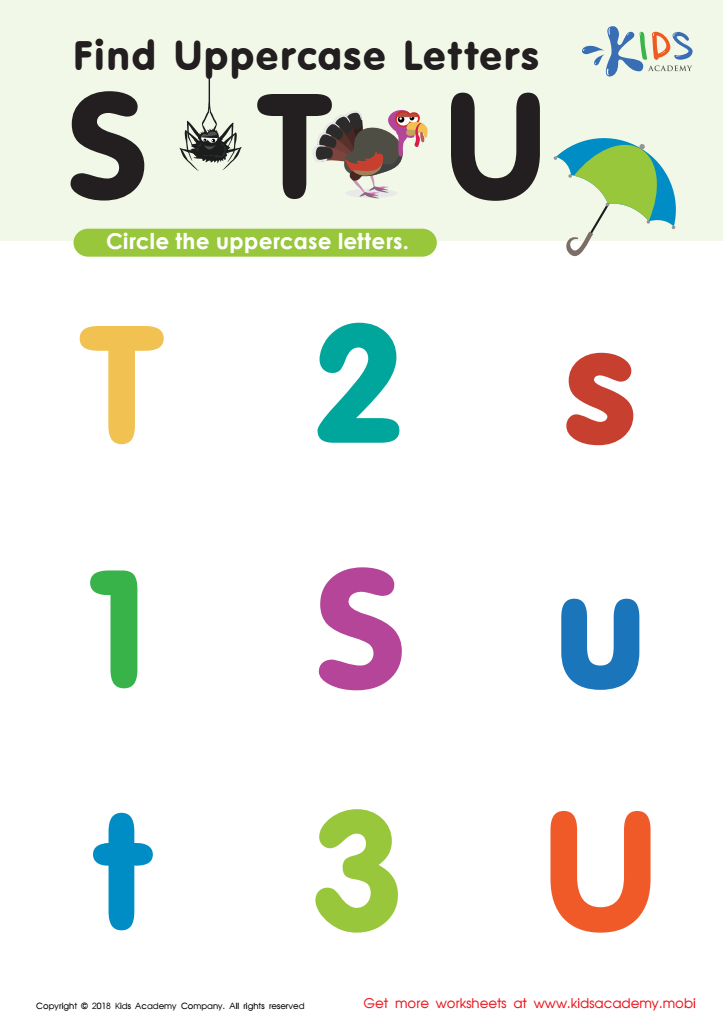
Find Uppercase Letters Worksheet
 Assign to My Students
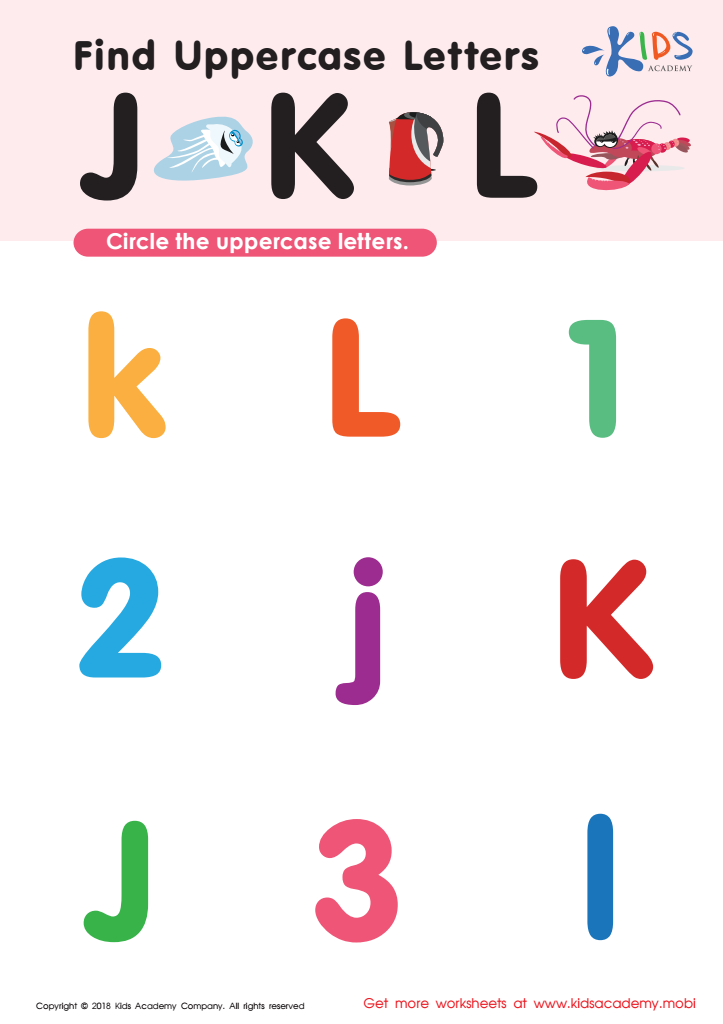
Find Uppercase Letters J, K, and L Worksheet
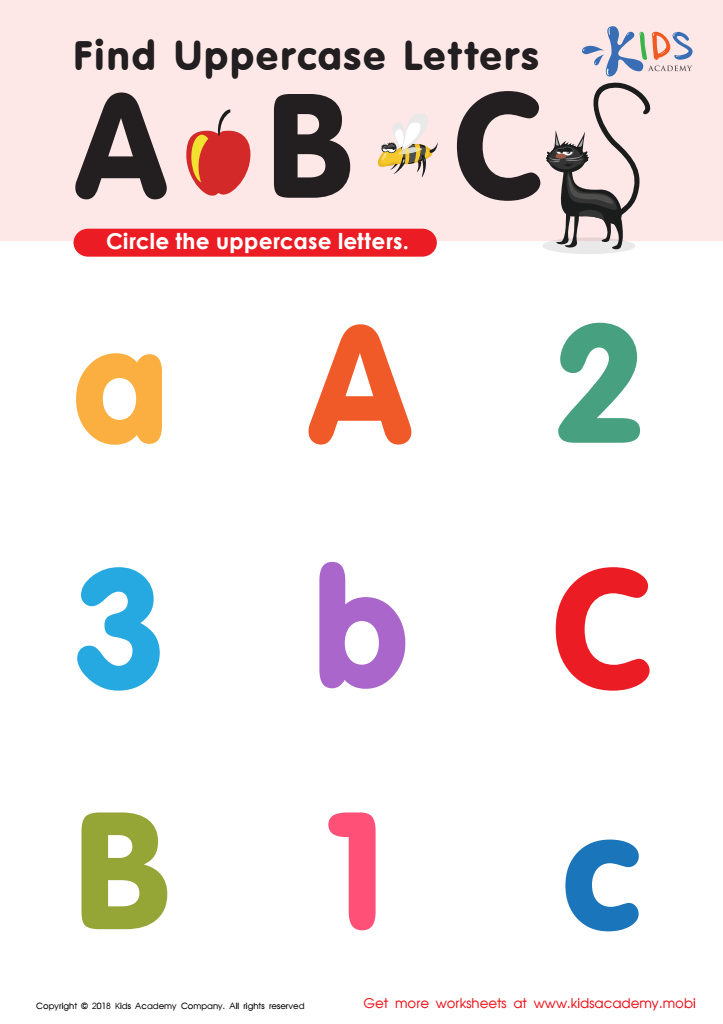
Find Uppercase Letters A, B, and C Worksheet
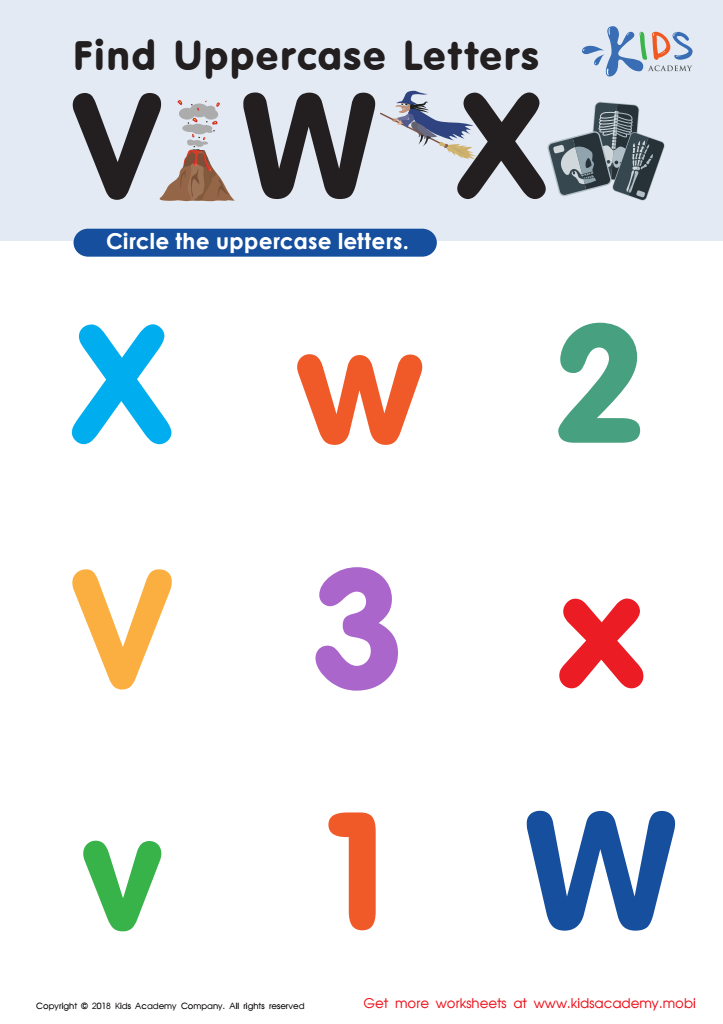
Find Uppercase Letters V, W, X Worksheet
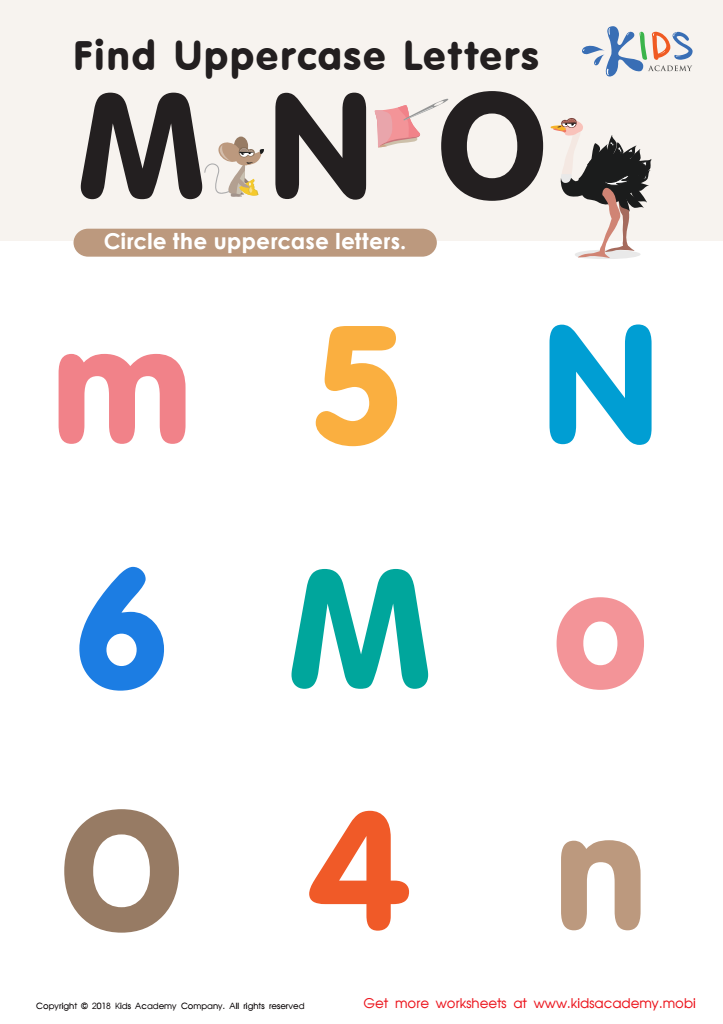
Find Uppercase Letters M, N, and O Worksheet








Uppercase letter identification is crucial for children aged 5-8, as it lays the foundation for literacy and communication skills necessary for their academic success. At this stage, children are often engaged in learning to read and write, and recognizing uppercase letters is a significant step in that journey. Uppercase letters serve various functions, such as indicating the beginning of sentences, proper nouns, and acronyms, which are essential for understanding and navigating text.
Moreover, learning uppercase letters enhances phonemic awareness, bridging the gap between spoken and written language. When children can identify these letters, they gain confidence in their ability to decode words, fostering a love for reading that can last a lifetime. Additionally, understanding uppercase letters supports hand-eye coordination and fine motor skills through writing practice.
Furthermore, parents and teachers play a vital role in encouraging this skill. Engaging children in interactive activities, like letter games and alphabet books, makes learning enjoyable and reinforces their identification skills. By actively supporting their children's uppercase letter identification, caregivers help set the stage for future literacy development, critical thinking, and effective communication—skills that are essential for success in school and beyond.








