Vocabulary improvement Normal Worksheets for Ages 5-8
5 filtered results
-
From - To
Enhance your child's vocabulary with our engaging Normal Worksheets designed specifically for ages 5-8! Our worksheets focus on vocabulary improvement through fun and interactive activities that promote learning while keeping your little ones entertained. Each worksheet includes various exercises such as matching words, identifying synonyms, and filling in the blanks, making it easy for young learners to grasp new words and their meanings. Tailored to suit different learning styles, these worksheets are perfect for enhancing language skills at home or in the classroom. Help your child build a strong vocabulary foundation today with our comprehensive resources!

Hansel and Gretel Geometry Maze Worksheet
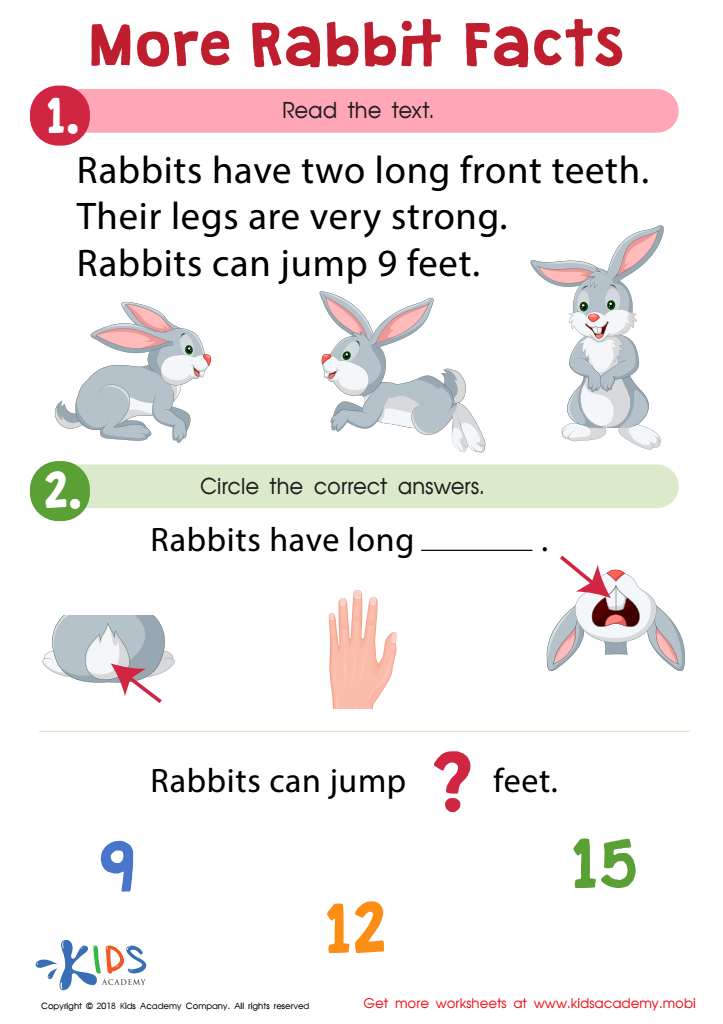
More Rabbit Facts Worksheet
Dental Coloring Page Worksheet
 Assign to My Students
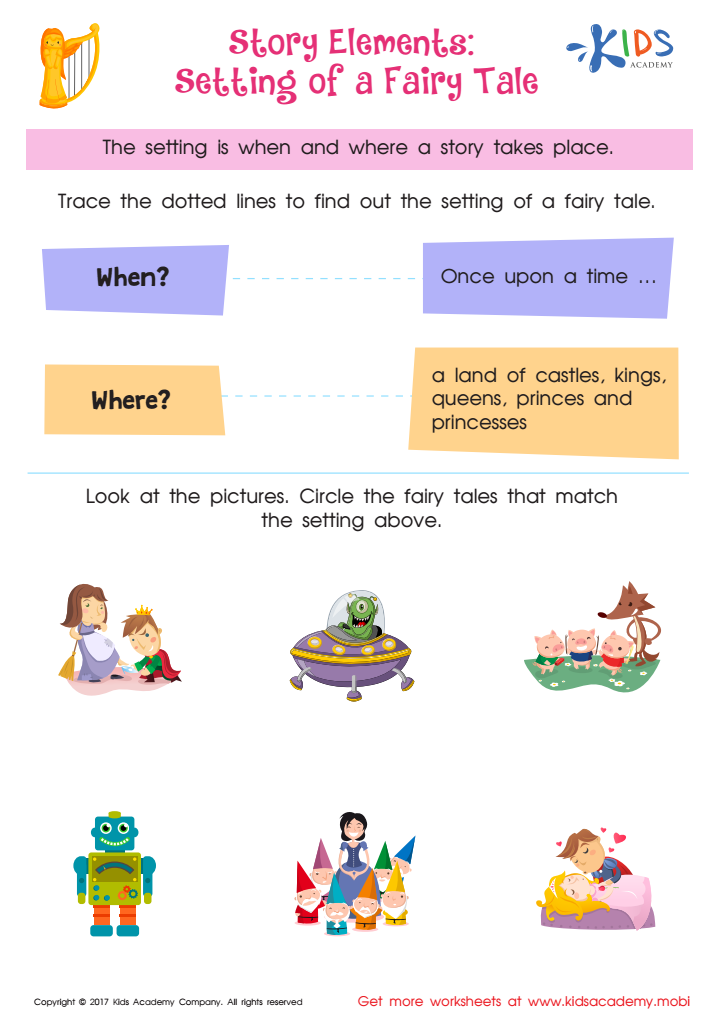
Story Elements: Setting of a Fairy Tale Printable
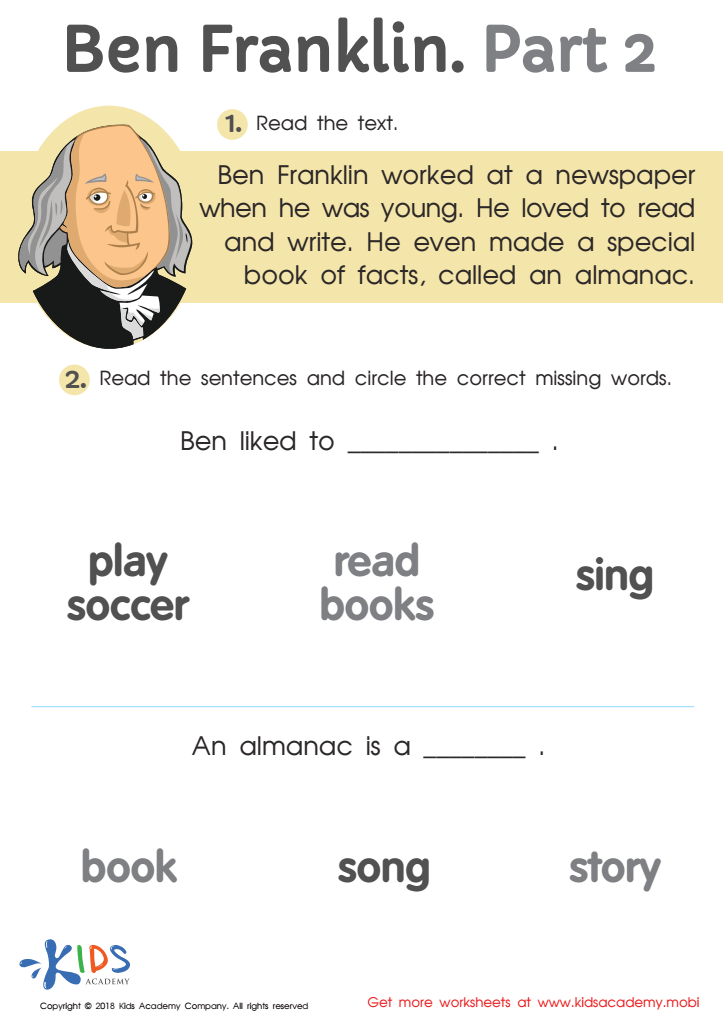
Ben Franklin Part 2 Worksheet





Vocabulary improvement for children ages 5-8 is crucial for their overall development and academic success. During these formative years, children inherently expand their language skills, which play a significant role in their ability to communicate, comprehend, and engage with the world around them. A robust vocabulary enhances literacy development, helping kids read more proficiently and express their thoughts more clearly.
For parents and teachers, investing in vocabulary improvement helps in fostering critical thinking skills. A rich vocabulary allows children to articulate their emotions, participate in discussions, and ask questions, which leads to better analytical skills and creativity. Additionally, improved vocabulary is linked to higher performance in standardized tests and academic achievements later on.
Furthermore, children with strong vocabulary skills often display better social interactions. They can navigate peer relationships through effective communication, leading to enhanced confidence and self-esteem. By emphasizing vocabulary improvement, parents and teachers not only prepare children for academic success but also equip them with life skills essential for navigating their social environments.
Ultimately, nurturing a child’s vocabulary lays the foundation for lifelong learning, enabling them to embrace challenges and succeed in diverse aspects of life. Hence, it is vital for educators and caregivers to prioritize this crucial development stage.








