Normal Addition and Subtraction Word Problems Worksheets for Ages 5-8 - Page 2
29 filtered results
-
From - To
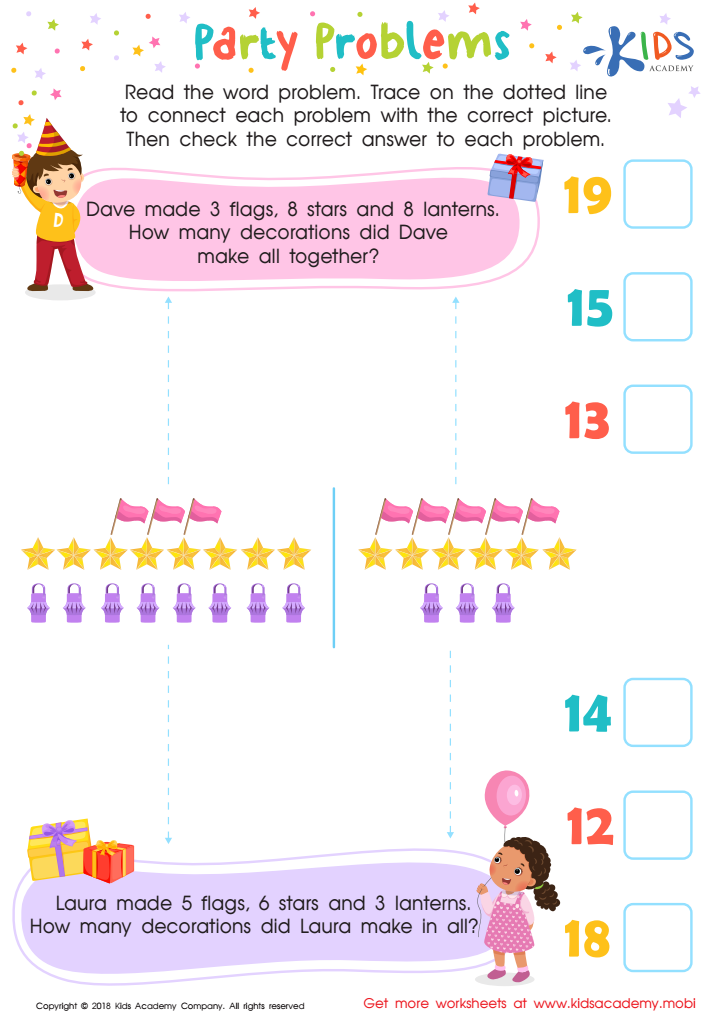
Party Problems Worksheet
 Assign to My Students
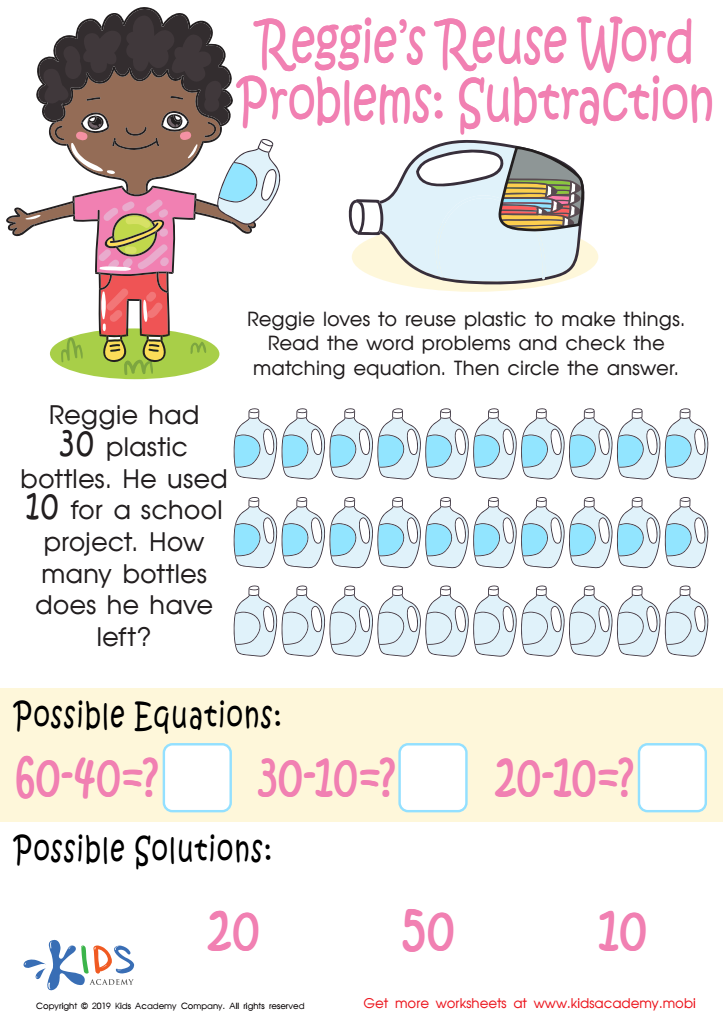
Reggie's Reuse Word Problems: Subtraction Worksheet
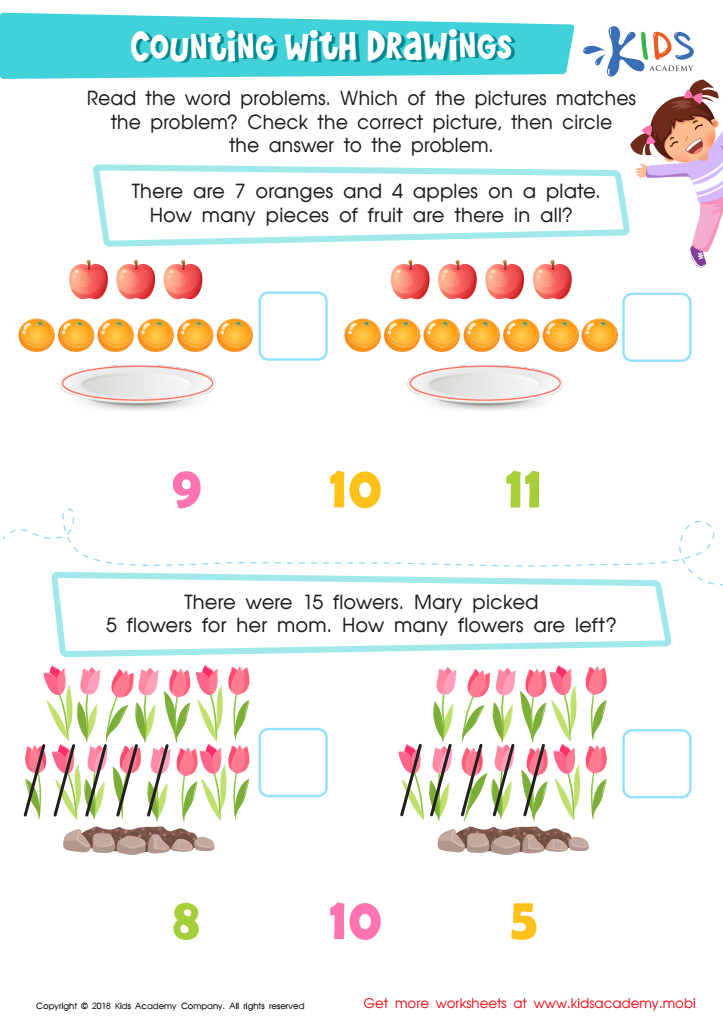
Counting with Drawings:Fruits & Flowers Worksheet
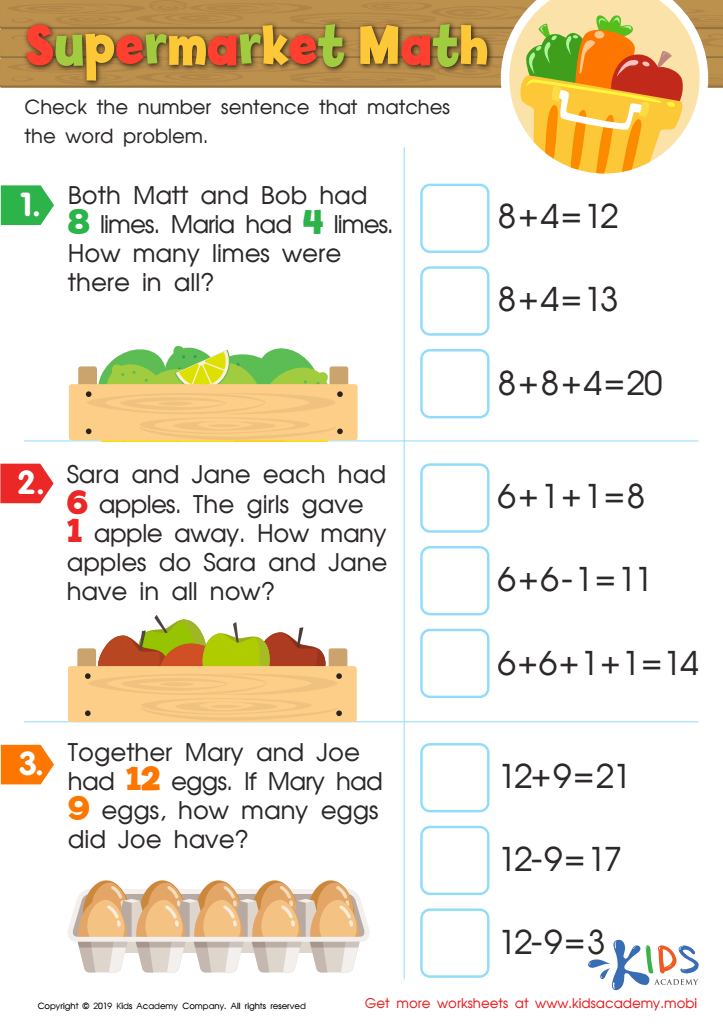
Supermarket Math Worksheet
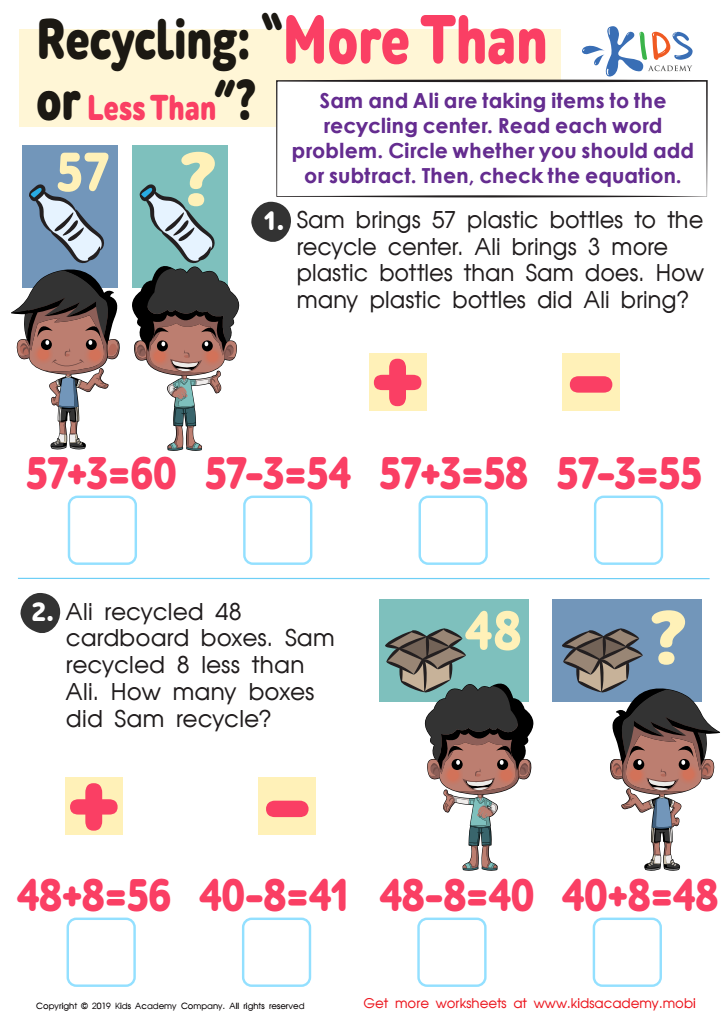
Recycling - More or Less Worksheet








Parents and teachers should prioritize normal addition and subtraction word problems for ages 5-8 because they are fundamental to developing mathematical thinking and problem-solving skills. At this age, children are transitioning from counting to using numbers in more abstract ways, and word problems provide a context for them to apply their skills in real-life scenarios.
These problems enhance critical thinking, enabling children to read, comprehend, and analyze information before finding a solution. Furthermore, they bridge mathematical concepts with language skills, as children learn to pick out key information from a narrative. This not only improves their numeracy but also fosters their reading comprehension abilities.
Additionally, working through word problems cultivates perseverance and logical reasoning. Children encounter challenges that encourage them to think creatively and explore multiple ways to arrive at an answer, building resilience as they learn that mistakes can be stepping stones to understanding.
Ultimately, by emphasizing normal addition and subtraction word problems, parents and teachers equip children with essential skills that apply beyond math—nurturing thinkers and problem solvers for life. This foundational work supports academic success and prepares them for more complex concepts as they progress through their education.