Hand-eye Coordination Normal Addition & Subtraction Worksheets for Ages 5-8
3 filtered results
-
From - To
Boost your child's math and motor skills with our Hand-eye Coordination Normal Addition & Subtraction Worksheets designed for ages 5 to 8. These engaging activities combine fundamental math operations with fun exercises to enhance both cognitive development and hand-eye coordination. Perfect for early learners, our worksheets offer a blend of visually stimulating problems and playful illustrations, capturing young minds while reinforcing key arithmetic skills. Ideal for home or classroom use, these printable materials make learning math an enjoyable and interactive experience. Help your child achieve academic success and fine motor mastery with our thoughtfully designed worksheets.
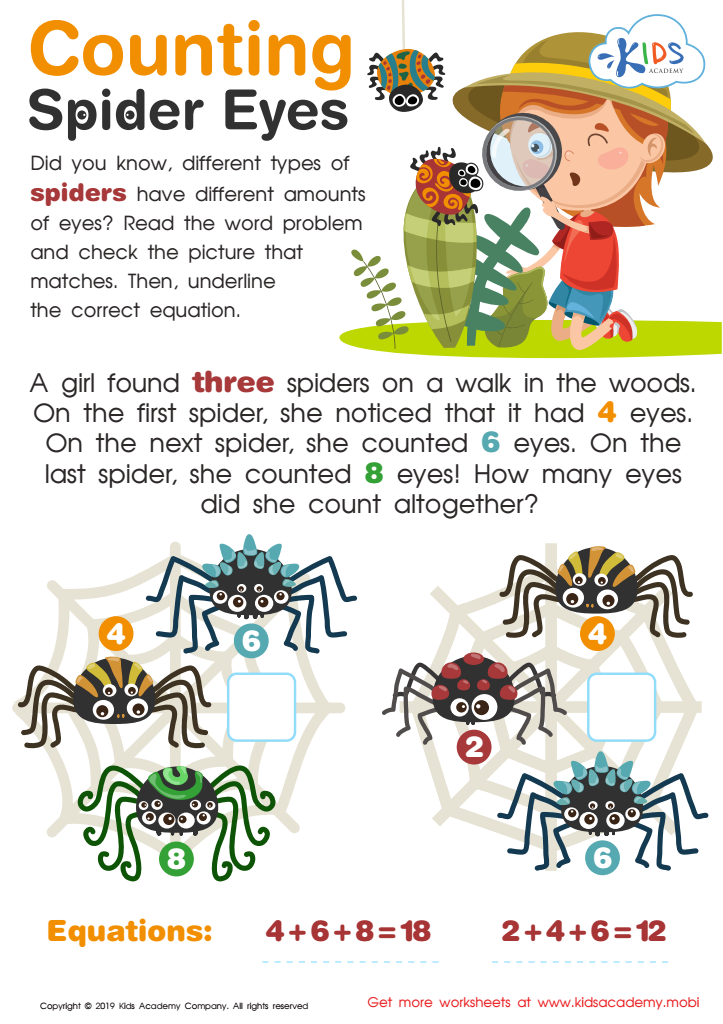
Counting Spider Eyes Worksheet
 Assign to My Students
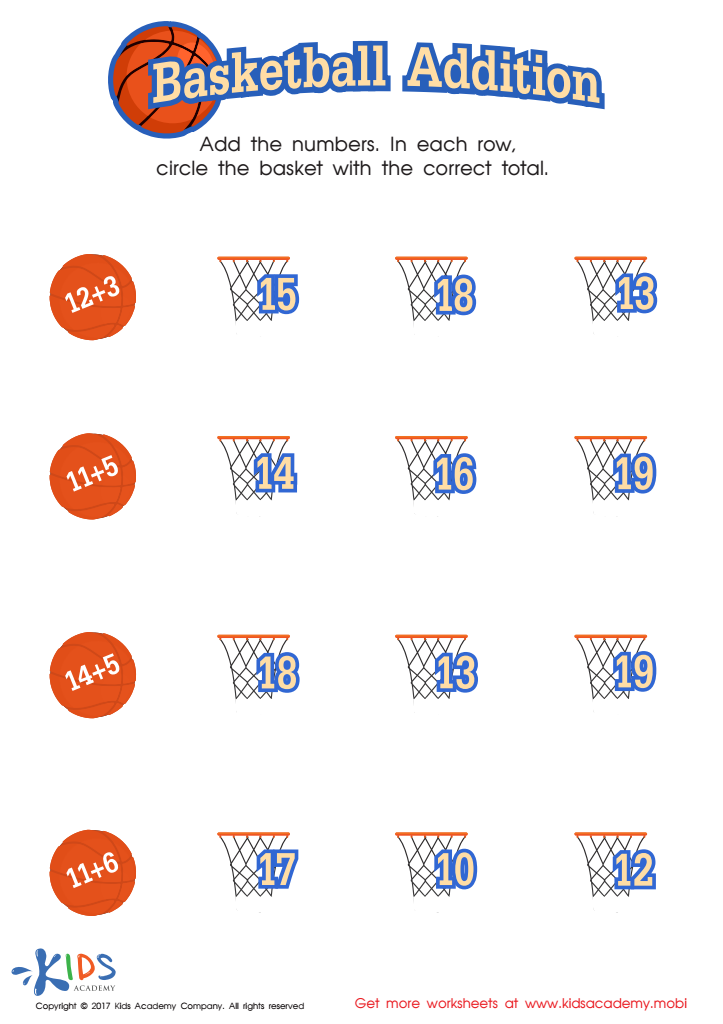
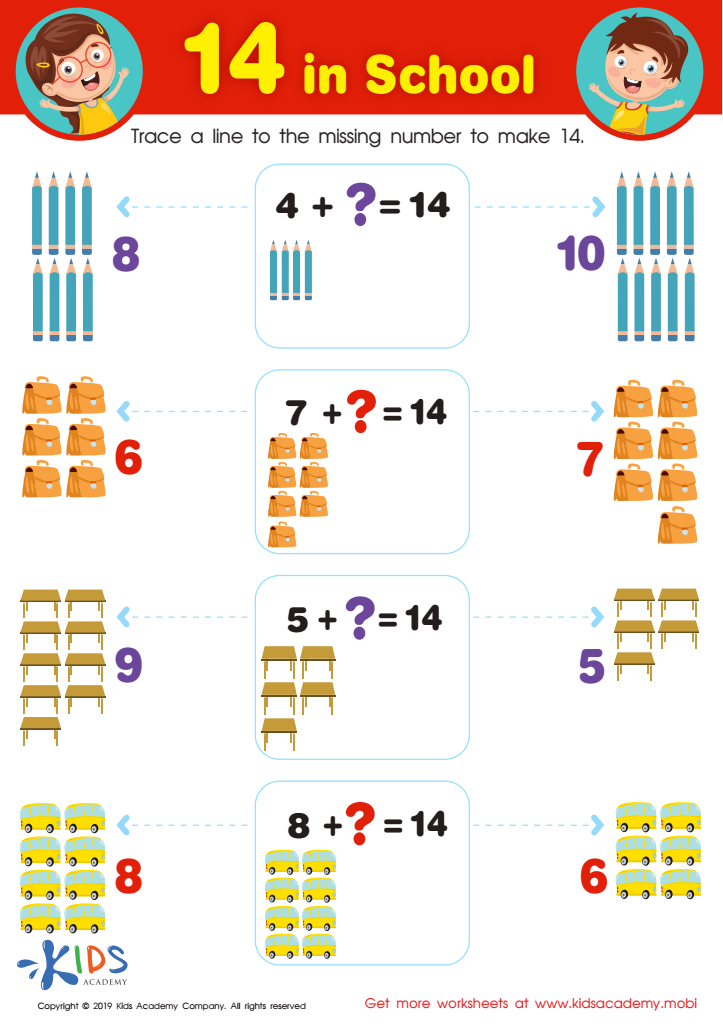
14 in School Worksheet








Parents and teachers should prioritize hand-eye coordination in children aged 5-8 as it plays a pivotal role in cognitive and motor skill development. Hand-eye coordination involves the efficient synchronization of visual input and physical movements, foundational for many everyday tasks and academic activities.
Firstly, strong hand-eye coordination directly impacts writing and drawing skills. These activities not only enhance motor skills but also critical thinking and creativity, crucial aspects in early education. Children with well-developed hand-eye coordination find it easier to learn to form letters and numbers, boosting their academic performance and confidence.
Additionally, hand-eye coordination is closely tied to mastering basic mathematical skills like addition and subtraction. As kids physically manipulate objects to solve problems, they gain a tactile understanding of numbers and quantities, reinforcing abstract mathematical concepts.
This coordination also fosters social and recreational development. Many playground activities and sports require good hand-eye coordination, helping kids participate confidently in group play. This social involvement enhances cooperation, team spirit, and emotional well-being.
Addressing hand-eye coordination at an early age sets children up for a lifetime of academic success and physical prowess, forming a solid foundation for future learning and personal growth. Hence, integrating activities to improve coordination within their routines benefits children tremendously.








