Multiplication practice Normal Advanced Times Tables up to 12 Worksheets for Ages 5-8
12 filtered results
-
From - To
Elevate your child's math skills with our "Multiplication Practice Normal Advanced Times Tables up to 12" worksheets designed for ages 5-8. These engaging worksheets are perfect for reinforcing and mastering multiplication concepts, featuring a variety of exercises that cater to different learning levels. Kids will enjoy solving problems centered around the times tables up to 12, enhancing their number sense and building confidence in mathematical abilities. Ideal for home or classroom use, these worksheets come with clear instructions to support independent learning. Start your journey of mastering multiplication and watch your little ones flourish in their math skills!
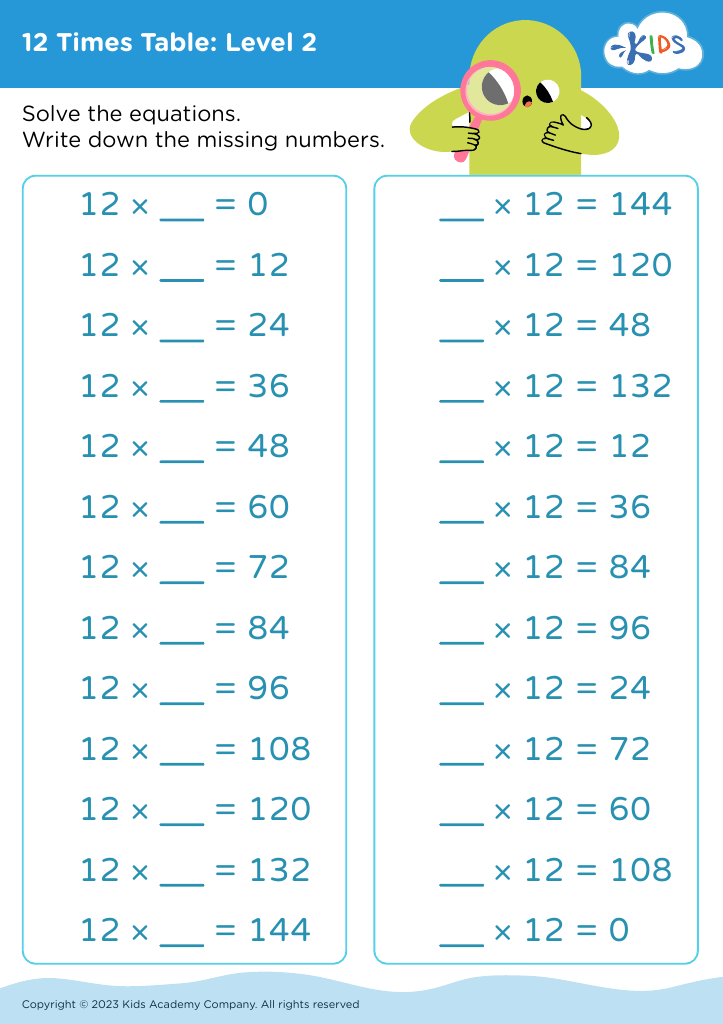
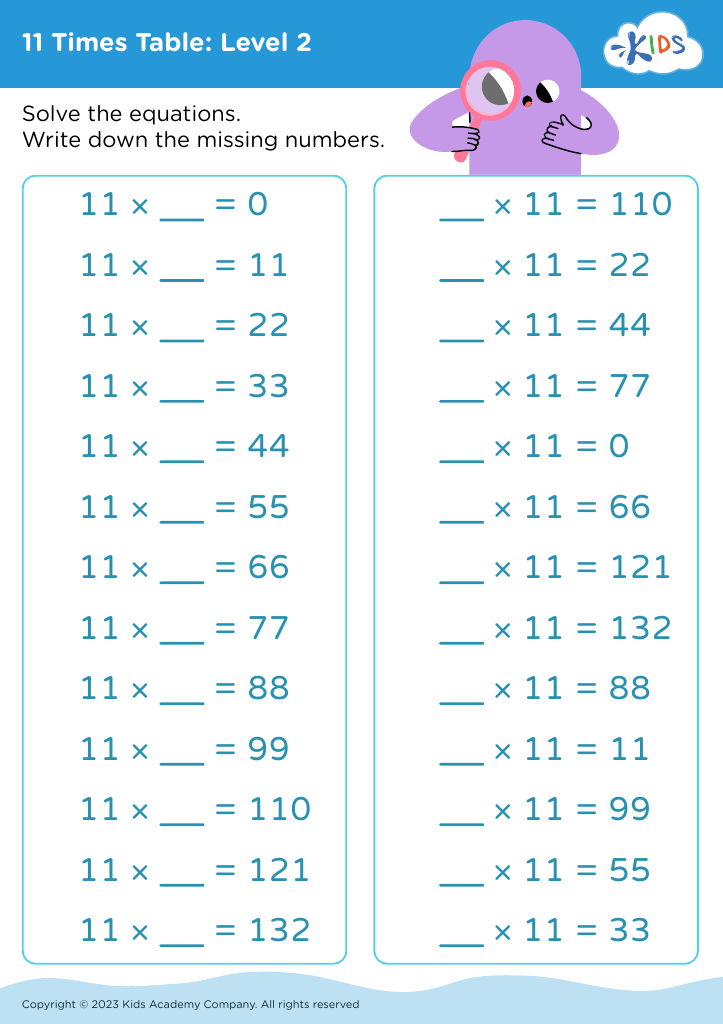
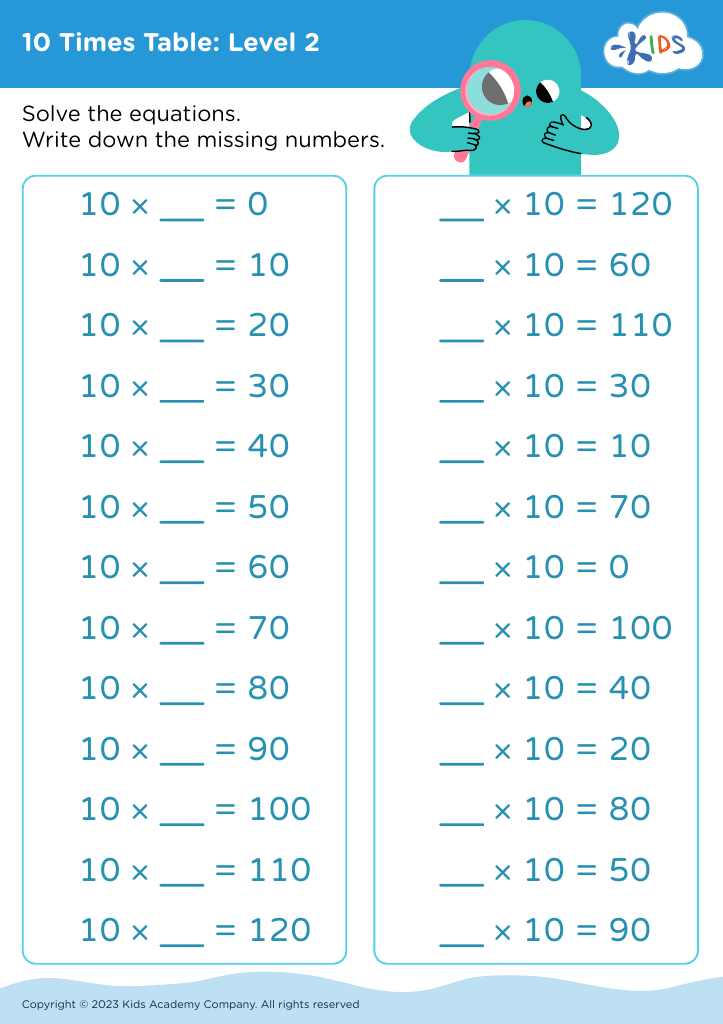
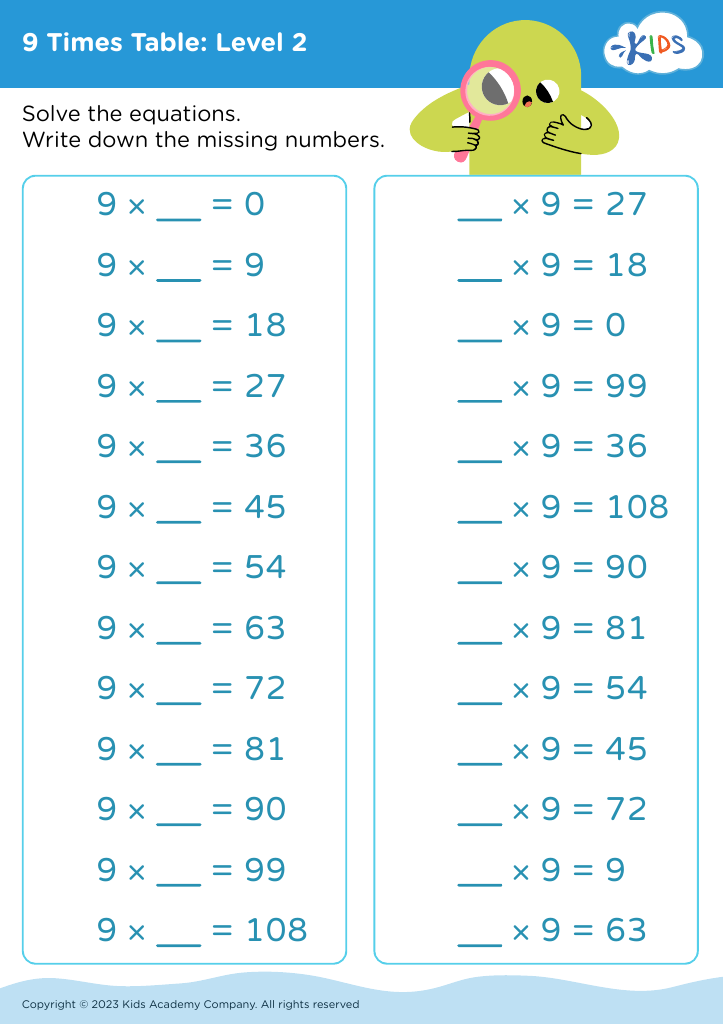
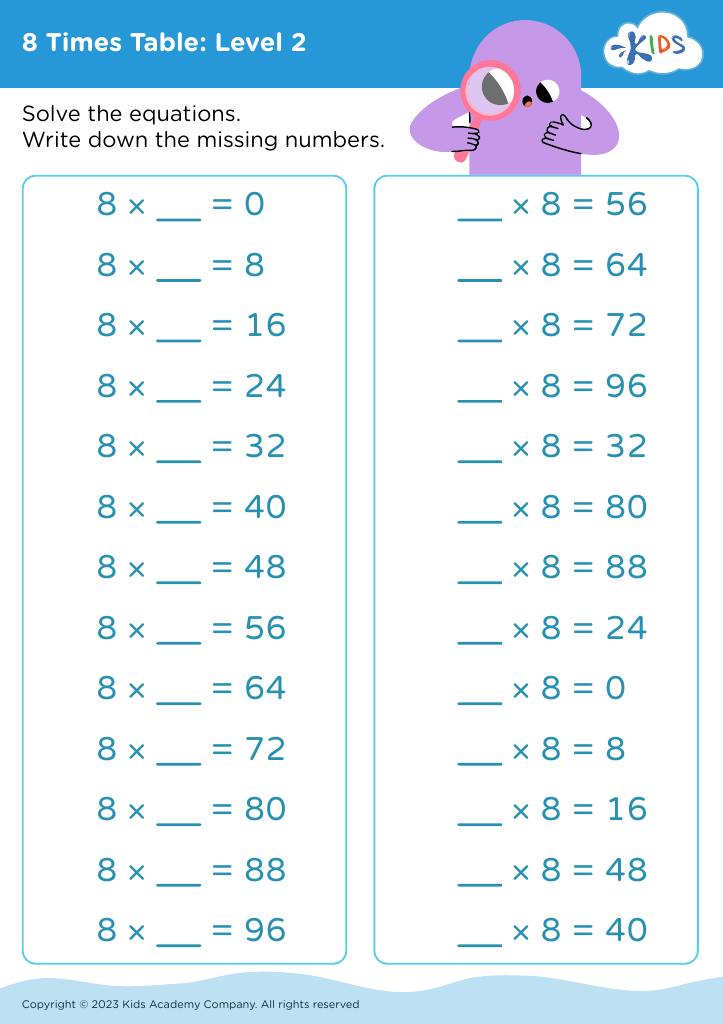
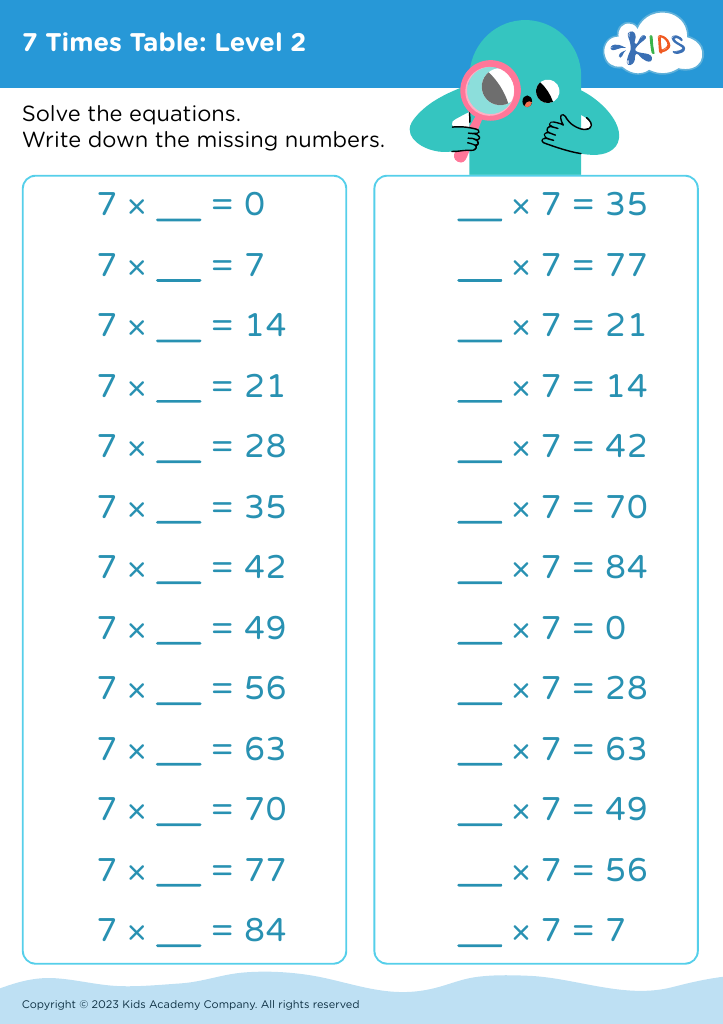
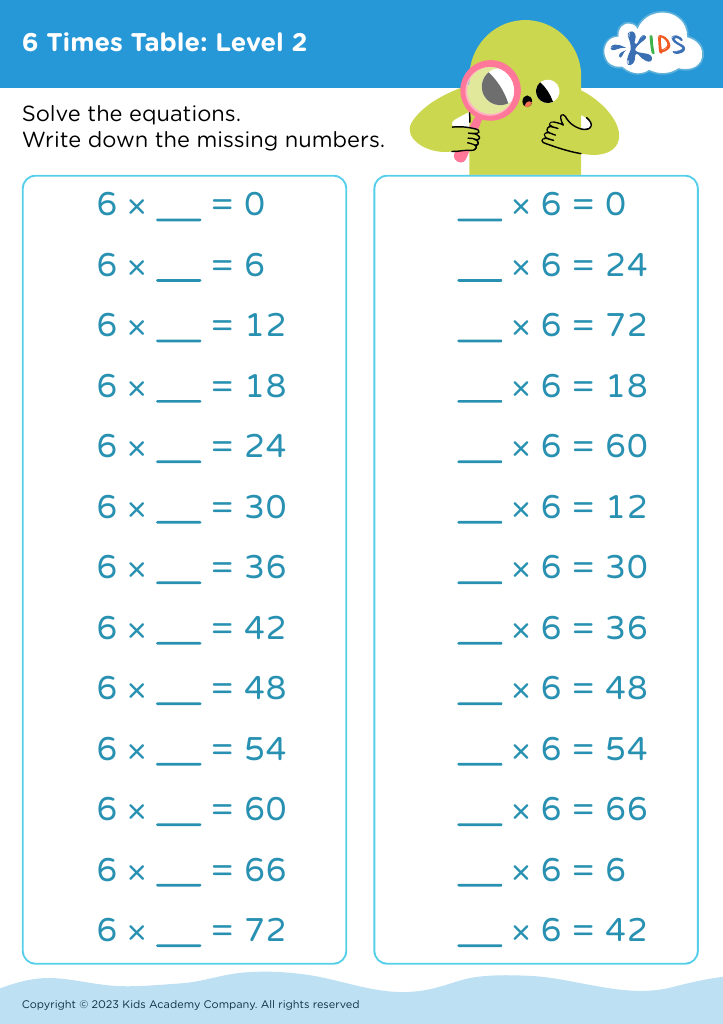
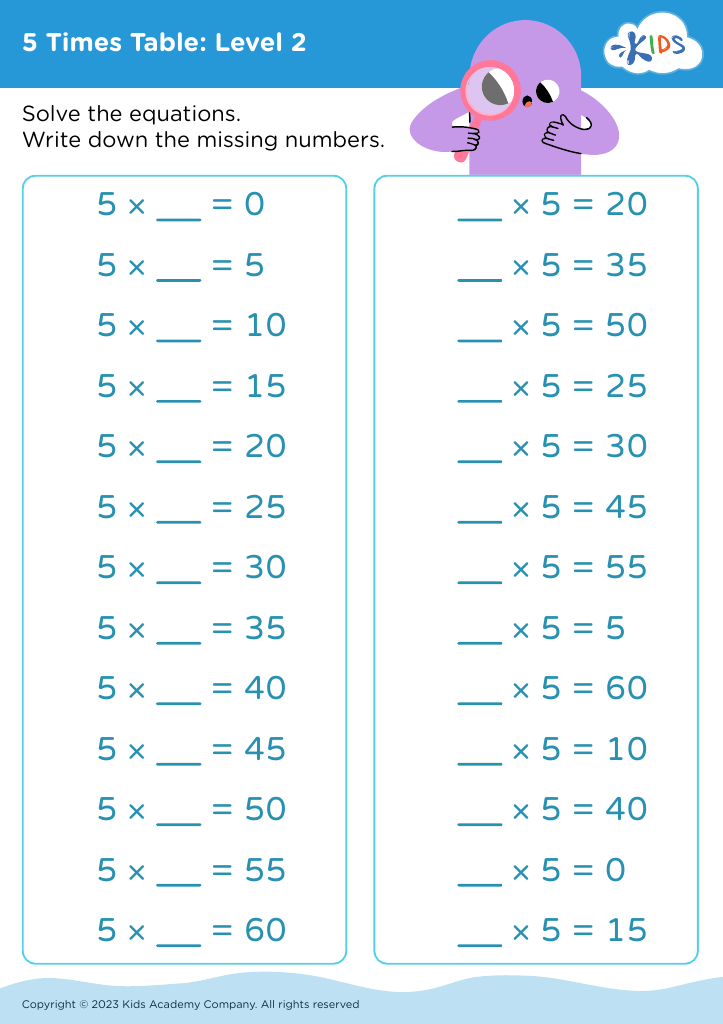
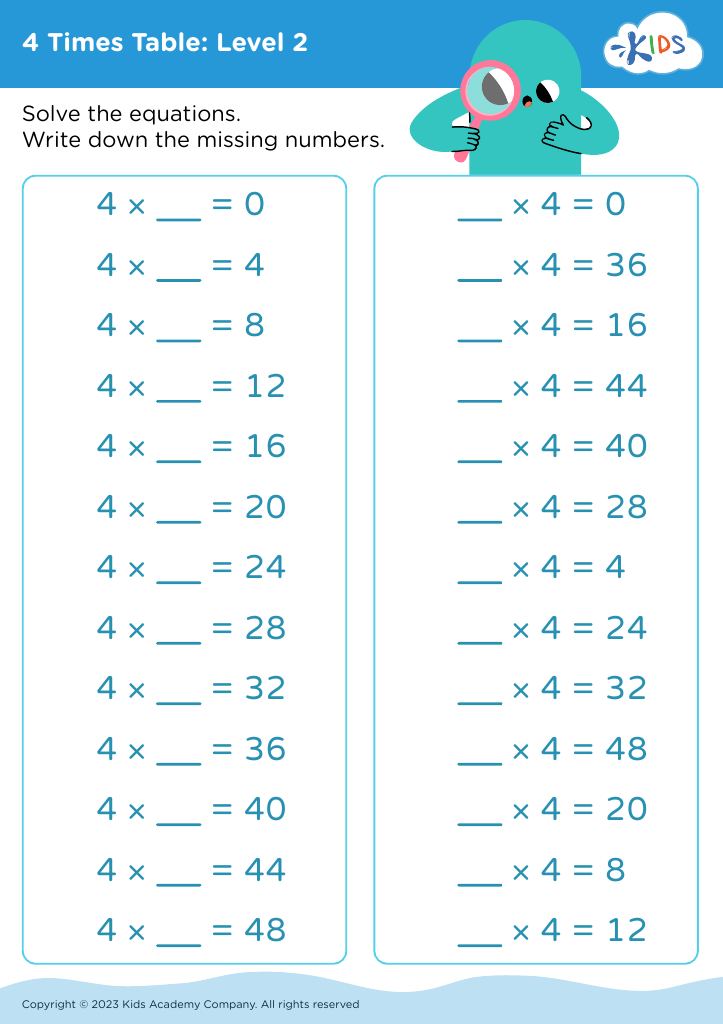
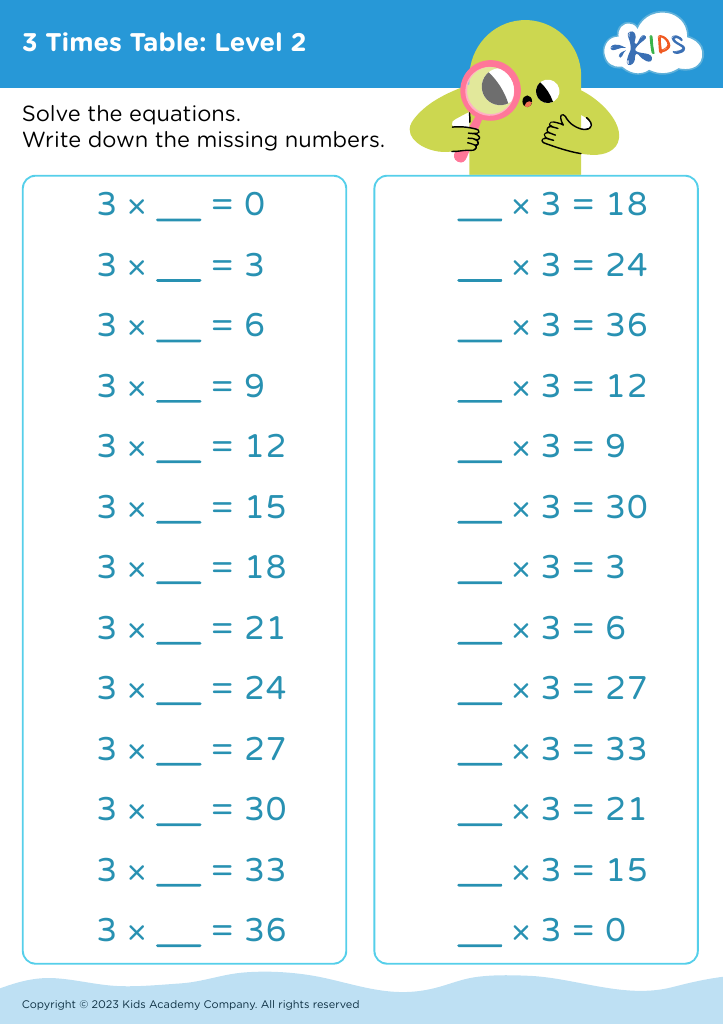
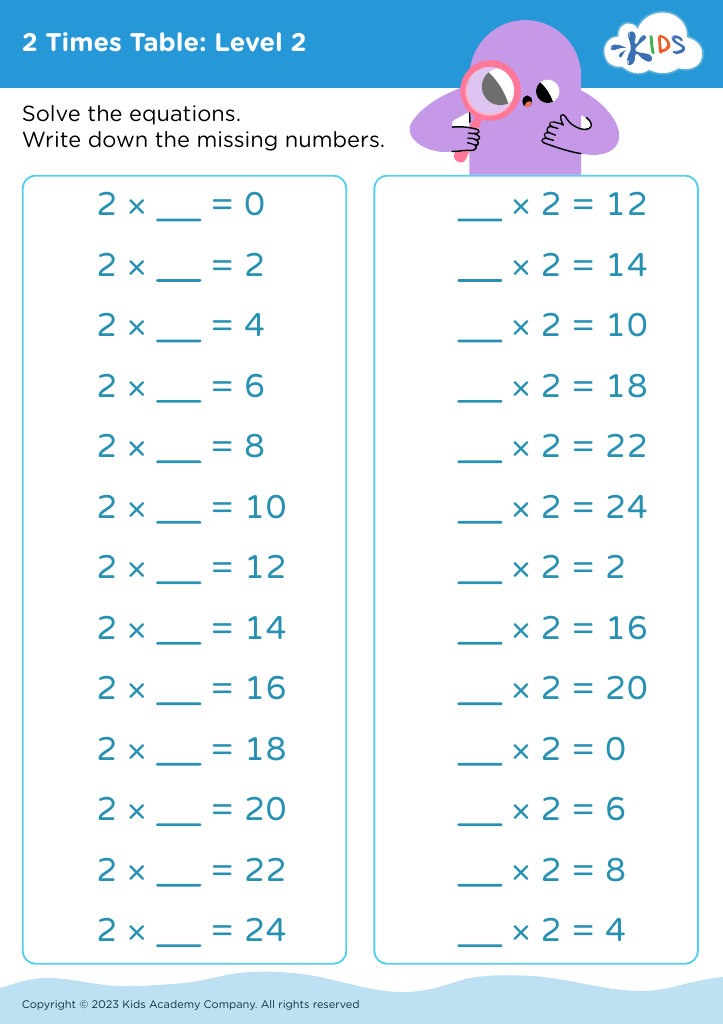
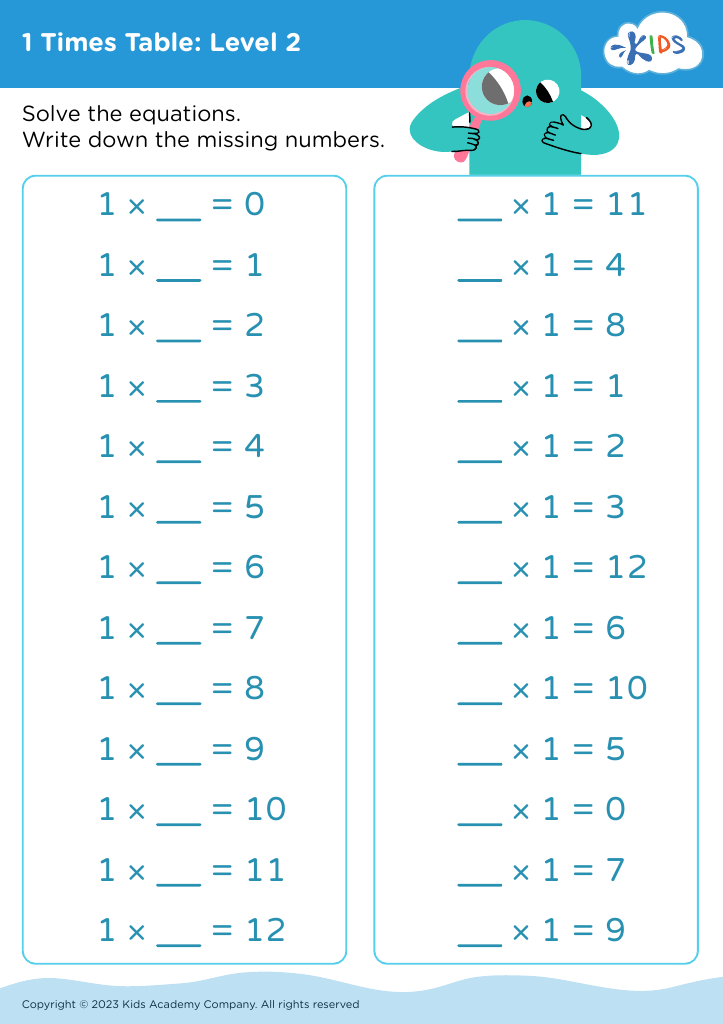



Multiplication practice, particularly mastering the times tables up to 12, is crucial for children aged 5-8 as it lays the groundwork for future mathematical understanding and confidence. For parents and teachers, ensuring students grasp these concepts is not merely about rote memorization; it fosters critical thinking and problem-solving skills that are vital across all areas of learning.
Mastering multiplication transforms kids into proficient math users, enabling them to tackle more complex operations, such as division and fractions. These skills are essential for daily life situations, helping children manage real-world challenges like budgeting and time management.
Further, regular multiplication practice enhances cognitive development, reinforced through various learning strategies. Introducing both normal and advanced times tables accommodates different learning paces, catering to all students, including those ready to face higher challenges. Additionally, strong multiplication skills boost self-esteem and encourage a positive attitude towards math, combating anxiety associated with the subject.
Ultimately, investing time in multiplications feeds into broader educational goals, supporting lifelong learning and analytical thinking. Promoting a solid foundation in multiplication at this age instills a love for math, turning complexities into enjoyable challenges as students advance in their education.








