Following instructions Normal Numbers Worksheets for Ages 5-8
3 filtered results
-
From - To
Introduce your young learners to our "Following Instructions Normal Numbers Worksheets" tailored for ages 5-8. These engaging worksheets from Kid’s Academy not only help children practice number recognition and counting but also develop crucial skills in following directions. Through fun, age-appropriate activities, kids enhance their understanding of numbers while improving their ability to listen and obey instructions. Perfect for both classroom and at-home learning, these worksheets are designed to build foundational math skills while boosting focus and comprehension. Watch as your child enjoys learning and mastering numbers in an interactive, structured way!

8 Petals Worksheet
 Assign to My Students
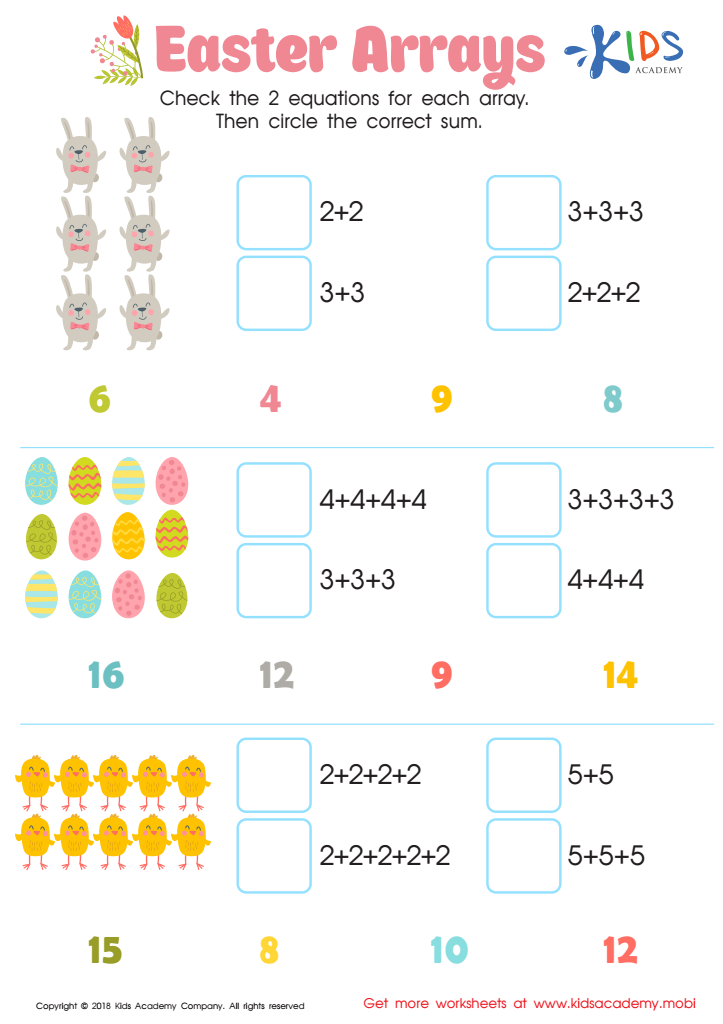
Easter Arrays Worksheet
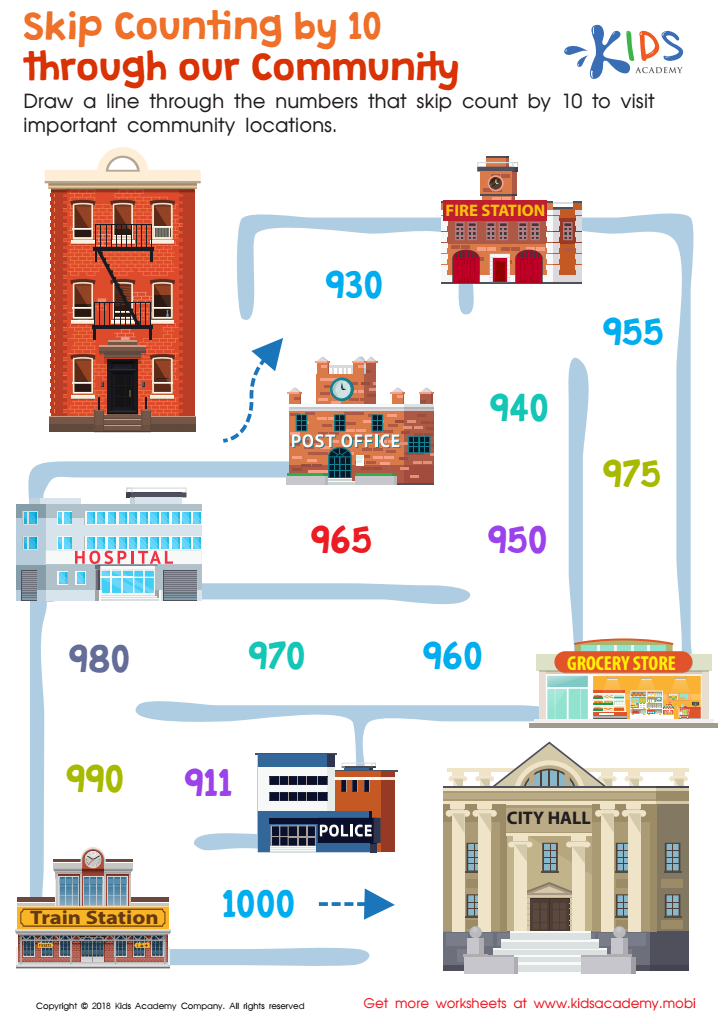
Skip Counting by 10 Through Our Community Worksheet








Following instructions and understanding normal numbers are critical skills for early childhood, impacting many areas of a child’s development. For ages 5-8, these skills form the foundation of both academic and everyday tasks.
Firstly, following instructions enhances a child's ability to listen, process information, and act accordingly. These are not just essential academic skills but are fundamental to social interactions and routine activities. For instance, activities like putting away toys, completing a drawing task, or lining up quietly require adherence to given instructions, fostering discipline and organization.
Meanwhile, normal numbers—basic counting, recognizing, and understanding quantities—are cornerstone skills in early math education. They help children make sense of the world around them; from counting snacks to comparing the number of blocks. Comprehending numbers culminates in more complex mathematical concepts, including addition, subtraction, and problem-solving.
Mastery in these areas leads to academic readiness, easing transitions as children progress through school. Additionally, these skills overlap into other life competencies such as time management, following schedules, and logical thinking. Thus, investing energy in nurturing these skills builds confident, independent, and capable students who can tackle academic challenges and navigate daily life successfully.
Parents and teachers play a vital role in creating engaging and supportive environments that promote these essential competencies early on.








