Comparison Skills Normal Math Worksheets for Ages 5-8
3 filtered results
-
From - To
Unlock your child's potential with our "Comparison Skills Normal Math Worksheets," designed for ages 5-8! These engaging worksheets provide young learners with the foundational skills needed for comparing numbers, objects, and quantities. Through a variety of fun activities, students will develop critical thinking and problem-solving abilities as they practice identifying greater than, less than, and equal to values. Ideal for parents and teachers alike, these worksheets make math enjoyable while reinforcing essential concepts. Whether used in the classroom or at home, our resources are perfect for boosting confidence and fostering a love for math early in life. Explore today and watch your child thrive!
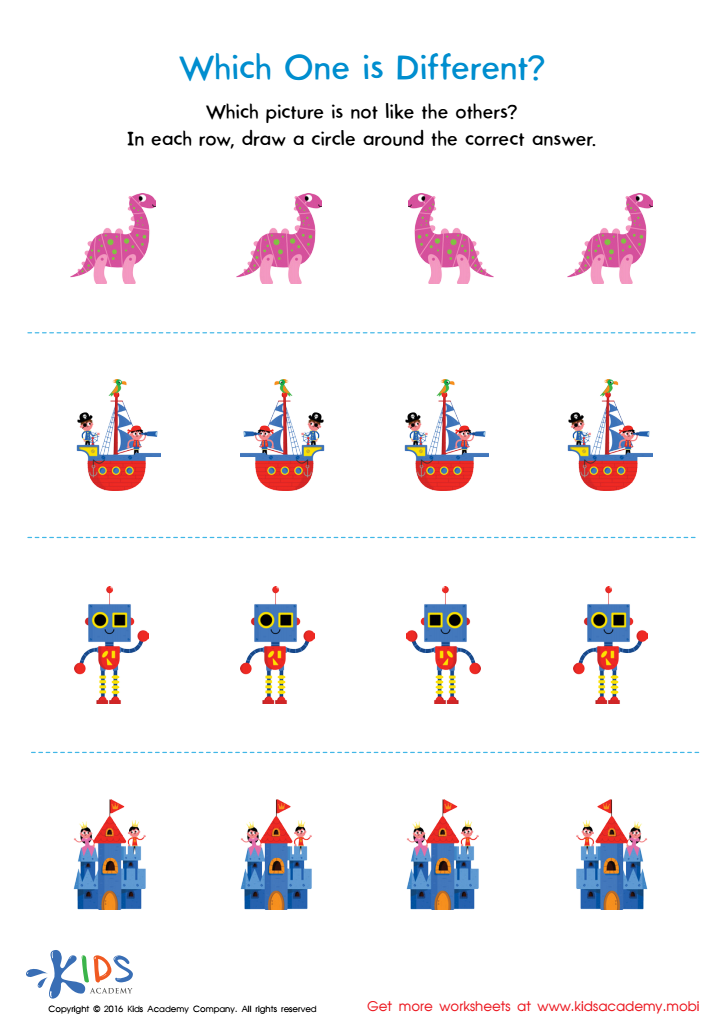
Which One Is Different Worksheet
 Assign to My Students
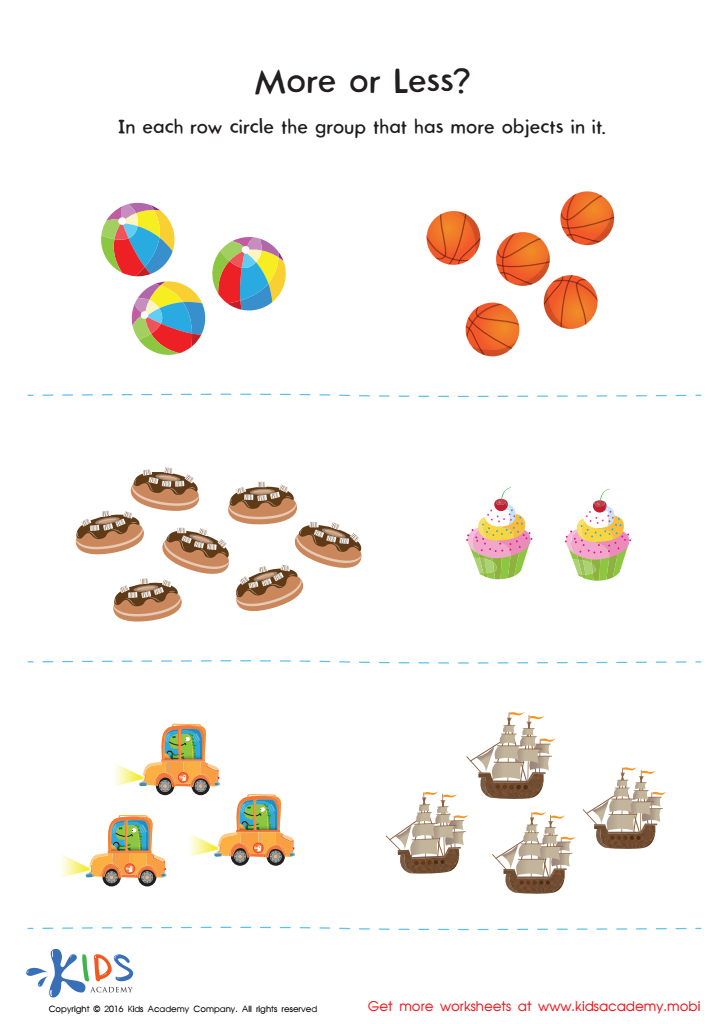
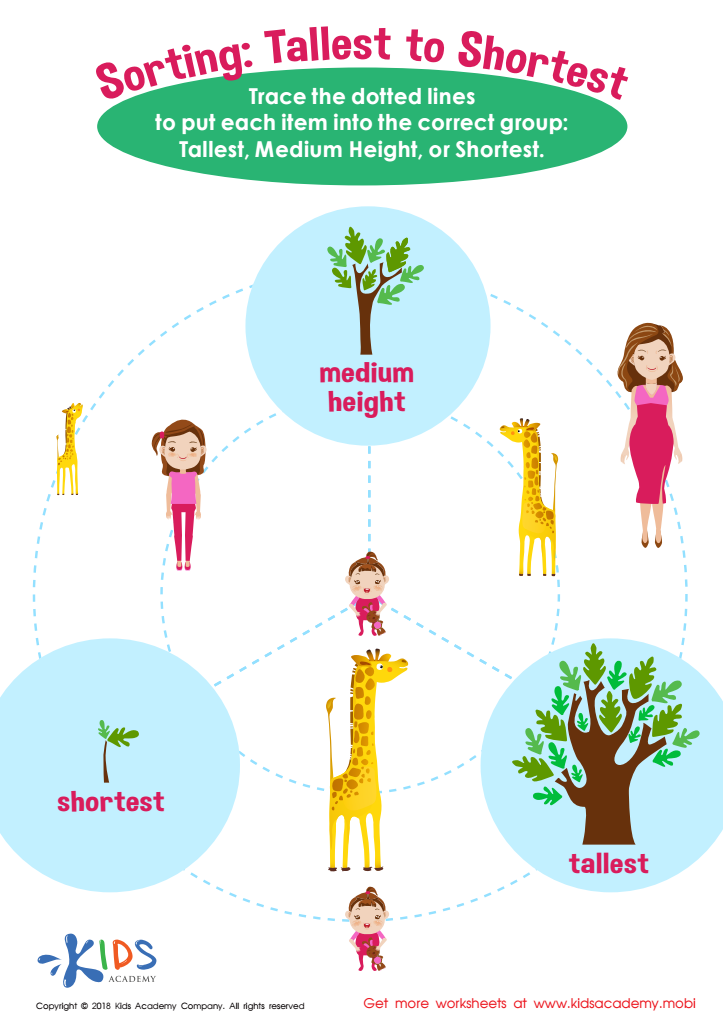
Sorting: Tallest to Shortest Worksheet






Comparison skills in math are crucial for children aged 5-8 as they lay a strong foundation for critical thinking and problem-solving abilities. During these developmental years, students start to understand concepts of greater than, less than, and equal to, which are essential for grasping more complex mathematical ideas in the future.
Engaging with comparison skills helps equip children with the ability to assess quantities, sizes, and even qualities in an array of contexts, fostering analytical reasoning. For example, when children compare numbers, they learn to identify patterns and relationships that enhance their understanding of mathematics overall. This skill also supports their ability to make informed decisions based on evidence, an essential life skill.
Moreover, early mastery in comparison can boost confidence in math, encouraging a positive attitude towards the subject. This is particularly crucial, as feelings about math can significantly impact a child's future learning trajectory. Parents and teachers should prioritize activities that promote these skills—such as using everyday situations, including cooking, shopping, and play—to nurture a child's mathematical literacy in a relatable and enjoyable manner. Ultimately, fostering comparison skills not only benefits children's academic journey but also helps shape confident, informed individuals.








