
Data interpretation Normal Math Worksheets for Ages 5-8
3 filtered results
Difficulty Level
Grade
Age
-
From - To
Subject
Activity
Standards
Help young learners build essential math skills with our Data Interpretation Normal Math Worksheets for Ages 5-8. Perfectly designed for early grade students, these worksheets feature fun and engaging activities that teach children how to read and interpret various forms of data, such as charts and graphs. By working through these pages, kids will develop critical thinking and analytical skills in a hands-on and interactive way. Each worksheet provides clear instructions and colorful graphics, making learning both enjoyable and educational. Ideal for classroom use or at-home practice, these worksheets are an excellent resource for solidifying foundational math skills.
Favorites
With answer key
Interactive
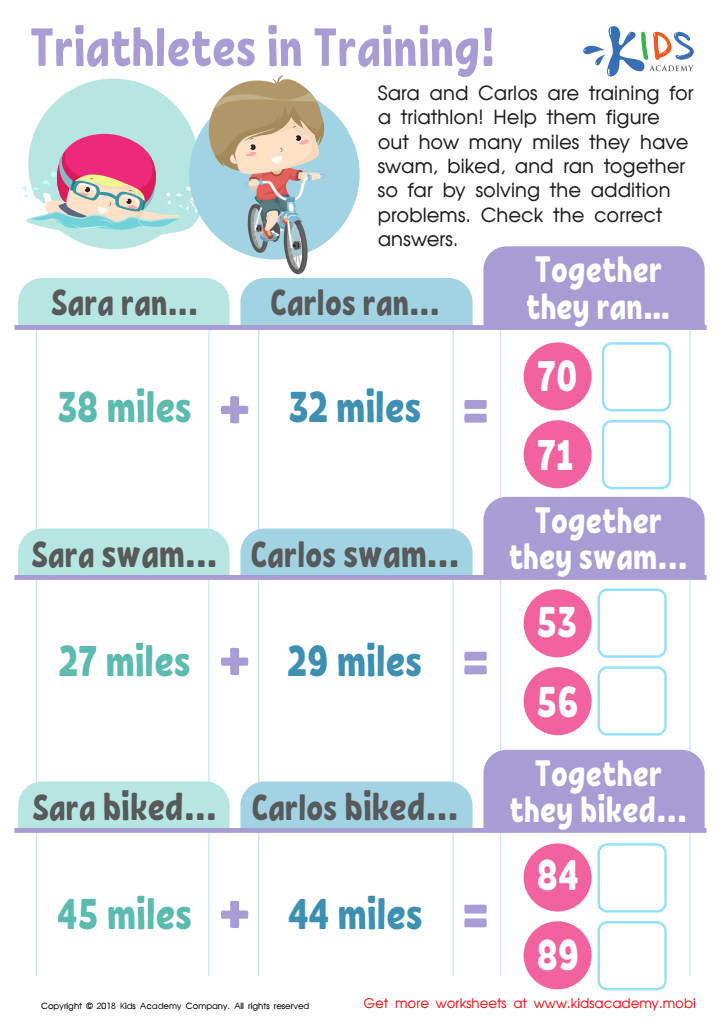
Triathletes in Training Worksheet
Sara and Carlos are training for a triathlon and need your child's help! They must solve the addition problems to figure out how many miles they've swam, ran, and biked. Help your kid check the answers and get them ready for the triathlon!
 Assign to My Students
Triathletes in Training Worksheet
Worksheet
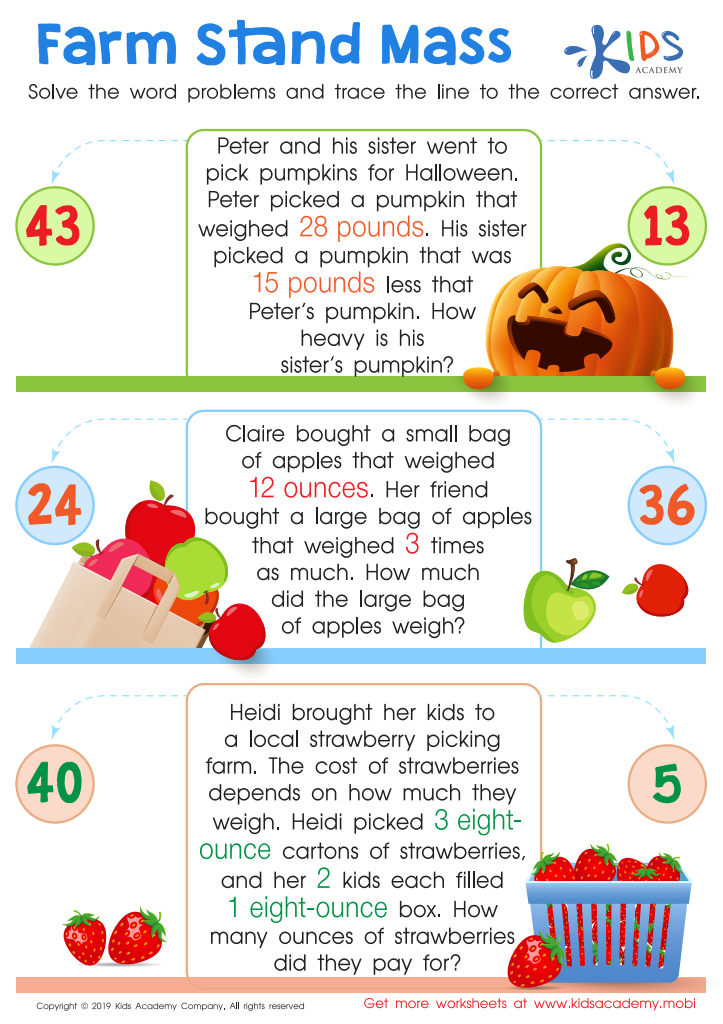
Farm Stand Mass Worksheet
Engage your kids in a fun learning adventure! Encourage them to practice what they learn in school using this worksheet. Look at the picture and read the problem together. Help them solve it and trace the line to the answer. Make learning enjoyable and your kids will be more motivated!
Farm Stand Mass Worksheet
Worksheet
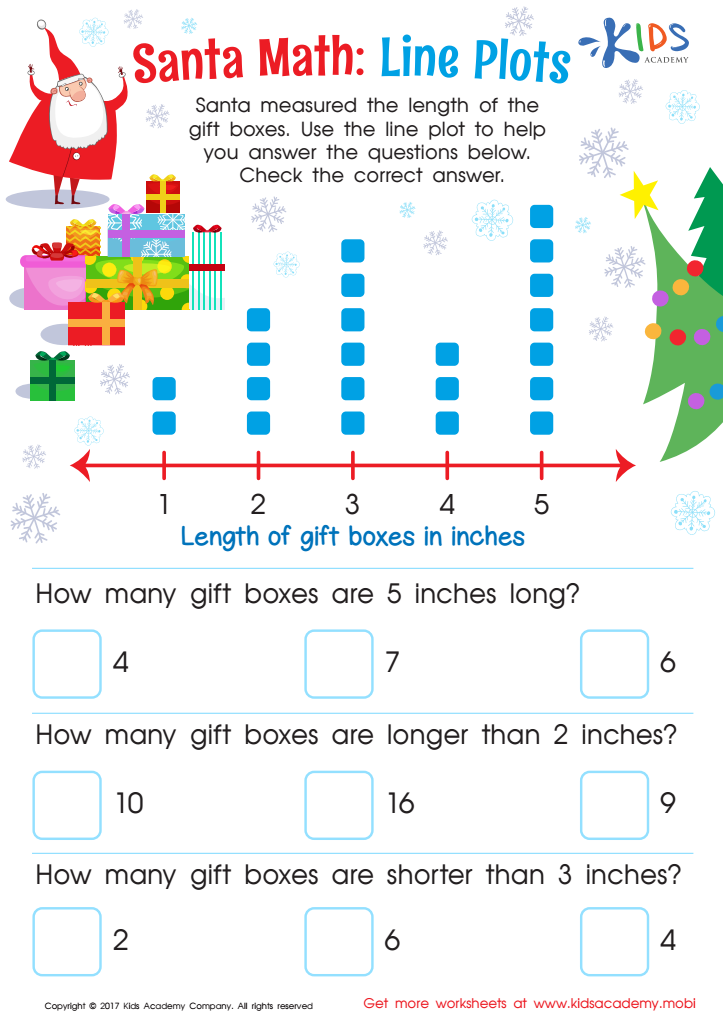
Line Plot Worksheet
Help your child measure presents with Santa using this 2nd grade line plot worksheet! It's a fun way to boost math skills and analyze data. Plus, it's sure to delight your child!
Line Plot Worksheet
Worksheet
Join Kids Academy for Free
Who is primarily going to use this learning content?







Parents and teachers should care about data interpretation and normal mathematics for children aged 5-8 because foundational math skills are crucial during early childhood development. This is the stage where young minds are highly adaptable and eager to learn, making it the perfect time to introduce fundamental concepts that will be built upon in later years.
Teaching data interpretation skills at an early age helps children develop critical thinking and problem-solving abilities. When kids learn to analyze simple data sets—like counting objects, understanding basic graphs, and recognizing patterns—they start to make sense of the world around them in a structured way. These skills lay the groundwork for more complex reasoning required in advanced mathematics and other academic subjects.
Moreover, early exposure to math fosters confidence in their abilities and a positive attitude toward learning. Children who grasp basic math concepts early on are more likely to succeed in math-related subjects later, reducing anxiety and increasing lifelong learning enthusiasm. For parents and teachers, investing time and resources into teaching these skills will help children achieve academic milestones more easily and is essential for their overall cognitive development. Encouraging and guiding young learners in understanding everyday data not only prepares them for school success but also equips them with essential life skills.








