Logical reasoning development Normal Math Worksheets for Ages 5-8
3 filtered results
-
From - To
Discover an engaging collection of logical reasoning development math worksheets designed specifically for children ages 5-8. Our printable resources encourage young learners to enhance their problem-solving skills and critical thinking abilities through fun, age-appropriate exercises. Each worksheet focuses on key concepts in logical reasoning while integrating essential math skills, making learning both effective and enjoyable. Ideal for classroom use or at-home practice, these worksheets foster a strong foundation in mathematics, preparing kids for future academic success. Explore our diverse selection today and watch your child’s confidence and reasoning skills flourish! Start their journey towards logical mastery with our creative worksheets!
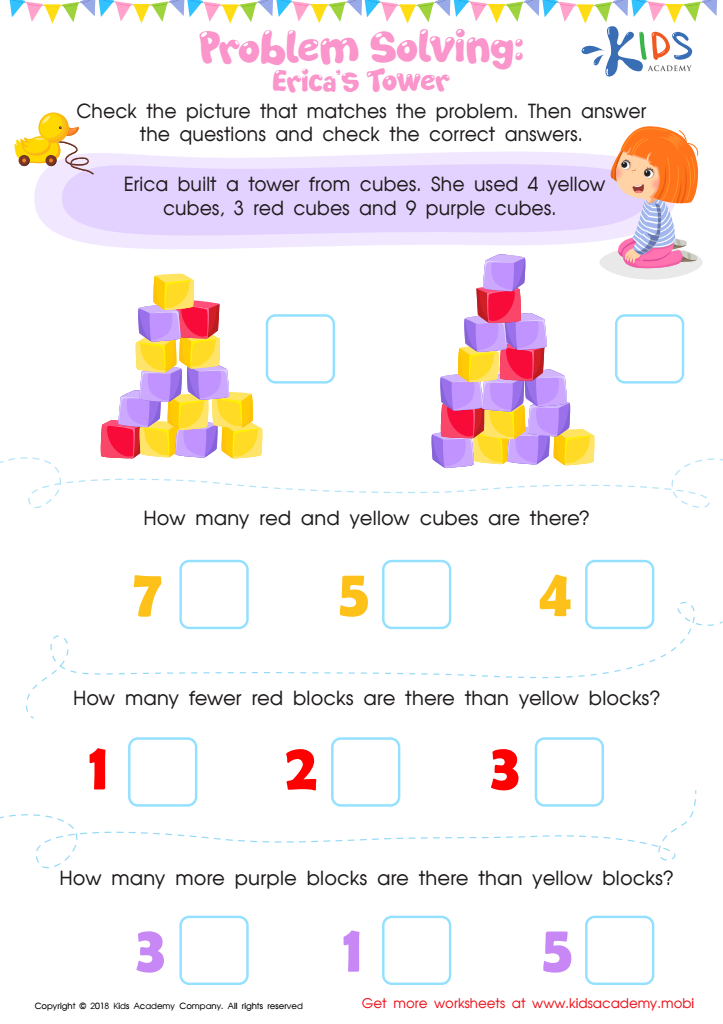
Problem Solving: Erica's Tower Worksheet
 Assign to My Students
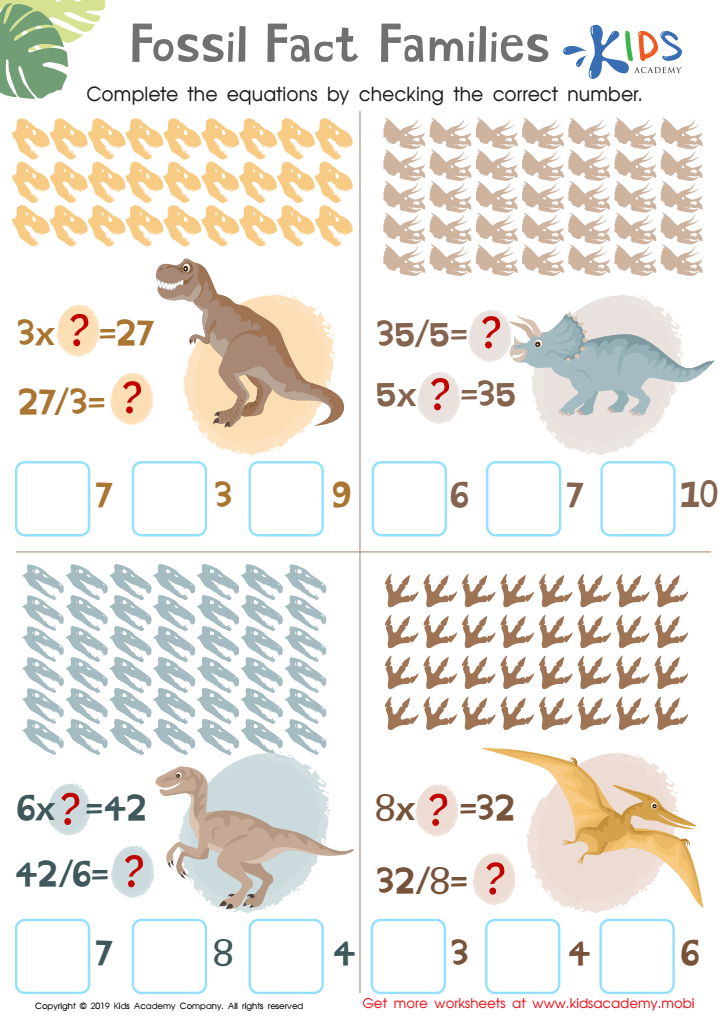
Fossil Fact Families Worksheet
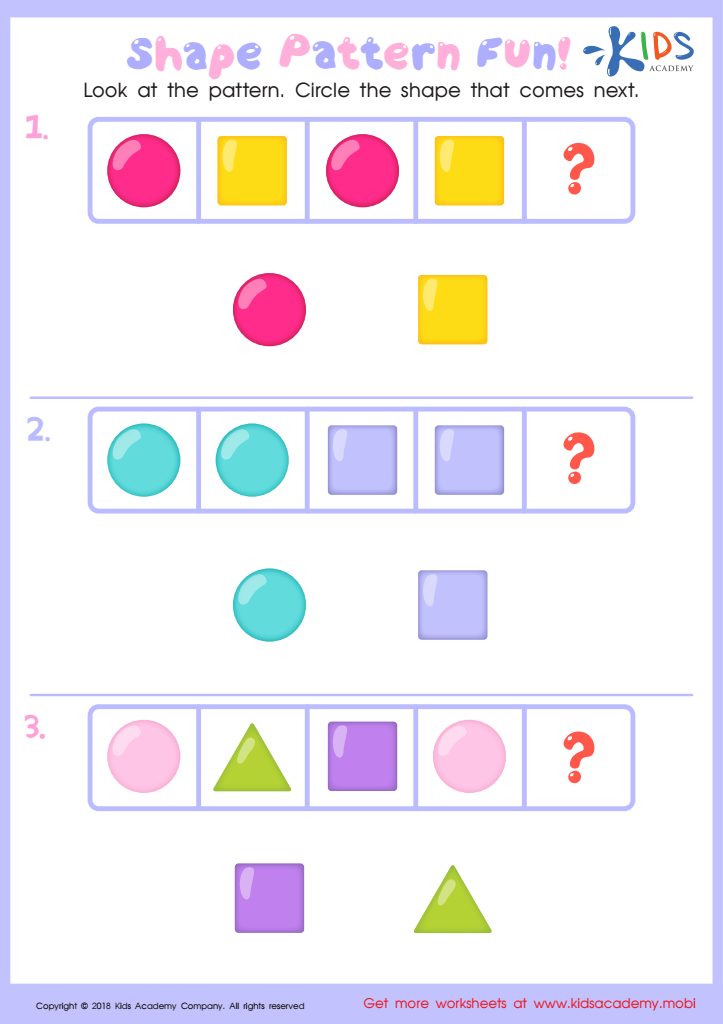
Shape Pattern Fun Worksheet


.jpg)




Logical reasoning development in children aged 5-8 is crucial for their overall cognitive and academic growth. At this age, children are naturally curious and eager to make sense of the world, and engaging them in logical reasoning activities supports their problem-solving skills and critical thinking abilities. This foundation not only enhances their grasp of math concepts but also influences their ability to approach challenges systematically and creatively.
Parents and teachers should care about this development as it directly ties into early math proficiency. Children who can reason logically are better equipped to understand numerical relationships, patterns, and operations. By fostering logical reasoning, educators can help children move beyond rote memorization to a deeper understanding of mathematical principles, which is essential for future learning.
Moreover, strong logical reasoning skills boost confidence and resilience. As they tackle complex tasks, children learn persistence and adaptability, traits that are beneficial beyond the classroom. Ultimately, nurturing logical reasoning in early childhood sets the stage for successful lifelong learning, ensuring that children are well-prepared for academic challenges and encouraging a love of learning. Engaging children in fun and interactive logical tasks, such as puzzles and games, can make this developmental journey enjoyable and effective.








