Understanding base ten Normal Math Worksheets for Ages 5-8
3 filtered results
-
From - To
Welcome to our "Understanding Base Ten Normal Math Worksheets" designed specifically for children ages 5 to 8. These engaging worksheets introduce young learners to the foundational concepts of base ten mathematics, fostering a solid understanding of place value, addition, and subtraction. Through fun activities, children will develop essential skills while interacting with visual aids and hands-on exercises. Our thoughtfully crafted resources aim to enhance comprehension, encourage problem-solving, and build confidence in early math abilities. Explore our collection to help your child master base ten concepts in a playful and effective way, setting the stage for future math success!
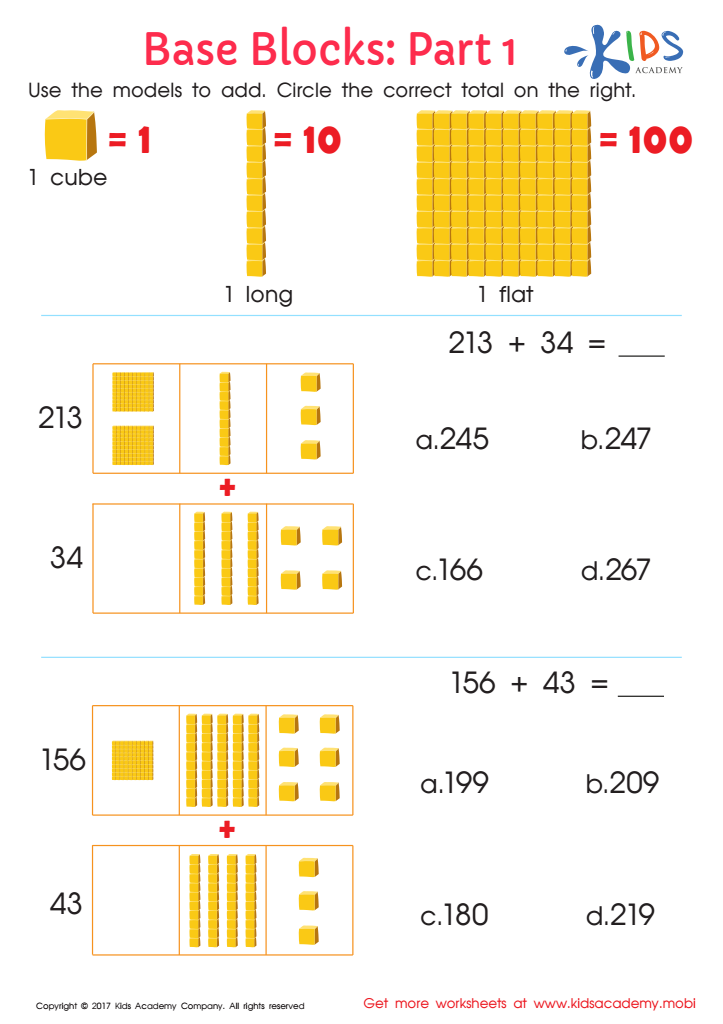
Base Ten Blocks Worksheet: Part 1
 Assign to My Students
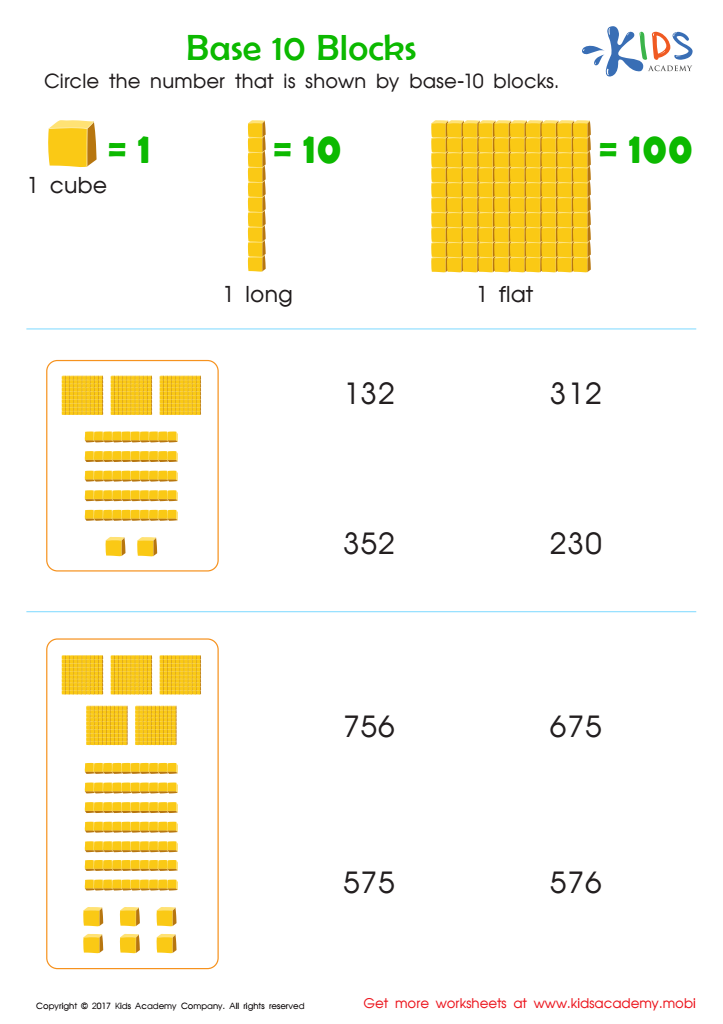
Base Ten Blocks Worksheet
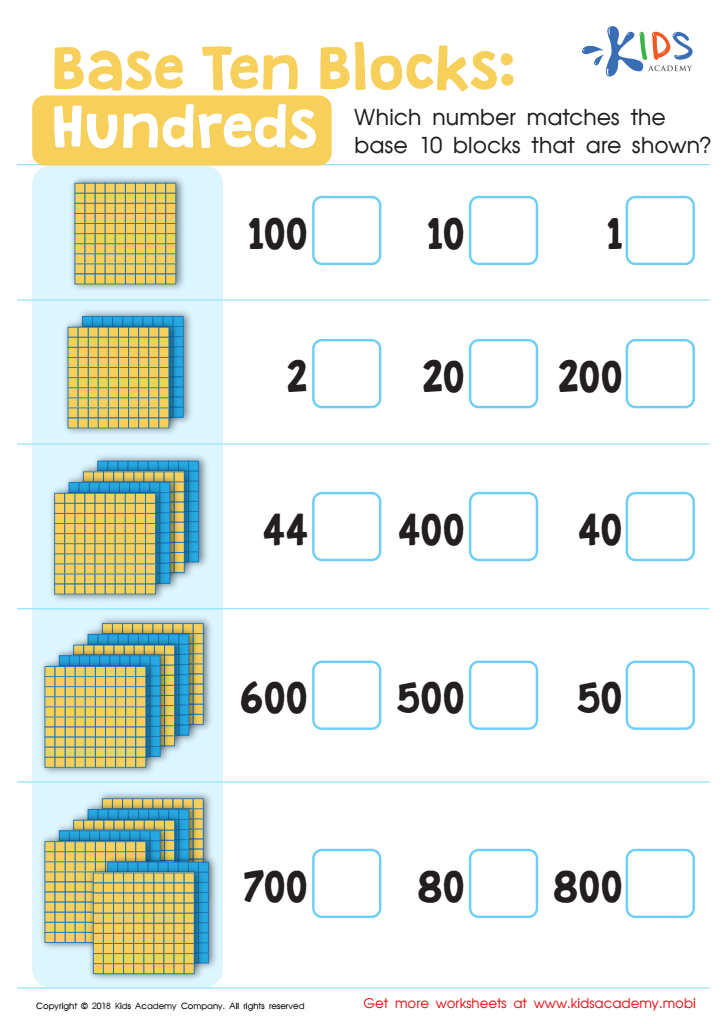
Base Ten Blocks: Hundreds Worksheet




.jpg)



Understanding base ten is a fundamental concept in math for children ages 5-8, forming the foundational skills necessary for later mathematical success. At this critical developmental stage, it's important for parents and teachers to focus on base ten to foster children's numerical understanding through concrete experiences.
Base ten concepts involve understanding how numbers are structured, where each digit's place value represents a power of ten. It helps children comprehend how to regroup, add, or subtract larger numbers, basics that are pivotal for efficient mathematical operations in the future. For instance, recognizing that '45' represents four tens and five ones aids in grasping the idea of carrying over in addition or borrowing in subtraction.
Furthermore, mastering base ten sets the stage for advanced math concepts encountered in later grades, such as multiplication and division. When children build their skills in this area, they also develop critical thinking, problem-solving abilities, and a comfort with numbers.
Additionally, early math proficiency is linked to overall academic success and confidence in learning. By prioritizing understanding base ten, parents and teachers can cultivate a passion for math in young learners, enabling them to build both competence and a consistent, resilient mindset towards challenges.








