
Shape Recognition Normal Matching Worksheets for Ages 5-8
5 filtered results
Difficulty Level
Grade
Age
-
From - To
Subject
Activity
Standards
Enhance your child's shape recognition skills with our engaging Shape Recognition Normal Matching Worksheets designed for ages 5-8. These fun and interactive worksheets provide a fantastic way for young learners to identify, match, and learn about various shapes in a hands-on method. Tailored to encourage critical thinking, our resources help children develop essential cognitive skills while enjoying their learning journey. Ideal for both classroom and home use, these worksheets make learning shapes entertaining and effective. Give your kids the opportunity to explore the world of shapes with our carefully crafted materials, fostering a strong mathematical foundation through enjoyable activities. Download today!
Favorites
With answer key
Interactive
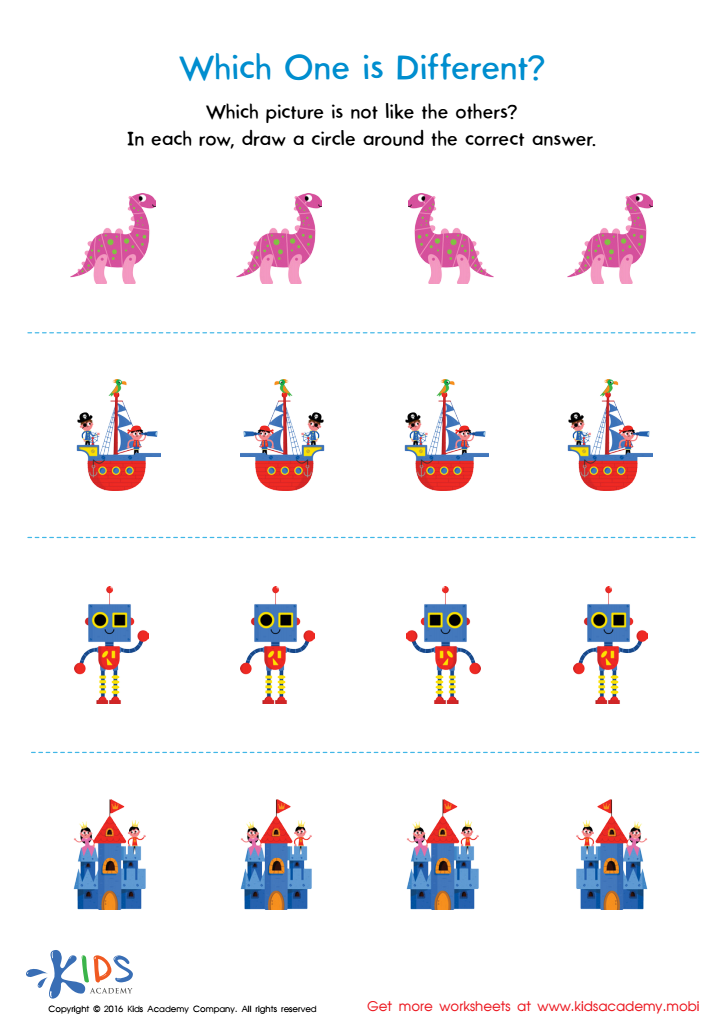
Which One Is Different Worksheet
Preschoolers can hone logical reasoning and critical analysis skills with this "Which one is Different?" worksheet. Kids must look closely and pick out unique attributes of objects and images. It's a skill that can serve them throughout their lifetime.
 Assign to My Students
Which One Is Different Worksheet
Worksheet
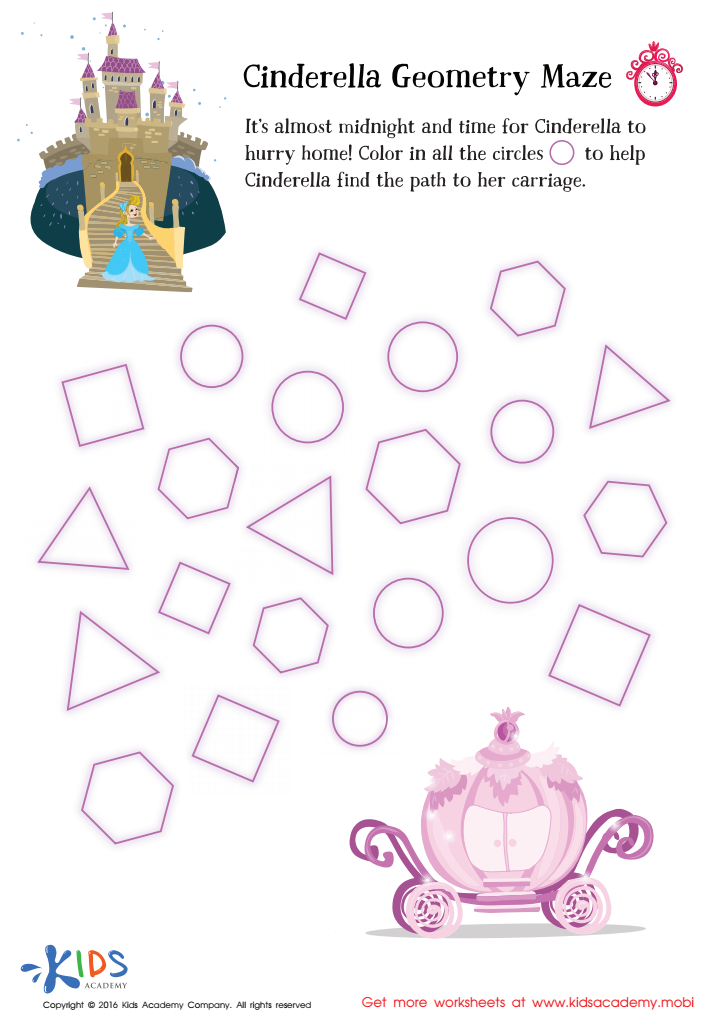
Cinderella Geometry Maze Worksheet
Help Cinderella hurry home! Your preschooler will have fun problem-solving and sorting shapes in this geometric maze. As they shade in the circles, they'll be helping their favorite princess reach her carriage on time. Not only that, but they'll strengthen their logic skills in the process. Get this and other fairy tale mazes to keep them entertained while learning.
Cinderella Geometry Maze Worksheet
Worksheet
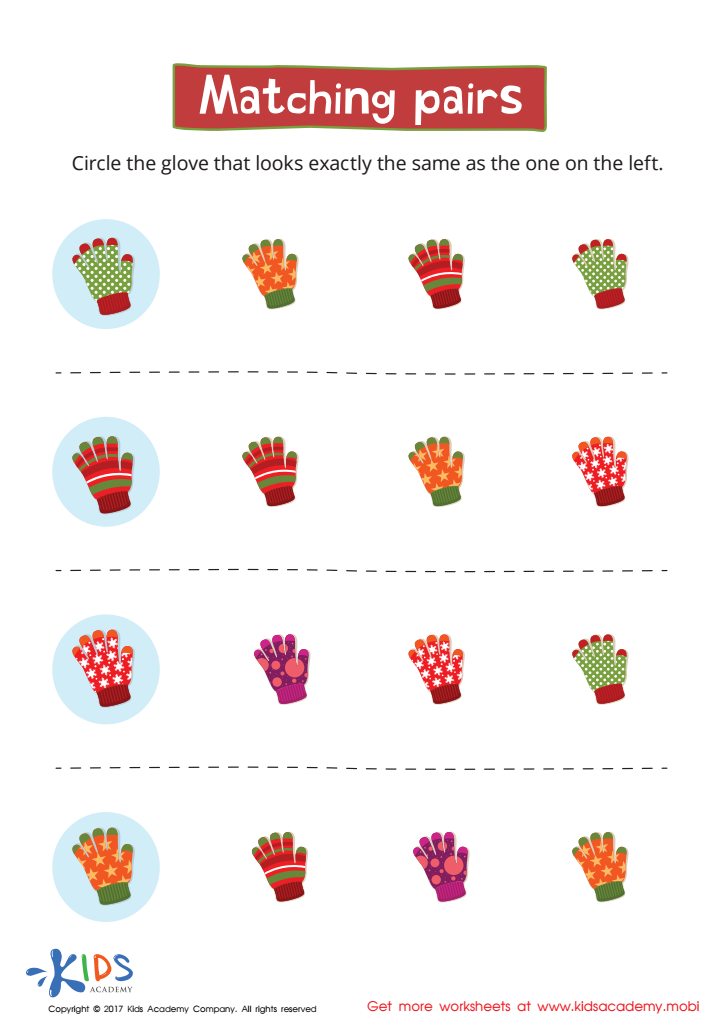
Matching: Matching Pairs Worksheet
Winter's here! Get your child ready with a fun matching worksheet. Challenge them to sort mitten designs, recognize directions, and match mittens in other rows. This helps preschoolers hone problem-solving skills and recognize shapes. Print out more seasonal activities for a diverse summer experience!
Matching: Matching Pairs Worksheet
Worksheet
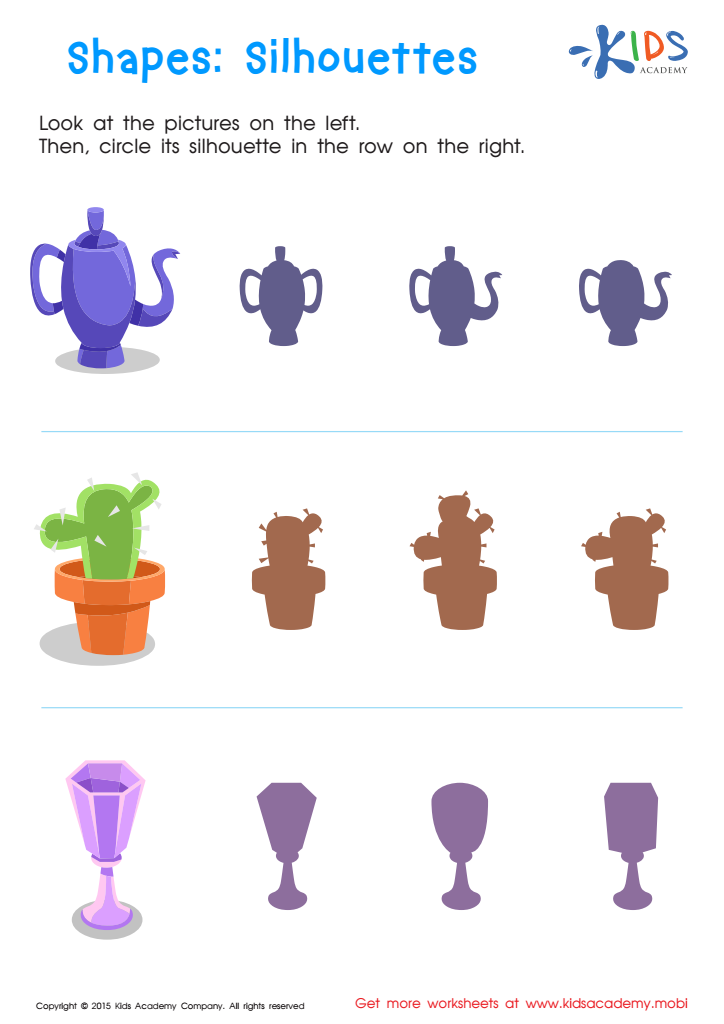
Silhouettes – Shapes Worksheet
Kids can have fun while learning to compare sizes with this silhouettes shapes worksheet! Matching pictures to silhouettes helps them build early math skills, while enjoying the activity!
Silhouettes – Shapes Worksheet
Worksheet
Join Kids Academy for Free
Who is primarily going to use this learning content?








Shape recognition and normal matching are crucial skills for children aged 5-8, as they lay the foundation for essential cognitive, mathematical, and spatial reasoning abilities. At this age, children are naturally curious and eager to explore the world around them, making it an ideal time for educators and parents to engage in activities that promote shape recognition.
Understanding shapes helps children categorize and make sense of their environment. It enhances their ability to identify patterns, which is foundational for problem-solving across subjects like math and science. Normal matching, where children pair similar shapes, not only builds observational skills but also fosters critical thinking by encouraging them to analyze attributes like size, color, and orientation.
Moreover, these skills can boost confidence as children successfully engage in tasks that require them to classify and manipulate shapes. This success can translate into a love for learning and exploration.
Incorporating shape recognition and normal matching activities into lessons or playtime can enhance communication skills, as children learn to describe shapes and their properties. By prioritizing these enjoyable and informative activities, teachers and parents help children develop essential skills that serve them academically and socially as they grow.








