Historical Knowledge Normal Reading Worksheets for Ages 5-8
6 filtered results
-
From - To
Discover our engaging Historical Knowledge Normal Reading Worksheets designed specifically for children aged 5-8! These resources are perfect for introducing young learners to important historical events, figures, and cultures in a fun and interactive way. Each worksheet features age-appropriate reading passages, comprehension questions, and related activities that promote critical thinking and enrich vocabulary. Ideal for classrooms or home learning, our worksheets support early literacy while fostering a curiosity about the world’s history. Encourage your child’s love for learning and enhance their understanding of the past with our thoughtfully crafted worksheets. Start exploring history today with Kids Academy!
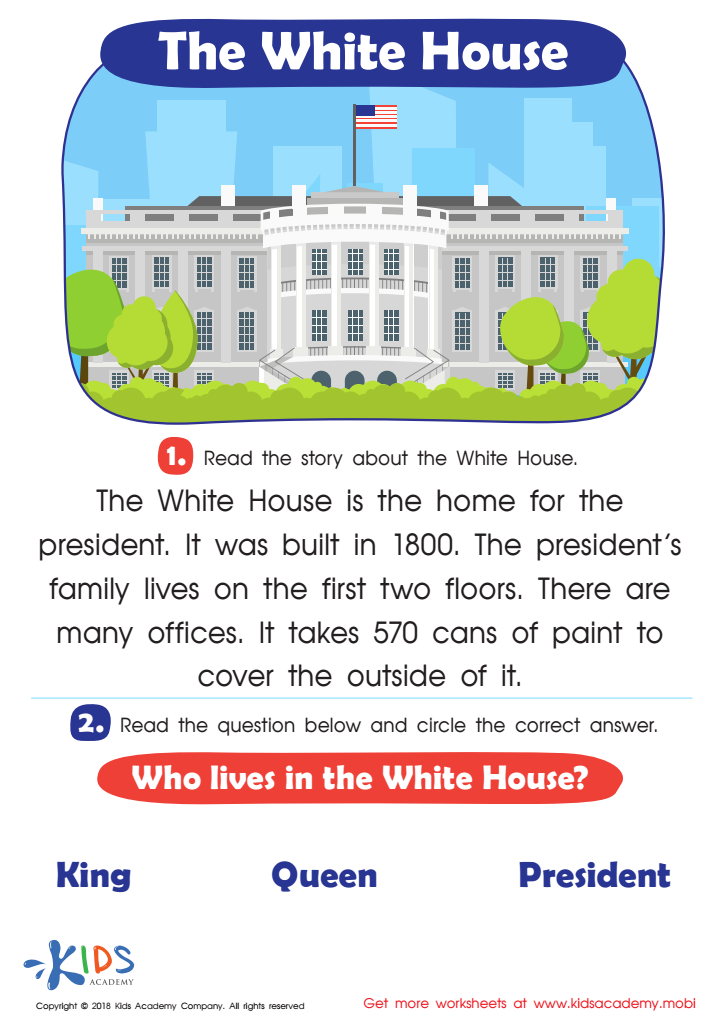
White House Worksheet
 Assign to My Students
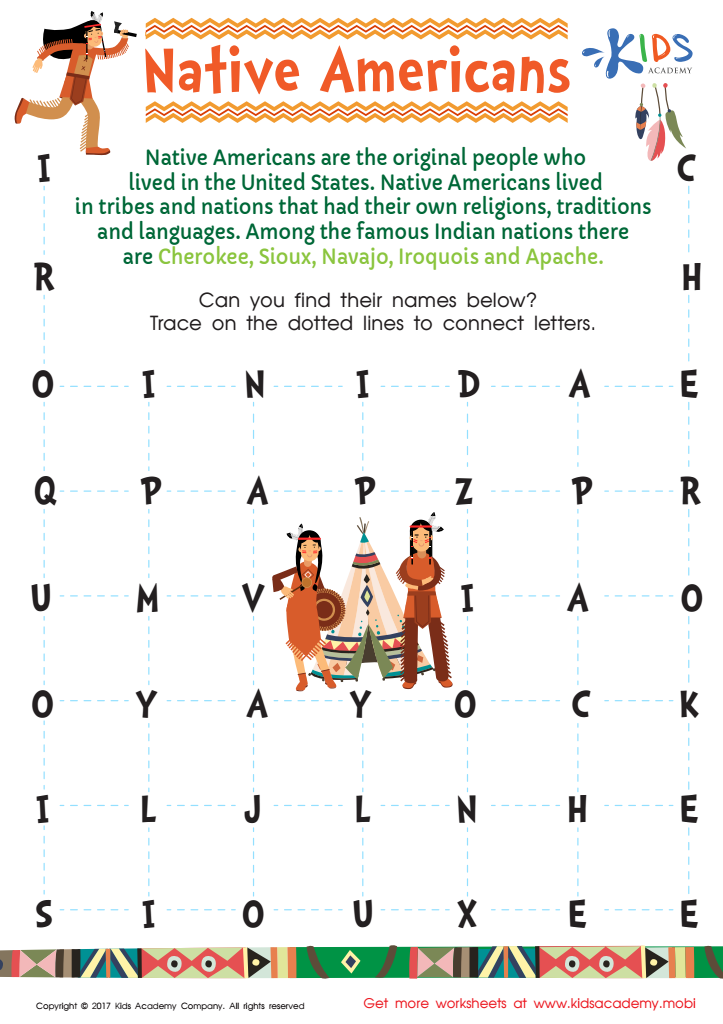
Native American Word Search Printable
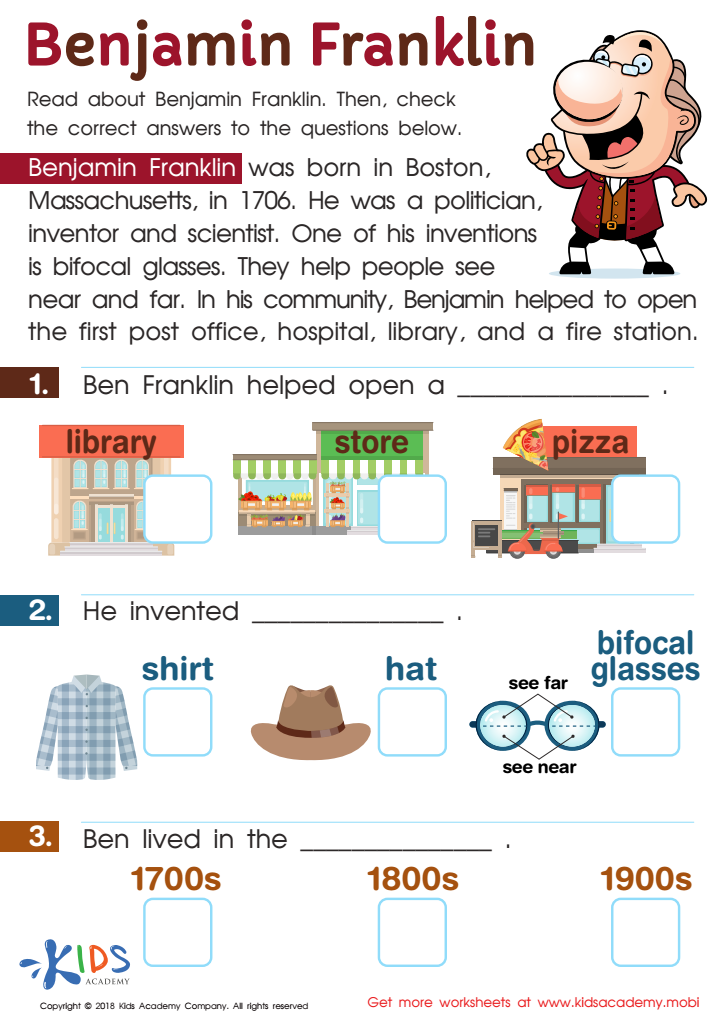
Benjamin Franklin Worksheet
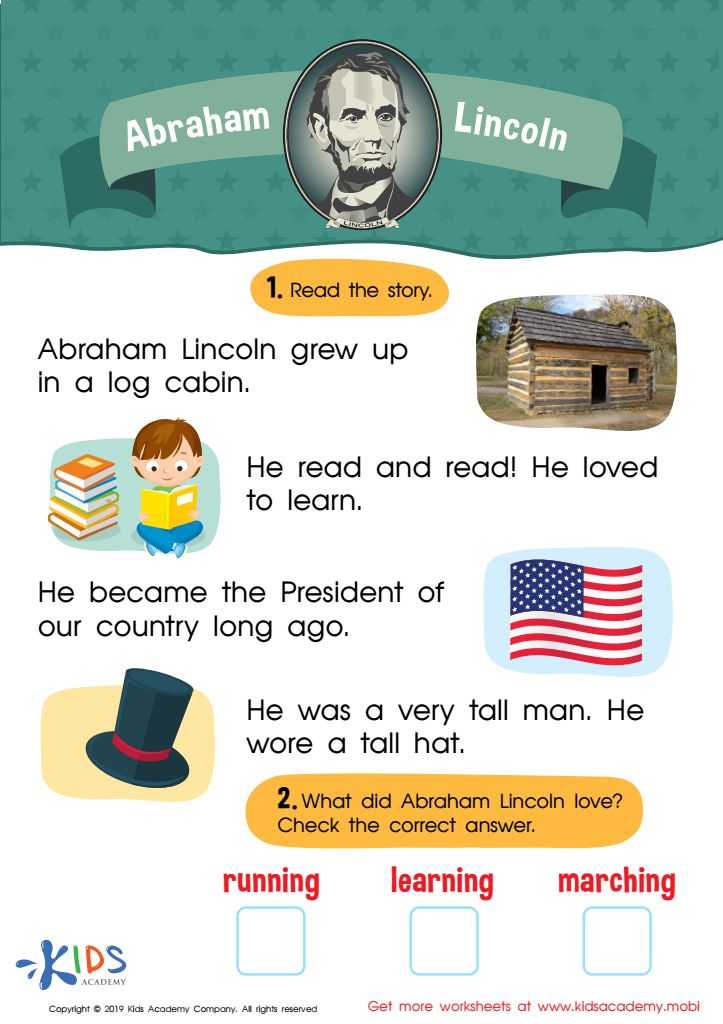
Abraham Lincoln Worksheet
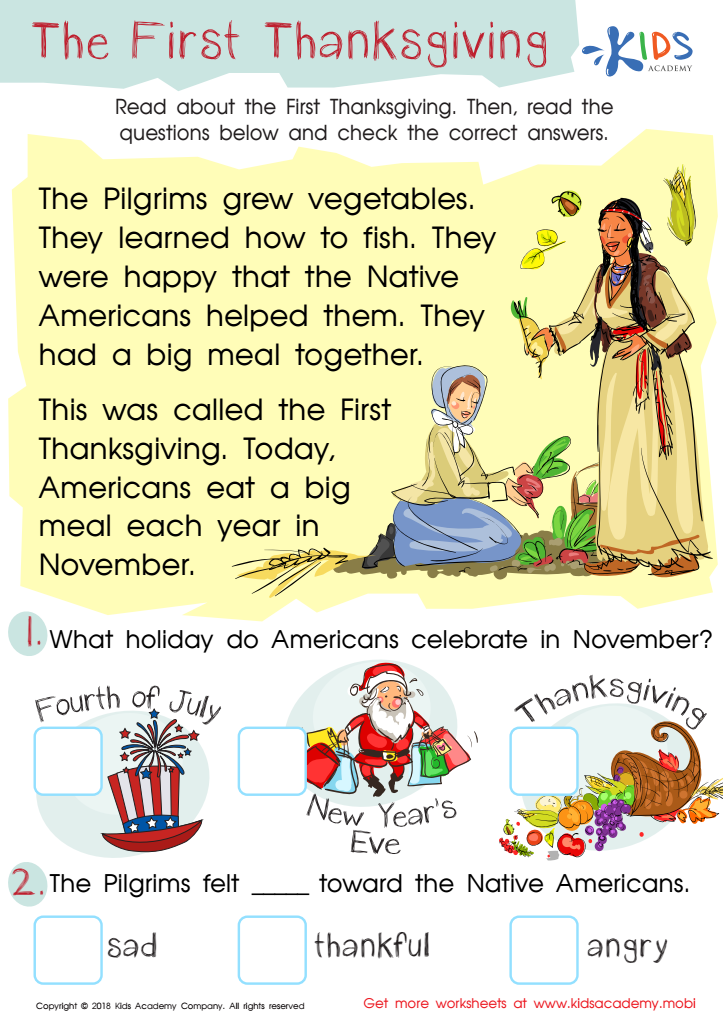
Assessment: First Thanksgiving Worksheet
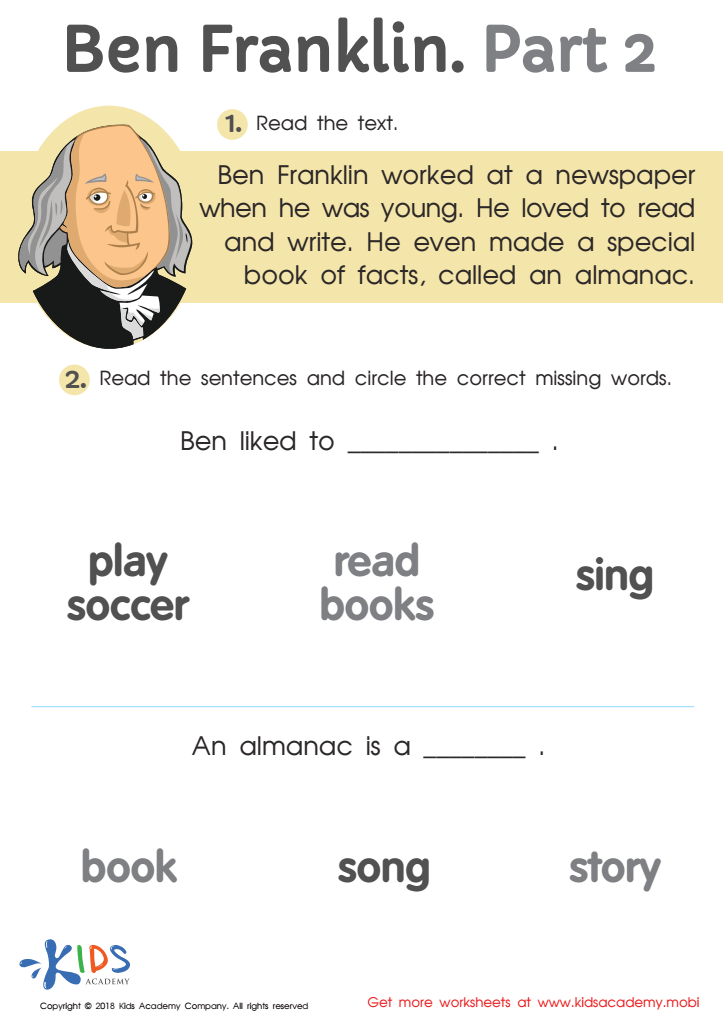
Ben Franklin Part 2 Worksheet








Parents and teachers should care about historical knowledge for children aged 5-8 because it lays the foundation for understanding the world around them. At this developmental stage, children are naturally curious and eager to learn about their past, which fosters critical thinking and inquiry skills. Introducing historical concepts in a simple and engaging manner helps children comprehend complex social themes, cultural diversity, and the importance of historical events, making them more informed citizens.
Moreover, understanding history cultivates empathy and appreciation for different perspectives. By learning about various cultures and significant figures, children start to recognize the value of diversity and the contributions of others. This awareness is vital in fostering a sense of belonging and respect in an increasingly interconnected world.
Additionally, historical knowledge enhances literacy skills. Engaging narratives about the past often captivate young readers, encouraging them to explore more texts and develop their reading comprehension. Incorporating stories of historical significance not only makes learning fun but also enriches vocabulary and language skills.
Ultimately, nurturing historical knowledge in early childhood education equips children with the tools to navigate their futures thoughtfully and responsibly, making it a priority for both parents and educators.








