Phonics practice Normal Reading Worksheets for Ages 5-8
5 filtered results
-
From - To
Boost your child's reading skills with our Phonics Practice Normal Reading Worksheets for ages 5-8! These expertly designed worksheets from Kids Academy offer engaging activities to help young learners master phonics, the fundamental blocks of reading. Our worksheets cover various phonics strategies, including letter recognition, blending sounds, and word formation. Suitable for early readers, these printables make learning fun and effective through interactive tasks and colorful designs. Perfect for classroom and home use, our phonics practice worksheets ensure your child develops strong reading abilities, setting the foundation for lifelong learning and literacy success. Download today for endless educational fun!
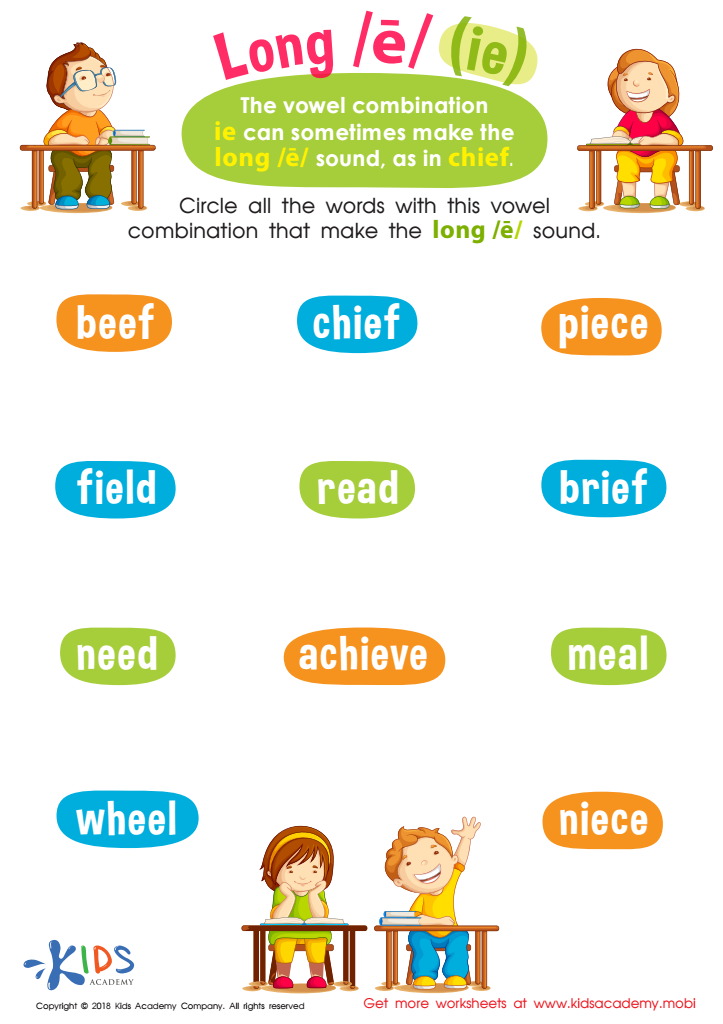
Reading: Long E and IE Worksheet
 Assign to My Students
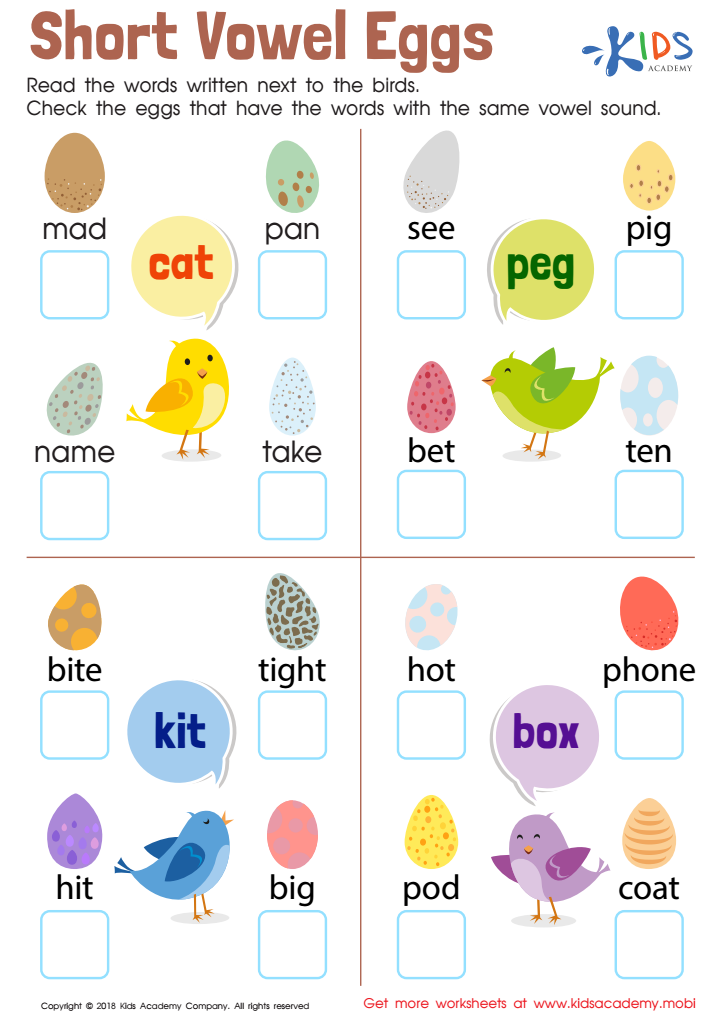
Short Vowel Eggs Worksheet
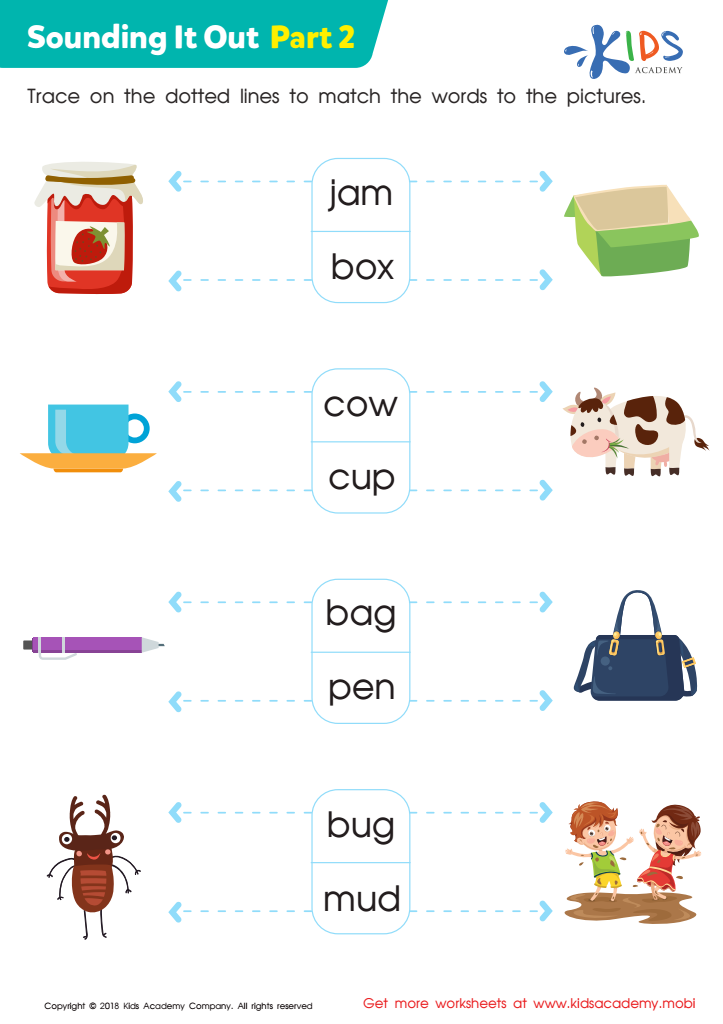
Sounding it Out: Part 2 Worksheet
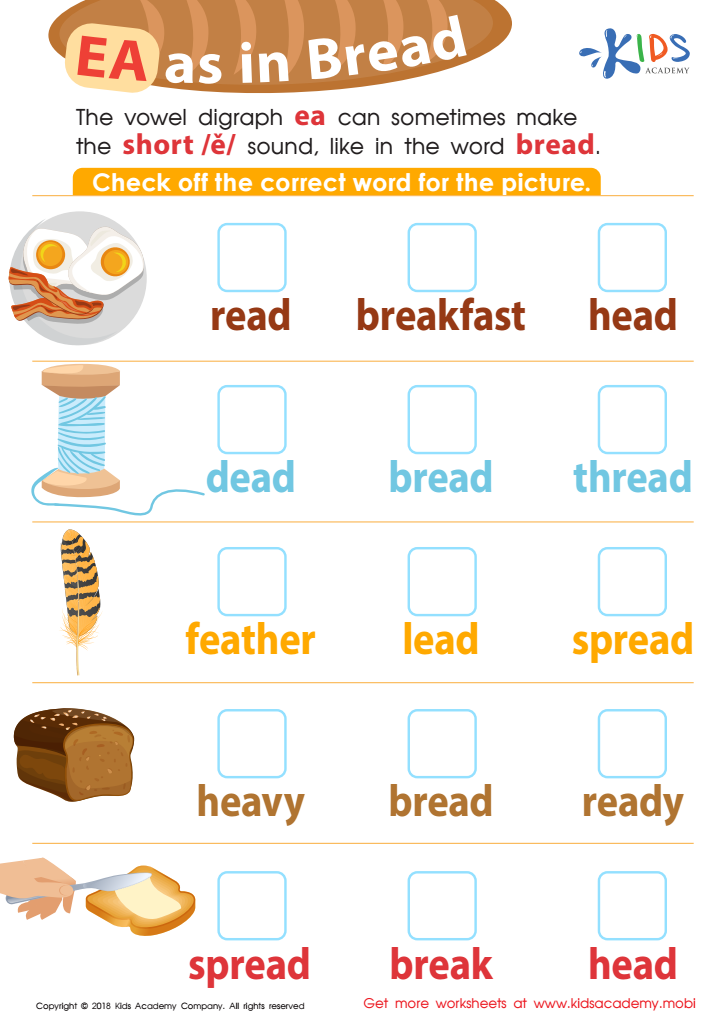
Reading: EA as in Bread Worksheet
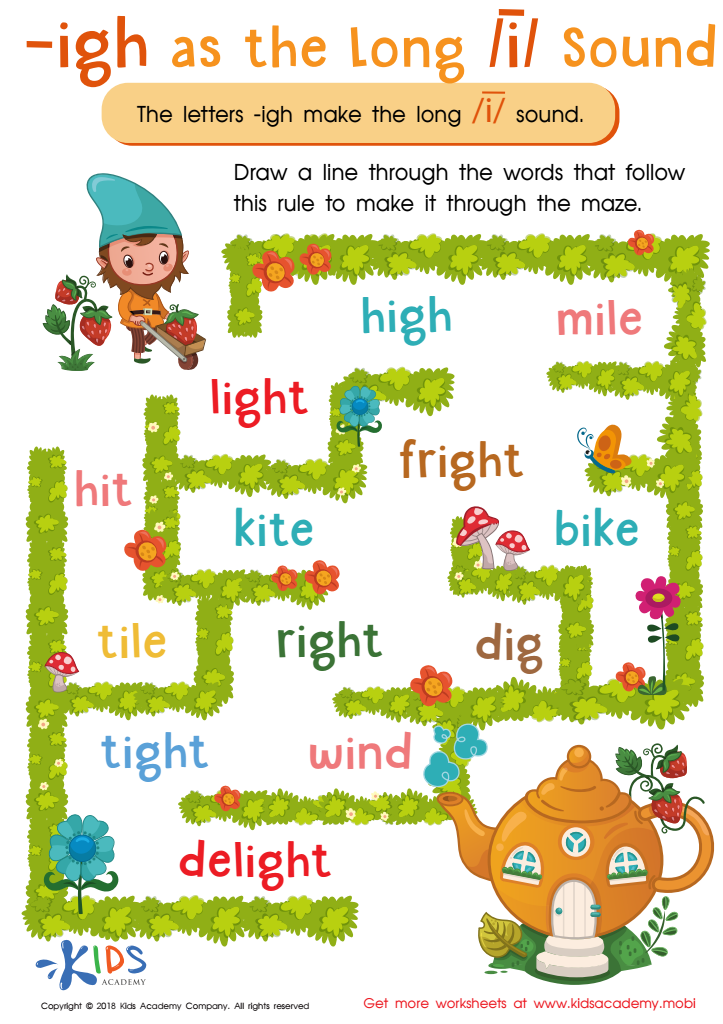
Reading: IGH as Long I Worksheet








Phonics practice is essential for children ages 5-8 as it lays the groundwork for successful reading and writing. During these formative years, children are highly receptive to language acquisition. Phonics instruction helps children understand the relationship between letters and sounds, enabling them to decode words, improving fluency, and boosting comprehension skills.
For parents and teachers, prioritizing phonics ensures that children acquire critical literacy skills early on. As children practice phonics, they become more confident readers. This confidence fosters a love for reading, opening up new worlds of imagination and knowledge. Proficient reading skills also support achievement across all academic areas, from math to science, as reading is integral to understanding and following instructions.
Moreover, phonics practice addresses the diverse learning needs and paces of different children, providing them with tools to tackle any linguistic challenges they may face. Engaging in regular phonics activities also promotes attention to detail and enhances listening skills, contributing to overall cognitive development.
Ultimately, when parents and teachers commit to consistent phonics practice, they pave the way for children to have a strong educational foundation. These early literacy skills not only enrich their current learning experience but also encourage lifelong reading and academic success.