Filters

174 filtered results

Clear all filters
Favorites
With answer key
Interactive

174 filtered results

Difficulty Level

Grade


Check out this FREE Trial Lesson on Reading for age 5-8!

Answer Questions About Key Details in a Story

Favorites
With answer key
Interactive
  • 5-8
  • Reading comprehension
  • Reading
  • Normal
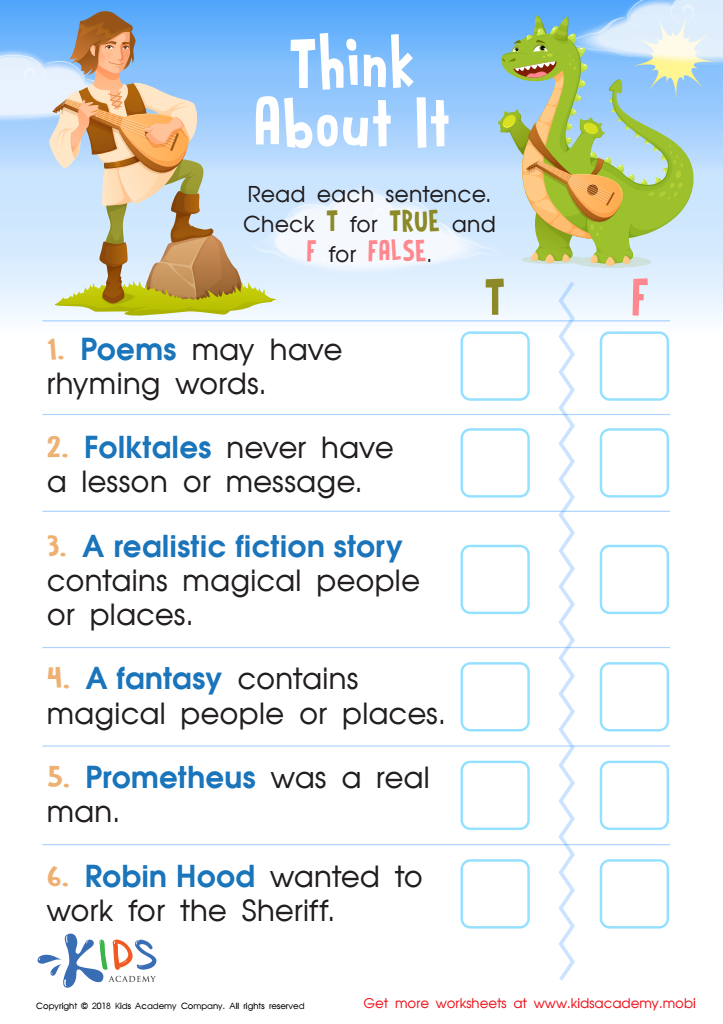
Think About It: Assessment Worksheet

Think About It: Assessment Worksheet

Reading is a fun and important way to learn. Help your students become better readers with this simple yet colorful worksheet. Read each sentence aloud, then have them read it by themselves. Ask them to check T for True and F for False. It's a great way to practice their reading skills!
Think About It: Assessment Worksheet
Worksheet
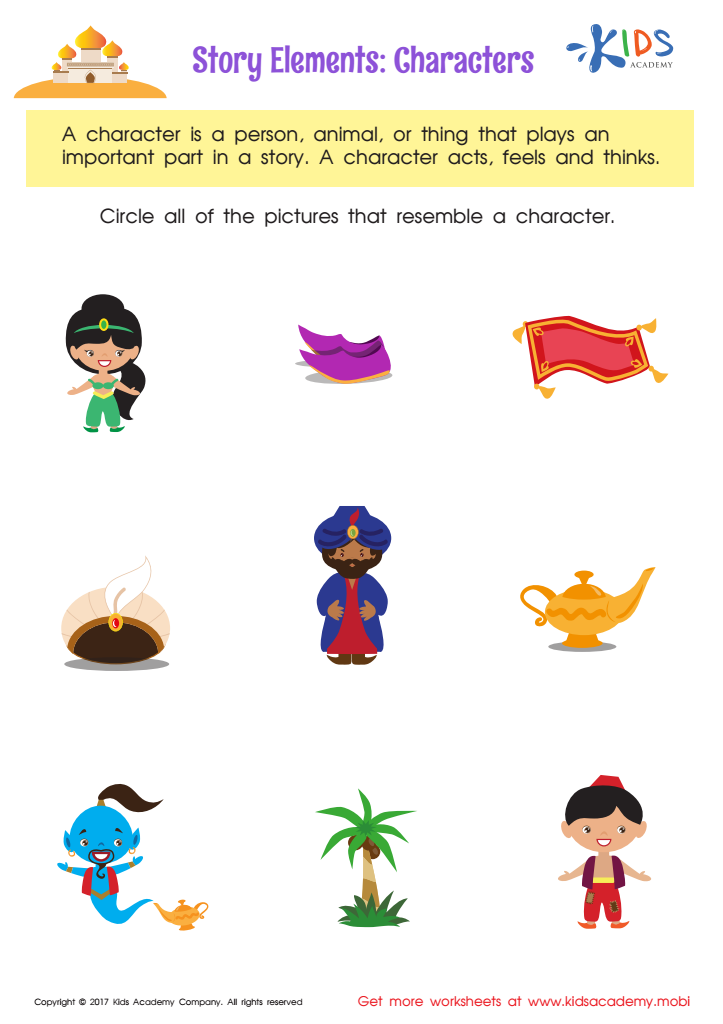
Reading Comprehension Worksheet: Aladdin

Story Elements Printable

Read the text and review the characters, settings and plot in a guided discussion. Take your child on a journey to the Middle East and review the characters, settings and plot of their favorite childhood stories with this Aladdin-themed worksheet! It'll help them master early analysis skills and learn about characterization. Enjoy a fun, guided discussion with your child as you review important story elements.
Story Elements Printable
Worksheet
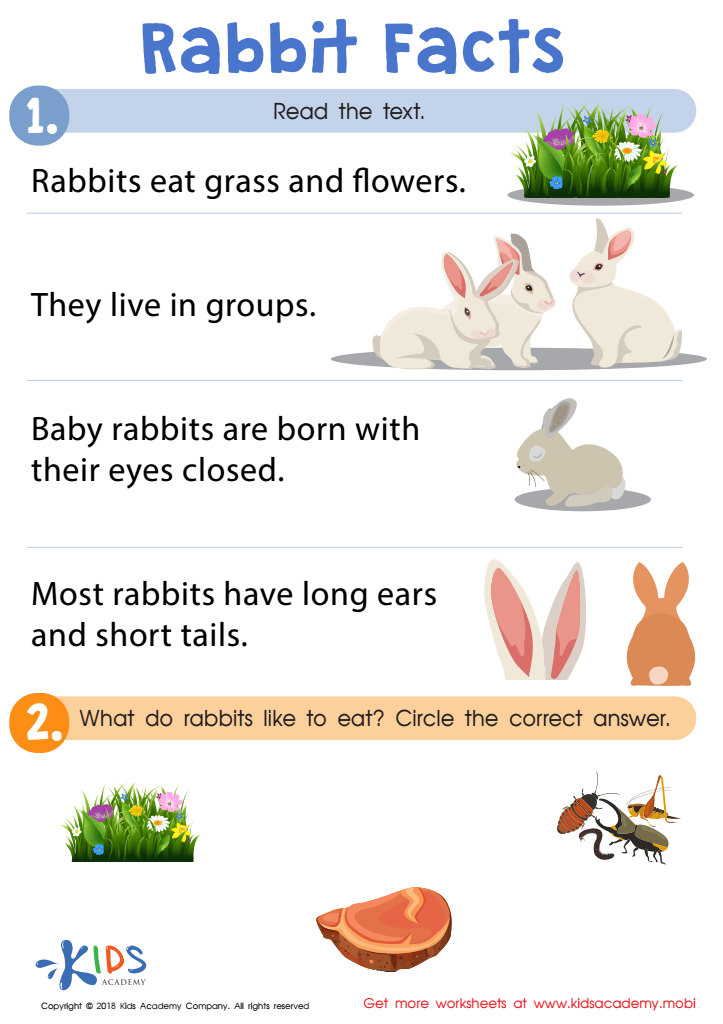
Rabbit Facts Worksheet

Rabbit Facts Worksheet

Informational texts offer great learning opportunities. Kids Academy's reading worksheet helps children read and recall important details from a text about bunnies. Kids will love it! Simply read the rabbit facts and circle the correct pictures to answer the questions.
Rabbit Facts Worksheet
Worksheet
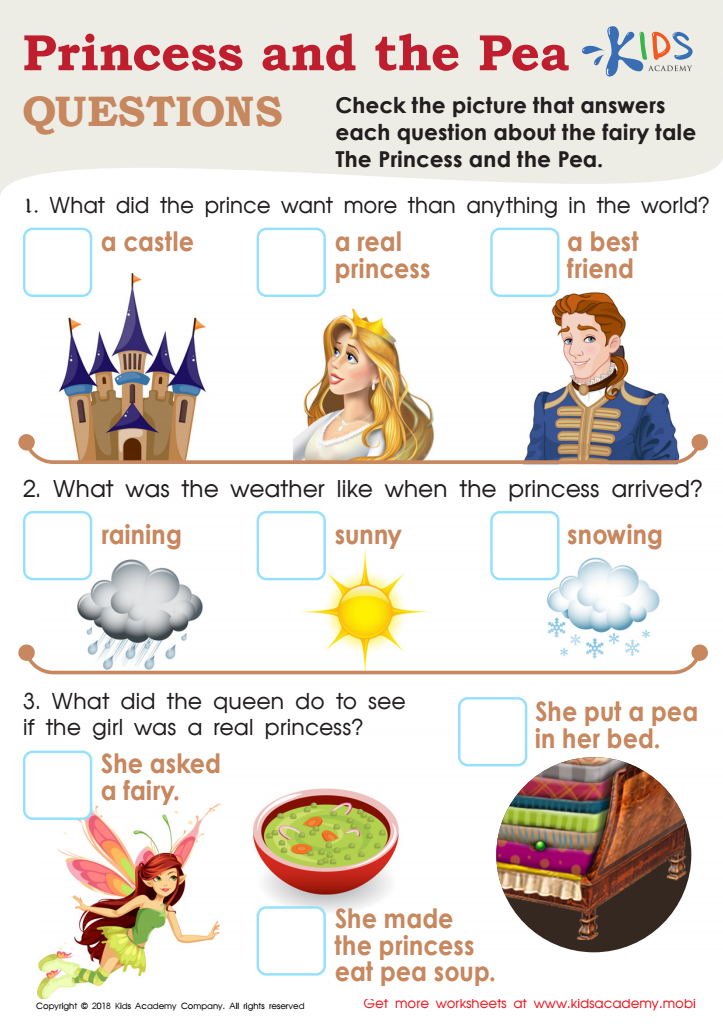
Princess and the Pea Questions Worksheet

Princess and the Pea Questions Worksheet

Your kid knows The Princess and the Pea inside-out? Test their knowledge with this worksheet. Ask your little one to read the questions and match each one to the picture. It's a fun way to see just how much attention they've paid to their bedtime story.
Princess and the Pea Questions Worksheet
Worksheet
The Boy Who Cried Wolf Part 2 Worksheet

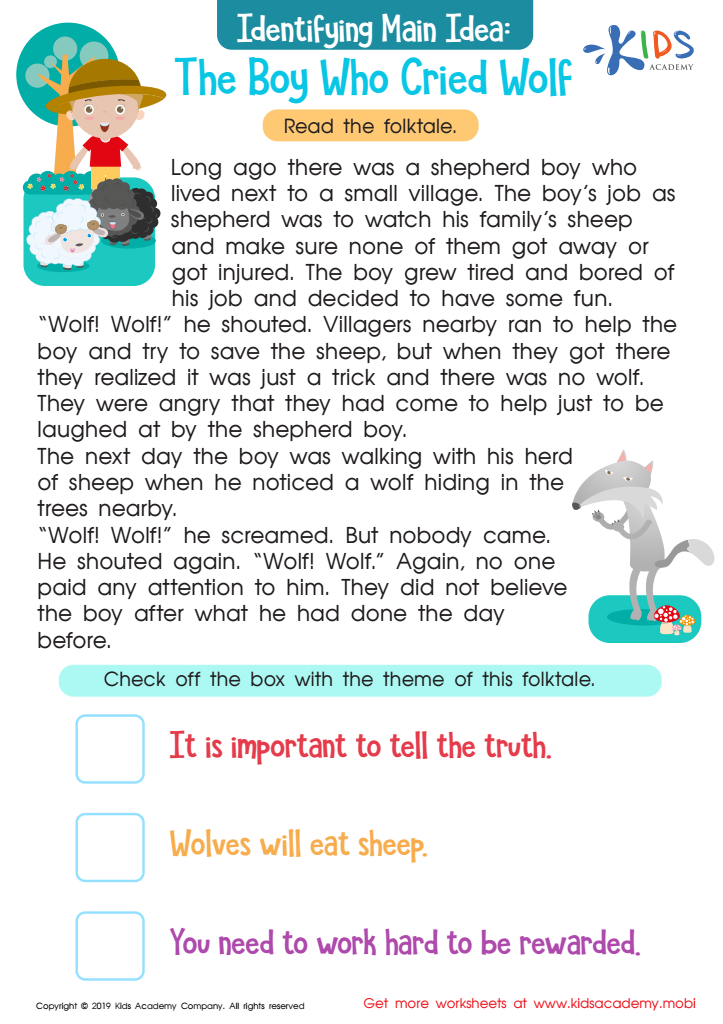
The Boy Who Cried Wolf Part 2 Worksheet

Kids love story time - no doubt they know their favorites! This worksheet tells a story with a theme or main idea. Read it carefully with your kids and ensure they understand every word. Then, help them answer the simple questions at the bottom of the page.
The Boy Who Cried Wolf Part 2 Worksheet
Worksheet
Finish Rhyming Poem Worksheet


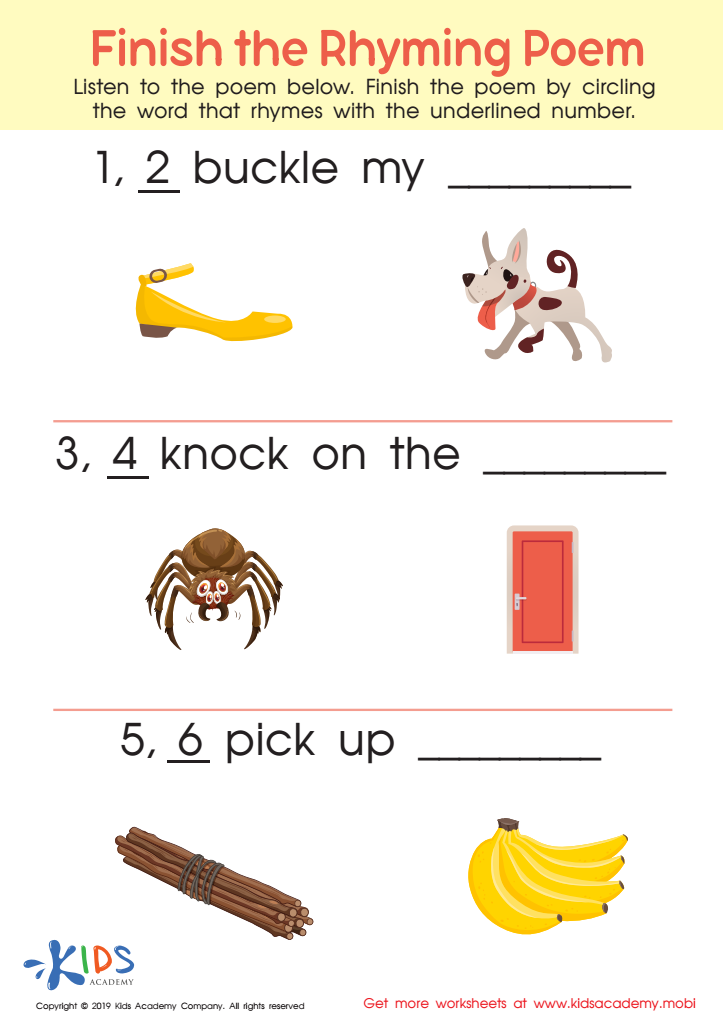
Finish Rhyming Poem Worksheet

Poems are a great way to express emotions and spark imagination. Does your child enjoy poetry and even have their own creations? If so, they'll love this worksheet. It's a great way to develop their rhyming skills. Challenge them to find and circle the words that rhyme with the ones underlined.
Finish Rhyming Poem Worksheet
Worksheet


... 7 8

Reading comprehension in early childhood (ages 5-8) is fundamental because it forms the foundation for all future learning. When children understand what they're reading, they can absorb information more effectively. This skill is not just about recognizing words, but about grasping their meaning and context. Proficient reading comprehension at a young age fosters a love of reading, encouraging lifelong learning and intellectual curiosity.

For children aged 5-8, strong reading comprehension skills translate into better performance across all subjects, from science to social studies. It enables them to follow instructions, solve problems, and think critically. More importantly, good comprehension skills impact emotional and social development, too. Stories help children understand emotions, cultures, and perspectives different from their own, fostering empathy and social awareness.

For teachers, focusing on reading comprehension ensures that their students are equipped to tackle progressively challenging material as they advance through their education. For parents, supporting this skill at home means reinforcing what’s taught in school, creating a consistent and powerful learning environment. Activities like shared reading, asking questions about stories, and encouraging discussions about books can significantly boost comprehension skills. Ultimately, investing in reading comprehension from an early age helps children develop the necessary tools for academic success and for understanding the world around them.