Rhyming skills development Normal Reading Worksheets for Ages 5-8
3 filtered results
-
From - To
Discover engaging "Rhyming Skills Development Normal Reading Worksheets" designed for children aged 5-8, perfect for enhancing early literacy! Our carefully crafted worksheets provide fun activities that help young learners recognize, create, and manipulate rhyming words, fostering their phonemic awareness. These printable resources encourage creativity while making learning enjoyable, helping children to improve their reading and vocabulary skills. Ideal for use at home or in the classroom, they foster a love for language through colorful illustrations and interactive exercises. Encourage your child's learning journey today with our rhyming worksheets that cultivate essential reading skills in a playful and supportive way!
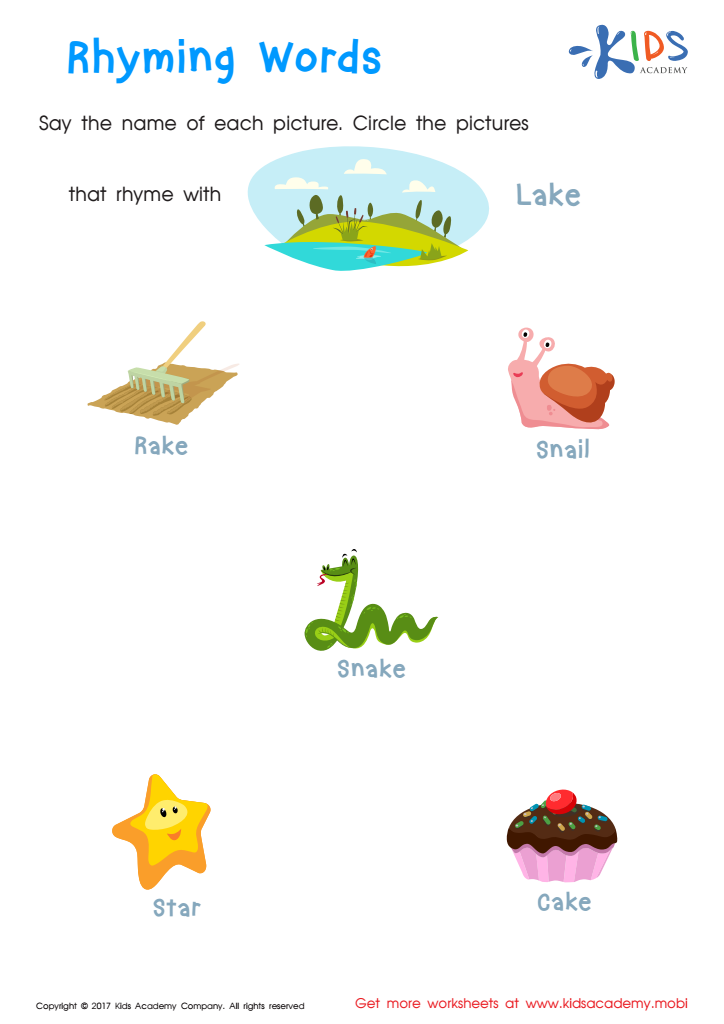
Rhyming Words Rhyming Worksheet
 Assign to My Students
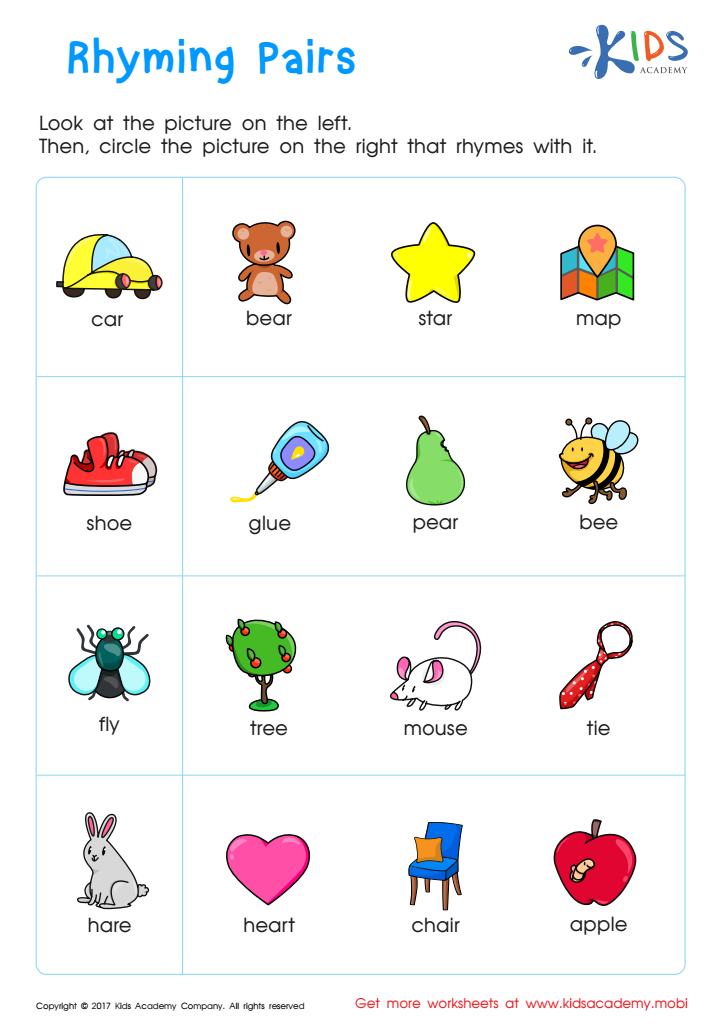
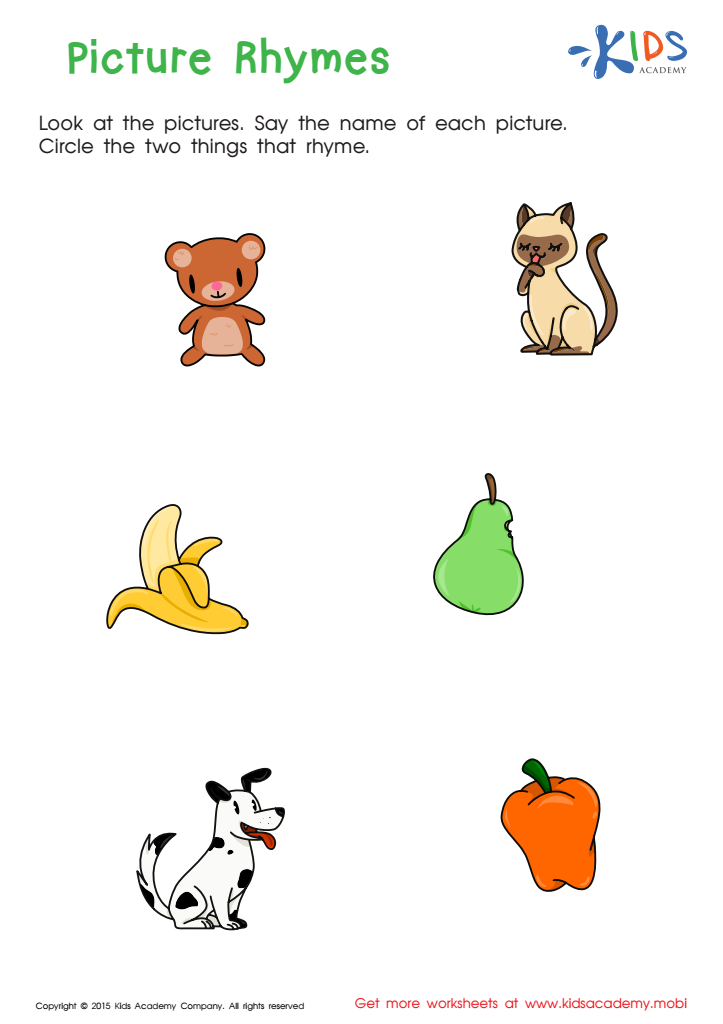
First Words: Picture Rhymes Worksheet






.jpg)

Rhyming skills are a crucial aspect of early literacy development for children aged 5-8. At this stage, children are beginning to grasp the fundamentals of reading, and rhyming plays a significant role in building phonemic awareness—the ability to hear, identify, and manipulate sounds in spoken language. This skill is foundational for reading, as it enhances decoding skills, making it easier for children to sound out words when they read.
Moreover, engaging with rhymes helps expand a child's vocabulary and improves their understanding of language structures. When children play with rhymes, they develop auditory discrimination, which aids in distinguishing between similar sounds and words. This ability supports overall literacy by bolstering spelling and pronunciation skills.
In addition to individual literacy benefits, rhyming fosters a love of language and reading through its playful and engaging nature. Storytimes filled with rhymes can cultivate enthusiasm for books and increase comprehension and retention of stories. For parents and teachers, actively supporting rhyming skill development enriches the learning environment, equipping children with the tools they need to succeed in reading while nurturing their imaginative and linguistic abilities. Ultimately, this foundational skill sets the stage for long-term academic achievement and a lifelong love of learning.








