Verb identification Normal Reading Worksheets for Ages 5-8
3 filtered results
-
From - To
Discover our engaging Verb Identification Normal Reading Worksheets designed specifically for children aged 5-8! These interactive resources help young learners recognize and understand verbs in various contexts, enhancing their reading skills and vocabulary. Each worksheet features fun activities, colorful illustrations, and clear instructions that promote independent learning. As kids identify verbs in sentences and stories, they build a solid foundation for their language development. Perfect for classroom or home use, these worksheets make learning enjoyable while ensuring educational growth. Dive into the world of verbs and watch your child’s reading confidence soar with our thoughtfully crafted materials!
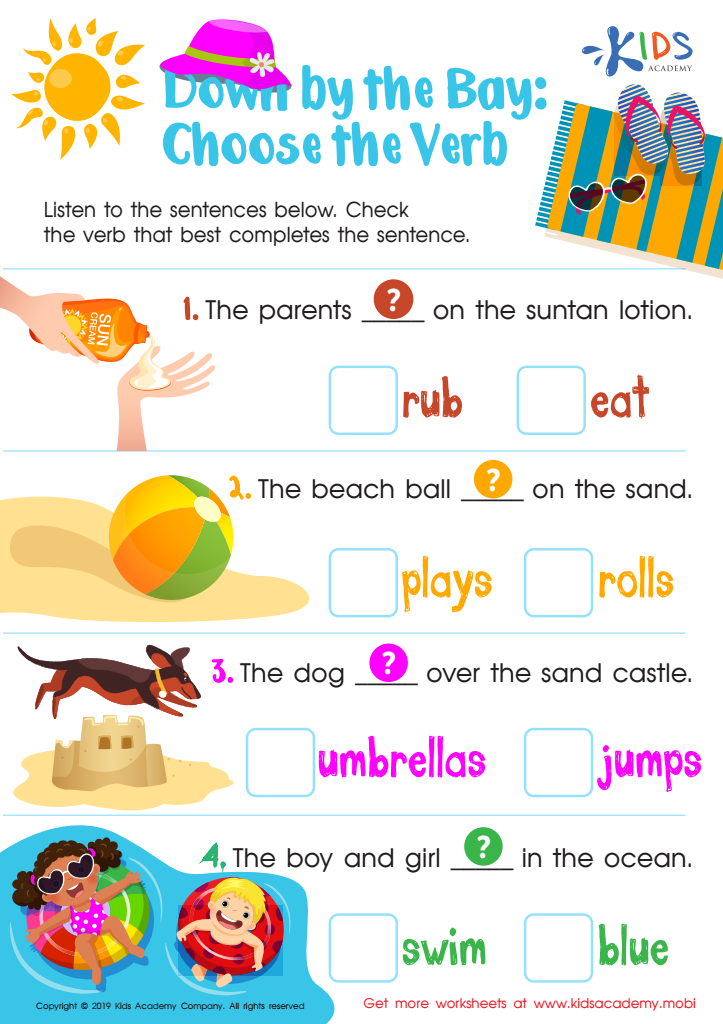
Down by the Bay: Choose the Verb Worksheet
 Assign to My Students
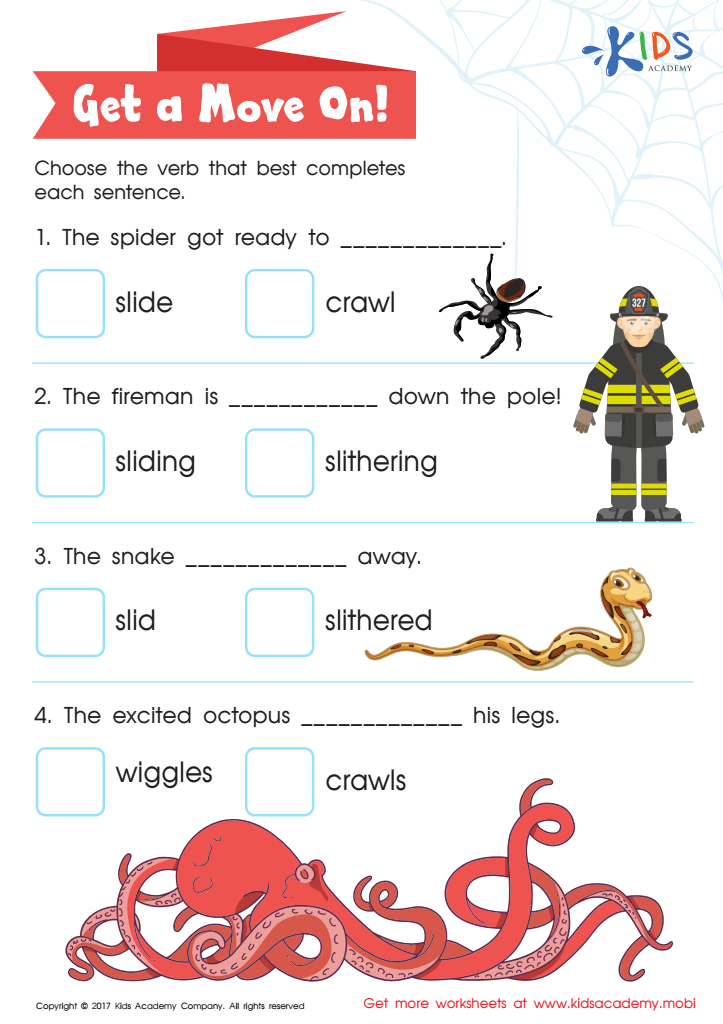
Verb Worksheet
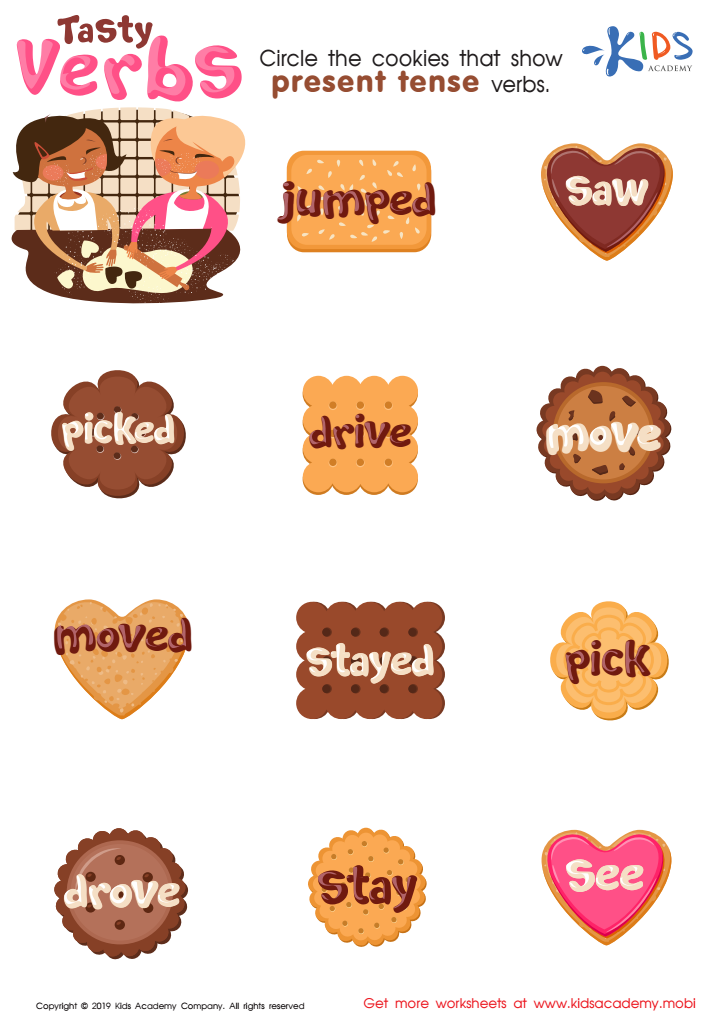
Tasty Verbs Worksheet








Understanding verb identification is crucial for children aged 5 to 8 as it serves as a foundational skill in reading and language development. This age group is at a pivotal stage where they learn to decode and comprehend sentences, making the identification of verbs essential. Verbs are action words that are vital for sentence structure, conveying what the subject is doing. Mastering verb identification helps young learners develop stronger reading fluency and comprehension, enabling them to engage with texts more effectively.
When parents and teachers pay attention to verb identification, they assist children in expanding their vocabulary and enhancing their understanding of language mechanics. This understanding allows children to write more complex sentences and express their thoughts clearly. Furthermore, recognizing verbs helps students improve their listening skills, as they learn to pick out key actions in stories or discussions.
By incorporating fun activities that focus on verbs into daily learning, parents and teachers can foster an enthusiastic and interactive environment. This not only supports literacy development but also instills a love for language in children. Ultimately, by emphasizing verb identification, caregivers play a critical role in building a solid foundation for future reading and writing success.








