
Comprehension skills Normal Reading Fiction Worksheets for Ages 5-8
7 filtered results
Difficulty Level
Grade
Age
-
From - To
Subject
Activity
Standards
Enhance your child's reading journey with our "Comprehension Skills Normal Reading Fiction Worksheets" suitable for ages 5-8. These meticulously crafted worksheets are designed to boost young learners' understanding of fiction texts, helping them grasp key concepts, sequence events, and draw predictions. The vibrant illustrations and engaging narratives make learning enjoyable while fostering critical thinking skills. Each worksheet offers a blend of fun and education, ensuring kids stay engaged and motivated. Perfect for both classroom use and home practice, our resources support children in achieving reading proficiency and developing a lifelong love for literature. Explore our selection today for effective learning!
Favorites
With answer key
Interactive
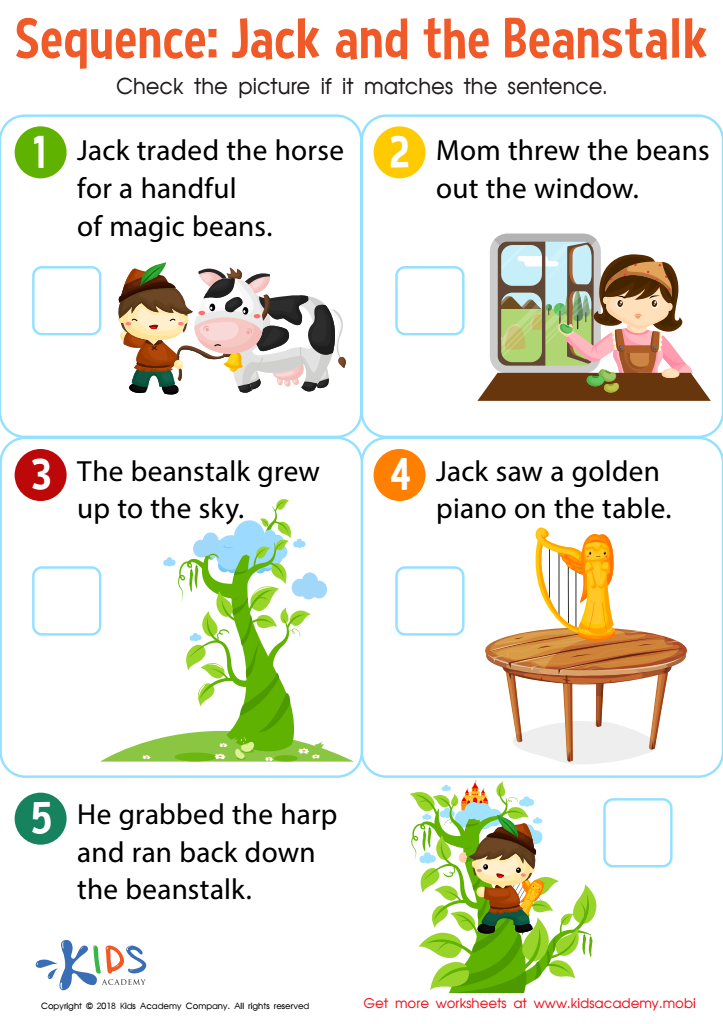
Sequence: Jack and The Beanstalk Worksheet
Ensure your kids are familiar with Jack and the Beanstalk before starting this worksheet. If not, read them the story. In the pdf, there are five pictures with sentences. Read the sentences, ask your kid if it matches the picture, then help them check if it does.
 Assign to My Students
Sequence: Jack and The Beanstalk Worksheet
Worksheet
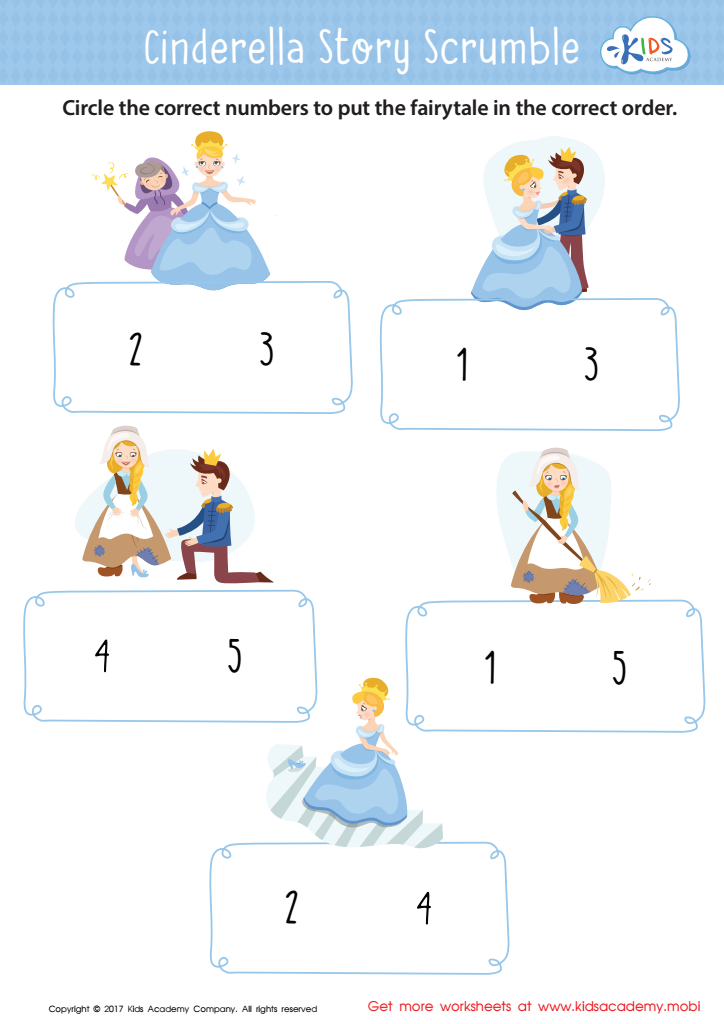
Cinderella Story Sequencing Worksheet
This worksheet helps strengthen reading comprehension skills by getting your child to remember key moments from the Cinderella story. They'll be asked to place pictures in the right order to tell the story.
Cinderella Story Sequencing Worksheet
Worksheet
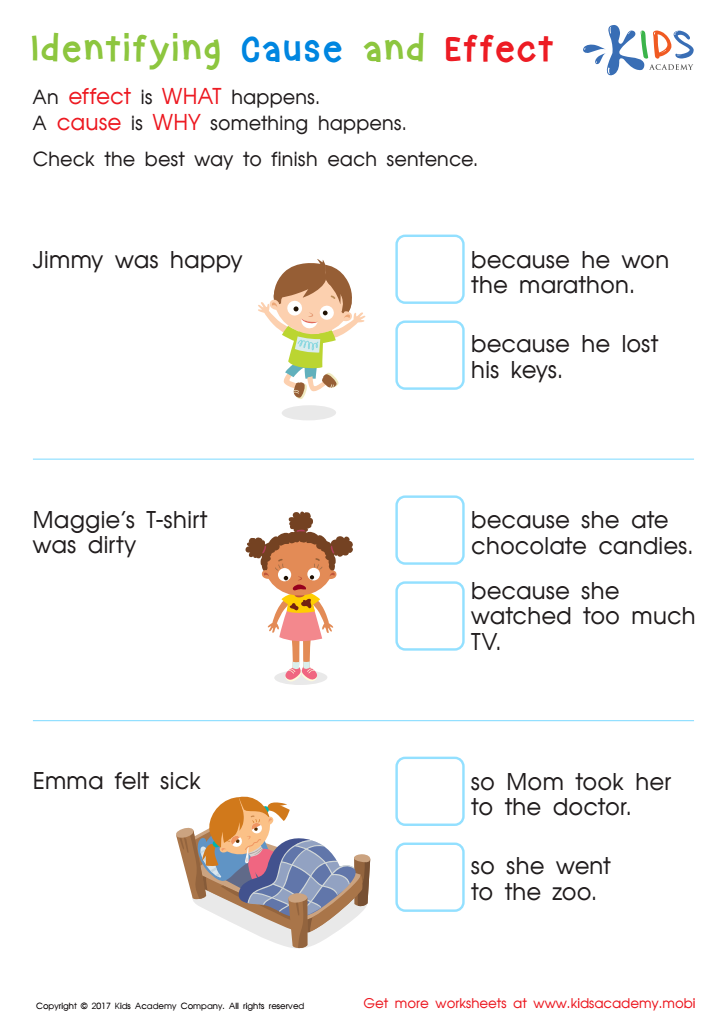
Indentifying Cause and Effect Worksheet
2nd grade cause & effect worksheets give your child practice making connections between events and their results. Fun activities help develop reading and critical thinking skills.
Indentifying Cause and Effect Worksheet
Worksheet
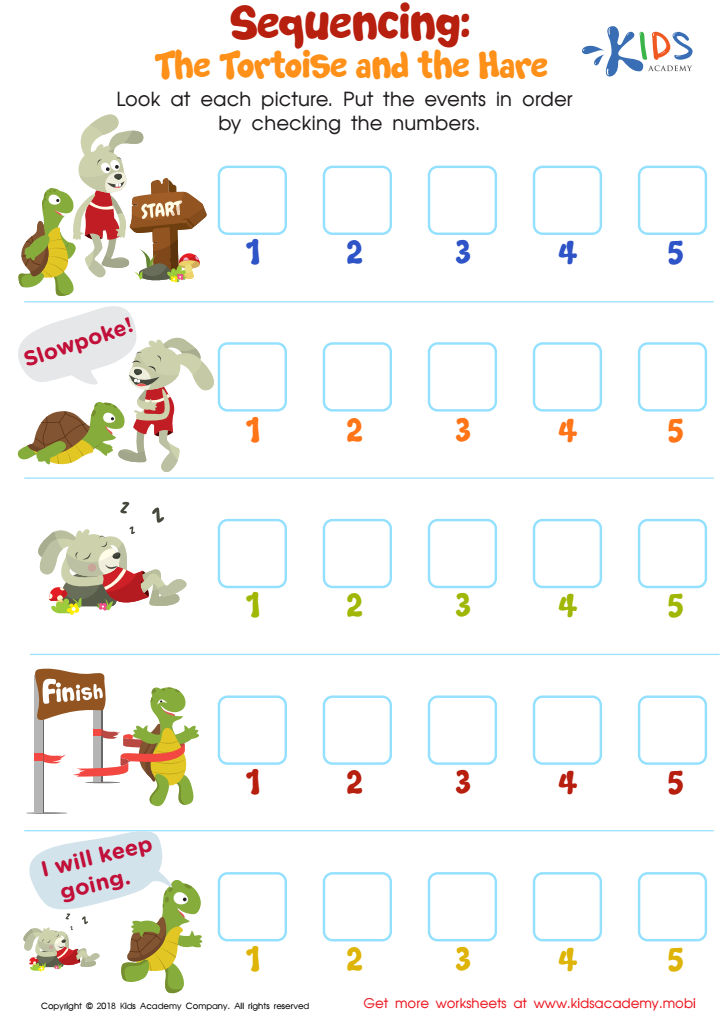
Sequencing: The Tortoise and the Hare Worksheet
Help your child become an independent reader and critical thinker with a sequencing worksheet from Kids Academy! Have them read the classic tale of the tortoise and the hare and use the accompanying worksheet to check their understanding of the story's sequence of events. Have kids identify the correct order of events by selecting the box next to the correct number for each image!
Sequencing: The Tortoise and the Hare Worksheet
Worksheet
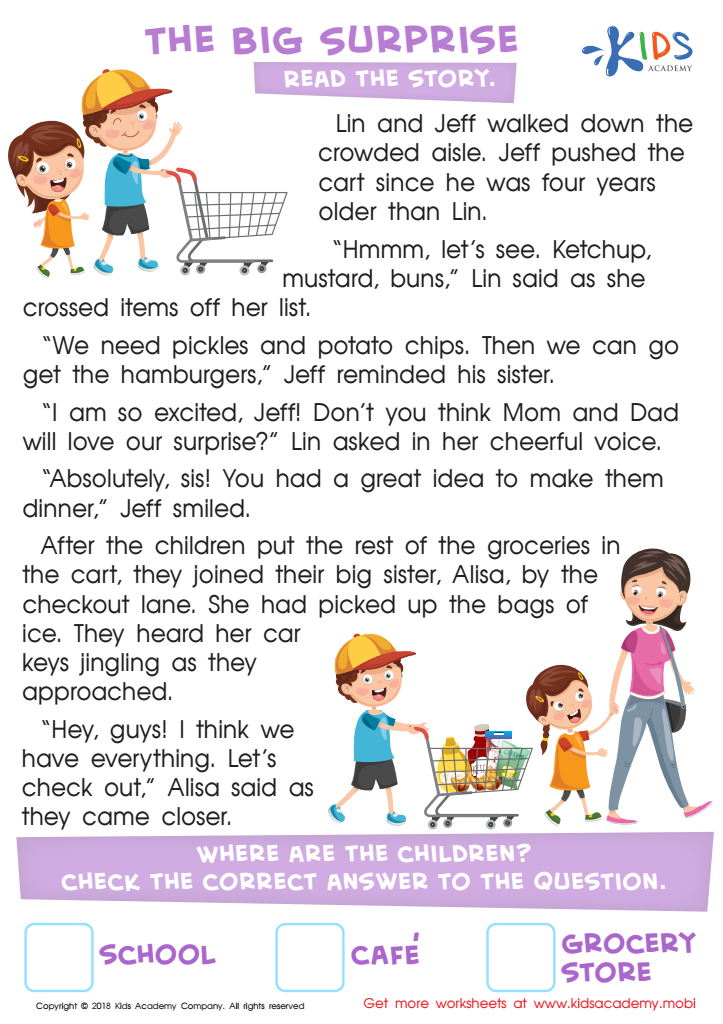
The Big Surprise Worksheet
Read this story to your kids: Lin and Jeff are in the supermarket with their big sister Alisa. They're excited to buy groceries. Listen closely to the details and ask the questions at the end to check your understanding. Read it twice to ensure full comprehension.
The Big Surprise Worksheet
Worksheet
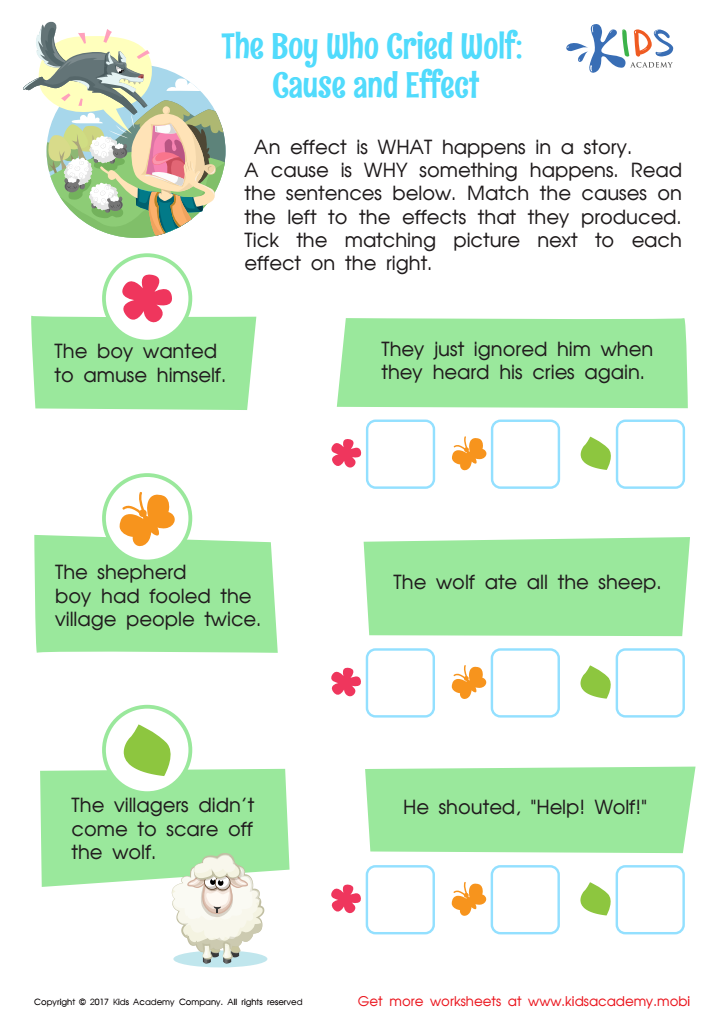
The Boy Who Cried Wolf: Cause and Effect Worksheet
With classic stories and fables, learning reading comprehension is easy - and fun!
The Boy Who Cried Wolf: Cause and Effect Worksheet
Worksheet
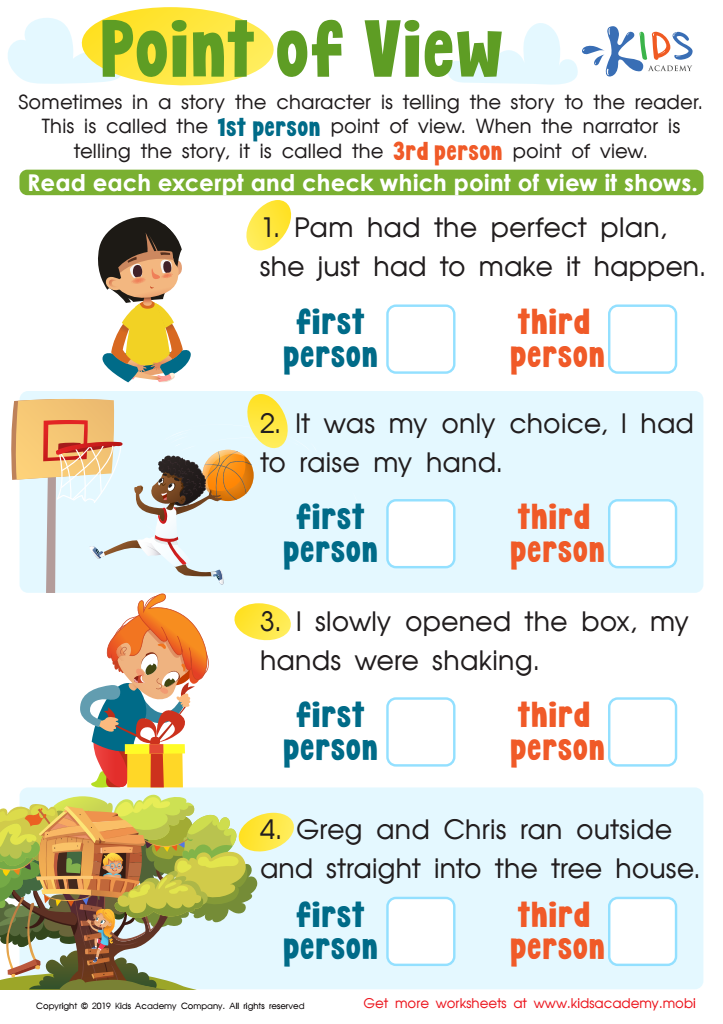
Point of View Printable
Teach your kids about points of view with this worksheet! In a story, characters can tell the story in first person or it can come from a narrator in third person. Read the excerpt in the worksheet and ask your kids to identify which point of view it is.
Point of View Printable
Worksheet
Join Kids Academy for Free
Who is primarily going to use this learning content?








Comprehension skills in young readers, especially those aged 5-8, are crucial for their cognitive and emotional development. Normal reading of fiction nurtures these skills effectively during early childhood. Stories in fiction serve as a fertile ground for young minds to practice understanding context, following narratives, and making predictions. This enhances their ability to retain and process information, an important skill not just for academics but for everyday problem-solving as well.
Additionally, fiction introduces children to a diverse range of characters, settings, and situations, fostering empathy and social understanding. When children read about heroes and heroines overcoming challenges, they learn about perseverance and moral values in a way that's accessible and engaging. Subconsciously, they start practicing critical thinking and interpretative skills.
Parental or teacher involvement amplifies these benefits. Active discussions about the story deepen understanding and prompt children to engage more dearly with the text. Questions like "Why do you think the character acted that way?" can boost inferential thinking. Plus, the bonding time between adults and children around stories creates a positive association with reading, which can instigate a lifelong love for books.
Bottom line, investing in comprehension skills through normal reading habits not only equips children with essential literacy skills but also aids their socio-emotional growth, preparing them for a more nuanced understanding of the world around them.







