Rhyming skills development Normal Rhyming Words Worksheets for Ages 5-8
3 filtered results
-
From - To
Enhance your child's early literacy skills with our engaging Rhyming Skills Development worksheets for ages 5-8. Designed by educational experts, these printable worksheets provide fun, age-appropriate rhyming exercises that promote phonemic awareness and strengthen vocabulary. Through playful activities and creative word matching, kids discover the joy of language while building a strong foundation in reading. Ideal for both classroom and home use, these resources offer a seamless blend of entertainment and education, ensuring your child develops essential rhyming skills with ease. Explore our collection today and watch your young reader thrive!
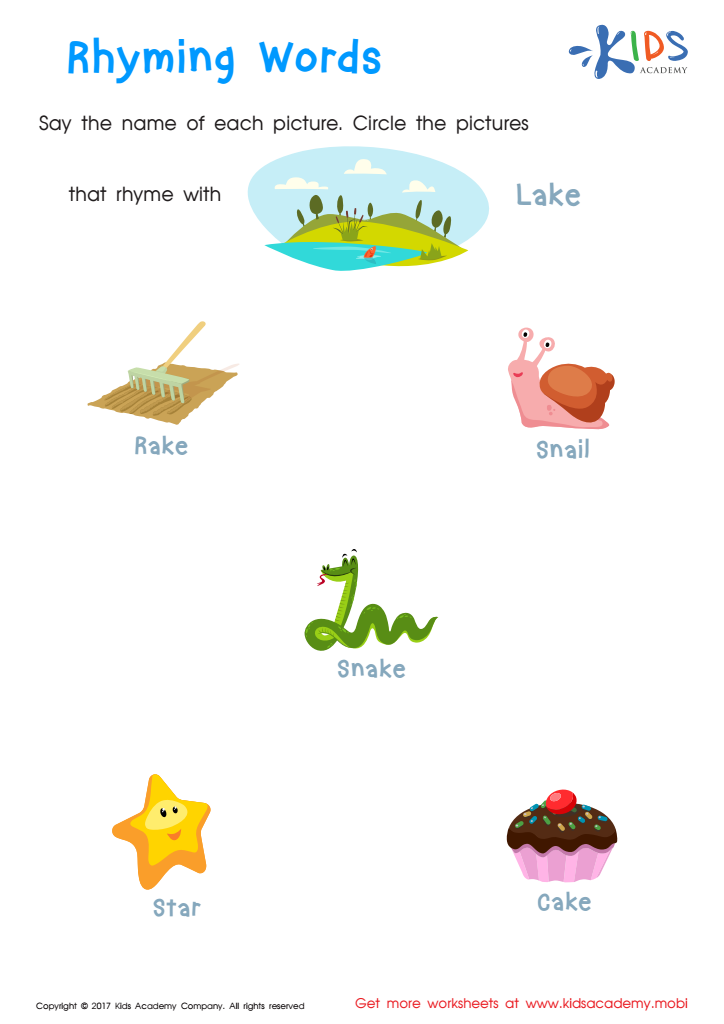
Rhyming Words Rhyming Worksheet
 Assign to My Students
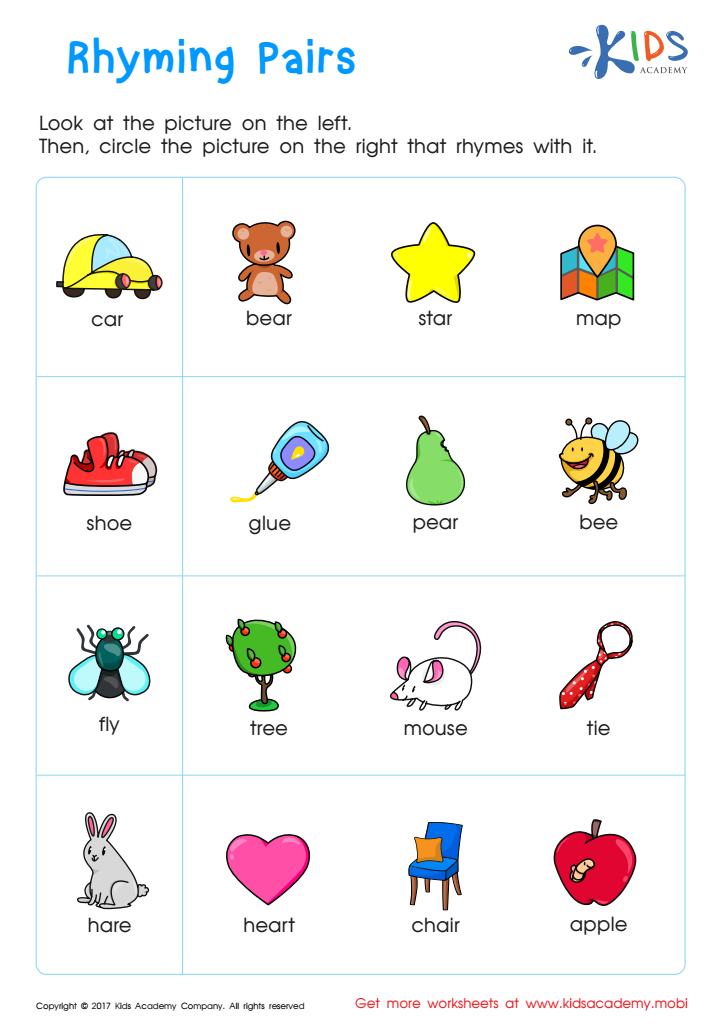
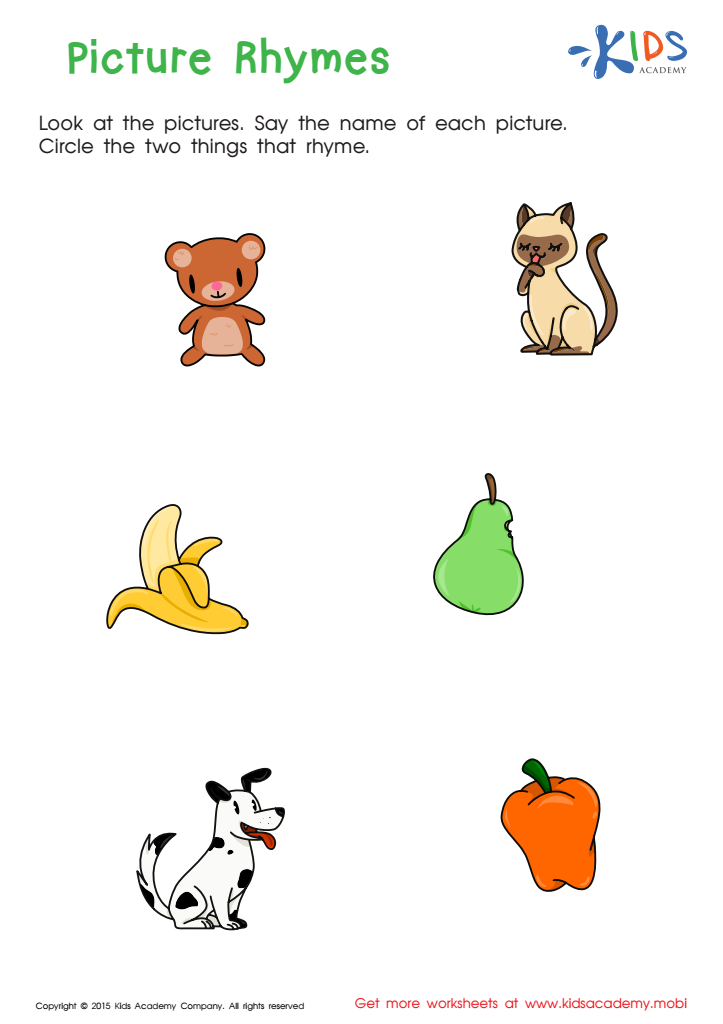
First Words: Picture Rhymes Worksheet







Rhyming skills are a fundamental building block in early childhood literacy, critical for children aged 5-8. Rhyming enhances phonemic awareness, which is the ability to hear, identify, and manipulate individual sounds in words. This skill is crucial for learning to read and spell because it helps children understand how sounds work together in language. When children recognize rhyming patterns, they develop predictive skills that make reading new words easier.
Practicing rhyming also expands a child’s vocabulary. As children are exposed to different words that rhyme, they learn new words and their meanings, promoting language enrichment. For example, through rhyming games and activities, children might learn that "cat," "hat," and "bat" share similar sounds but have different meanings.
Moreover, rhyming activities are engaging and enjoyable, which makes learning fun. Through songs, poems, and nursery rhymes, children are more likely to develop a positive association with reading. This enjoyment can foster a lifelong love of reading and learning.
For parents and teachers, focusing on rhyming skills is pivotal; it lays a strong foundation for future academic success. By incorporating rhyming activities into daily routines, they can support a child's literacy development and boost their confidence in reading and writing.








