Normal Animals Worksheets for Ages 5-8 - Page 3
49 filtered results
-
From - To
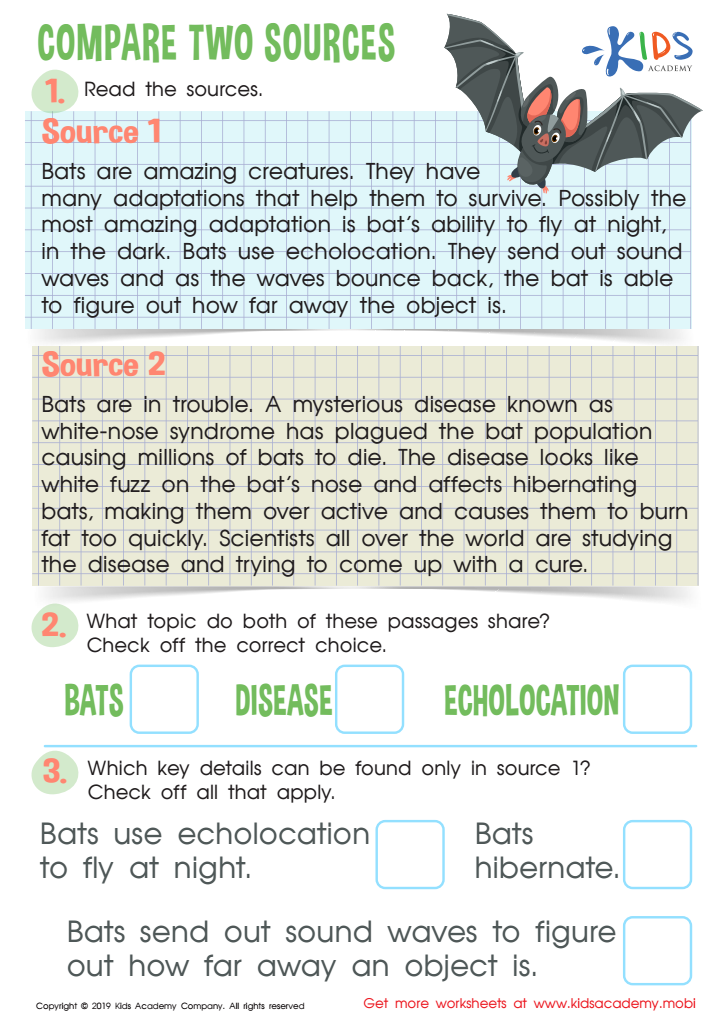
Compare Two Sources Worksheet
 Assign to My Students







%20(1).jpg)
Parents and teachers should care about normal animals for children ages 5-8 because these animals support key aspects of early childhood development and learning. At this age, children are naturally curious and eager to learn about the world around them. Teaching them about normal animals—those commonly found in their environment—can foster a connection to nature and enhance their understanding of ecosystems.
By learning about different animals, children develop critical thinking skills as they explore the characteristics, habitats, and behaviors of these creatures. This knowledge can spark interest in science, contributing to a lifelong love of learning. Engaging with animals promotes emotional intelligence; children learn to empathize and understand the needs of living beings, cultivating a sense of responsibility.
Additionally, discussing normal animals aligns with various educational goals, such as literacy and numeracy. Teachers can incorporate storytelling, art, and math activities related to animals, making learning dynamic and interdisciplinary.
Ultimately, raising awareness about normal animals encourages children to observe and appreciate their surroundings, promoting environmental stewardship. Parents and teachers play a vital role in nurturing this awareness, laying the foundation for informed, compassionate future stewards of our planet.








