
Comprehension skills Normal Science Worksheets for Ages 5-8
6 filtered results
Difficulty Level
Grade
Age
-
From - To
Subject
Activity
Standards
Boost your child’s understanding of scientific concepts with our "Comprehension Skills Normal Science Worksheets" designed for ages 5-8. These engaging activities combine fun storytelling with age-appropriate science topics, helping young learners build critical thinking and interpretive skills. Perfect for classroom use or at-home practice, our worksheets cover intriguing subjects that pique curiosity and foster a love for learning. With colorful illustrations and thoughtful questions, children will enjoy learning concepts such as ecosystems, weather patterns, and basic anatomy. Equip your child with essential comprehension skills to excel in science and beyond. Discover more today!
Favorites
With answer key
Interactive
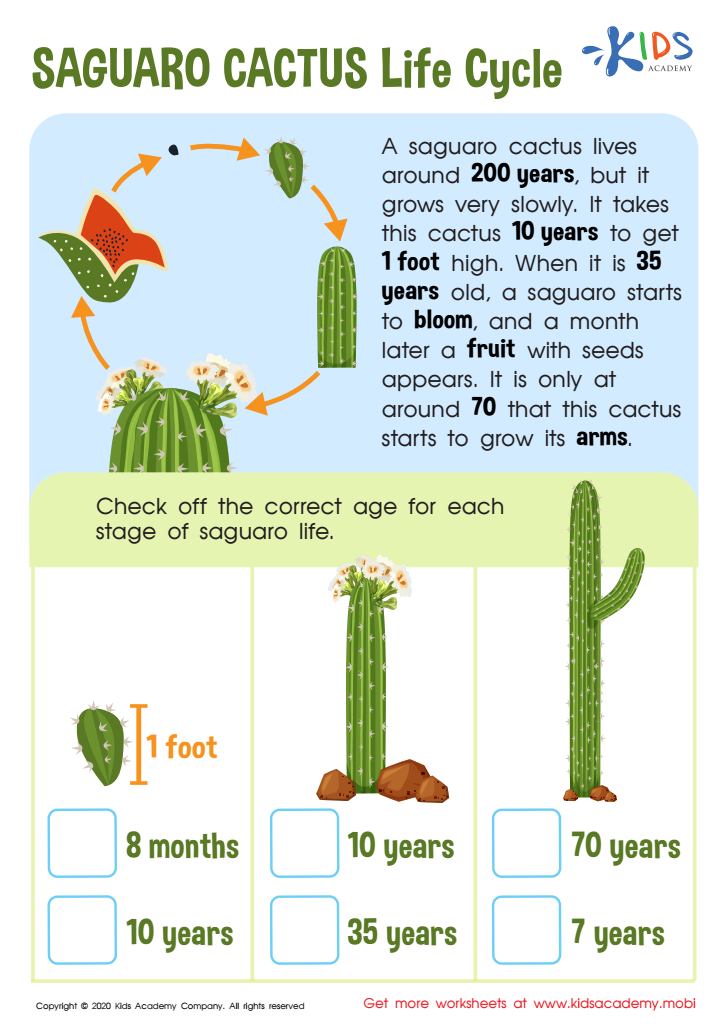
Saguaro Cactus Life Cycle Worksheet
Teach your child about the saguaro cactus, which takes 35 years to bloom and can live up to twice the lifespan of a human! Print this free PDF worksheet to engage learners with an interesting passage. Check off the correct answers to reflect their learning!
 Assign to My Students
Saguaro Cactus Life Cycle Worksheet
Worksheet
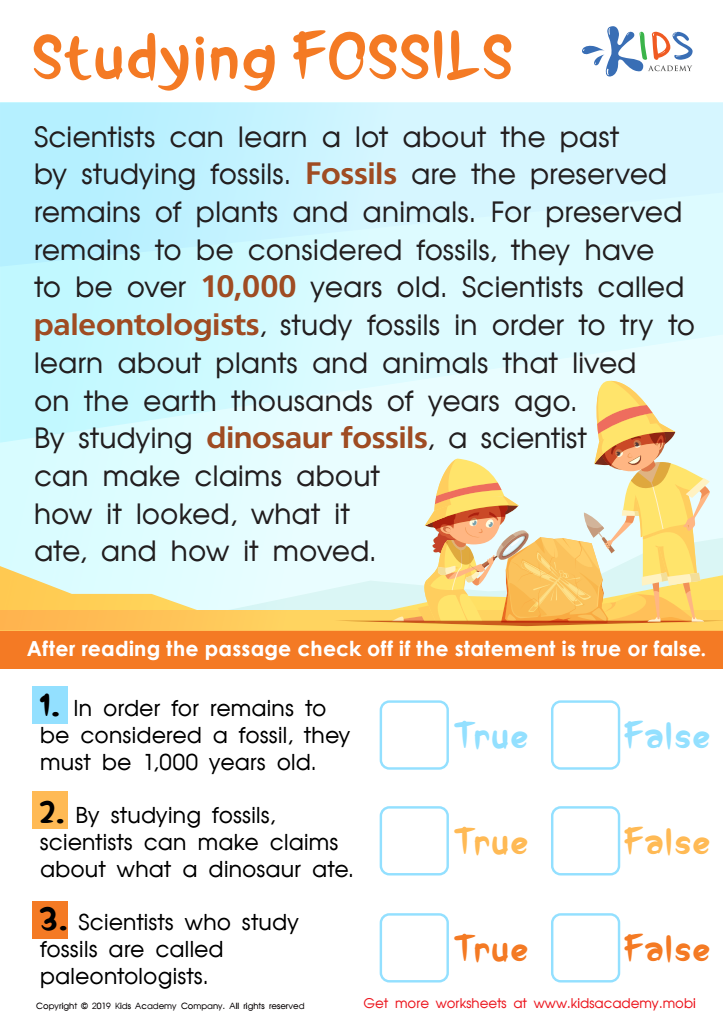
Studying Fossils Worksheet
Fossils captivate children! It's no wonder why; when we learn about them, we are getting a glimpse into history and uncovering old mysteries! With this free download, kids will understand what a paleontologist is and how they use fossils to learn about long-gone plants and animals. They'll discover that old bones are priceless and that exploring ancient history can be exciting!
Studying Fossils Worksheet
Worksheet
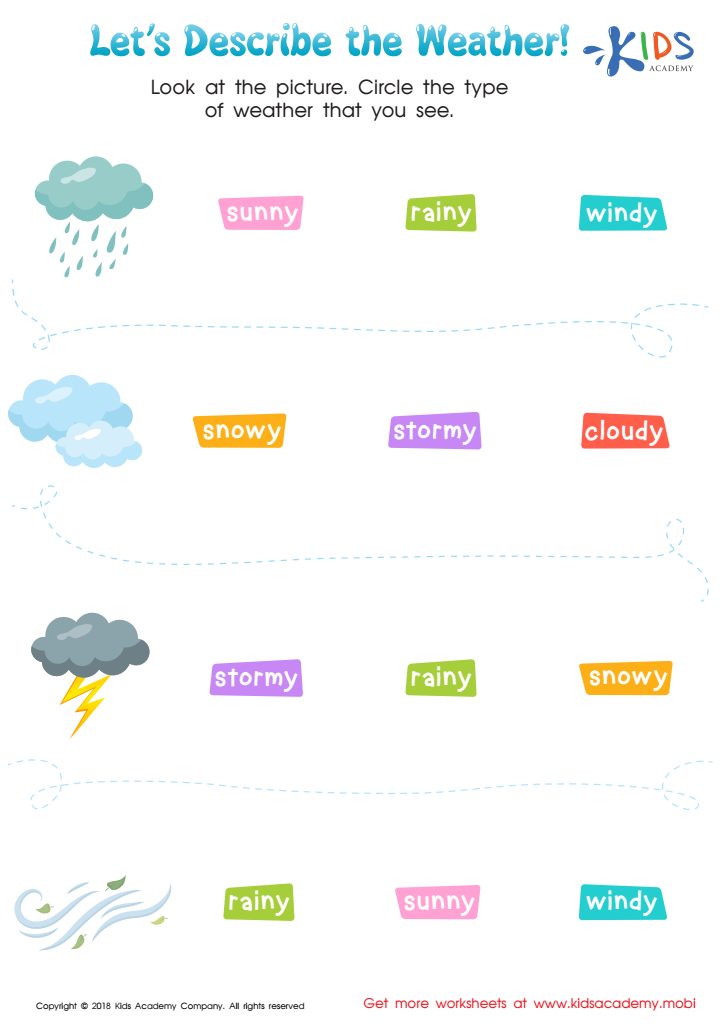
Let's Describe the Weather! Worksheet
Test your child's knowledge of weather with this fun worksheet. Ask them to look at the pictures and identify the type of weather. Then, have them select the correct answer from the options on the right. See how well your kids have been paying attention to the weather forecast!
Let's Describe the Weather! Worksheet
Worksheet
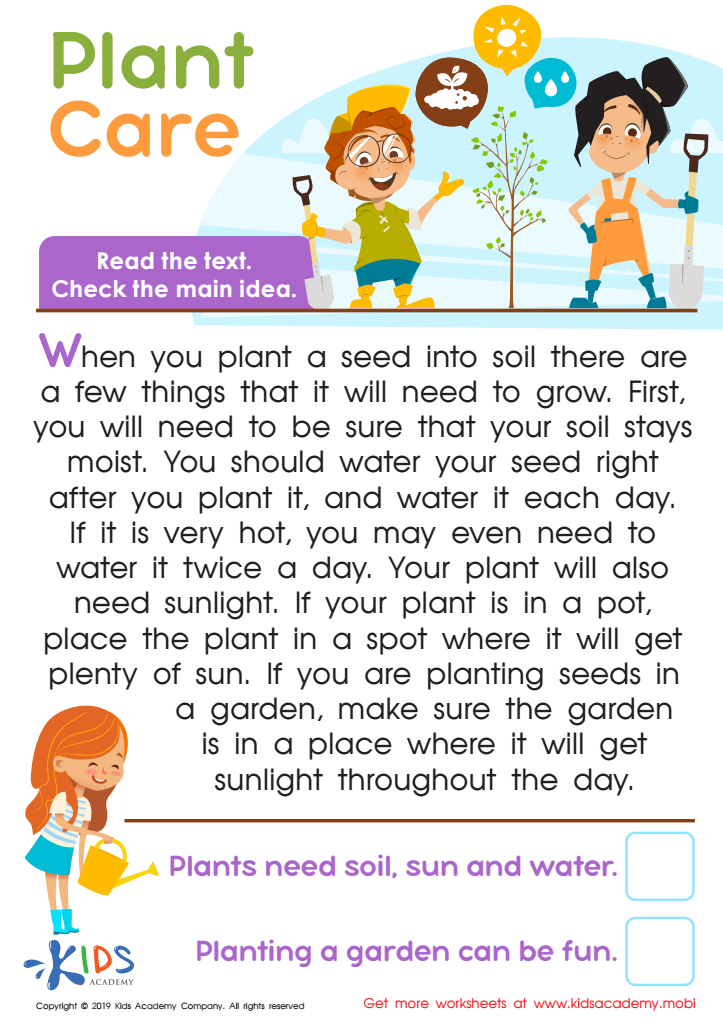
Plant Care Worksheet
Encourage your children to read by helping them practice. Print out the worksheet and read the text with them. Help them understand the words and find the main idea. This will improve their reading skills and prepare them for school.
Plant Care Worksheet
Worksheet
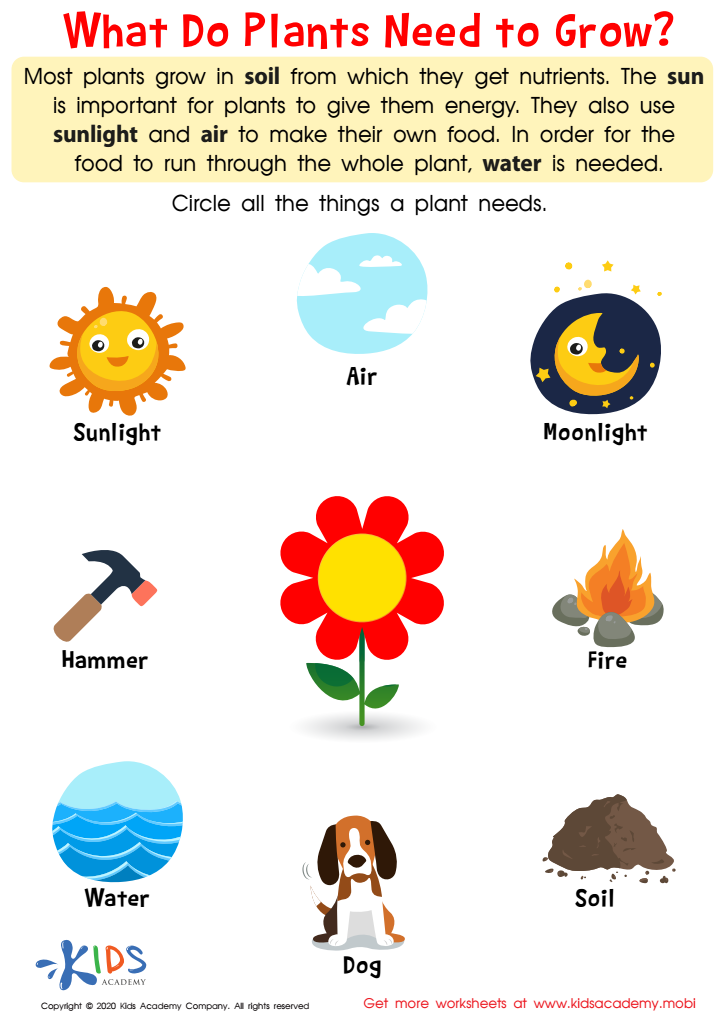
What Do Plants Need to Grow Worksheet
Help your child explore and discover the world of plants with this fun how do plants grow worksheet! They'll gain knowledge, sharpen problem solving skills, and build science foundations as they identify what plants need to grow. Afterward, plant a seed together and watch it sprout right before their eyes!
What Do Plants Need to Grow Worksheet
Worksheet
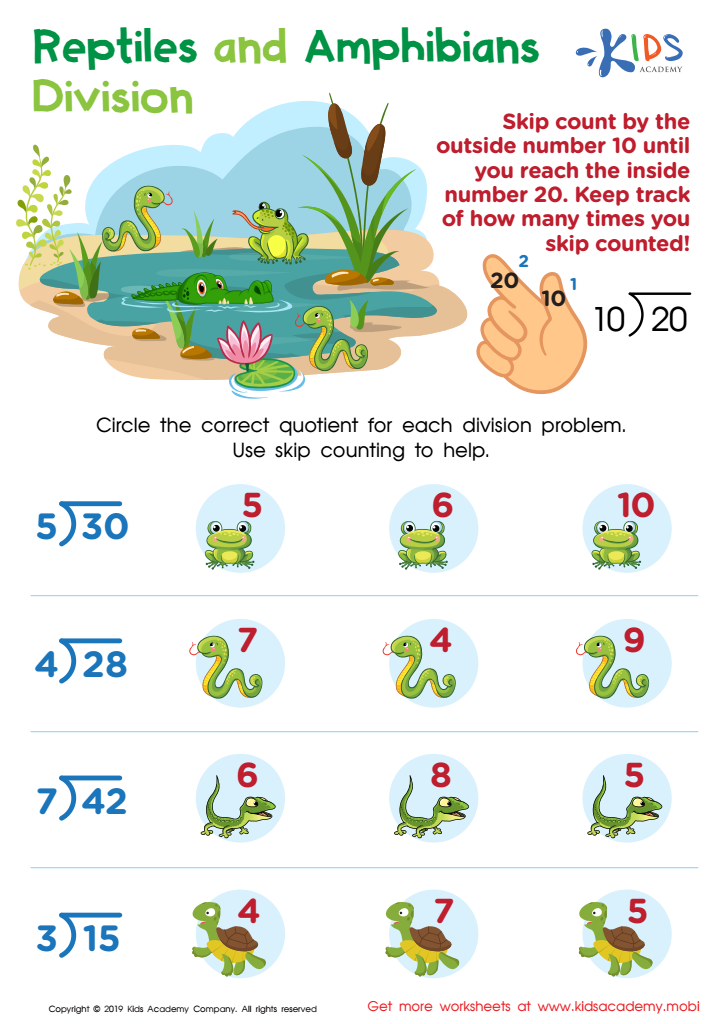
Reptile and Amphibians Division Worksheet
Skip counting is key in division. This PDF worksheet helps children practice this skill with fun reptile and amphibian friends. They must circle the right quotient among the choices given to reinforce their pattern recognition. Perfect for mastering division!
Reptile and Amphibians Division Worksheet
Worksheet
Join Kids Academy for Free
Who is primarily going to use this learning content?







Comprehension skills in the realm of normal science are vital for children aged 5-8 because they lay the foundation for future academic success and critical thinking. At this developmental stage, young minds are exceptionally receptive to new information and learning patterns. Building strong comprehension skills during these years will enable children to understand and retain scientific concepts such as observing, classifying, predicting, and drawing conclusions.
When parents and teachers foster these skills, children become more curious and enthusiastic about learning. Science, in particular, helps to cultivate curiosity and a keen understanding of the world around them. Comprehending basic scientific ideas and methods can nurture children's problem-solving abilities and stimulate analytical thinking.
Moreover, effective comprehension skills in science support overall literacy and numeracy. Understanding scientific texts involves not just recognizing words, but also grasping meanings, coherence, and context—skills that are transferable across all subjects. Encouraging comprehension skills can improve a child’s ability tol interpret information, follow instructions, and express their ideas clearly.
Furthermore, a well-developed scientific comprehension prepares children for higher-level science education and instills a lifelong love for learning. Thus, early investment in developing these skills can position children well for challenges and opportunities in their educational journeys and beyond.







