Counting skills Normal Science Worksheets for Ages 5-8
7 filtered results
-
From - To
Introduce your young learners to the world of counting with our engaging Normal Science Worksheets for Ages 5-8. Designed to blend education with fun, these worksheets help children develop essential counting skills through interactive activities and colorful illustrations. Perfect for age-appropriate skill-building, our printable resources provide hands-on practice that fosters curiosity and confidence in young minds. Whether used in classrooms or at home, our counting worksheets are an excellent tool to support your child's journey in mastering basic math concepts while exploring the fascinating realms of science. Download now to transform learning into an enjoyable adventure!
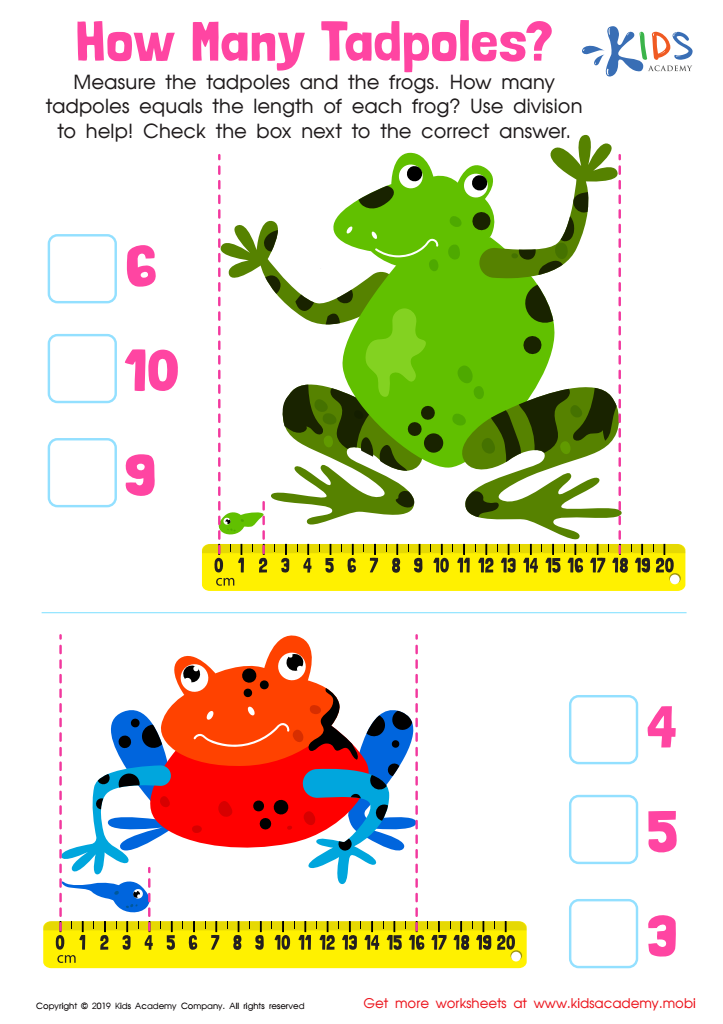
How Many Tadpoles Worksheet
 Assign to My Students
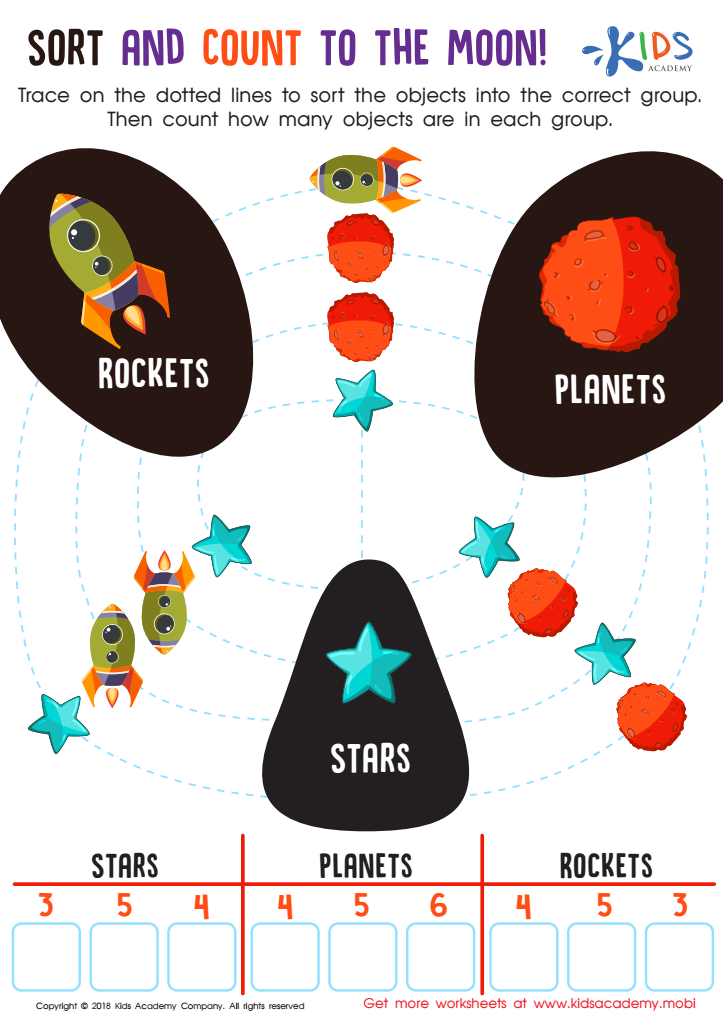
Sort and Count to the Moon Worksheet
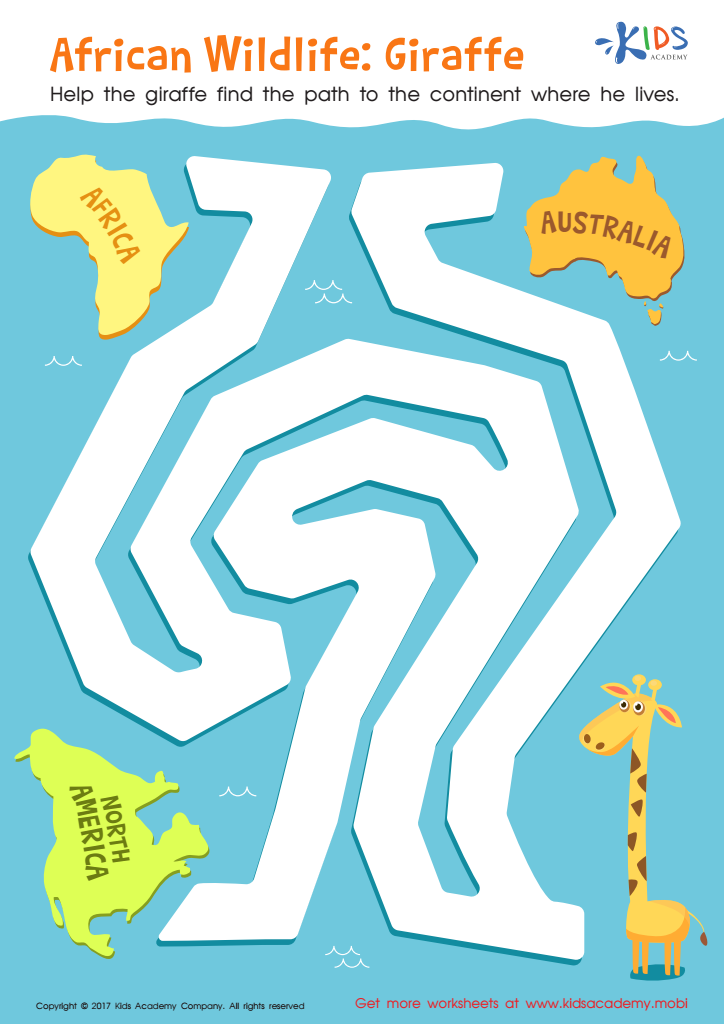
African Wildlife: Giraffe Worksheet
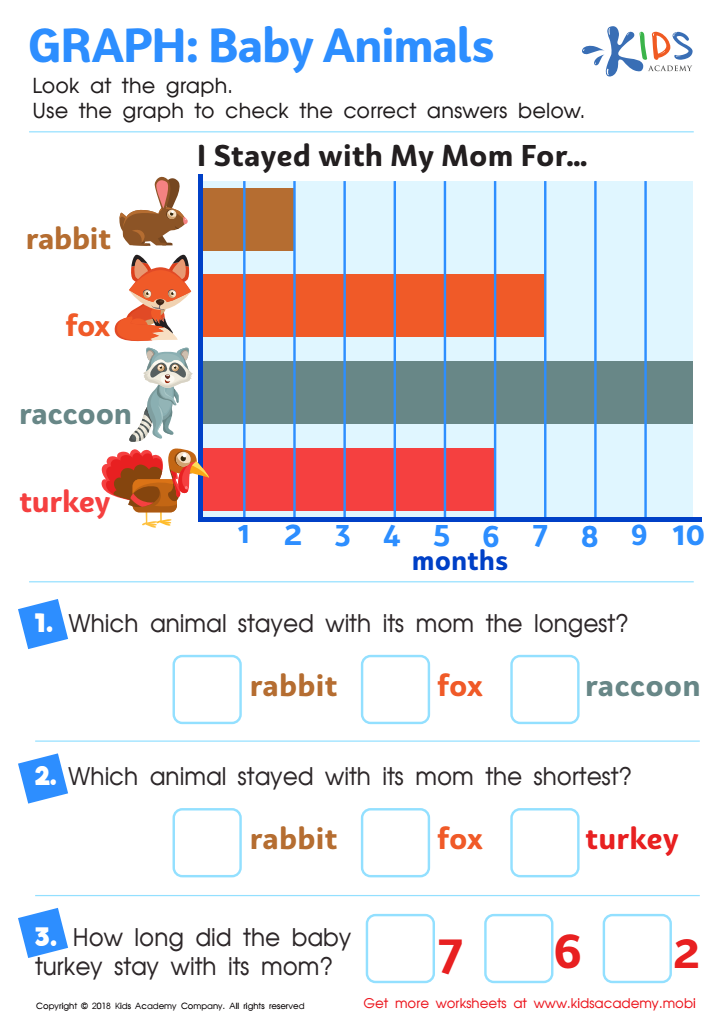
Graph: Baby Animals Worksheet
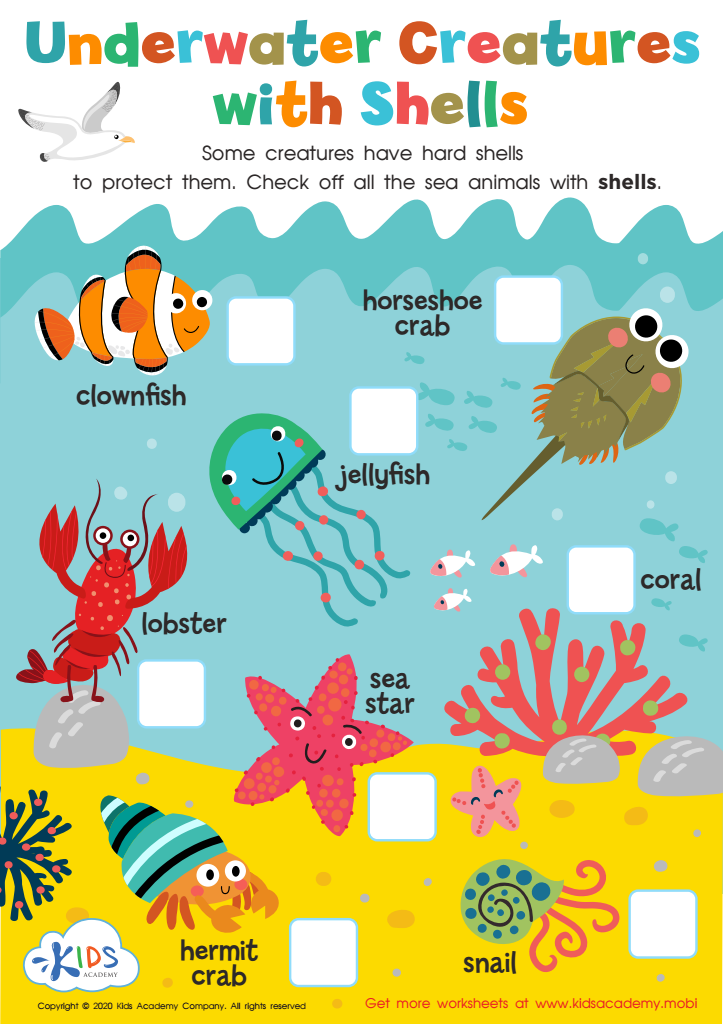
Underwater Creatures with Shells Worksheet
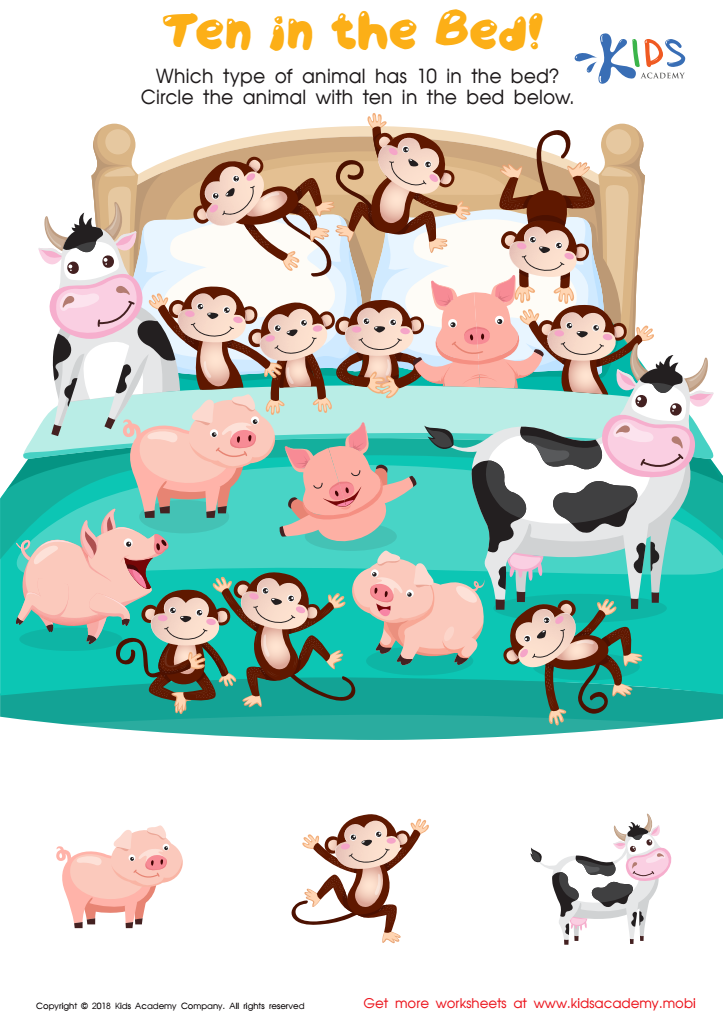
Ten in the Bed Worksheet
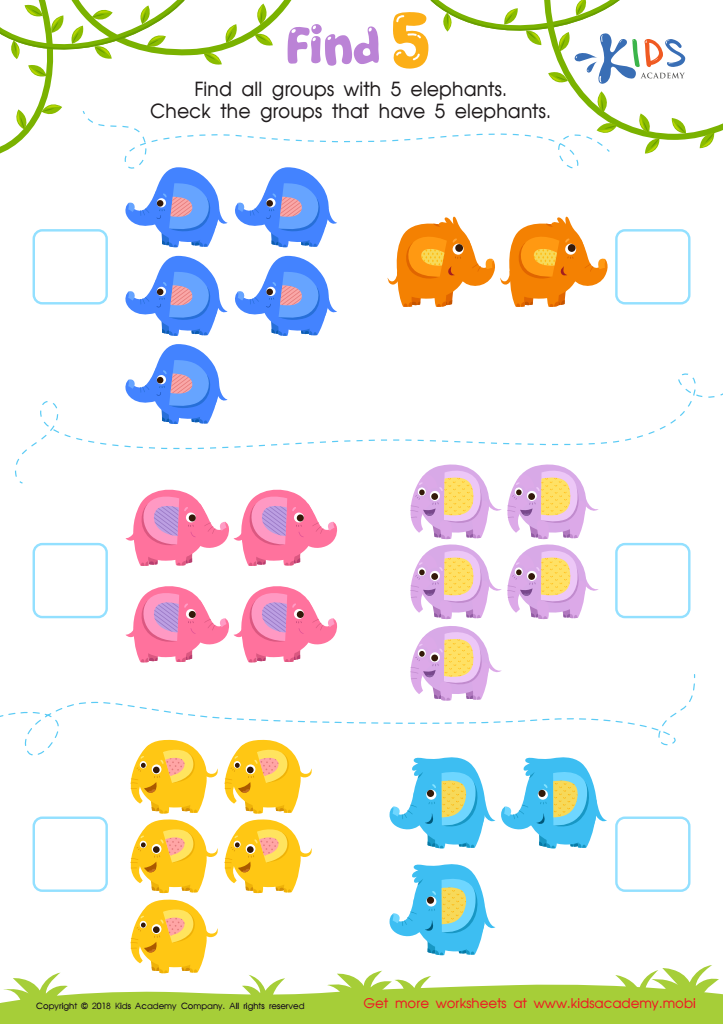
Find 5 Worksheet








Counting skills form the bedrock of a child's mathematical development and understanding of the world. For children aged 5-8, mastering these skills is paramount as it lays the foundation for more advanced arithmetic operations such as addition, subtraction, multiplication, and division. Fluency in counting not only enhances number sense but also fosters cognitive development, helping children grasp concepts of quantity, order, and sequence.
Parents and teachers should prioritize building these skills because children who develop strong counting abilities tend to find subsequent math lessons easier and more enjoyable. Efficient counting forms a basis for everyday activities — from telling time and handling money to measuring ingredients for a recipe — fostering practical life skills that are vital for independent living.
In the realm of science education, counting is equally essential. It aids in understanding scientific principles that depend on measurement, estimation, and data collection. Whether it is counting seeds in an experiment, tracking the growth of a plant, or understanding the periods of the moon, counting bridges numeric comprehension and scientific inquiry. Moreover, it boosts confidence, reduces math anxiety, and promotes logical thinking.
By nurturing counting skills early on, parents and teachers can ensure that children are well-equipped with the numerical proficiency needed to thrive academically and in everyday life, which can lead to a lifelong appreciation for math and science.







