Understanding constellations Normal Science Worksheets for Ages 5-8
3 filtered results
-
From - To
Discover the fascinating world of stars with our "Understanding Constellations" science worksheets designed for ages 5-8. These engaging, age-appropriate printables help young learners explore the night sky, identify major constellations, and understand their stories. Through interactive activities and visually appealing illustrations, children develop essential skills in recognizing patterns and shapes. Perfect for classroom use or at-home learning, these worksheets foster curiosity and enhance knowledge of astronomy, sparking a lifelong interest in science. Download now and let your child embark on an exciting celestial journey!
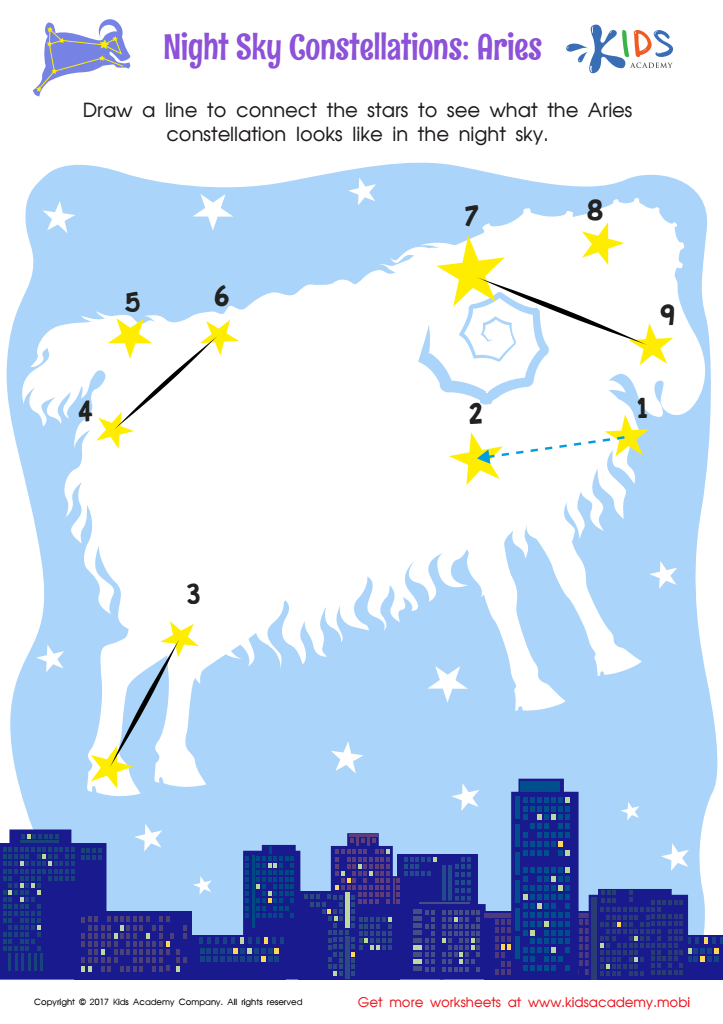
Night Sky Constellations: Aries Worksheet
 Assign to My Students
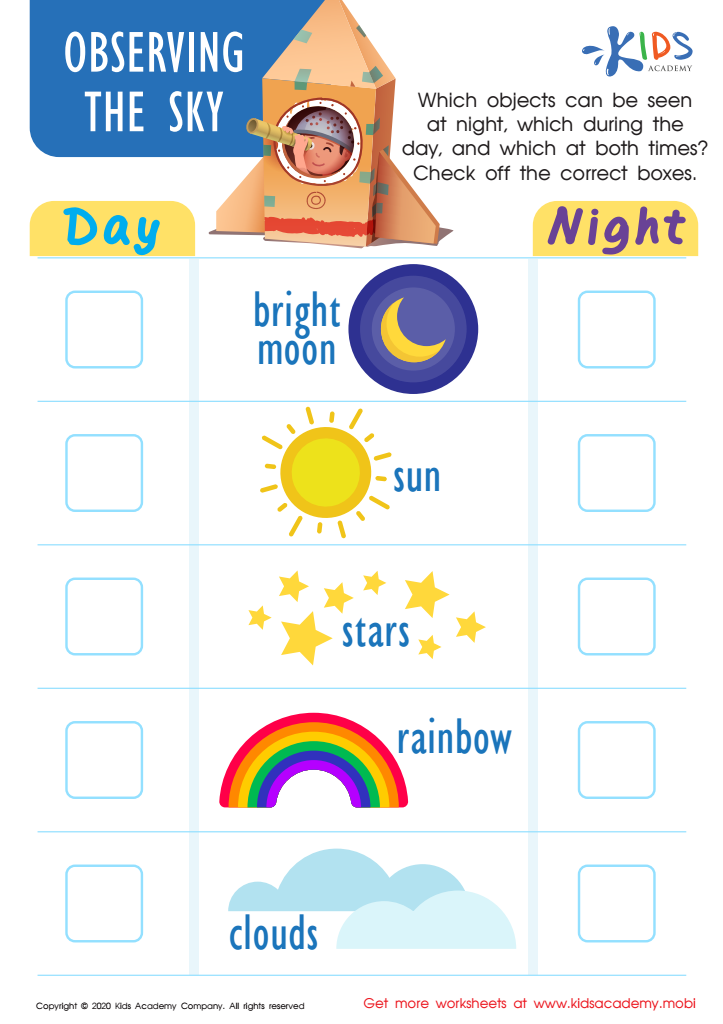
Observing the Sky Worksheet
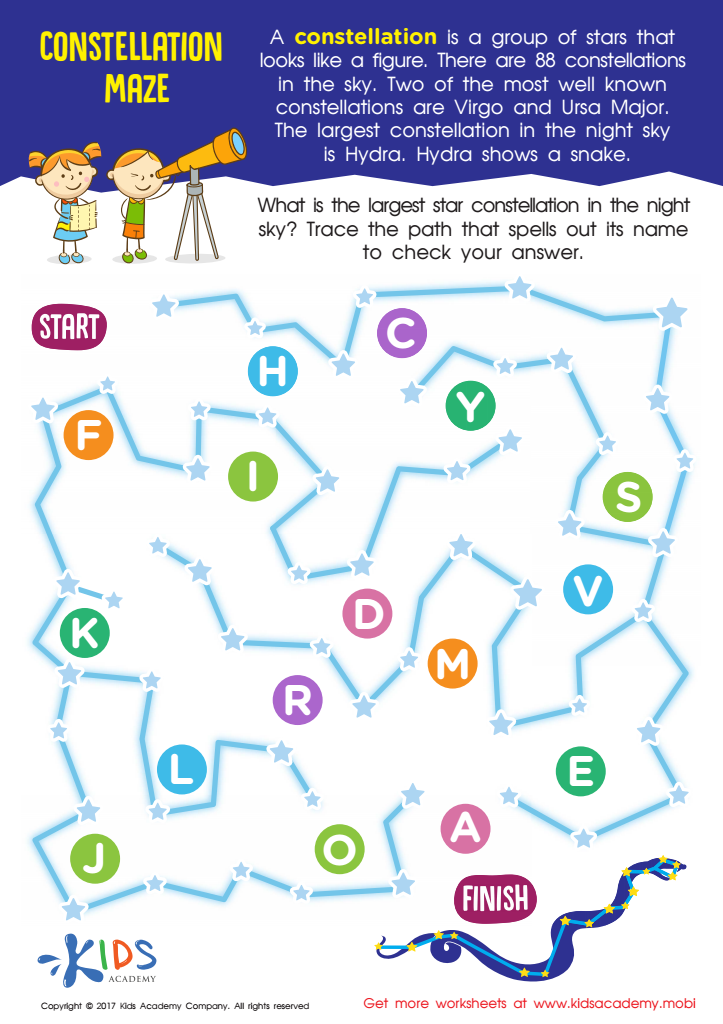
Constellations Worksheet






Understanding constellations and normal science for ages 5-8 is important for various reasons, and parents or teachers should care about it because it nurtures curiosity, enhances learning, and supports developmental milestones. Introducing young children to the concept of constellations can spark a fascination with space and astronomy, encouraging kids to ask questions about the universe. This early curiosity builds a solid foundation for scientific thinking and promotes critical thinking skills.
Moreover, learning about constellations connects children to patterns, sequencing, and recognition, which are essential skills not just in science, but in literacy and mathematics as well. For instance, recognizing shapes and connecting dots to form a constellation can improve spatial awareness and cognitive development. The stories and myths associated with constellations can also expand children's cultural knowledge and listening skills, making learning more exciting and engaging.
Exposure to normal science concepts helps children understand the world around them, fostering resilience, problem-solving, and adaptability. It also prepares them for more complex scientific ideas in the future. For parents and teachers, nurturing an early interest in sciences like astronomy aids in developing a child's comprehensive educational experience, setting the stage for academic enthusiasm and robust intellectual growth. Ultimately, fostering a love for science in early childhood cultivates lifelong learners and inquisitive minds.







