Understanding magnetism Normal Science Worksheets for Ages 5-8
4 filtered results
-
From - To
Unlock the wonders of magnetism with our engaging science worksheets tailored for kids aged 5-8. These interactive activities introduce young learners to the fascinating world of magnets, teaching them essential concepts in a fun, age-appropriate manner. Each worksheet is carefully designed to enhance children's understanding of magnetic forces, poles, and attraction through hands-on experiments and vibrant illustrations. Perfect for educators and parents alike, our resources aim to foster curiosity, build foundational science skills, and inspire a lifelong love for learning. Download now to start your child's magnetic adventure today!
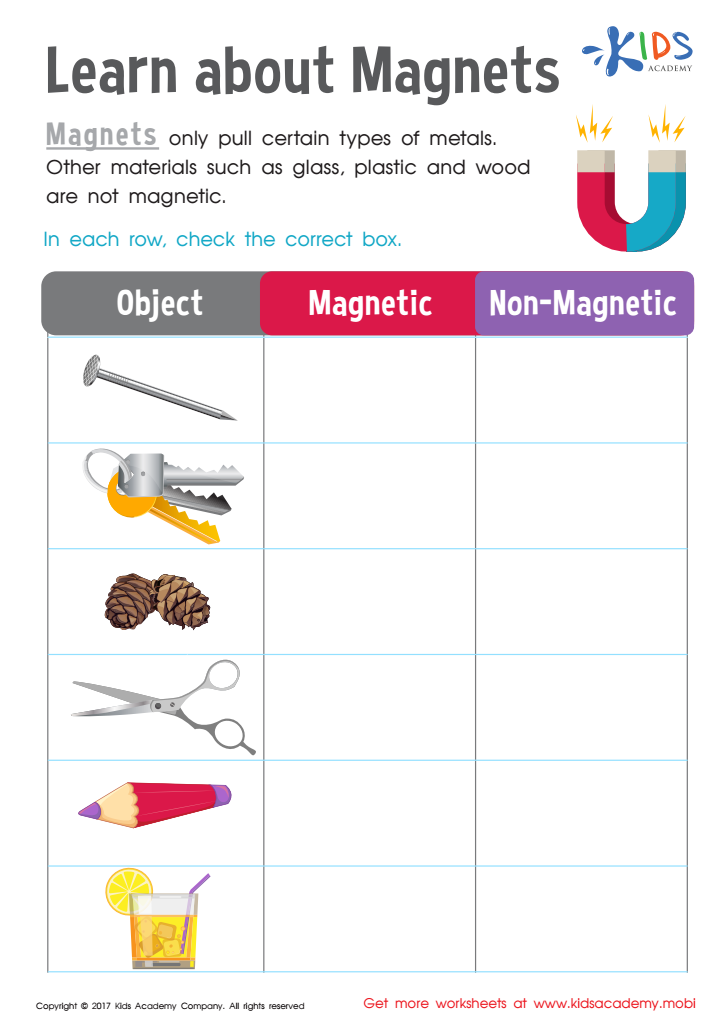
Magnetic Or Not Worksheet
 Assign to My Students
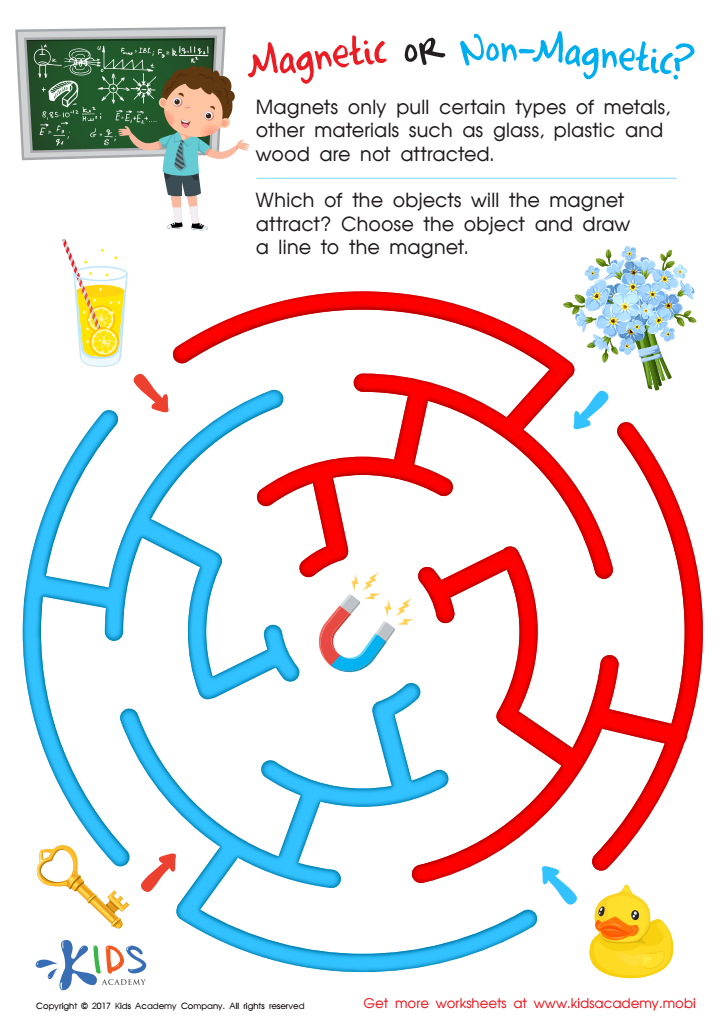
Magnetic or Non–Magnetic Worksheet
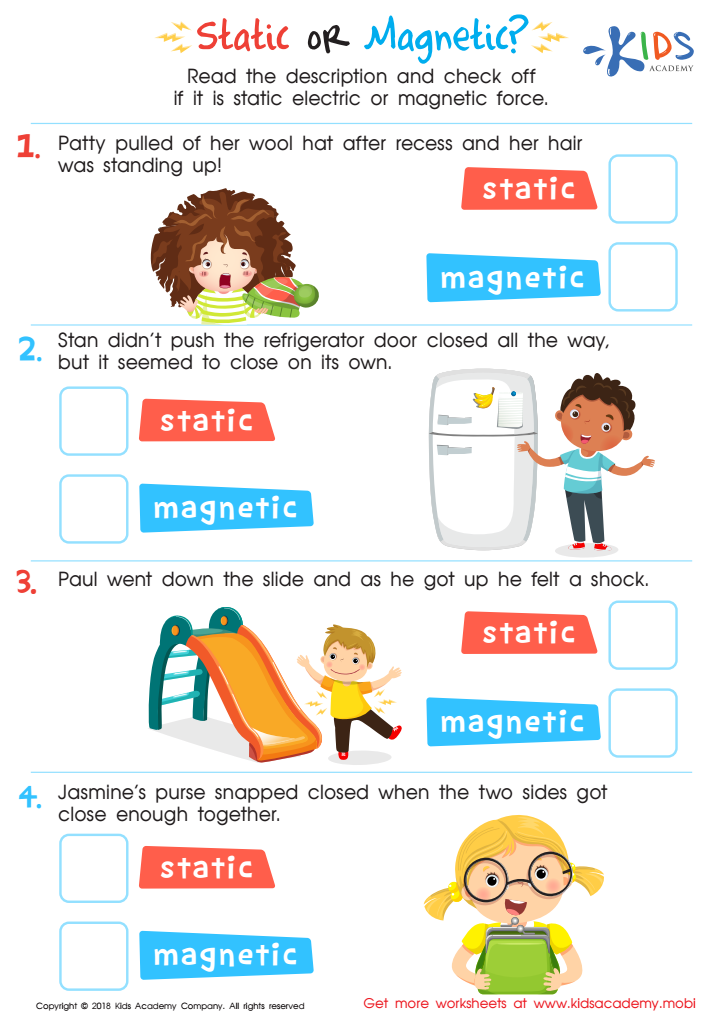
Static or Magnetic Printable Worksheet
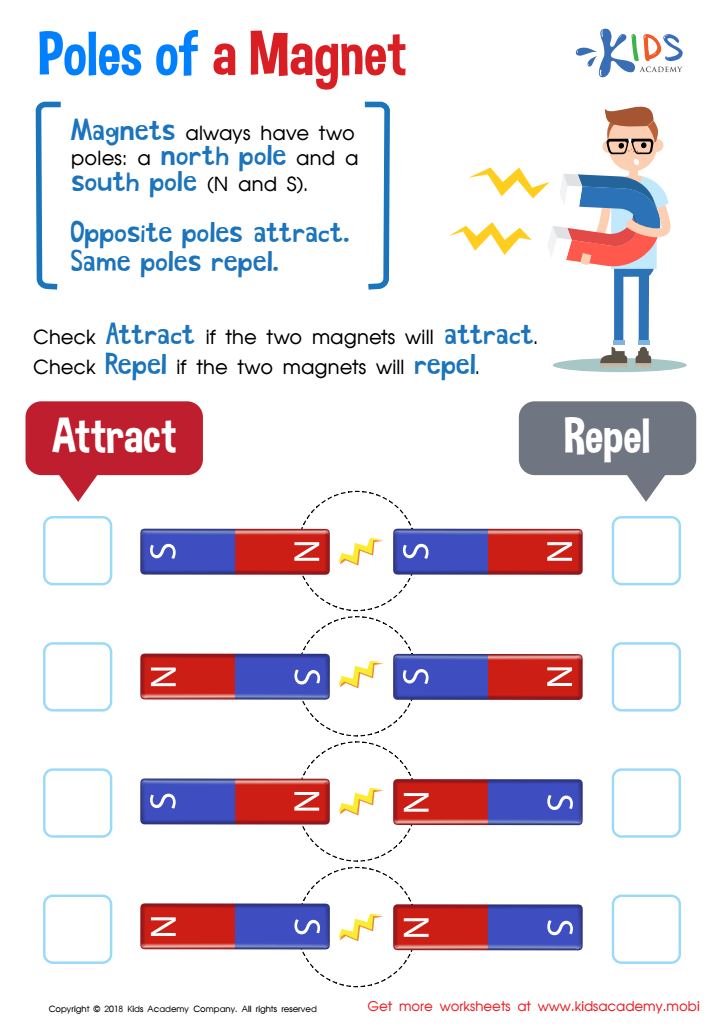
Magnet Poles Attract or Repel Worksheet







Understanding magnetism at an early age fosters curiosity, critical thinking, and foundational scientific knowledge. For children aged 5-8, exploring magnetism can turn abstract concepts into tangible experiences. This hands-on exploration can captivate their natural curiosity, allowing them to see science in action. By playing with magnets, children learn about forces and interactions that are invisible but have observable effects, such as attraction and repulsion, which lays the groundwork for later physics and engineering concepts.
Early exposure to magnetism also develops problem-solving skills. As children experiment with different materials to see what magnets attract or repel, they learn to make hypotheses, test them, and observe outcomes—essential steps in the scientific method. These activities promote critical thinking and reasoning abilities, as kids discern patterns and draw conclusions.
Moreover, understanding magnetism encourages a healthy attitude towards learning and science. If children see science as fun and engaging, they're more likely to develop a lifelong interest in it. Parents and teachers play pivotal roles in guiding these explorations, providing safe environments for experimentation, and asking probing questions that stimulate deeper thinking.
Incorporating lessons on magnetism in early education not only nurtures scientific literacy but also develops cognitive, motor, and social skills. It's a crucial stepping stone in fostering a well-rounded, inquisitive, and educated future generation.







