Critical Thinking Normal Physical Science Worksheets for Ages 5-8
3 filtered results
-
From - To
Introduce young learners to the fascinating world of physics with our Critical Thinking Normal Physical Science Worksheets, tailored for ages 5-8. These engaging activities nurture curiosity and foster problem-solving skills through hands-on experiments and thought-provoking exercises. Perfect for building a solid scientific foundation, our worksheets encourage kids to ask questions, make predictions, and explore the principles of physical science in a fun and interactive way. With a focus on critical thinking, children will learn to analyze observations, draw conclusions, and develop a deeper understanding of the natural world, setting them on a path of lifelong learning and curiosity.
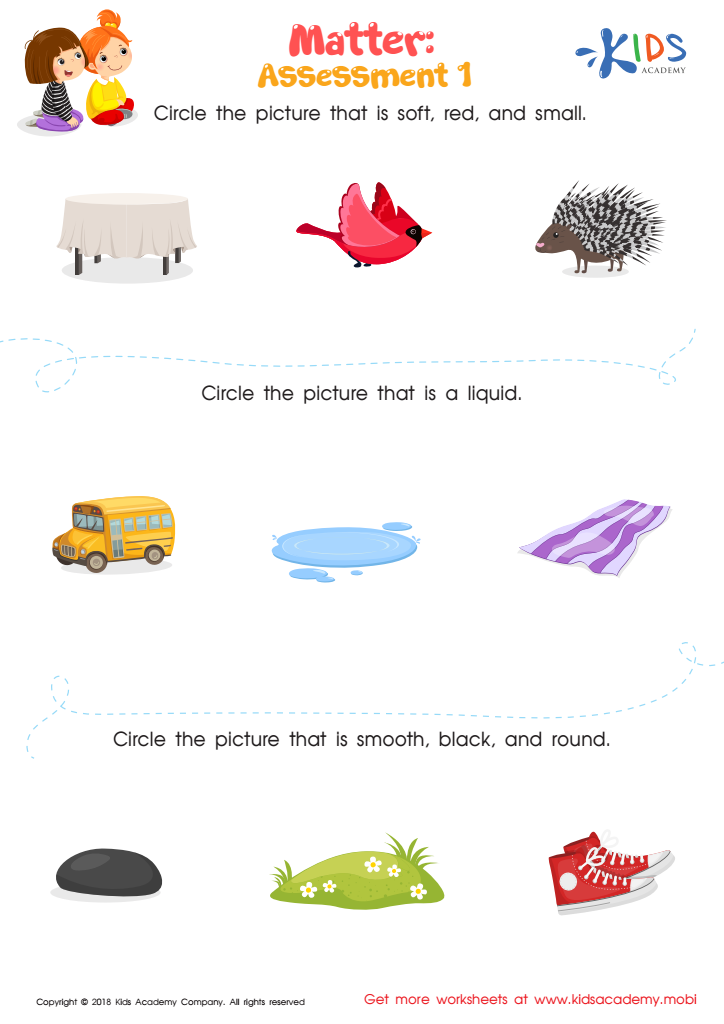
Matter: Assessment 1 Worksheet
 Assign to My Students
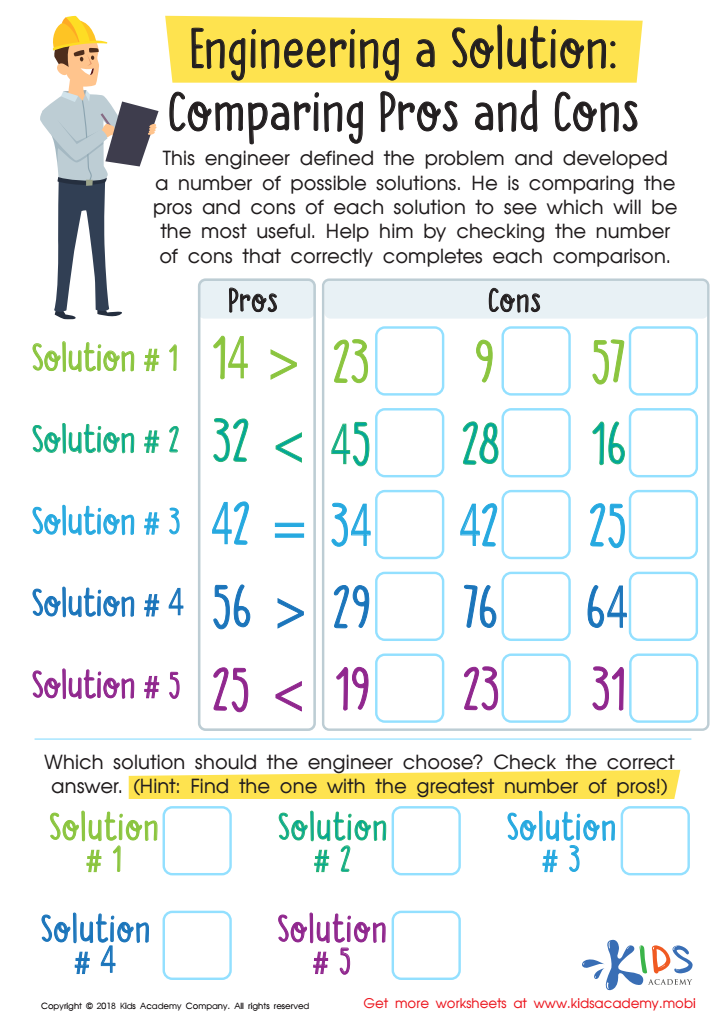
Engineering a Solution: Comparing Pros and Cons Worksheet
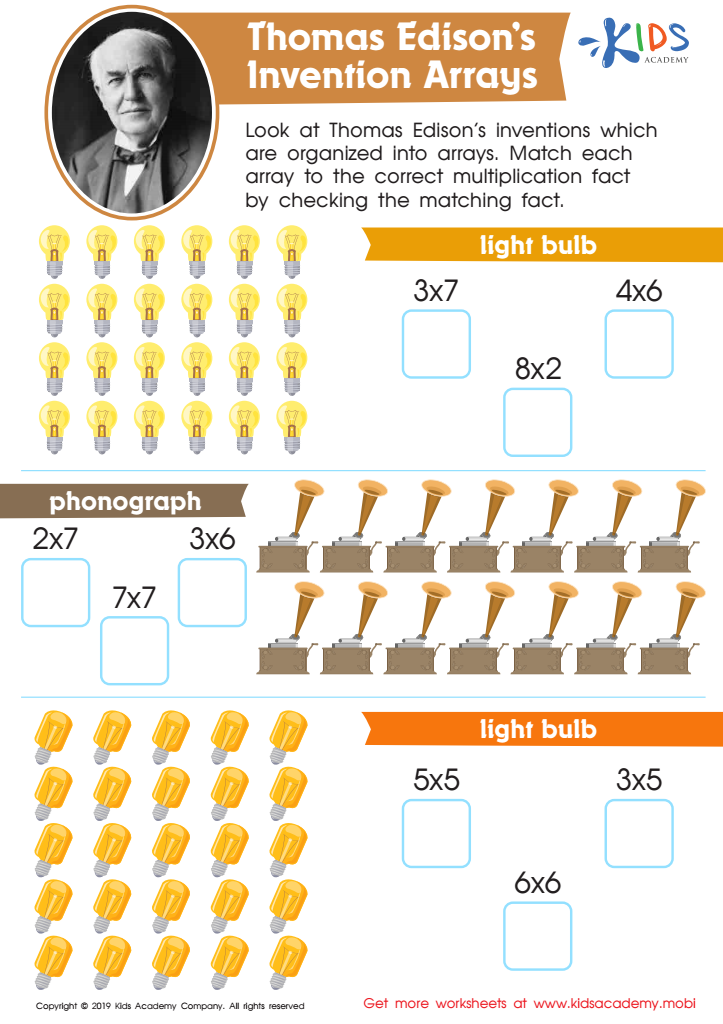
Thomas Edison’s Invention Arrays Worksheet








Critical thinking in normal physical science for ages 5-8 is essential because it lays the foundation for lifelong learning and problem-solving skills. Children in this age group are naturally curious, and engaging them in hands-on, inquiry-based activities helps them understand the world around them. By fostering critical thinking, parents and teachers enable children to ask questions, explore hypotheses, and draw conclusions, which are crucial skills in scientific exploration and beyond.
At this developmental stage, children are highly impressionable, and their cognitive and reasoning abilities are rapidly evolving. Introducing basic physical science concepts, such as the states of matter, magnetism, or simple machines, encourages them to observe, predict, and experiment. This can enhance their cognitive development, including better memory, attention, and language skills.
Critical thinking also promotes resilience and adaptability by teaching children that failure is a part of the learning process. They learn to analyze why an experiment didn’t work and how to approach the problem differently, which builds perseverance and a growth mindset.
Furthermore, early exposure to science can spark a lifelong interest in STEM fields, which are crucial in today’s technology-driven world. Overall, emphasizing critical thinking in physical science helps children develop intellectually, emotionally, and socially, preparing them for complex challenges and informed decision-making later in life.







