Vocabulary enhancement Normal Plants Worksheets for Ages 5-8
3 filtered results
Difficulty Level
Grade
Age
-
From - To
Subject
Activity
Standards
Boost your young learner's vocabulary with our engaging "Normal Plants" worksheets designed for ages 5-8. Our expertly crafted worksheets introduce children to essential plant-related terms while enhancing their understanding of nature. Through fun activities, children will explore plant parts, growth stages, and much more, reinforcing their science knowledge and vocabulary simultaneously. These printables are perfect for supplementing classroom lessons or at-home learning, making science exciting and accessible. With varying levels of difficulty, our worksheets aim to cater to different learning paces, ensuring every child progresses confidently. Unlock the wonders of plants and watch your child's vocabulary flourish!
Favorites
With answer key
Interactive
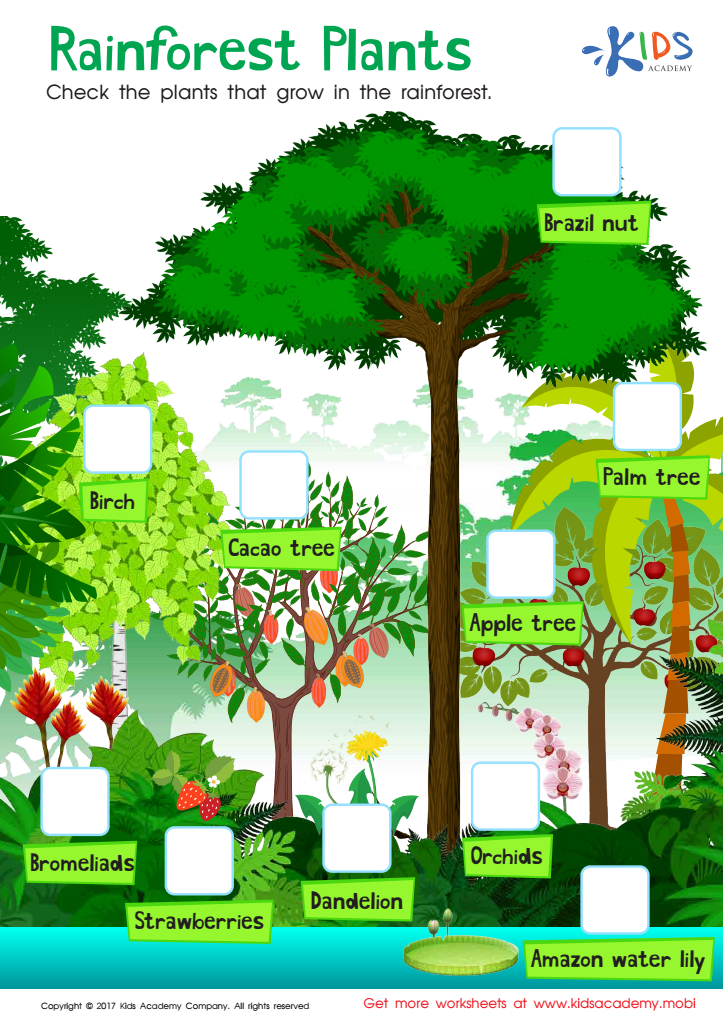
Rainforest Plants Worksheet
Revised: Get a better understanding of rainforest flora with this professionally crafted rainforest plants worksheet. Outline the distinguishing characteristics of each plant and have kids identify the plants that are common to rainforests.
 Assign to My Students
Rainforest Plants Worksheet
Worksheet




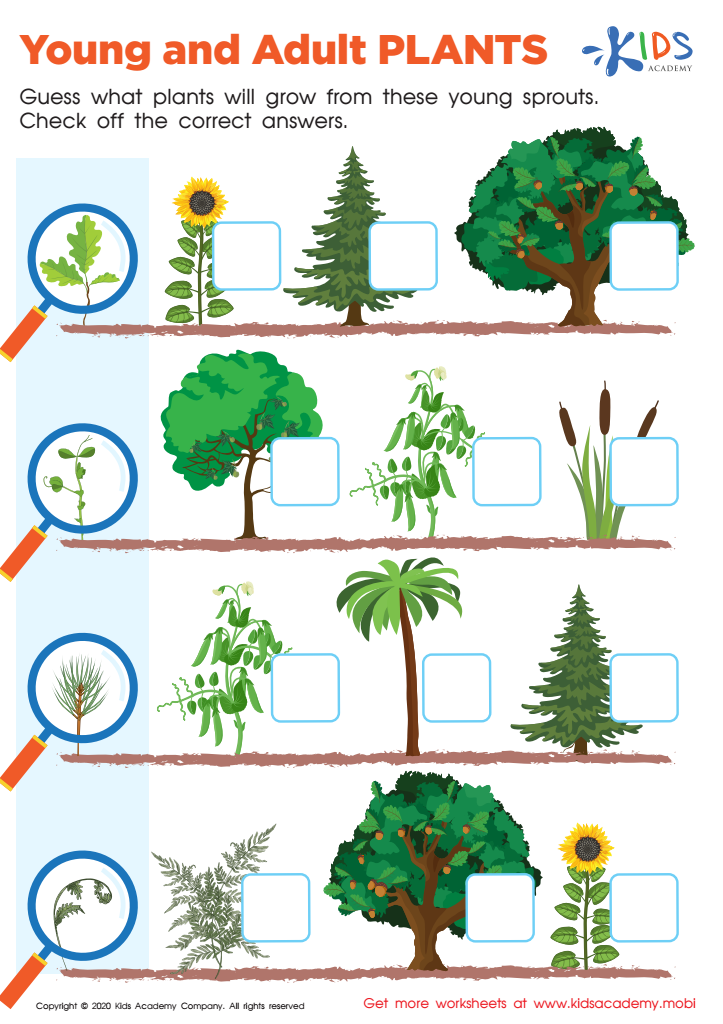
Young and Adult Plants Worksheet
Examine the sprouts, then compare the leaves of the nearby trees. Check the box next to the tree that looks similar to the sprout to complete the worksheet. Problem-solving and analysis skills will be put to the test! 80 words.
Young and Adult Plants Worksheet
Worksheet
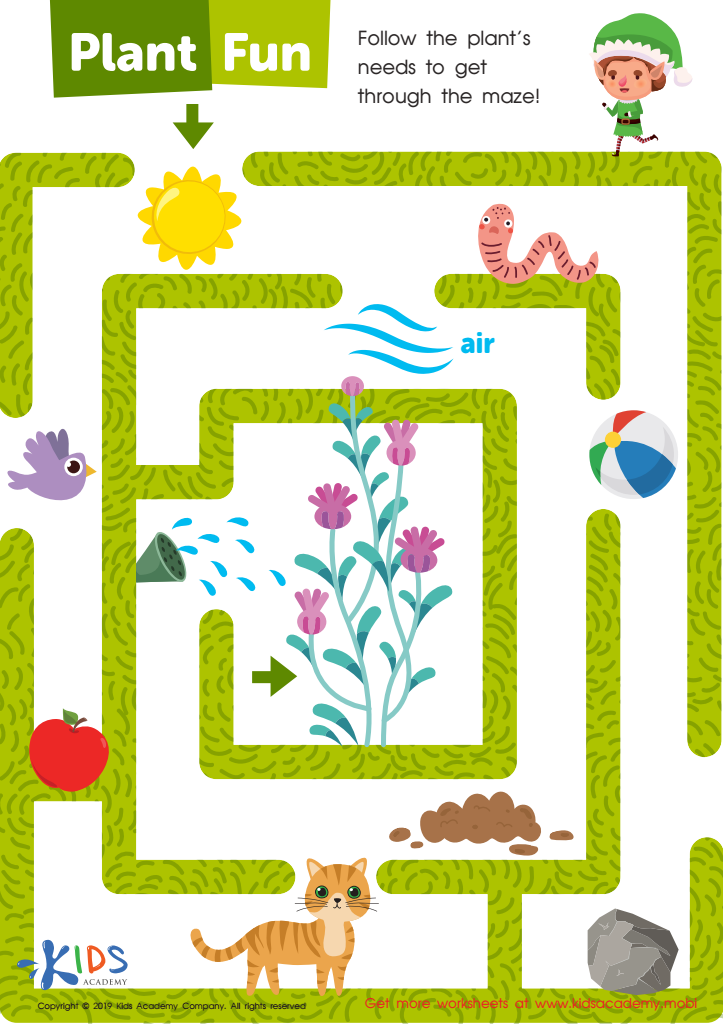
Plant Fun Worksheet
Engage your kid's mind by playing a learning maze! Ask them what plants do for us and what we need to do for the plants to help them grow. Then, help them find their way out of the maze while following the things that plants need.
Plant Fun Worksheet
Worksheet
Join Kids Academy for Free
Who is primarily going to use this learning content?








Vocabulary enhancement in young children, particularly related to normal plants, is crucial for several reasons. Firstly, it lays a foundation for scientific literacy, helping children understand and appreciate the natural world around them. When children learn plant-related vocabulary—such as names of common plants, parts of a plant like roots, stems, leaves, and terms like photosynthesis—they start to grasp basic biological concepts. This early exposure can spark a lifelong interest in science and nature.
Secondly, expanding vocabulary in any subject area improves overall language skills. It enhances children's ability to express themselves, comprehend complex texts, and communicate effectively. Rich vocabulary also bolsters reading comprehension and academic performance across subjects. When teachers and parents focus on vocabulary related to normal plants, they not only teach words but also context, relationships between concepts, and critical thinking skills.
Moreover, understanding plant-related vocabulary can promote environmentally responsible behaviors. Early education about plants fosters a sense of responsibility and stewardship towards nature. Children who can identify plants and describe their roles in the ecosystem are more likely to value and protect their environment.
Finally, this focus on vocabulary is invaluable for cognitive development. Vocabulary learning exercises the brain, enhancing memory, attention span, and information processing skills. Therefore, parents and teachers should prioritize vocabulary enhancement, including plant-related terms, to equip children with essential skills for their educational journey and beyond.