Animal identification Normal Plants and Animals Worksheets for Ages 5-8
3 filtered results
-
From - To
Discover our engaging "Animal Identification Normal Plants and Animals Worksheets" designed specifically for children ages 5 to 8. These interactive worksheets help young learners explore and recognize various animals and plants through fun activities and colorful illustrations. Enhance their observational skills as they engage in matching games, labeling exercises, and identification tasks, all tailored to nurture curiosity about the natural world. Perfect for classroom use or at-home learning, these resources foster essential scientific literacy and critical thinking. Visit us to access a variety of worksheets that make learning about plants and animals an exciting adventure for your little ones!
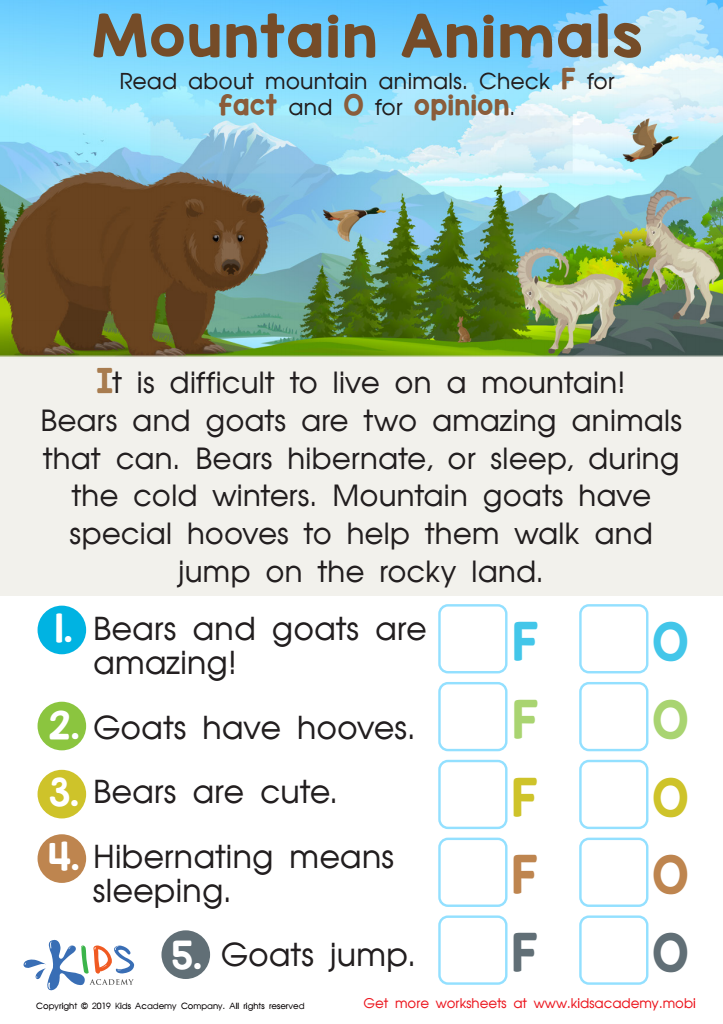
Mountain Animals Worksheet
 Assign to My Students


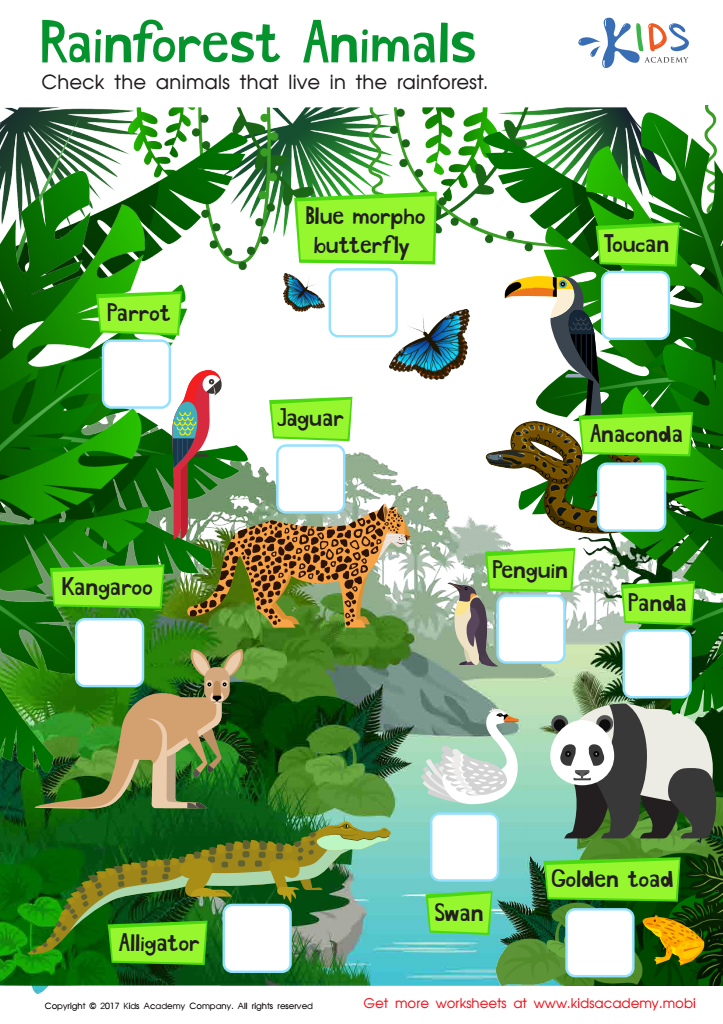
Rainforest Animals Worksheet
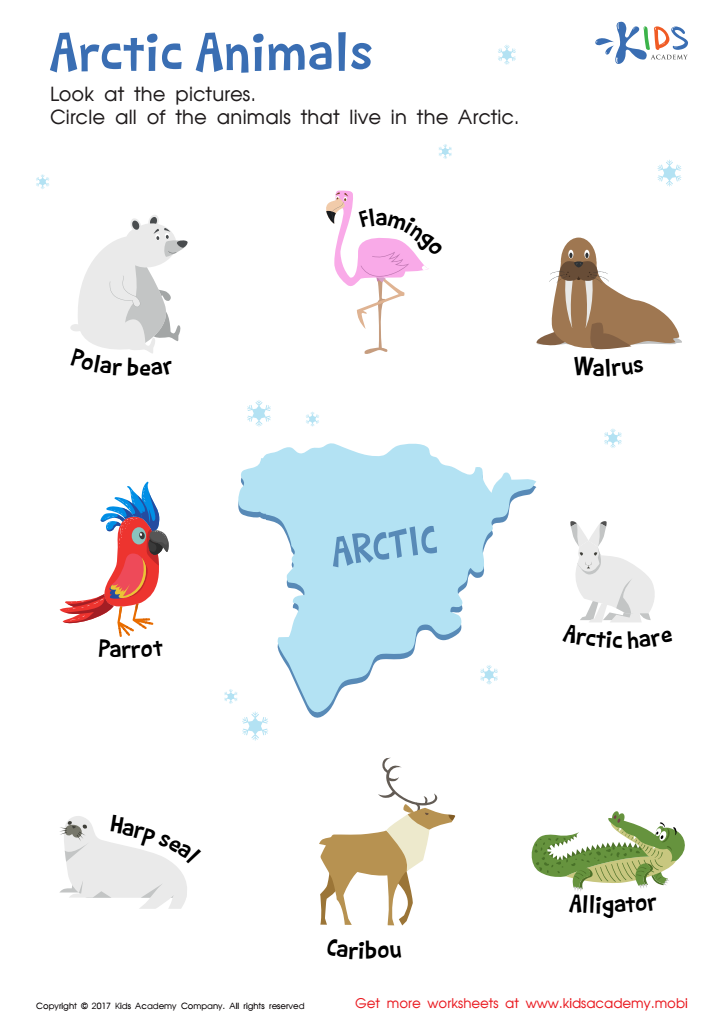
Arctic Animals Worksheet








Animal identification is crucial for young learners, aged 5-8, as it fosters curiosity and a deeper understanding of the natural world. When parents and teachers focus on this subject, they are nurturing a sense of wonder and appreciation for the environment. Early exposure to recognizing different plants and animals helps children develop observational skills and critical thinking—skills that are essential throughout their education.
Understanding animal identification aids in teaching biodiversity and ecology, highlighting the interdependence of all living organisms. This knowledge instills a sense of responsibility towards wildlife and encourages stewardship of our planet from an early age. Additionally, the study of plants and animals can spark conversations about habitats, food chains, and conservation, promoting a well-rounded education.
Moreover, recognizing animals and plants connects children to cultural traditions and contributes to their social-emotional development, as they learn about different species and their roles in communities. Incorporating hands-on activities, like nature walks or interactive games, can make learning fun and engaging, creating memorable experiences that inspire lifelong learning. In essence, prioritizing animal identification cultivates an informed generation equipped to protect and cherish our fragile ecosystems.







