Building vocabulary Normal Community Worksheets for Ages 5-8
3 filtered results
-
From - To
"Building Vocabulary Normal Community Worksheets for Ages 5-8" provides fun and engaging activities designed to enhance young learners' vocabulary related to their community. These printable worksheets are perfect for kindergarten to 2nd grade students, focusing on age-appropriate words and themes centered around their everyday environment. Each worksheet helps children to discover and understand key terms associated with their neighborhoods, such as places, people, and community roles. Through interactive exercises like matching, spelling, and word searches, kids can easily expand their vocabulary while developing their reading and writing skills. Ideal for classroom and at-home learning!
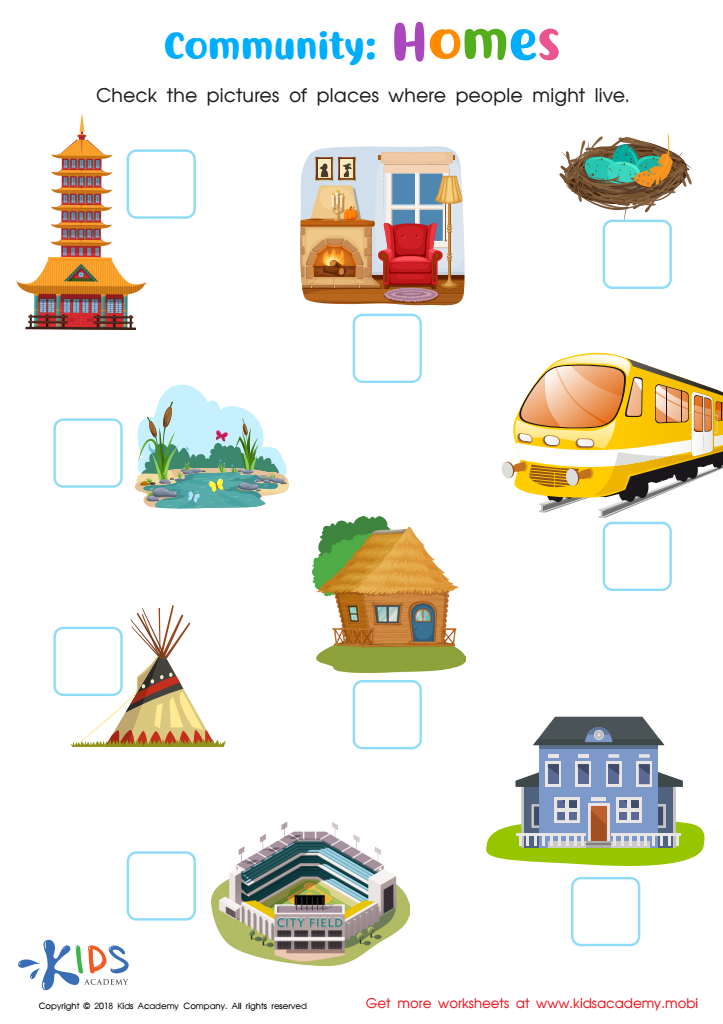
Community: Homes Worksheet
 Assign to My Students
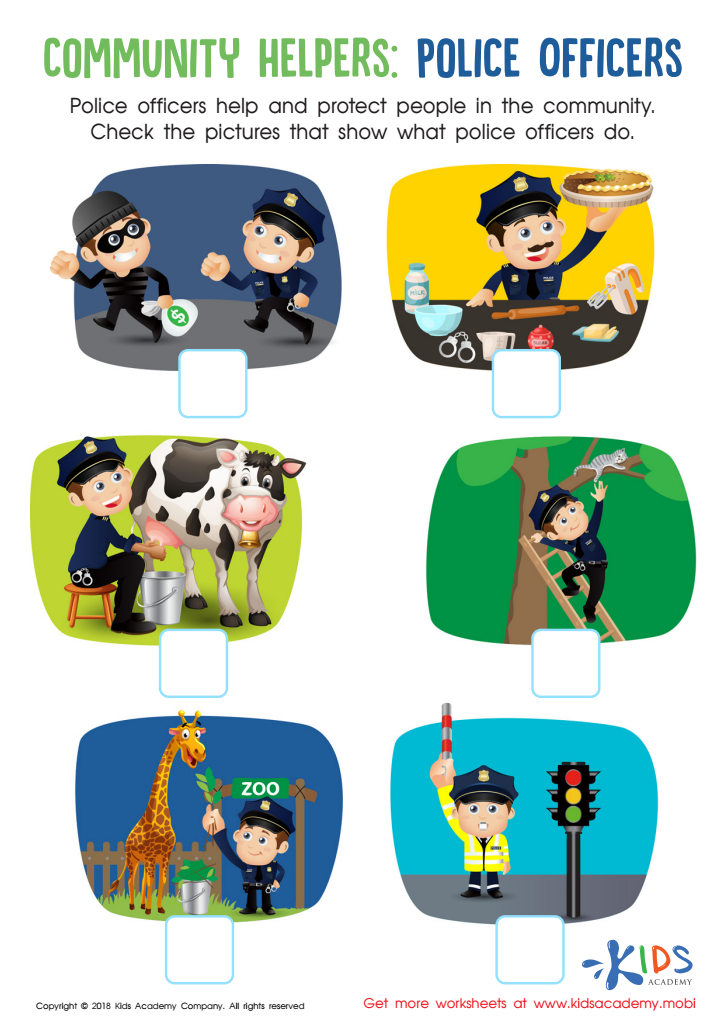
Police Officers Community Helpers Worksheet
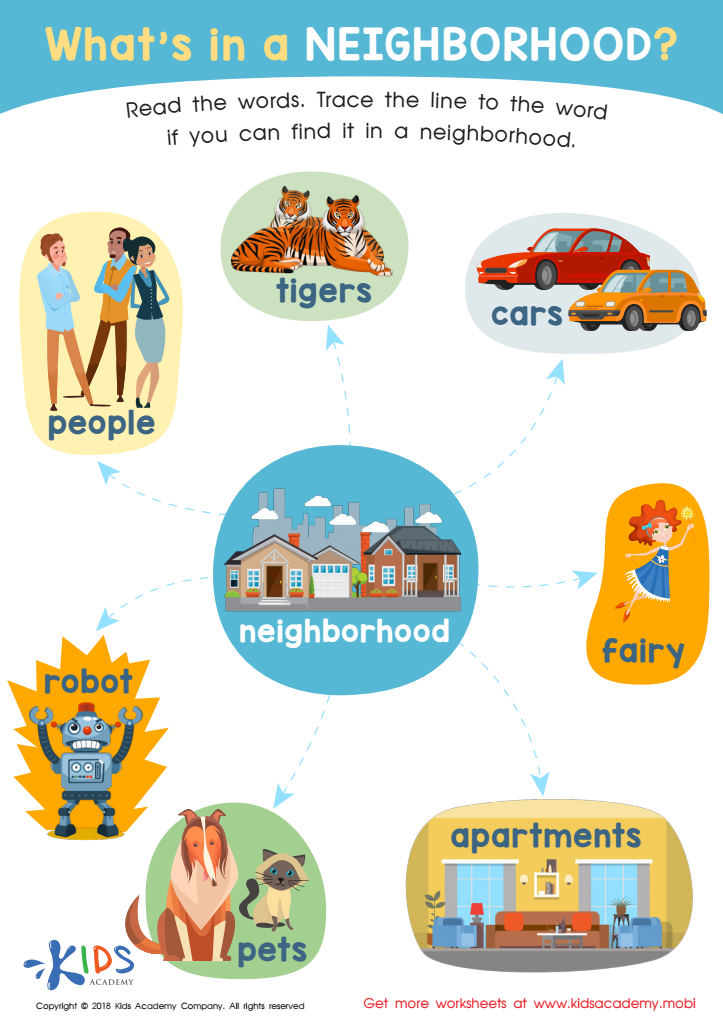
What's in a Neighborhood? Worksheet








Building vocabulary is foundational for children ages 5-8, as it directly impacts their academic and social development. For parents and teachers, nurturing vocabulary at this stage is crucial because it enhances reading comprehension, a vital skill across all subjects. Young children with a rich vocabulary can better understand stories, follow instructions, and engage in meaningful conversations. This language proficiency also lays the groundwork for future success in both education and life.
Moreover, a robust vocabulary boosts confidence. Children who can express their thoughts and feelings effectively feel more comfortable participating in class discussions and social interactions. This sense of confidence encourages curiosity and a love for learning, promoting a positive attitude toward school.
Additionally, a well-developed vocabulary helps children make sense of the world around them. By understanding and using new words, children can grasp complex concepts more easily, fostering critical thinking and problem-solving skills. This enriched cognitive ability allows them to connect ideas and improve memory, aiding overall intellectual growth.
In nurturing vocabulary, parents and teachers are investing in a child's future. A strong vocabulary not only supports academic achievement but also promotes effective communication and interpersonal skills, essential for lifelong success. Therefore, dedicating time and resources to vocabulary development in early childhood opens doors to a world of opportunities.








